The Soul of the Pizza
When you bite into a slice of truly artisanal pizza, your palate is immediately greeted by a symphony of textures and flavors. While the charred, airy crust provides the structure and the melted mozzarella offers the creamy decadence, it is the sauce that acts as the soul of the entire creation. At pizzacream.com, we believe that a mediocre sauce can mask the quality of the finest toppings, but a perfect sauce elevates the simplest Margherita to a gourmet experience. The secret to that perfection isn’t found in a pre-made jar; it lies in the delicate balance of high-quality ingredients and a patient, thoughtful preparation process.
The Foundation: Ingredient Selection
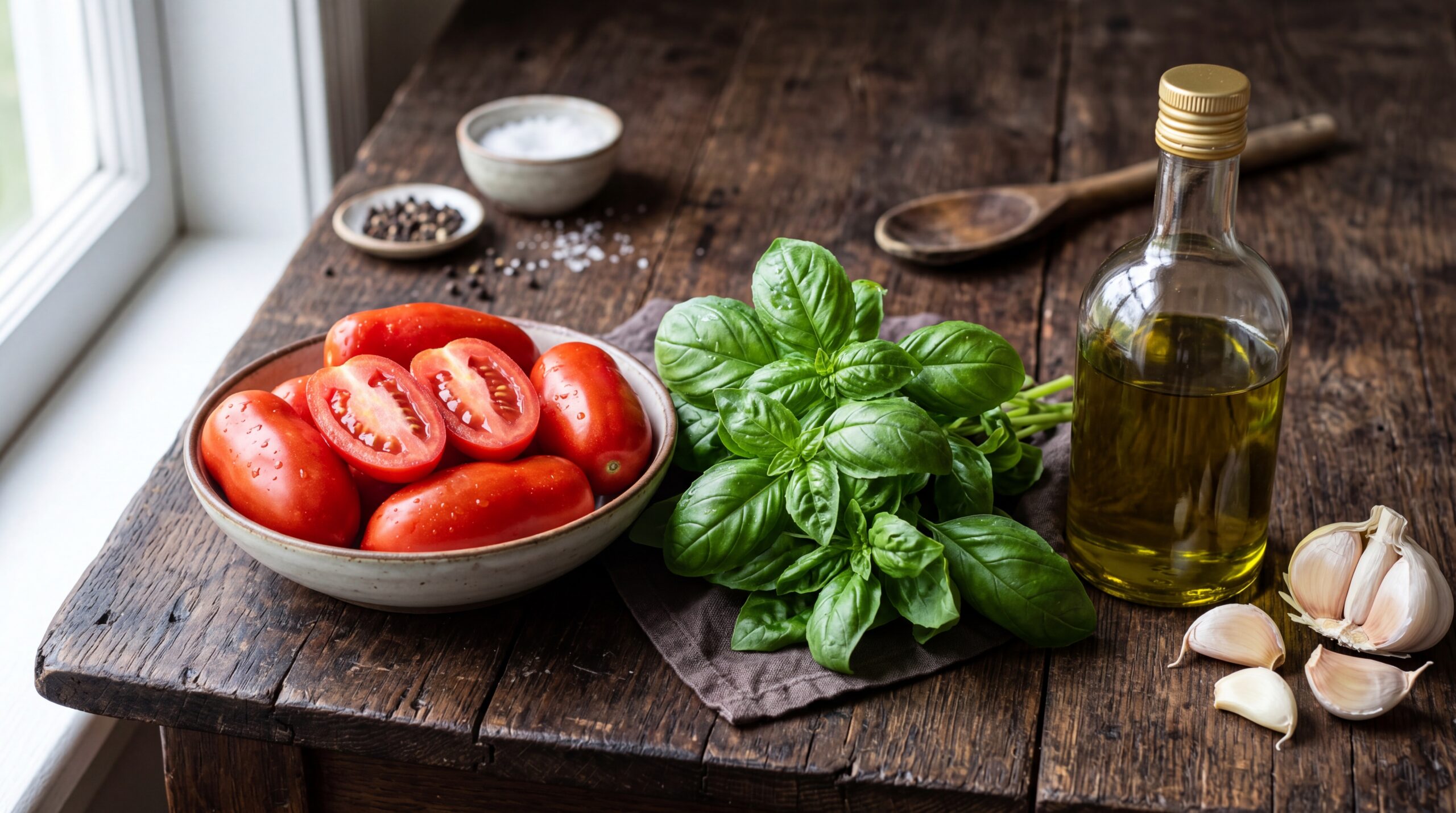
In the world of artisanal pizza, your sauce is only as good as the raw materials you use. Because the ingredient list is short, there is nowhere for low-quality components to hide. To achieve that authentic, vibrant flavor, you must start with the gold standard: San Marzano tomatoes. Grown in the volcanic soil near Mount Vesuvius, these tomatoes are prized for their thick flesh, low seed count, and a perfect balance of sweetness and acidity. Look for the “D.O.P.” seal on the can to ensure authenticity.
Beyond the tomatoes, every other element must be chosen with care:
- Extra Virgin Olive Oil: Use a high-quality, cold-pressed oil to add richness and a peppery finish.
- Fresh Basil: Never substitute dried basil. Fresh leaves provide a bright, aromatic lift that cuts through the richness of the cheese.
- Garlic: Freshly minced garlic offers a pungent depth that pre-minced jars simply cannot replicate.
- Sea Salt: Use fine sea salt to enhance the natural sugars of the tomato without adding a chemical aftertaste.
The Step-by-Step Method
While some prefer a raw, “no-cook” sauce for Neapolitan styles, a lightly simmered sauce provides a robust depth that holds up beautifully on various crust types. Here is the definitive PizzaCream method for a world-class red sauce.
Step 1: The Hand-Crush
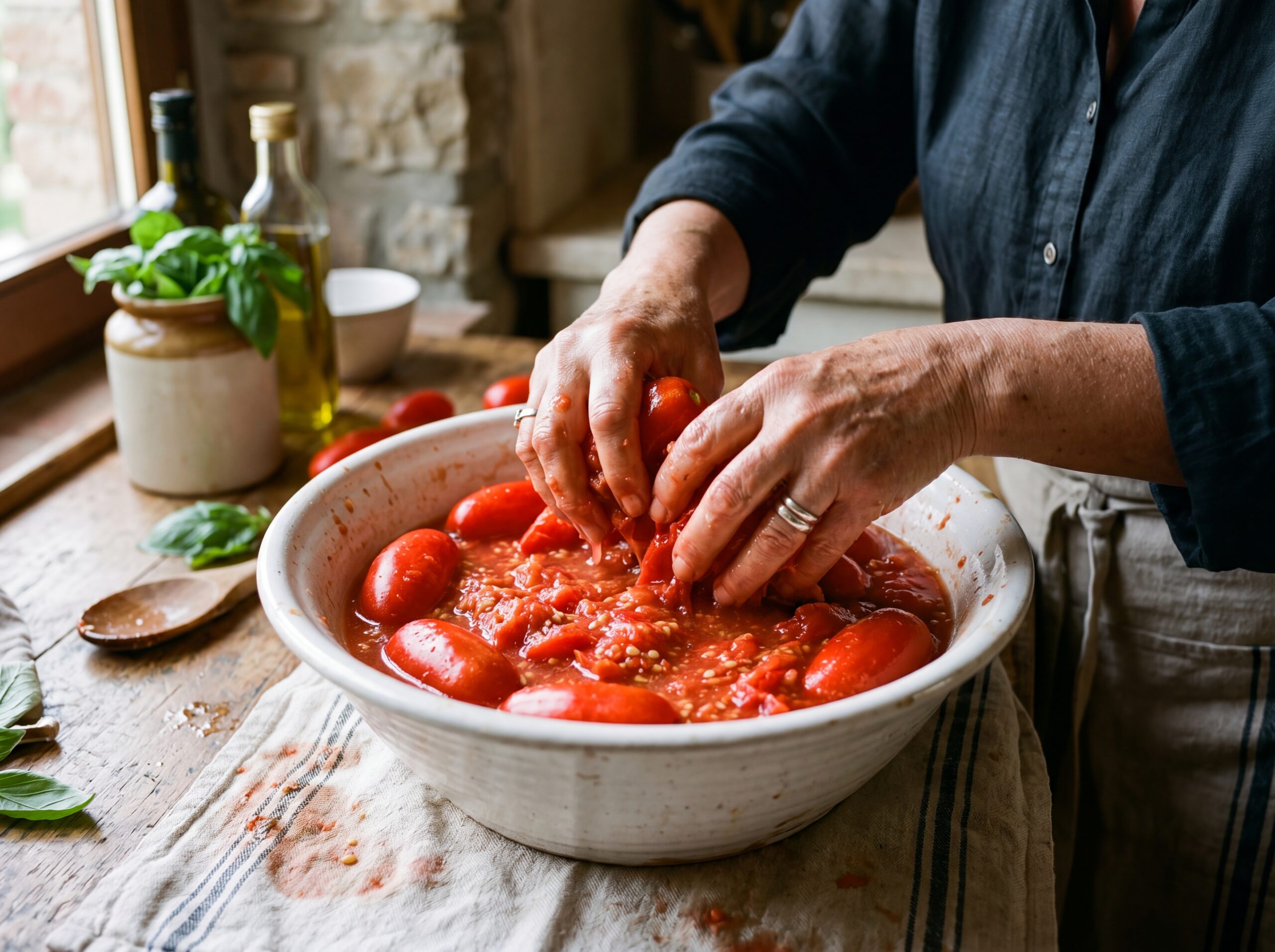
Empty a 28-ounce can of whole peeled San Marzano tomatoes into a large bowl. Using your hands, gently crush the tomatoes into a chunky pulp. This traditional method preserves the texture of the fruit, ensuring your sauce isn’t a watery puree but a rustic, textured base.
Step 2: The Aromatic Infusion
In a heavy-bottomed saucepan, heat two tablespoons of extra virgin olive oil over medium-low heat. Add three cloves of finely minced garlic. Sauté gently for about 60 seconds—just until fragrant. Do not let the garlic brown, as burnt garlic will turn the entire batch bitter.
Step 3: The Gentle Simmer
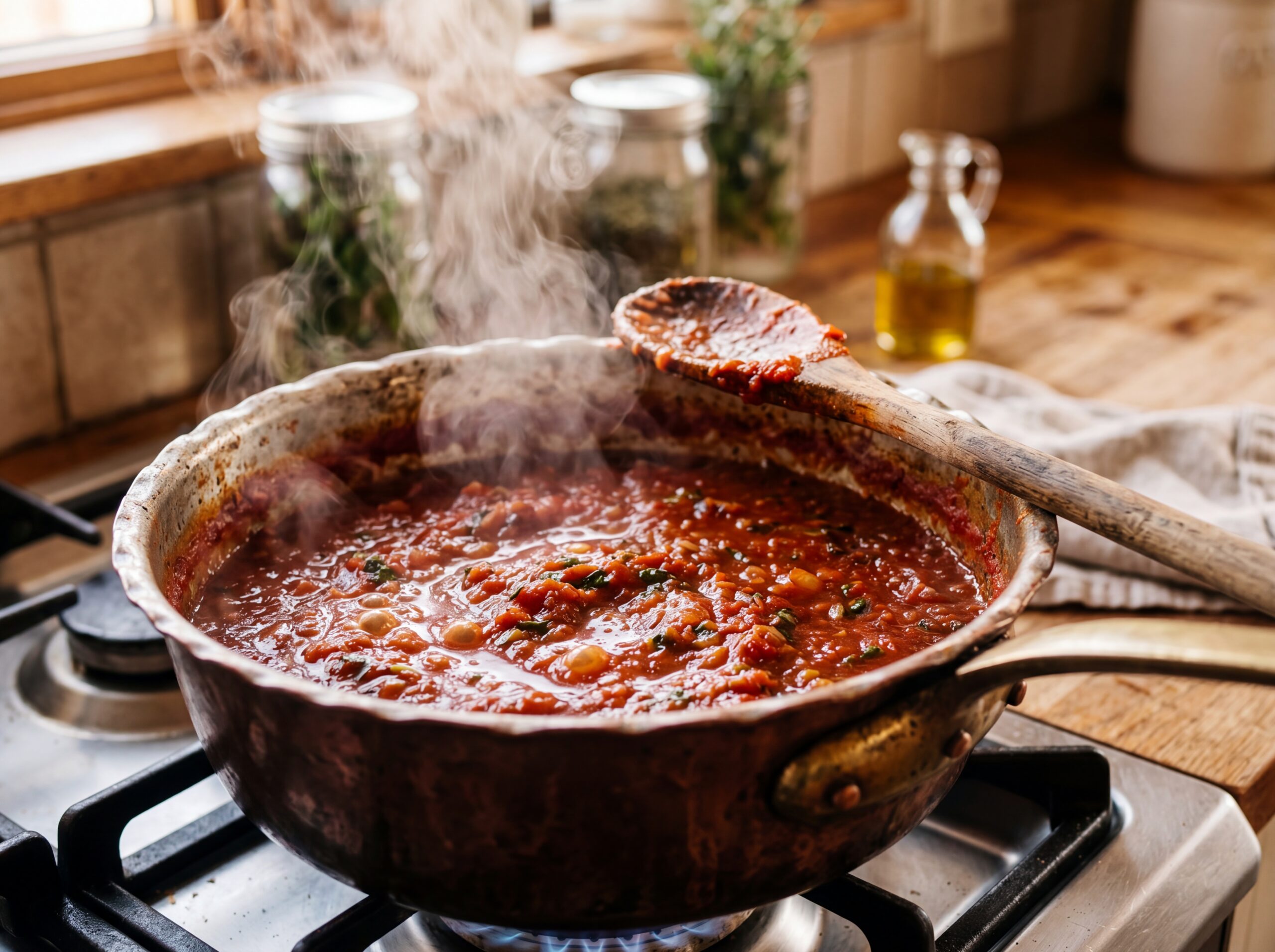
Add the crushed tomatoes to the pan along with their juices. Increase the heat to medium until the sauce reaches a light simmer, then immediately reduce the heat to low. Add a pinch of red pepper flakes if you desire a subtle heat. Let the sauce cook uncovered for 20 to 30 minutes. You aren’t looking to reduce it into a thick paste; you simply want the flavors to meld and the excess water to evaporate.
Step 4: The Finishing Touch
Remove the pan from the heat. Tear five or six large, fresh basil leaves by hand and stir them into the warm sauce. Tearing the leaves instead of chopping them prevents bruising and releases the essential oils directly into the tomatoes.
The Art of Balance: Acidity, Sweetness, and Salt
The final and most crucial step in creating the perfect sauce is the “tasting adjustment.” Every batch of tomatoes varies slightly in its natural sugar and acid content. Achieving the “Holy Trinity” of balance is what separates home cooks from master pizzaiolos.
Managing Acidity: If the sauce tastes too sharp or metallic, it likely has high acidity. While many suggest adding a teaspoon of sugar, we recommend a tiny pinch of baking soda first. It neutralizes the acid without making the sauce artificially sweet. If it still needs a lift, add sugar in very small increments.
Enhancing Sweetness: If the tomatoes are particularly tart, a small amount of grated carrot simmered in the sauce can provide a natural, earthy sweetness that complements the San Marzanos perfectly.
The Salt Factor: Salt is the ultimate flavor extractor. Add it slowly, tasting after every stir. The sauce should taste vibrant and “bright.” If it tastes flat, it needs more salt. If it tastes like “tomato soup,” you may have over-salted or over-cooked it.
Conclusion
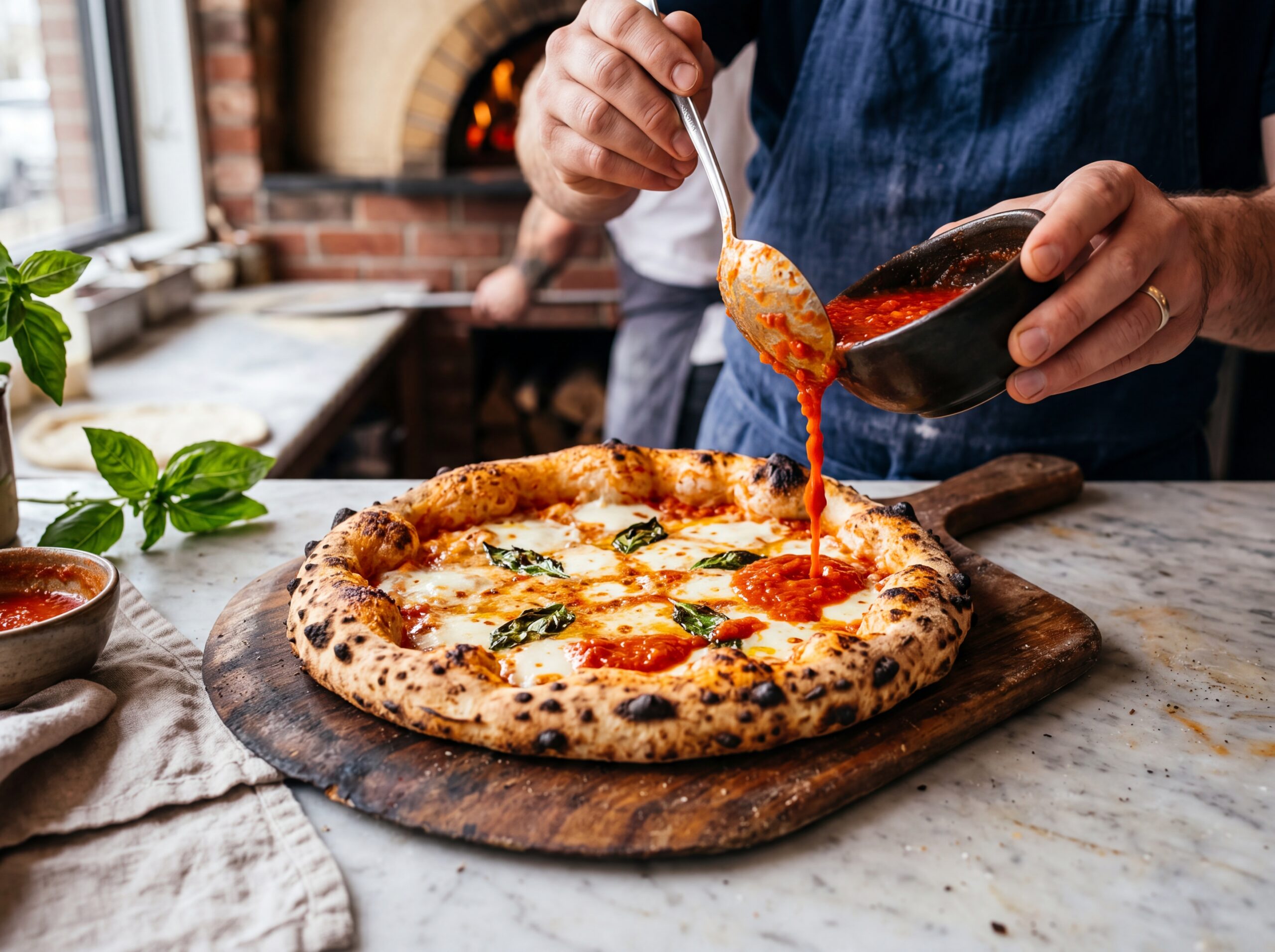
Mastering the perfect homemade pizza sauce is a rite of passage for any food enthusiast. By respecting the ingredients and following these artisanal techniques, you transform your kitchen into a true pizzeria. Remember, the sauce is the bridge between the crust and the toppings—treat it with the respect it deserves, and your pizza will be the talk of the neighborhood. For more tips on high-quality ingredients and artisanal techniques, stay tuned to pizzacream.com.