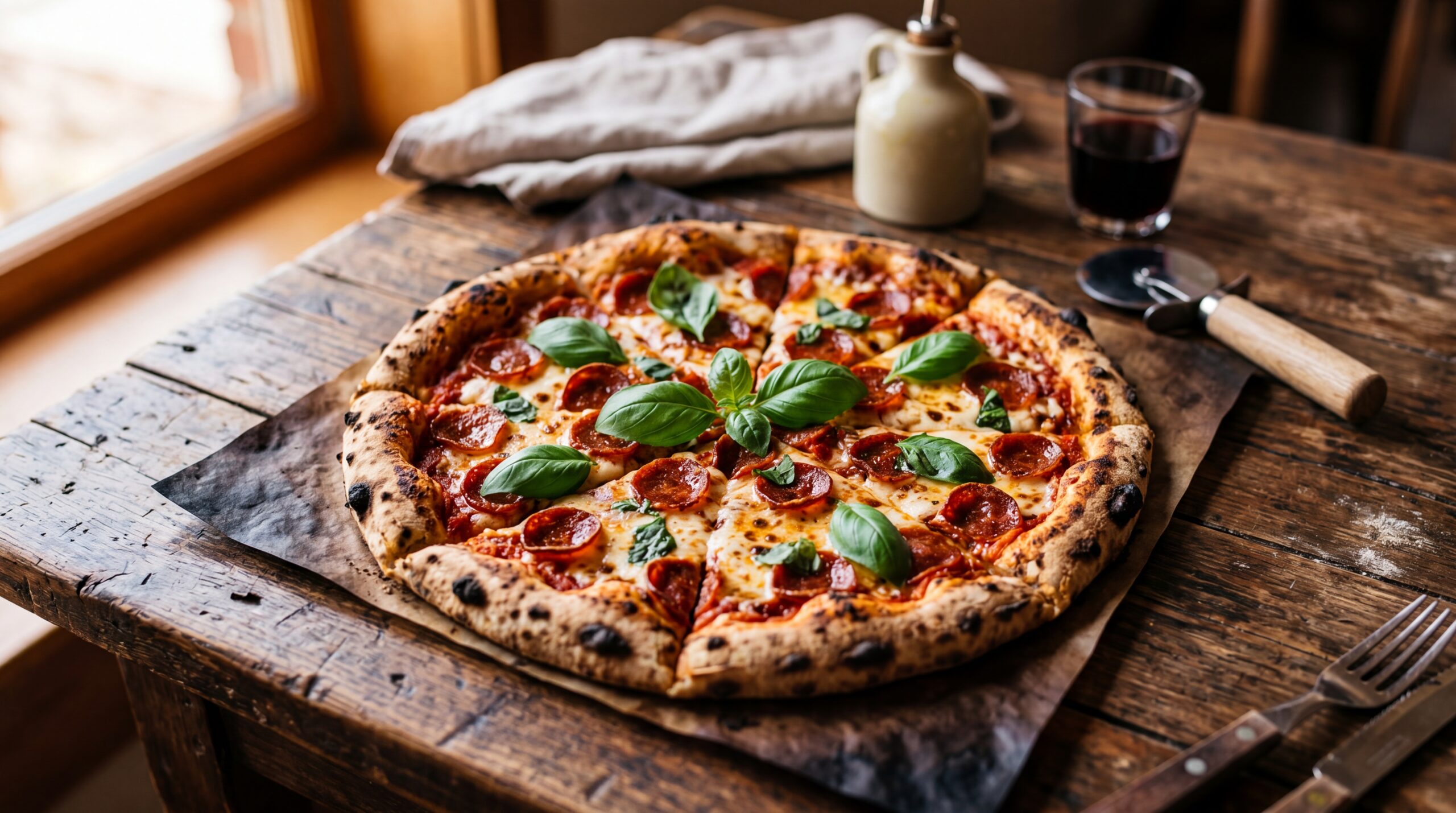
Discover the chemistry and physics behind the perfect pizza crust. From hydration ratios to cold fermentation and thermal mass, learn how to master the art of the dough.
The Science of the Perfect Pizza Crust: Hydration, Heat, and Heart
Pizza is often dismissed as simple fast food, but to the initiated, it is a complex intersection of organic chemistry, thermodynamics, and culinary intuition. The difference between a leaden, cracker-like base and a light, airy, leopard-spotted masterpiece lies in the details. To master the crust, one must look beyond the recipe and understand the science of how flour, water, time, and heat interact. This is the journey from a simple ball of dough to the perfect pizza crust.
The Foundation: Flour Quality and the Protein Powerhouse
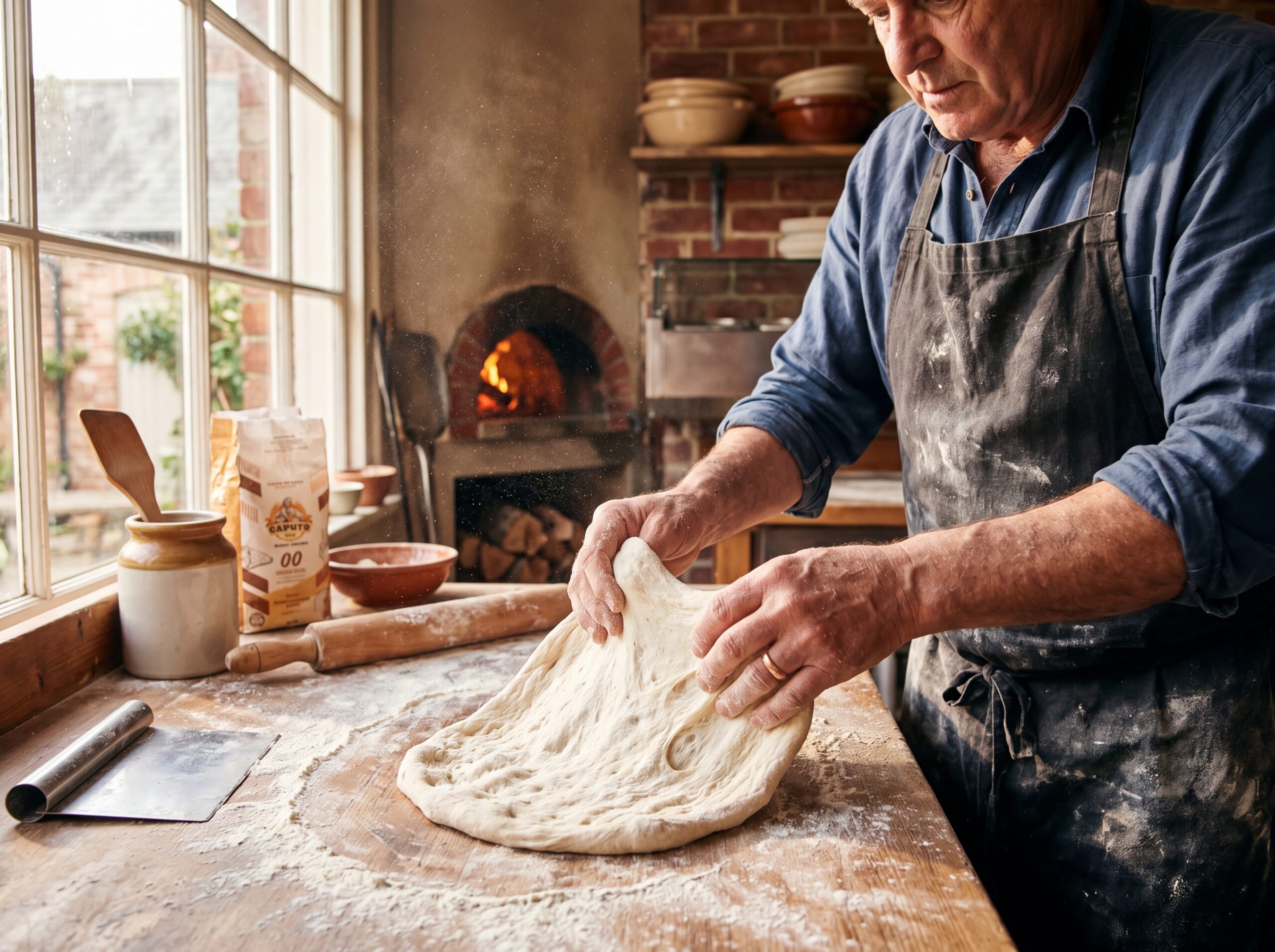
The soul of any pizza crust is the flour. While all-purpose flour might suffice for a quick weeknight dinner, achieving professional results requires a deeper understanding of protein content. In the world of pizza, protein equals gluten potential. When water meets flour, two proteins—glutenin and gliadin—bond to create gluten, the elastic network that traps carbon dioxide produced by yeast.
For a crust that is both strong enough to hold heavy toppings and elastic enough to stretch thin without tearing, high-protein flour is essential. Most “00” flours, the gold standard for Neapolitan pizza, are finely milled and hover around 11-12.5% protein. However, for home bakers using conventional ovens, high-protein bread flour (13-14% protein) often yields better results, providing the structural integrity needed for longer bake times. The “00” designation refers to the grind’s fineness, not the protein level, allowing for a silky dough that produces a melt-in-your-mouth texture when blasted with extreme heat.
Without sufficient protein, your dough will lack the “chew” that defines a great crust. It will be brittle or crumbly rather than supple and airy. Choosing your flour is the first scientific decision in the baking process, setting the stage for how the dough will behave during hydration and fermentation.
The Hydration Equation: 60% vs. 70%
In baker’s percentages, hydration is the weight of water relative to the weight of flour. It is perhaps the most significant variable in determining the final texture of your crust. A 60% hydration dough (600g of water for every 1000g of flour) is the traditional baseline. It is easy to handle, non-sticky, and produces a tight, crispy crumb—think classic New York-style pizza. It’s sturdy and reliable.
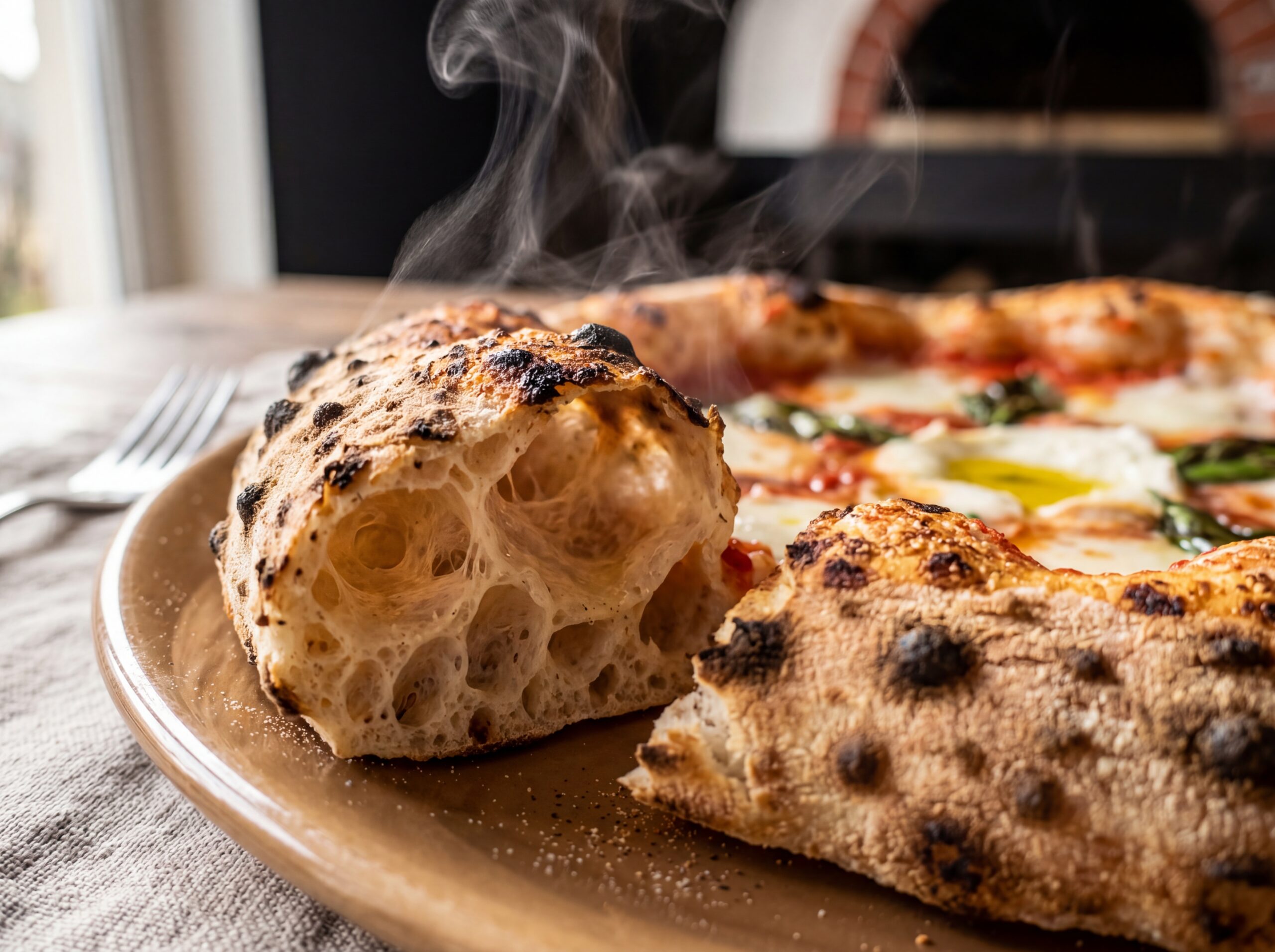
However, as you move into the 70% and 80% hydration range, the science changes. High-hydration doughs are notoriously difficult to work with; they are sticky, slack, and require advanced folding techniques rather than traditional kneading. But the payoff is the “cornicione”—the puffy, airy rim of the pizza. High water content creates more steam during the bake. As the intense heat hits the dough, that water rapidly evaporates, inflating the gluten bubbles like thousands of tiny balloons. This results in a crust that is incredibly light, with a crisp exterior and a soft, honeycomb-like interior.
The choice of hydration also affects the “windowpane test.” A well-hydrated, high-protein dough can be stretched so thin you can see light through it without it breaking. This elasticity is what allows for the thin, foldable center of a great artisan pie.
The Magic of Cold Fermentation: Time as an Ingredient
If flour and water provide the body, fermentation provides the soul. Many amateur bakers make the mistake of rushing the dough, using excess yeast to force a rise in two hours. While this produces edible bread, it lacks the complexity of a slow-fermented crust. This is where “cold fermentation” comes in—the process of letting the dough rise in the refrigerator for 24 to 72 hours.
At lower temperatures, yeast activity slows down, but it doesn’t stop. More importantly, enzymes in the flour called amylases begin to break down complex starches into simple sugars. This serves two purposes: it provides a food source for the yeast to create a more nuanced carbon dioxide release, and it ensures there are enough residual sugars left in the dough to caramelize during the bake. This is known as the Maillard reaction, which creates the deep brown colors and savory flavors we crave.
Furthermore, slow fermentation allows for the development of organic acids, such as lactic and acetic acid. These acids give the crust a slight tang, similar to sourdough, and help to strengthen the gluten network over time. A 48-hour dough is not just easier to digest; it is a symphony of chemical reactions that a “quick dough” simply cannot replicate.
The Physics of Heat: Why Stone and Steel Matter
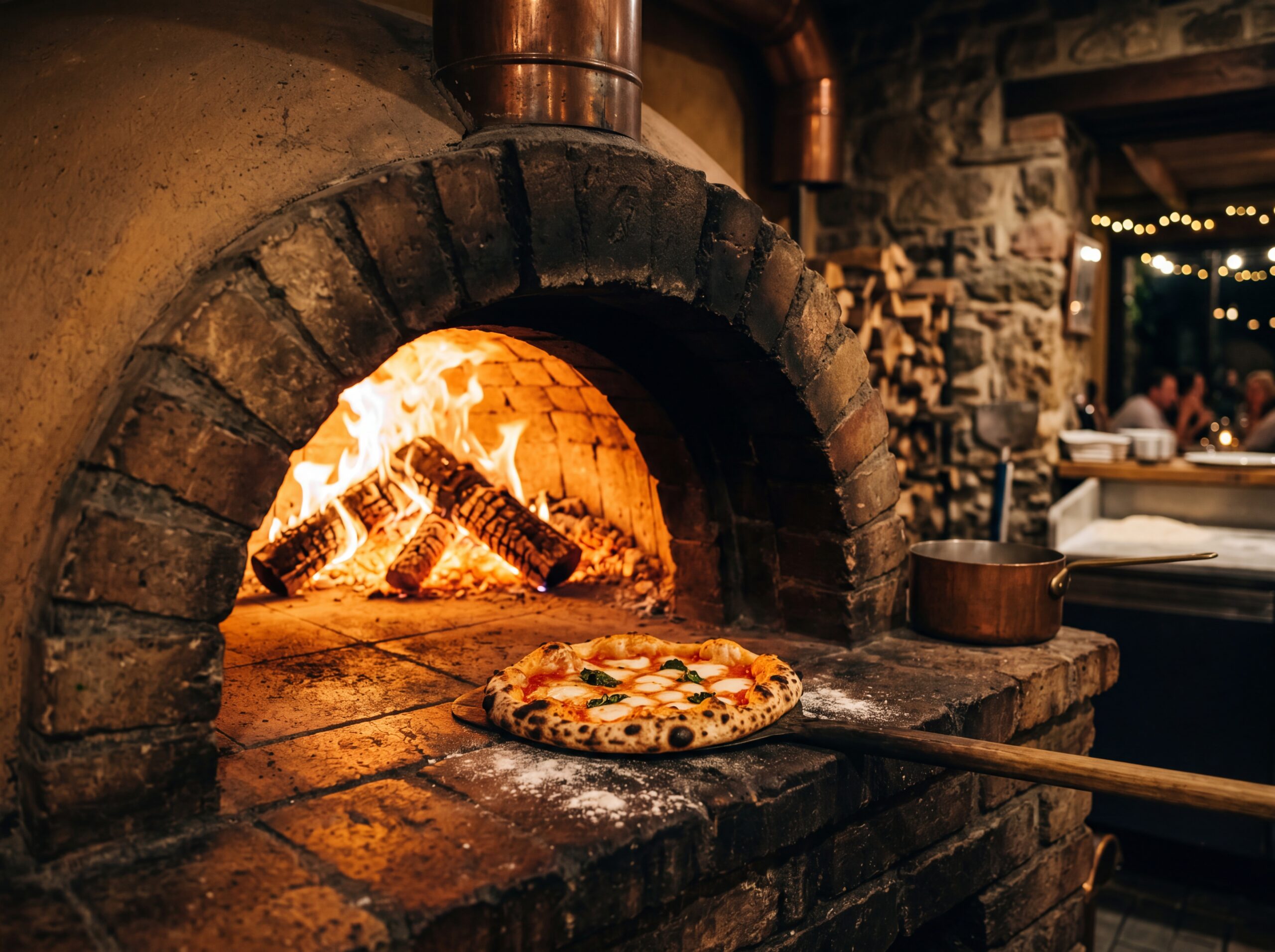
You can have the most scientifically perfect dough in the world, but if you put it on a cold cookie sheet in a 400°F oven, it will fail. The final stage of pizza science is all about thermal mass and conductivity. In a professional wood-fired oven, the floor is made of thick refractory brick that holds immense amounts of heat, transferring it instantly to the dough. This “oven spring” is the rapid expansion of gases in the first 60 seconds of baking.
To replicate this at home, we use pizza stones or pizza steels. A pizza stone is made of ceramic or cordierite; it is porous and holds heat well, helping to wick moisture away from the bottom of the dough for a crispy finish. However, the real game-changer is the pizza steel. Steel has much higher thermal conductivity than stone. It transfers heat to the crust at a much faster rate, mimicking the intense environment of a 900°F oven even if your home oven only reaches 500°F.
By using a steel, you decrease the bake time significantly. A shorter bake time at a higher temperature prevents the dough from drying out, ensuring that the inside remains moist and airy while the outside achieves that coveted char. This is the physics of the “perfect bite”: the contrast between the crunch of the base and the pillowy softness of the crumb.
Conclusion: The Heart of the Craft
While the science of hydration, protein, and thermal conductivity provides the roadmap, the “heart” of the pizza comes from the maker’s intuition. It’s the ability to feel when a dough has had enough kneading, to see when the fermentation has reached its peak, and to know exactly when the heat has done its work. Understanding the “why” behind the process empowers you to experiment, troubleshoot, and ultimately create a crust that is uniquely yours.
The perfect pizza crust isn’t an accident; it’s a calculated result of patience and precision. Whether you prefer a 60% hydration New York slice or a 75% hydration Neapolitan masterpiece, mastering these scientific principles will elevate your baking from a hobby to an art form.
What’s your secret to the perfect crust? Are you a pizza stone loyalist or have you made the switch to steel? Let us know in the comments below!