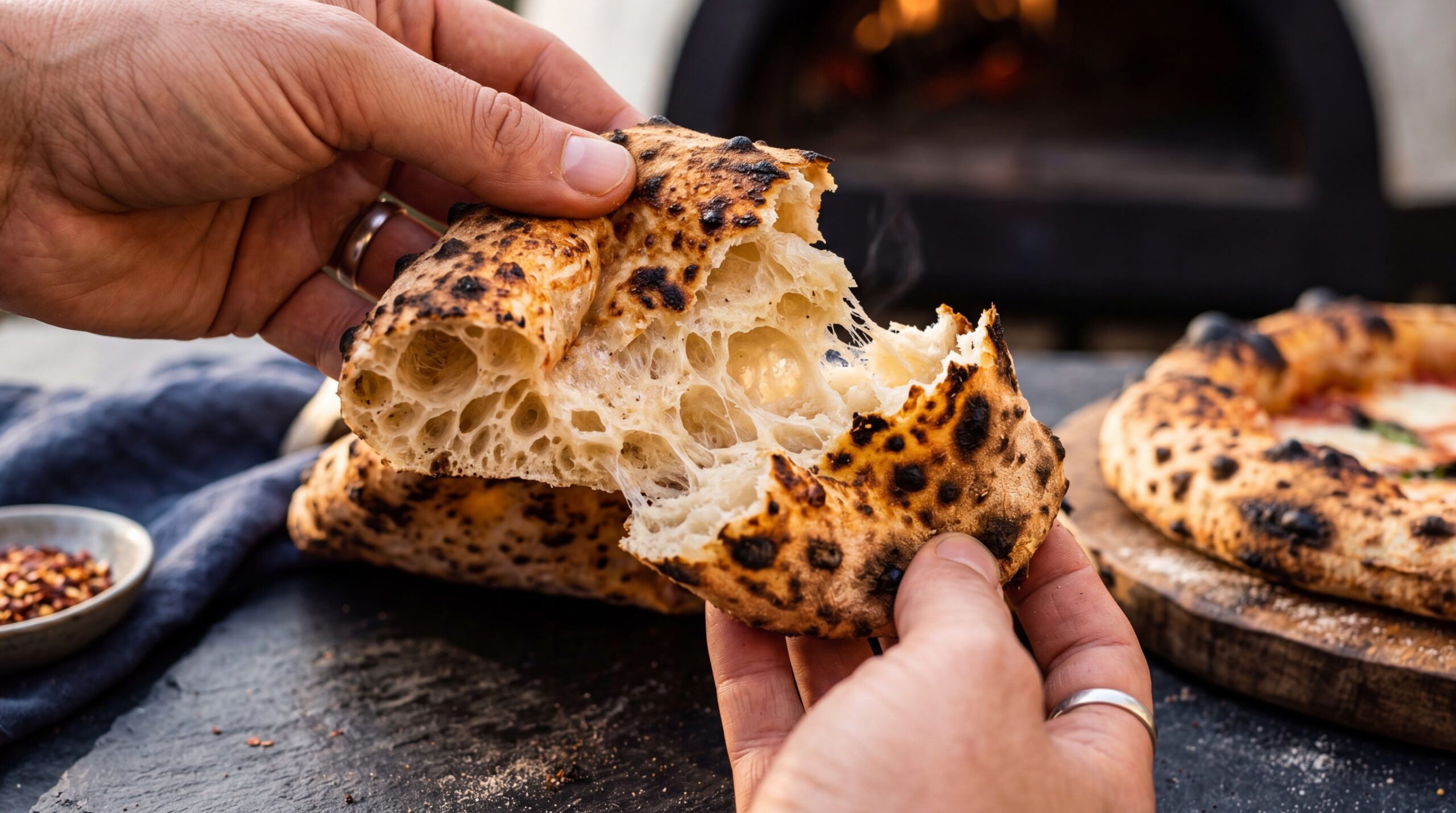
The Hidden Science of Pizza Fermentation
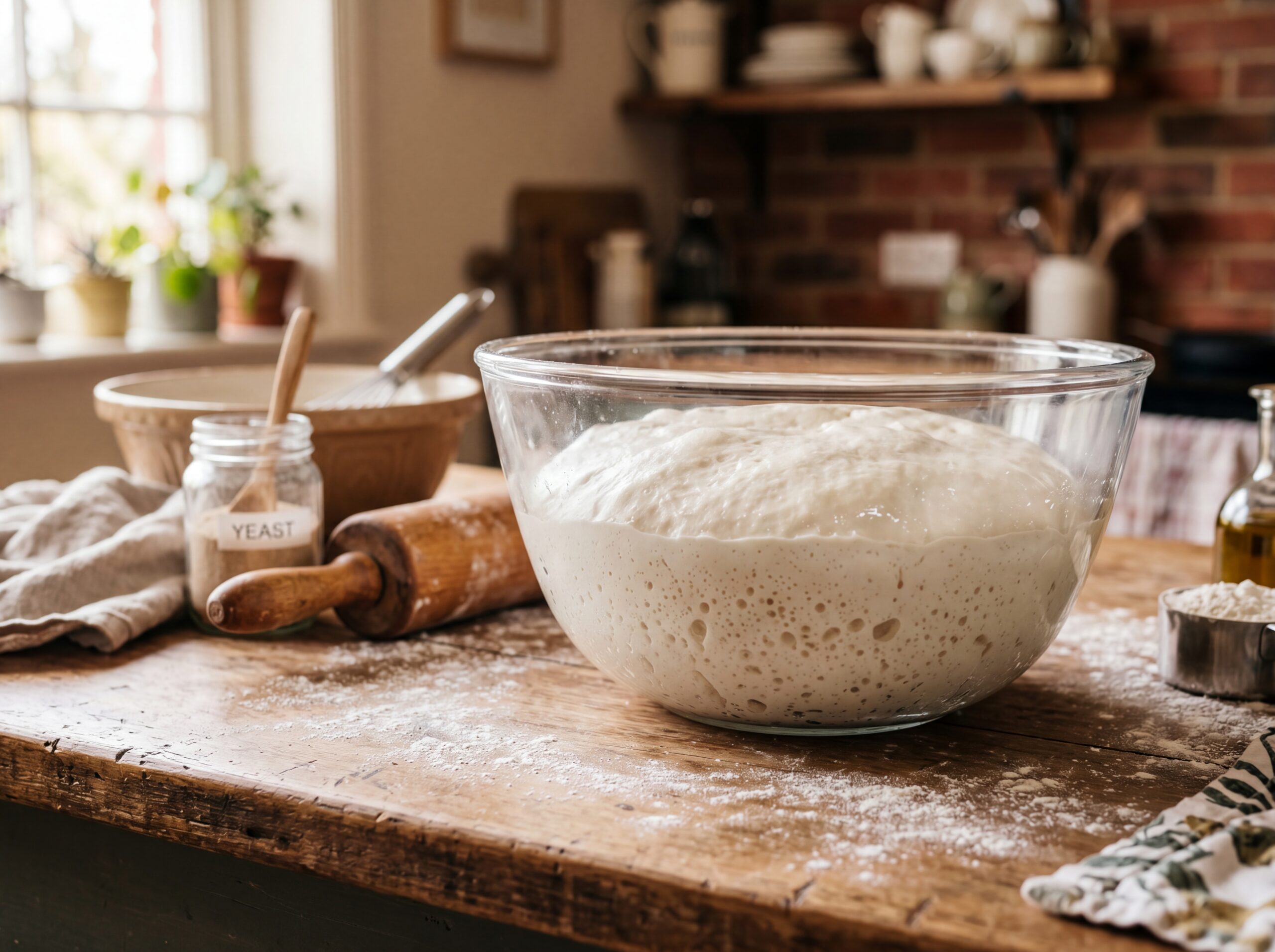
Pizza dough is far more than a simple mixture of flour and water; it is a thriving biological ecosystem. When you combine these ingredients with yeast, you initiate a complex biochemical sequence that determines the final texture, aroma, and digestibility of your crust. At the heart of this process is yeast activity. As Saccharomyces cerevisiae consumes the maltose and glucose present in the flour, it releases carbon dioxide (CO2) and ethanol. The CO2 gas becomes trapped within the elastic gluten network, creating the internal pressure necessary for the dough to rise and develop its characteristic airy crumb.
The Power of Cold Fermentation
While many home bakers rush the process at room temperature, professional pizzaiolos rely on cold fermentation—a technique where the dough is matured in a refrigerated environment for 24 to 72 hours. This “retarding” of the dough slows down yeast activity significantly, preventing the dough from over-proofing while allowing other chemical reactions to catch up. Mastering this timing is essential for The Art of the Perfect Pizza Dough, as it ensures the gluten has time to relax, making the dough easier to stretch without tearing.
Enzymatic Breakdown and Flavor Development
During the 24-72 hour window, enzymes within the flour—specifically amylase and protease—go to work. Amylase breaks down complex starches into simple sugars, providing a continuous food source for the yeast and sweetening the dough. Simultaneously, protease enzymes break down gluten proteins, which softens the dough and improves its extensibility. This enzymatic breakdown is the secret behind the complex, nutty, and slightly acidic flavor profile that characterizes world-class pizza. This biological transformation is a cornerstone of The Science of the Perfect Pizza Crust.
Leopard Spotting and the Final Bake
The science of fermentation culminates in the oven. The simple sugars produced by enzymatic activity are crucial for the Maillard reaction and caramelization. When the fermented dough hits a high-heat stone, these sugars darken rapidly, creating “leopard spotting”—the iconic charred micro-blisters found on Neapolitan crusts. These spots provide a smoky depth that balances the airy, soft interior. Without the proper 72-hour fermentation cycle, the crust would appear pale and taste one-dimensional, lacking the structural integrity and aesthetic beauty that only time and chemistry can provide.