In the world of professional pizza making, temperature isn’t just a setting on a dial—it is the most powerful ingredient in your arsenal. Whether you are aiming for the charred, pillowy edges of a Neapolitan pie or the structural snap of a New York slice, the heat of your oven dictates the final texture, color, and flavor of your creation. At PizzaCream, we believe that understanding the relationship between heat and dough is the final step in transitioning from a home cook to a master pizzaiolo.
The Science of the ‘Oven Spring’
The moment your pizza hits the hot stone, a phenomenon known as “oven spring” begins. This is the rapid expansion of gases within the dough before the crust sets. High heat causes the carbon dioxide produced during fermentation to expand almost instantly, creating those beautiful, airy pockets in the rim (the cornicione). To maximize this effect, your dough must be prepared with precision; mastering The Art of the Perfect Pizza Dough ensures that your gluten network is strong enough to hold these gases under intense pressure.
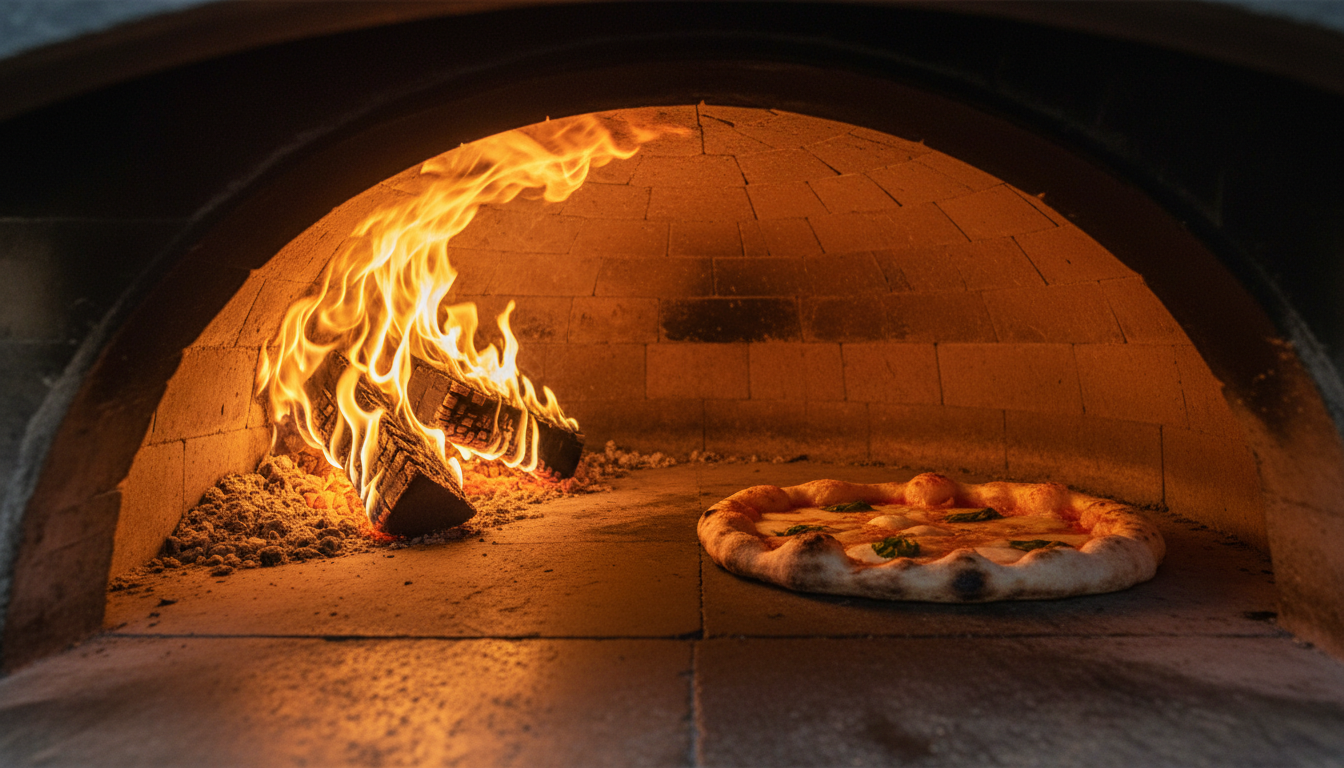
Style Guide: Finding Your Ideal Heat
Different pizza styles require vastly different temperature profiles. Matching the heat to the style is essential for success:
- Neapolitan (800°F – 950°F): The king of high heat. At these temperatures, the pizza cooks in just 60 to 90 seconds. This intense environment requires a specific flour that won’t burn instantly—refer to The Ultimate Guide to Pizza Flour to understand why Type 00 is the only choice for these extremes.
- New York Style (500°F – 600°F): Designed for lower-heat deck ovens. This style benefits from a longer bake (7-10 minutes), allowing the sugars in the dough to caramelize slowly and create a sturdy, crispy base that can be folded without breaking.
- Deep Dish and Pan Pizza (400°F – 450°F): Because of the volume of toppings and the thickness of the dough, these pizzas require a moderate heat for a longer duration. This ensures the middle is cooked through and the cheese is melted without burning the exterior walls of the crust.
The Tools of the Trade
You cannot manage what you cannot measure. Relying on your oven’s built-in thermostat is often a recipe for disaster, as home ovens can fluctuate by 50 degrees or more. A high-quality infrared thermometer is one of the most Essential Pizza Making Tools for any serious baker. By aiming the laser at different parts of your baking stone, you can identify hot spots and ensure the surface is exactly where it needs to be before the launch.
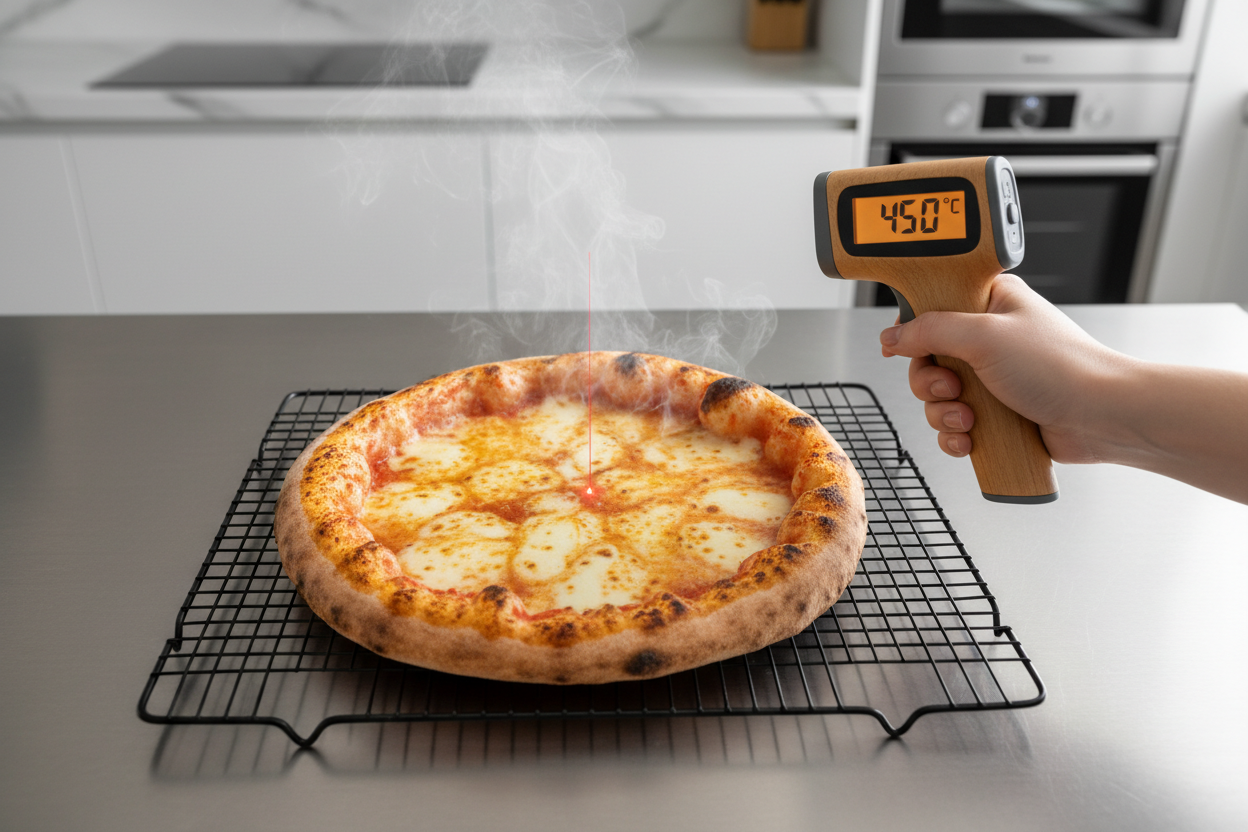
Wood-Fired vs. Domestic Ovens
While we all dream of a rustic brick oven in the backyard, most of us are working with modern kitchen appliances. Each environment offers unique challenges and benefits. A wood-fired oven provides a smoky aroma and extreme dry heat, while a domestic oven, when paired with a heavy baking steel, can produce surprisingly professional results. If you’re deciding which path is right for you, our deep dive into Wood-Fired vs. Home Ovens explores the pros and cons of each setup.
By mastering the heat, you gain ultimate control over the character of your pizza. Whether you’re chasing the lightning-fast bake of Naples or the slow-cooked crunch of Detroit, remember: the thermometer is just as important as the rolling pin. Happy baking!