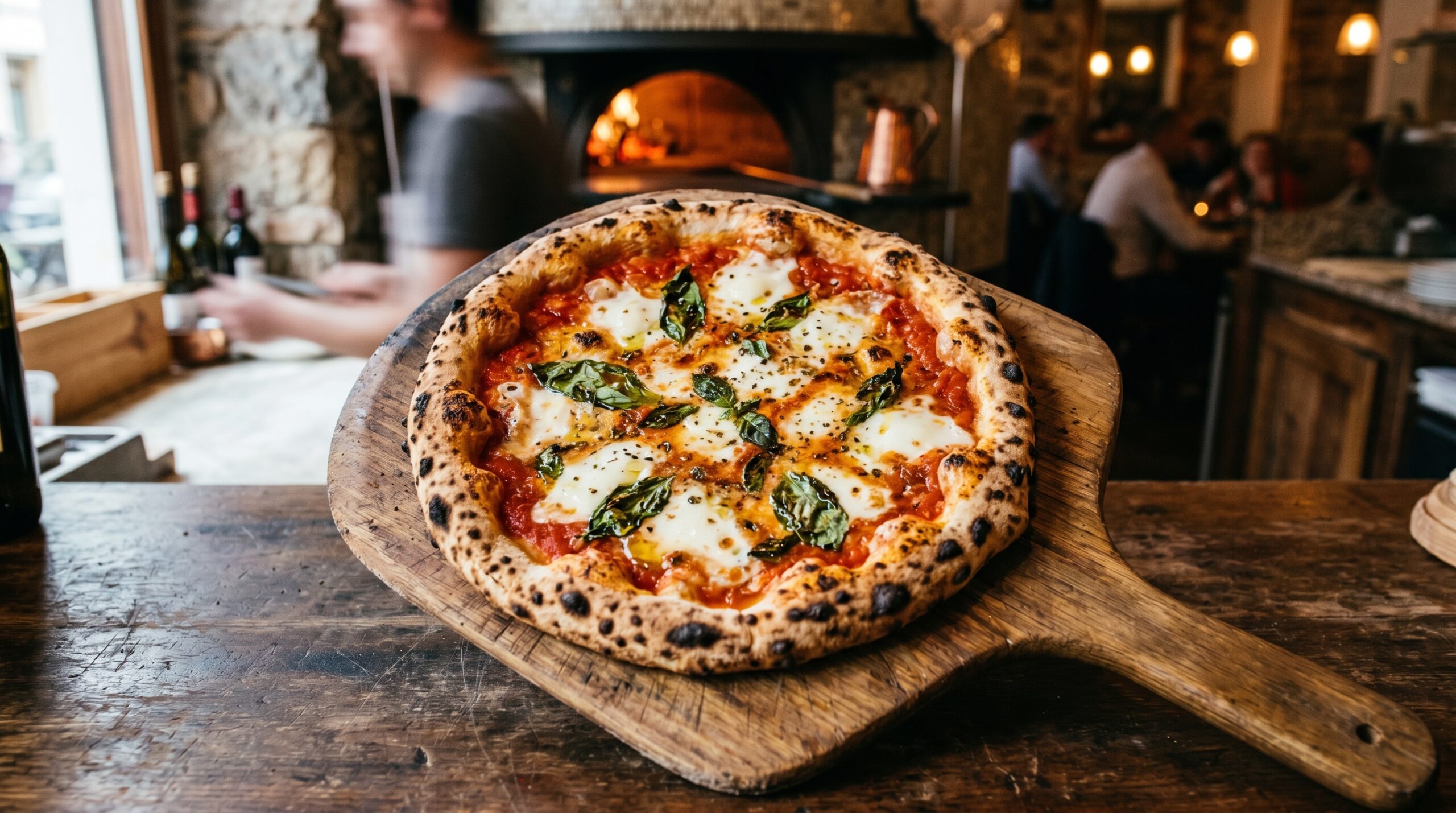
There’s something almost magical about making pizza from scratch. The way raw flour and water transform into silky, elastic dough; the way a simple tomato sauce blooms with flavor from just a handful of quality ingredients; and that unforgettable moment when you pull a perfectly blistered pie from a blazing-hot oven. Homemade pizza isn’t just a meal — it’s an experience, a ritual, and once you’ve mastered it, a superpower you’ll use for the rest of your life.
Whether you’re a complete beginner or a seasoned home cook looking to elevate your technique, this guide covers everything you need to know: the perfect dough, a foolproof sauce, and topping combinations that will make your pizza rivals any pizzeria in Naples.
Step 1: The Dough — The Soul of Every Great Pizza
Ask any Neapolitan pizzaiolo and they’ll tell you the same thing: the dough is everything. A great crust should be thin in the centre, airy and slightly charred at the edges, with a satisfying chew and a subtle tang. Achieving this at home is entirely possible — it just takes a little patience and the right technique.
The Classic Neapolitan Dough Recipe
For two medium pizzas, you’ll need:
- 500g 00 flour (or all-purpose as a substitute)
- 325ml cold water
- 10g fine sea salt
- 3g active dry yeast (or 1g instant yeast for a slow cold ferment)
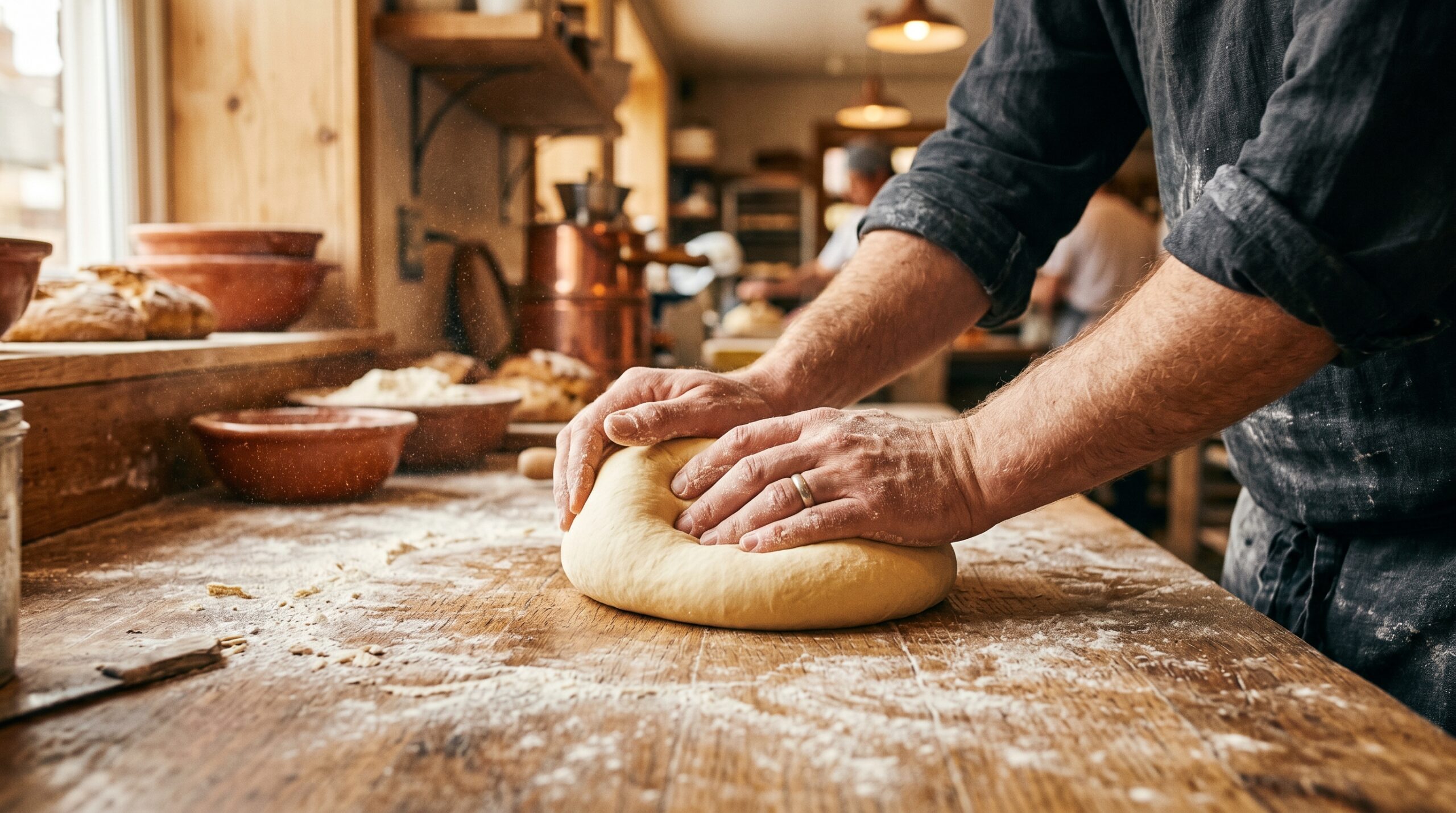
Dissolve the yeast in the water, then gradually mix in the flour. Once a shaggy dough forms, add the salt and knead vigorously for 8–10 minutes until the dough is smooth, elastic, and passes the “windowpane test” — stretch a small piece thin enough to see light through without it tearing. Divide into two balls, cover with a damp cloth, and let rest at room temperature for 2 hours, then refrigerate overnight (or up to 72 hours). The slow, cold fermentation is the secret to that complex, slightly tangy flavour and open crumb structure.
“A perfect pizza dough is not rushed. Time is your most important ingredient.”
Step 2: The Sauce — Simple, Vibrant, Unmistakable
One of the biggest mistakes home pizza makers make is overcooking the sauce. A true Neapolitan tomato sauce isn’t cooked at all before going on the pizza — its magic happens in the oven. This preserves the fresh, bright acidity of the tomatoes and lets them caramelise beautifully against the heat.
No-Cook San Marzano Sauce
This sauce couldn’t be simpler:
- 1 can (400g) whole San Marzano tomatoes (DOP certified if possible)
- A generous pinch of sea salt
- A few fresh basil leaves, torn
- A drizzle of extra-virgin olive oil
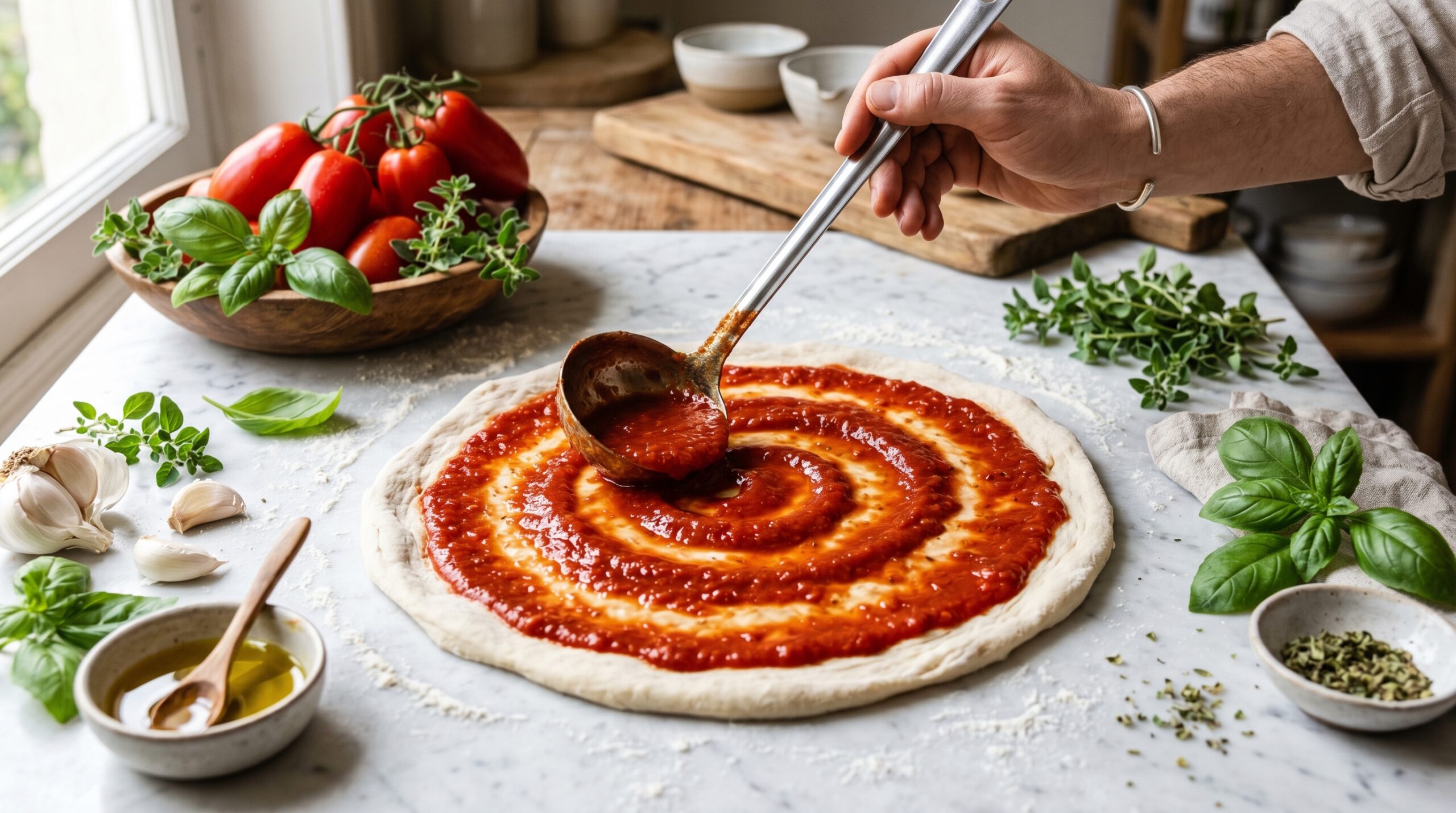
Crush the tomatoes by hand directly into a bowl — don’t use a blender, as that introduces air and makes the sauce watery. Season with salt, add the torn basil, and finish with olive oil. That’s it. No garlic, no dried herbs, no simmering. Trust the tomatoes.
Spread the sauce in a thin, even spiral from the centre of your stretched dough outward, leaving a clean border for the crust to puff and char. Less is more — a light coating lets the other flavours shine through.
Step 3: Toppings — Where Creativity Meets Tradition
Once you’ve nailed the dough and sauce, the toppings are where you can truly express yourself. The golden rule of Italian pizza is restraint: three to four quality ingredients, thoughtfully combined, will always beat a pile of mediocre toppings. Think of each pizza as a composition, not a container.
The Classic Margherita
Fresh buffalo mozzarella, torn San Marzano sauce, a few basil leaves post-bake, and a final drizzle of olive oil. Perfection in its purest form.
The Prosciutto e Rucola
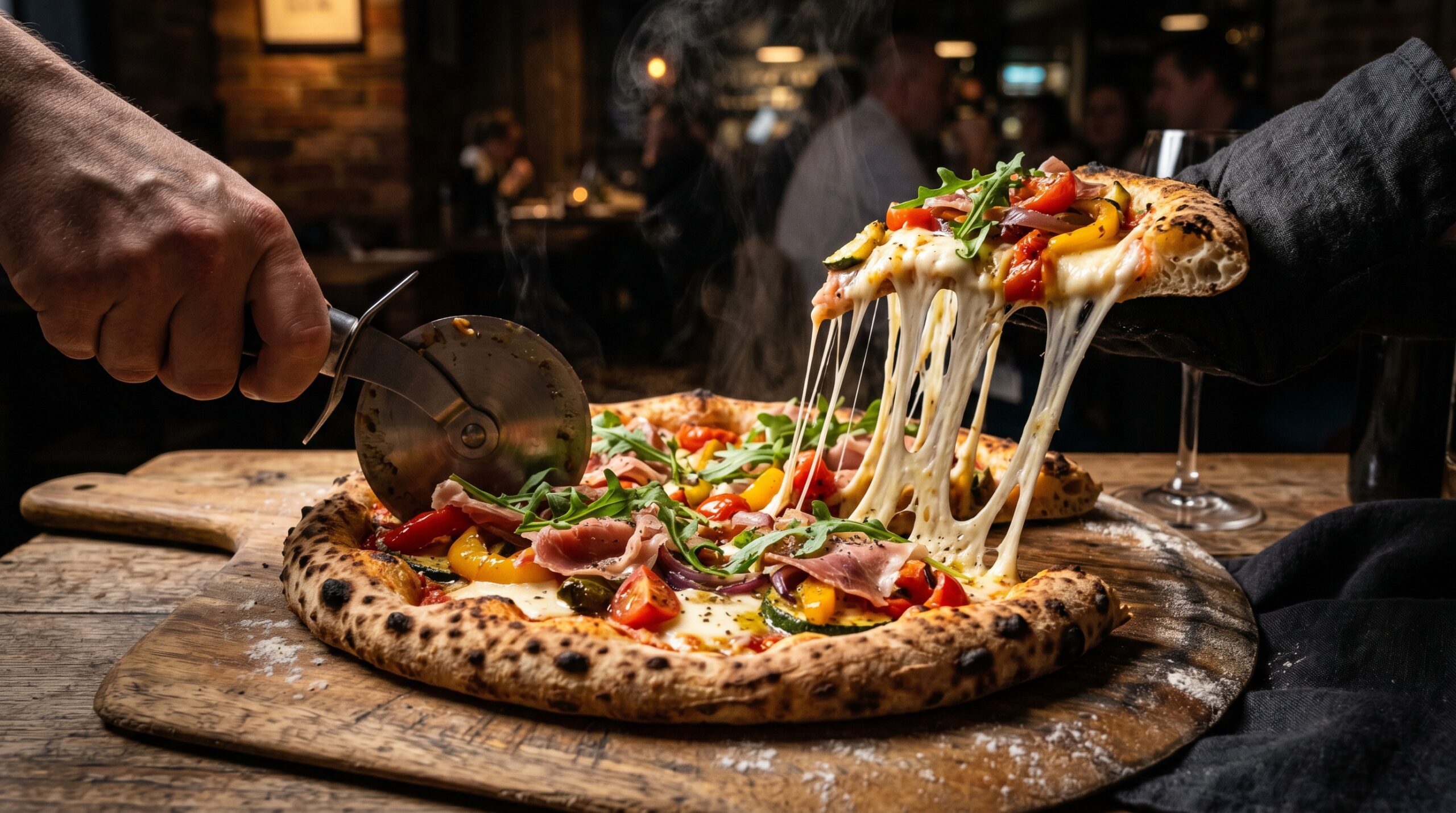
After baking, layer paper-thin prosciutto di Parma over the hot pie, then pile on fresh peppery arugula dressed lightly with lemon juice and olive oil. Add shaved Parmigiano-Reggiano for a salty finish.
The Truffle & Mushroom
A white base of crème fraîche and mozzarella, topped with sautéed wild mushrooms (porcini, chanterelle, shiitake), then finished with a drizzle of black truffle oil and fresh thyme. Earthy, luxurious, unforgettable.
The Bake: Getting Oven-Quality Results at Home
The biggest challenge of home pizza is temperature. A wood-fired oven reaches 450–500°C (840–930°F). Your home oven tops out at around 250–280°C (480–540°F). The solution? A pizza stone or steel, preheated for at least 45–60 minutes on the highest rack under the broiler/grill. This mimics the intense bottom heat of a professional oven and gives you that crispy, slightly charred base that makes all the difference.
Launch your pizza onto the stone using a well-floured pizza peel or the back of a baking sheet. Bake for 6–8 minutes, watching closely, until the crust is golden and charred in spots and the cheese is bubbling and lightly browned. Rest for 2 minutes before slicing — patience pays off here too.
The Finishing Touch: A Drizzle Changes Everything
The best pizzerias finish their pies with a final flourish right before serving. A drizzle of cold-pressed extra-virgin olive oil over a hot pizza releases an incredible aroma. A scatter of flaky sea salt heightens every flavour. Fresh herbs added post-bake — basil, oregano, fresh chilli — add brightness and contrast that get lost in a hot oven.
These small details separate a good homemade pizza from a truly memorable one.
Your Pizza Journey Starts Now
Making exceptional homemade pizza is a journey, not a destination. Your first attempt might not be perfect — and that’s completely fine. Each pizza you make teaches you something new about your oven, your dough, your instincts. Over time, it becomes second nature: the feel of properly fermented dough, the smell of a sauce that’s just right, the sound of a crust that shatters perfectly when you bite through it.
Start with the Margherita. Master the dough. Learn your oven. Then experiment, explore, and make the craft your own. The wood-fired dream is closer than you think — even from your own kitchen.
Have a favourite topping combination or a secret dough technique? Share it in the comments below — we’d love to hear from the PizzaCream community!