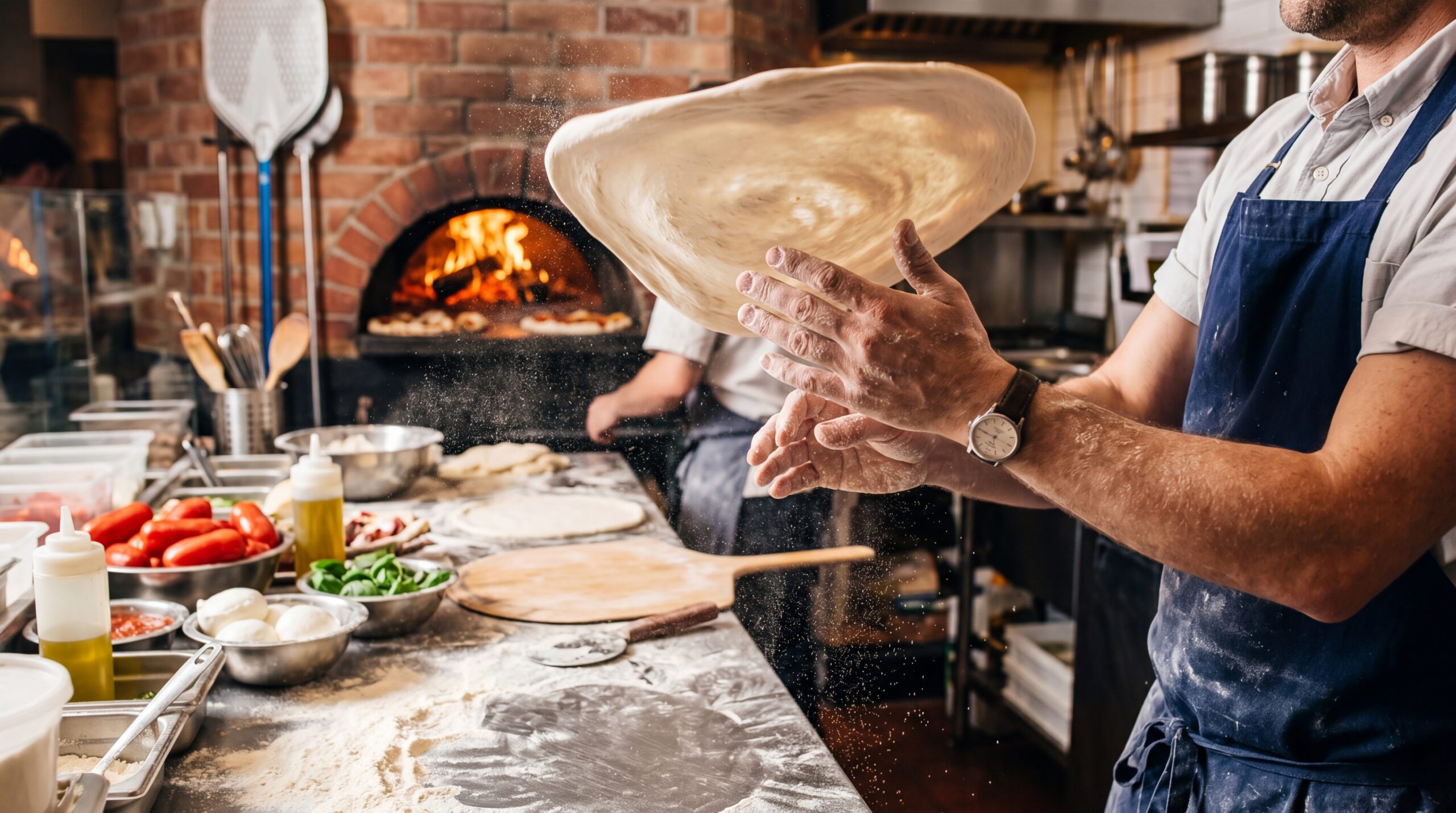
The Secret to Perfect Pizza Dough: Techniques from the Masters
Pizza dough is the foundation of every great pizza. Whether you’re a home cook or aspiring pizzaiolo, understanding the art of dough-making can transform your pizza from good to extraordinary. In this guide, we’ll explore the essential techniques that professional pizza makers use to create that perfect, airy, flavorful crust.
Understanding the Ingredients
The magic of pizza dough lies in its simplicity. With just four basic ingredients — flour, water, salt, and yeast — you can create something truly special. However, the quality and ratio of these ingredients matter immensely. High-protein bread flour (12-14% protein) develops better gluten structure, giving your crust that characteristic chewiness. For an even more authentic Neapolitan experience, consider using 00 flour from Italy, which creates a lighter, more tender crust.
The Art of Kneading
Proper kneading develops gluten, which gives pizza dough its structure and elasticity. There are two main approaches: hand kneading and machine mixing. Hand kneading connects you to the tradition of pizza-making that spans centuries, while a stand mixer with a dough hook can save time and ensure consistency. Either way, knead until the dough is smooth and passes the “windowpane test” — when stretched thin, it should form a translucent membrane without tearing.
Fermentation: Time is Flavor
The secret weapon of gourmet pizza makers is long, cold fermentation. Allowing your dough to rise slowly in the refrigerator for 24-72 hours develops complex flavors through the production of organic acids. This slow fermentation also improves digestibility and creates those beautiful air pockets in the crust. Patience truly pays off in pizza making.
Stretching vs. Rolling
Here’s where many home cooks go wrong. Never use a rolling pin on pizza dough — it forces out the precious gas bubbles created during fermentation. Instead, learn to stretch the dough by hand. Start by pressing the center flat, leaving a thicker cornicione (crust edge), then gently stretch from the center outward using your knuckles. Gravity is your friend — let the dough hang and stretch itself.
Temperature Matters
The temperature of your ingredients affects the final result. Room temperature water (around 70°F/21°C) activates yeast without shocking it. After mixing, let your dough rest at room temperature for the initial rise, then refrigerate. When it’s time to shape, remove the dough from the fridge 2-3 hours before baking to allow it to come to room temperature.
Baking Your Masterpiece
For restaurant-quality results at home, you need intense heat. A pizza stone or steel preheated in a 500°F (260°C) oven for at least an hour mimics the searing temperatures of professional pizza ovens. The instant contact with hot surface creates the leopard-spotted char on the crust bottom while the high heat puffs the edge dramatically.
Ready to put these techniques into practice? Check out more pizza tips and recipes on our site, and transform your kitchen into a pizzeria!