There is a reason why, after a long week or a particularly stressful day, we find ourselves reaching for a slice of cheesy pizza or a cold scoop of creamy ice cream. It isn’t just about hunger; it’s about a deep-seated psychological need for comfort. At PizzaCream, we are fascinated by the intersection of flavor and emotion. Why do these specific foods have such a powerful hold on our mood? The answer lies in a complex mix of brain chemistry, nostalgia, and the physical properties of what we eat.
The Science of Satiety and Reward
When we consume foods high in fats and carbohydrates, our brain’s reward system lights up. The combination of salt, sugar, and fat triggers the release of dopamine—the “feel-good” neurotransmitter. Pizza, with its savory fats and complex carbohydrates, provides a sustained release of energy and satisfaction. This is partially thanks to the complex processes involved in its creation, such as the hidden science of pizza fermentation, which develops those rich, umami flavors we crave.
Ice cream takes this reward a step further. The immediate cooling sensation and the high sugar content provide a quick emotional lift. But it isn’t just the sugar; it’s the texture. The smooth, velvety feel of a high-quality scoop is a sensory experience in itself. Understanding the science of ice cream creaminess helps us appreciate why that specific mouthfeel is so inherently soothing to our nervous system.
Nostalgia: The Flavor of Memory
For many of us, pizza and ice cream are tied to our happiest memories. They are the foods of birthday parties, Friday nights with family, and celebratory outings with friends. When we eat them as adults, we aren’t just consuming calories; we are tapping into a reservoir of positive emotional associations. This “food nostalgia” can actually reduce feelings of loneliness and anxiety by reminding us of times when we felt safe and cared for.

The Power of Contrast
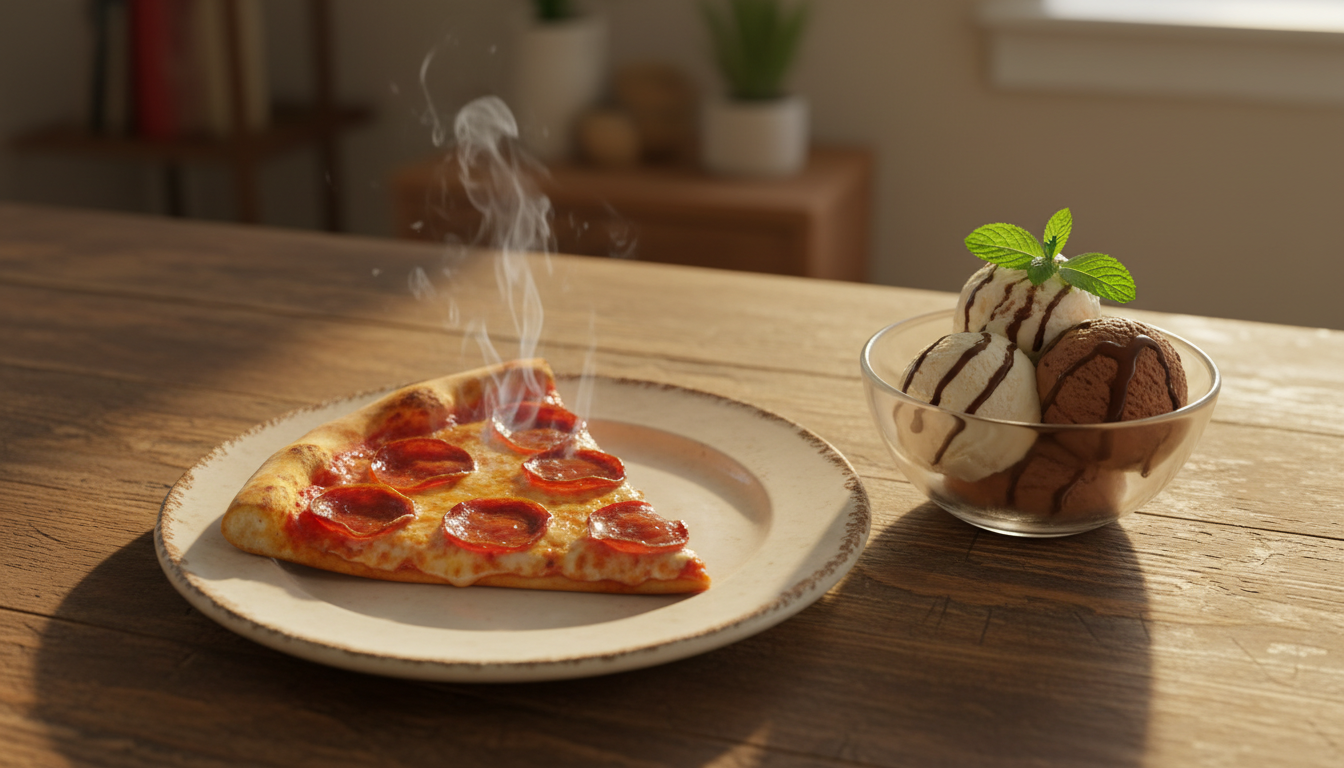
Psychologically, we are also drawn to contrast. The “hot vs. cold” dynamic of pizza followed by ice cream keeps our palate engaged and prevents “sensory-specific satiety,” where we get bored of a single flavor profile. This balance is exactly what makes pizza and ice cream pairings so successful. The transition from the warm, savory, and chewy texture of a crust to the cold, sweet, and melting texture of ice cream provides a complete sensory journey that signals to our brain that the meal—and the day—is complete.
Conclusion
The next time you find yourself ordering a “comfort food” feast, don’t feel guilty. You are simply responding to a sophisticated biological and psychological drive for equilibrium. Pizza and ice cream don’t just fill our stomachs; they nourish our spirits and help us navigate the ups and downs of life, one delicious bite at a time.