When you peel back the lid of a fresh pint of ice cream, you are looking at a complex matrix of milk solids, fats, sugar, and ice crystals. However, there is one critical ingredient that doesn’t appear on the nutritional label, yet it accounts for anywhere from 20% to 50% of the volume in the container: air. In the dairy industry, this incorporated air is known as “overrun,” and it is the secret variable that determines whether your dessert is a dense, decadent treat or a light, fluffy foam.
What is Overrun?
Technically speaking, overrun is the percentage by which the volume of the final ice cream exceeds the volume of the liquid base used to create it. If you start with one gallon of ice cream mix and, after churning, you have two gallons of finished ice cream, you have achieved 100% overrun. This means the product is exactly half air.
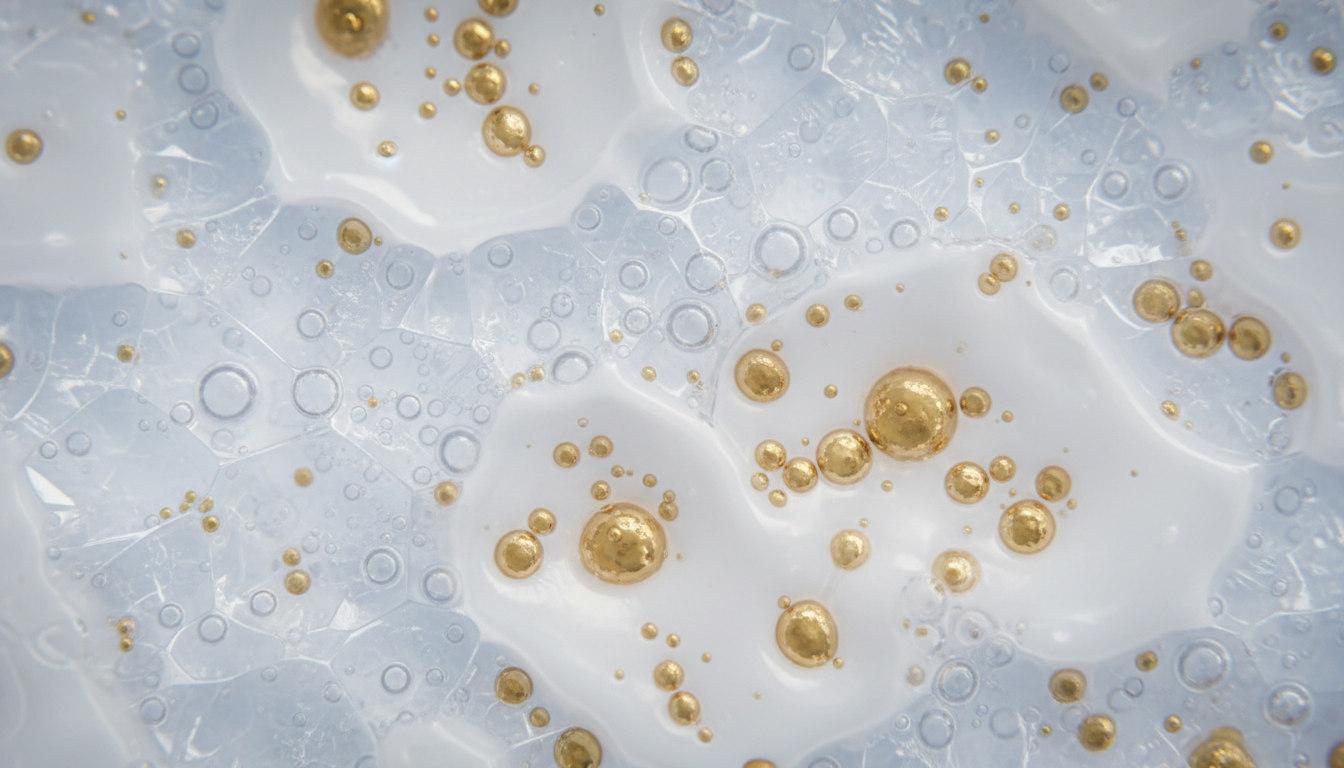
Overrun is created during the freezing process. As the liquid base is agitated in a refrigerated drum, dashers (blades) whip air into the mixture while it simultaneously freezes. The amount of air that stays trapped in the mixture depends on the speed of the churn, the design of the equipment, and the composition of the recipe.
Why Air is Essential for Texture
It might seem like “adding air” is just a way for manufacturers to save money, but air is actually a functional necessity. Without it, ice cream would be an unpalatable, rock-hard block of frozen dairy.
Air bubbles serve as a structural barrier. They physically get in the way of ice crystals, preventing them from linking together into a solid mass. This creates the “scoopability” we associate with high-quality desserts. By breaking up the network of ice and fat, air provides a soft, smooth mouthfeel. To understand more about how these elements work together, you can explore The Science of Ice Cream Creaminess: What Makes the Perfect Scoop? which delves deeper into the microscopic world of dairy chemistry.
Premium vs. Commercial: The Density Divide
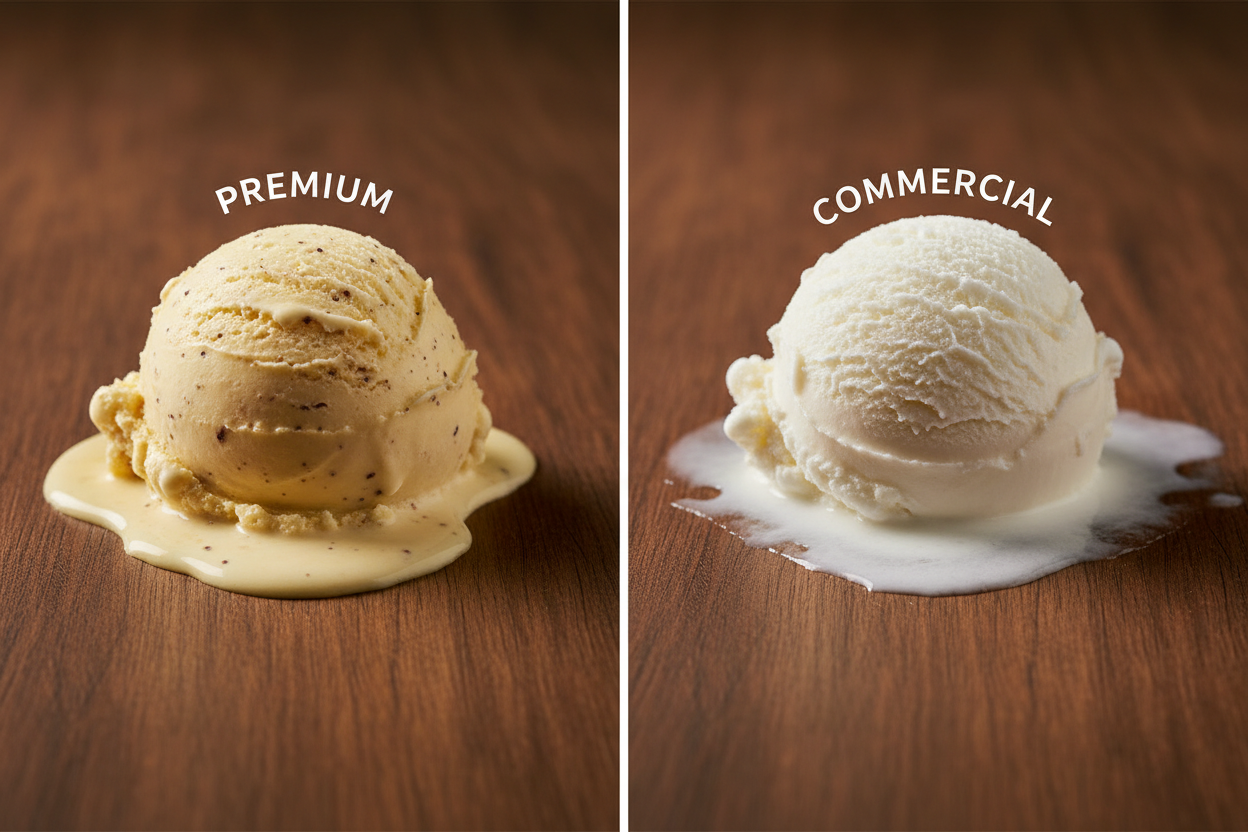
The most significant difference between “economy” ice cream and “super-premium” ice cream is the overrun percentage.
Commercial and Economy Ice Cream
Mass-produced, budget-friendly ice creams often have an overrun of 100% or higher. This results in a product that is very light, melts quickly, and feels “foamy” on the tongue. Because air is free, high overrun allows manufacturers to fill large tubs while using less expensive dairy fat. If you’ve ever noticed that a large four-quart tub of generic ice cream feels surprisingly light to carry, it’s because you are paying for a significant amount of atmospheric air.
Premium and Super-Premium Ice Cream
In contrast, premium brands aim for low overrun, typically between 20% and 40%. This creates a dense, heavy, and rich product. Because there is less air to act as an insulator, these ice creams take longer to melt and offer a much more substantial “chew.” This density is a hallmark of quality and is often why premium pints are more expensive—they simply contain more actual food by weight.
How Overrun Affects Flavor Perception
Overrun doesn’t just change how ice cream feels; it changes how it tastes. Air acts as an insulator for your taste buds. In high-overrun ice cream, the abundance of air bubbles prevents the cold mixture from making full contact with your tongue immediately. This can make the ice cream feel less “cold,” but it also dilutes the intensity of the flavors.
Low-overrun ice cream, being denser, coats the palate more thoroughly. The flavors of high-quality vanilla bean or rich cocoa are more concentrated because there is less air “thinning out” the experience. This intensity is particularly important when you are enjoying ice cream alongside other bold flavors. For instance, when considering The Ultimate Guide to Pizza and Ice Cream Pairings: A Match Made in Heaven, a low-overrun, dense gelato or ice cream is often preferred because it can stand up to the savory, robust profile of a pizza crust and sauce without disappearing.
This relationship between texture and flavor has deep roots in how we consume these treats. You can learn more about this in Pizza and Ice Cream: The Cultural History of a Perfect Duo, which explores how these two staples became the ultimate comfort food pairing.
How Home Enthusiasts Can Control Overrun
If you are making ice cream at home, you have direct control over the overrun, though you are somewhat limited by your equipment.
- Machine Type: Cheap “canister” style makers that you freeze in the domestic freezer often have slower motors, which naturally leads to lower overrun (denser ice cream). High-end compressor machines may have faster dashers that incorporate more air.
- Churning Time: The longer you churn, the more air you incorporate—up to a point. Once the mixture reaches a certain stiffness, it can no longer hold more air. To keep overrun low, stop churning as soon as the mixture reaches the consistency of soft-serve.
- Base Temperature: Always start with a base that is as cold as possible (ideally 40°F or lower). A cold base freezes faster, which limits the amount of time the machine has to whip air into the mix, resulting in a denser, more premium texture.
- Fat Content: A higher fat content (using more heavy cream and fewer egg whites) helps stabilize smaller air bubbles, leading to a smoother texture even at lower overrun levels.
Conclusion
The next time you enjoy a scoop of your favorite flavor, take a moment to consider its weight and texture. Is it light and airy, or dense and fudgy? By understanding overrun, you gain a deeper appreciation for the craftsmanship behind the pint. Whether you prefer the fluffy clouds of a nostalgic boardwalk cone or the dense richness of an artisanal gelato, air is the invisible ingredient that makes the experience possible.