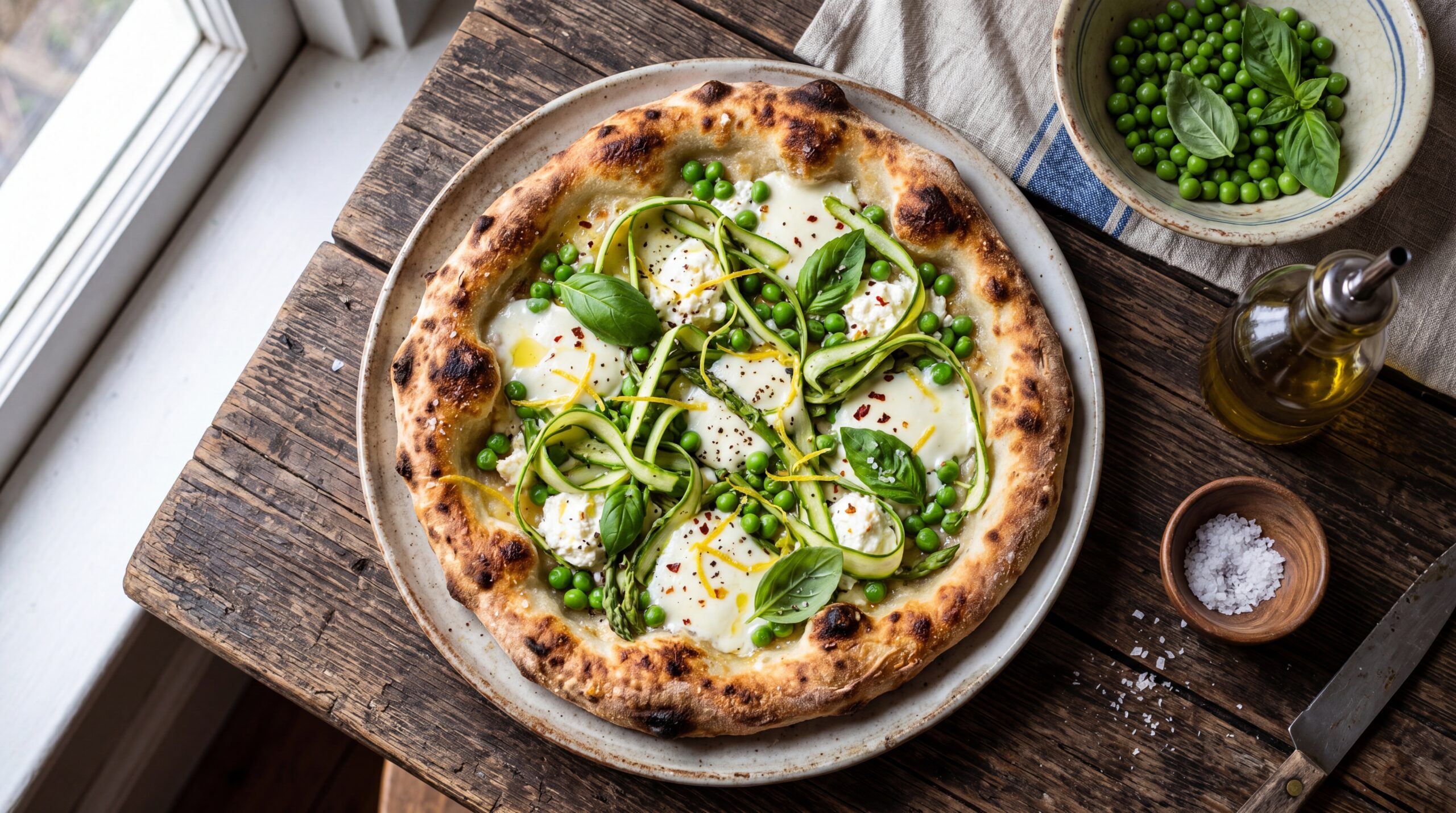
Spring is one of the most exciting seasons for pizza lovers. As markets fill with tender asparagus, sweet peas, peppery arugula, fresh herbs, and creamy cheeses, home cooks have the perfect chance to move beyond heavy winter toppings and build pies that feel bright, balanced, and full of flavor. A well-made spring pizza can still be rich and satisfying, but it relies on freshness, contrast, and restraint rather than sheer quantity.
If you want to bring seasonal energy into your kitchen, the secret is to start with a solid base and let a few carefully chosen ingredients shine. Stretch your dough thin enough to stay crisp, use a light hand with sauce and cheese, and think about how every topping contributes texture and aroma. Spring pizzas work especially well when they combine creamy elements, green vegetables, and a little salty contrast from cured meats or aged cheese.
Why Spring Ingredients Work So Well on Pizza
Traditional pizza principles already favor simplicity, which is why spring produce feels so natural on a good pie. Asparagus adds grassy sweetness and a pleasing snap. Peas bring small bursts of sweetness. Arugula delivers freshness after baking. Lemon zest, ricotta, mozzarella, and parmesan help tie everything together without burying the vegetables under too much heaviness.

A classic flavor combination for the season is asparagus, mozzarella, ricotta, and prosciutto. The cheese creates a creamy foundation, the asparagus stays bright and slightly crisp, and the prosciutto adds enough salt to make every bite feel complete. Finish with black pepper and a few torn basil leaves, and the result feels elegant without being complicated.
Build Around Three Flavor Layers
One of the easiest ways to create a memorable seasonal pizza is to think in layers. Start with a base layer such as olive oil, light tomato sauce, pesto, or whipped ricotta. Then add one or two vegetables as the main seasonal focus. Finally, finish with an accent ingredient such as chili flakes, lemon zest, pecorino, hot honey, or cured meat. This method keeps the pizza expressive but controlled.
- Base layer: olive oil, ricotta, pesto, or light tomato sauce
- Seasonal layer: asparagus, peas, spinach, zucchini ribbons, or artichokes
- Accent layer: prosciutto, parmesan, lemon zest, basil, mint, or chili oil
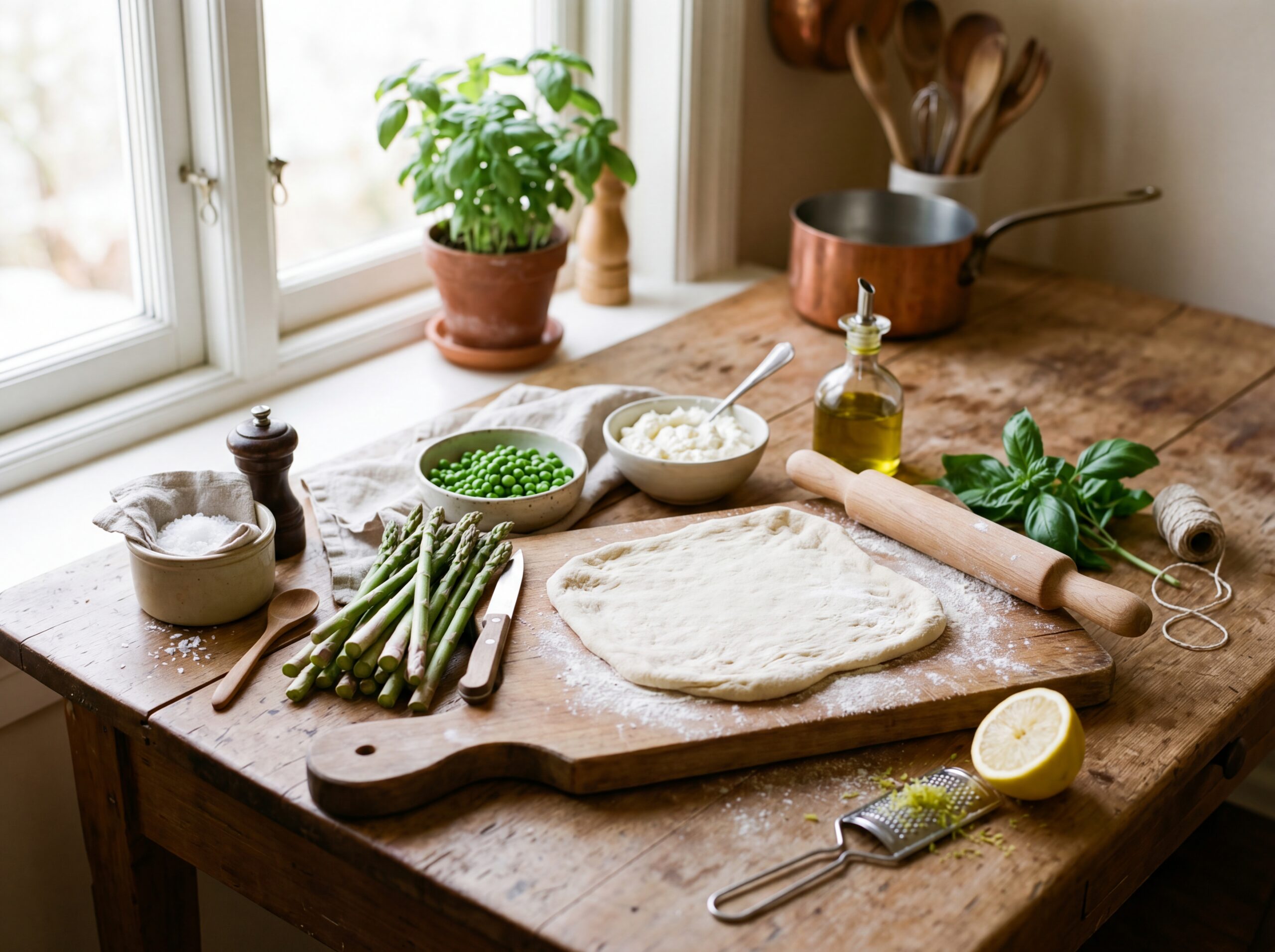
This approach also helps prevent the most common mistake in homemade pizza: overcrowding the dough. Too many watery toppings can leave the crust limp and the center undercooked. By choosing fewer ingredients with stronger contrast, you get a cleaner bake and a more distinct flavor in every slice.
Three Spring Pizza Ideas to Try
Need inspiration for your next pizza night? These combinations are simple, seasonal, and easy to adapt:
- Asparagus and prosciutto: mozzarella, shaved asparagus, prosciutto added after baking, parmesan, and lemon zest.
- Pea and ricotta: olive oil base, dollops of ricotta, peas, mozzarella, mint, and cracked black pepper.
- Arugula and burrata: light tomato base, mozzarella, baked crust, then topped with arugula, burrata, and a drizzle of chili honey.
Each of these pizzas delivers a different kind of spring mood. The first is salty and savory, the second is creamy and delicate, and the third feels lively and modern. Once you understand the structure, you can swap ingredients depending on what looks best at the market that week.
What to Serve With a Spring Pizza
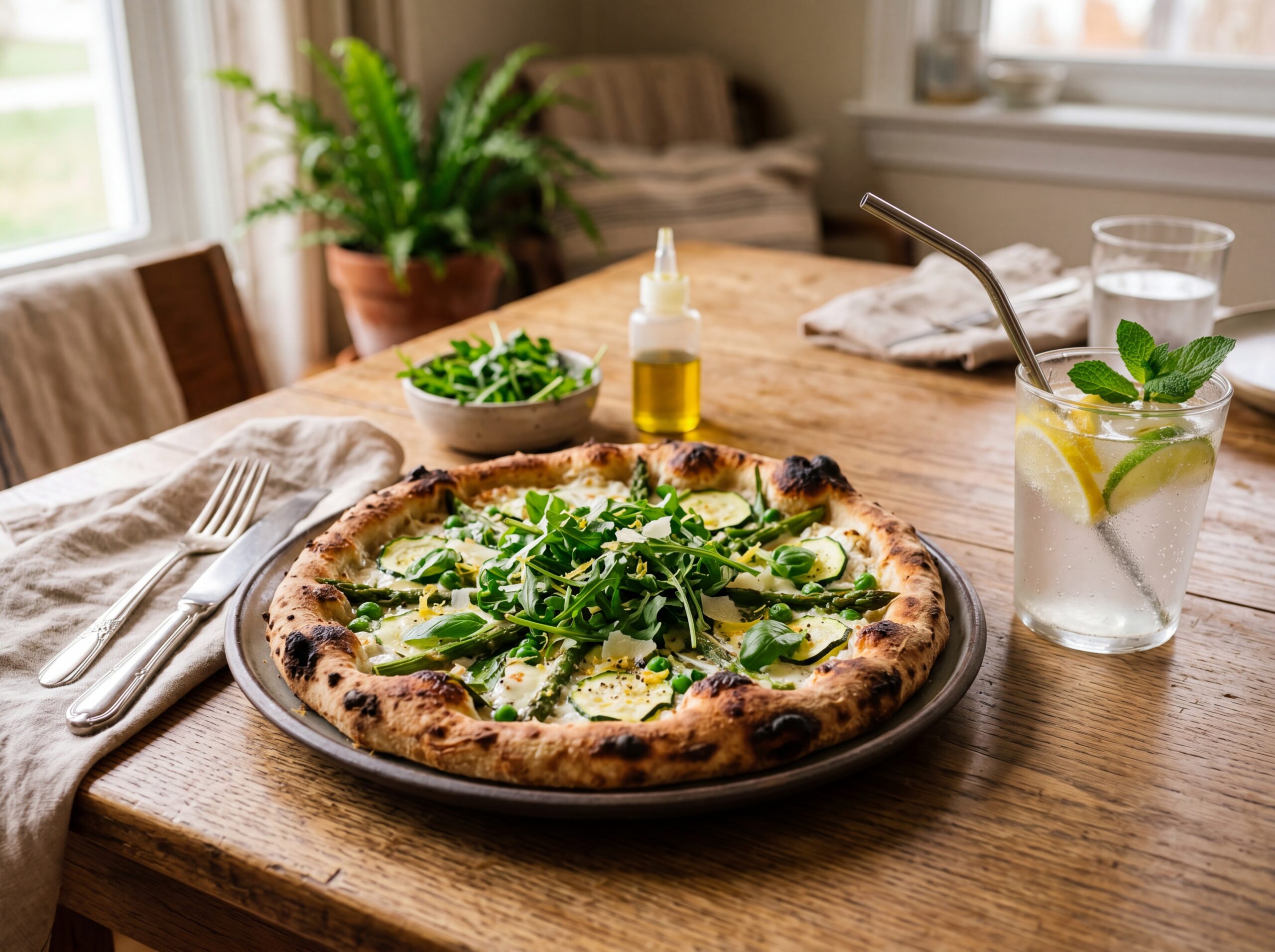
Because spring pizzas are often lighter and greener, they pair beautifully with crisp drinks and simple side dishes. Sparkling water with citrus, dry white wine, pale ale, or homemade lemonade can all work depending on the toppings. On the side, try a shaved fennel salad, marinated olives, or a plate of tomatoes with sea salt and olive oil.
The goal is not to overpower the pizza, but to support its freshness. If your pie includes herbs, lemon, or ricotta, choose drinks and sides that echo that brightness. A thoughtful pairing can make a simple homemade pizza feel like a complete seasonal meal.
A Fresh Take for Your Next Pizza Night
Spring ingredients offer an easy way to refresh your pizza routine without abandoning the comforting spirit that makes pizza so beloved. With a crisp crust, a restrained topping strategy, and a few colorful market ingredients, you can create something that feels both rustic and refined. Whether you choose asparagus, peas, arugula, or creamy cheeses, the season gives you everything you need for a pizza night that tastes bright, generous, and memorable.