The Sensation of Creaminess
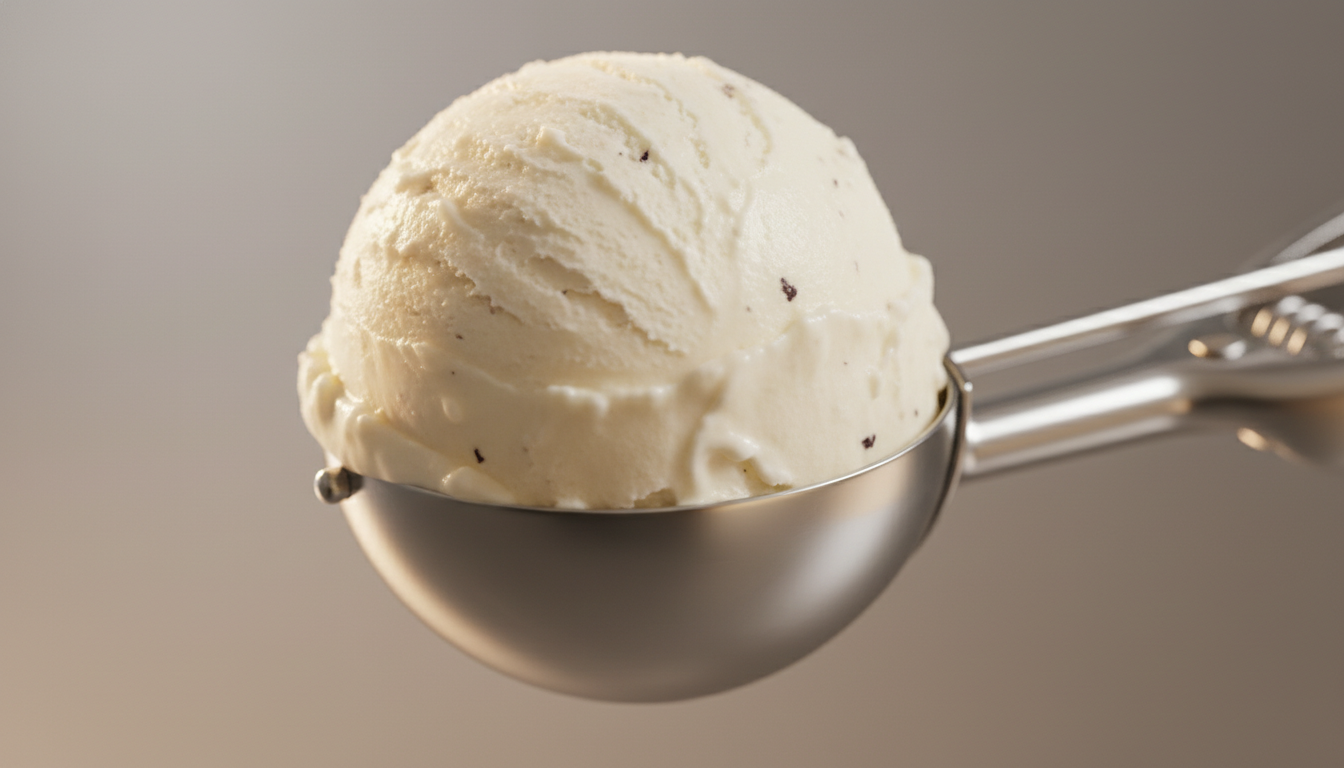
Creaminess is a multi-sensory experience. It involves the lubrication of the palate by fat and the slow melting of ice. When you achieve that ideal balance, you get a scoop that is dense yet light, cold yet smooth. For a deeper look at this sensation, check out our article on The Science of Ice Cream Creaminess.
Next time you visit your favorite parlor or open a pint at home, take a moment to look at the texture. You’re not just looking at a snack; you’re looking at a masterpiece of molecular engineering.
Why Temperature is Everything
Even the best-structured ice cream can be ruined by improper handling. The stability of the fat network and the size of the ice crystals are highly dependent on the “cold chain.” If ice cream melts slightly and refreezes, the ice crystals grow larger, leading to a sand-like texture. This is why maintaining the perfect serving temperature is more than just about convenience—it’s about preserving the science.
The Sensation of Creaminess
Creaminess is a multi-sensory experience. It involves the lubrication of the palate by fat and the slow melting of ice. When you achieve that ideal balance, you get a scoop that is dense yet light, cold yet smooth. For a deeper look at this sensation, check out our article on The Science of Ice Cream Creaminess.
Next time you visit your favorite parlor or open a pint at home, take a moment to look at the texture. You’re not just looking at a snack; you’re looking at a masterpiece of molecular engineering.

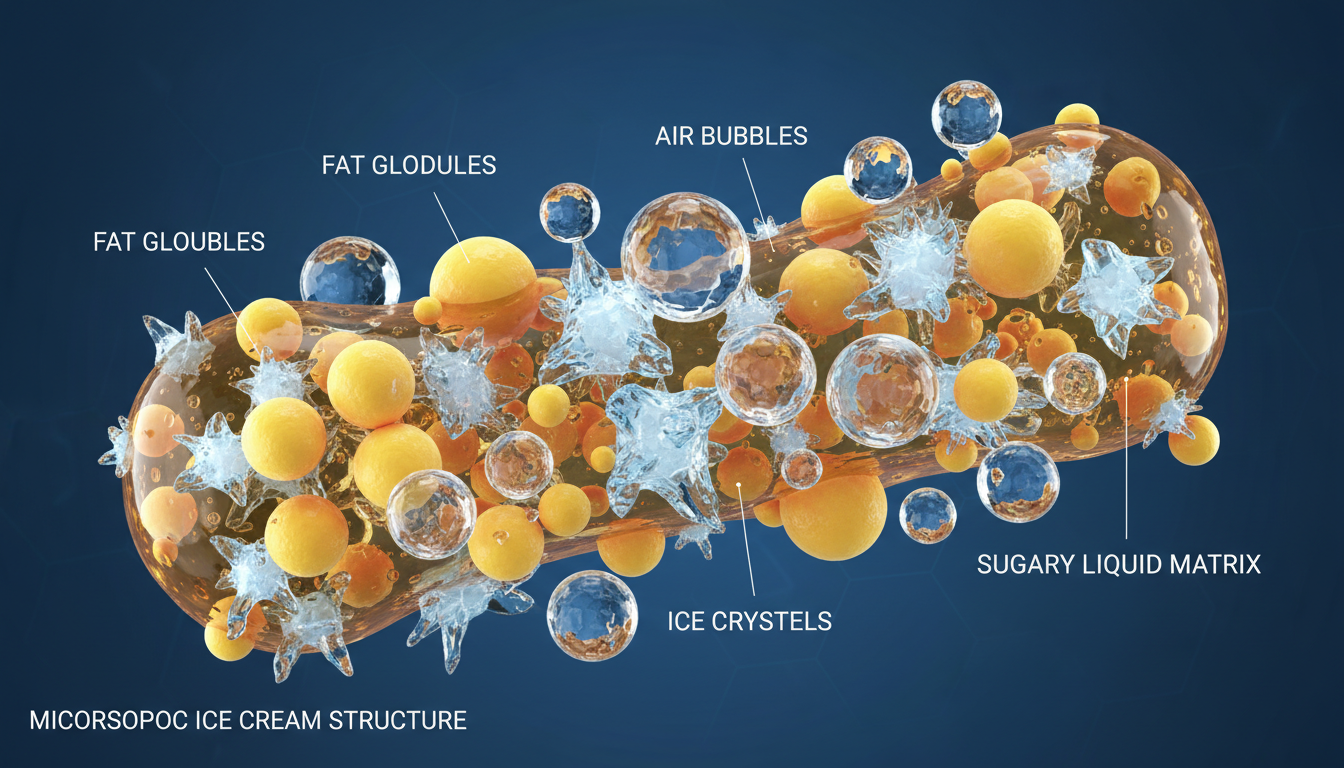
- Ice Crystals: These provide the “coldness” and body. If they are too large (above 50 micrometers), the ice cream feels gritty or “icy.”
- Air Bubbles (Overrun): Air is the “hidden” ingredient that makes ice cream soft. Without it, you’d be biting into a solid block of frozen milk. As we discussed in our guide to Understanding Overrun, the right amount of air is crucial for creaminess.
- Fat Globules: Usually from dairy, these globules partially “collpase” or destabilize during churning, forming a network that traps air bubbles and provides that rich, lingering mouthfeel.
Why Temperature is Everything
Even the best-structured ice cream can be ruined by improper handling. The stability of the fat network and the size of the ice crystals are highly dependent on the “cold chain.” If ice cream melts slightly and refreezes, the ice crystals grow larger, leading to a sand-like texture. This is why maintaining the perfect serving temperature is more than just about convenience—it’s about preserving the science.
The Sensation of Creaminess
Creaminess is a multi-sensory experience. It involves the lubrication of the palate by fat and the slow melting of ice. When you achieve that ideal balance, you get a scoop that is dense yet light, cold yet smooth. For a deeper look at this sensation, check out our article on The Science of Ice Cream Creaminess.
Next time you visit your favorite parlor or open a pint at home, take a moment to look at the texture. You’re not just looking at a snack; you’re looking at a masterpiece of molecular engineering.

At a microscopic level, ice cream is a complex foam. It consists of four main phases: ice crystals, air bubbles, fat globules, and a liquid syrup (the matrix). Balancing these is what separates artisanal scoops from the rest.
- Ice Crystals: These provide the “coldness” and body. If they are too large (above 50 micrometers), the ice cream feels gritty or “icy.”
- Air Bubbles (Overrun): Air is the “hidden” ingredient that makes ice cream soft. Without it, you’d be biting into a solid block of frozen milk. As we discussed in our guide to Understanding Overrun, the right amount of air is crucial for creaminess.
- Fat Globules: Usually from dairy, these globules partially “collpase” or destabilize during churning, forming a network that traps air bubbles and provides that rich, lingering mouthfeel.
Why Temperature is Everything
Even the best-structured ice cream can be ruined by improper handling. The stability of the fat network and the size of the ice crystals are highly dependent on the “cold chain.” If ice cream melts slightly and refreezes, the ice crystals grow larger, leading to a sand-like texture. This is why maintaining the perfect serving temperature is more than just about convenience—it’s about preserving the science.
The Sensation of Creaminess
Creaminess is a multi-sensory experience. It involves the lubrication of the palate by fat and the slow melting of ice. When you achieve that ideal balance, you get a scoop that is dense yet light, cold yet smooth. For a deeper look at this sensation, check out our article on The Science of Ice Cream Creaminess.
Next time you visit your favorite parlor or open a pint at home, take a moment to look at the texture. You’re not just looking at a snack; you’re looking at a masterpiece of molecular engineering.

The Three Pillars of Structure
At a microscopic level, ice cream is a complex foam. It consists of four main phases: ice crystals, air bubbles, fat globules, and a liquid syrup (the matrix). Balancing these is what separates artisanal scoops from the rest.
- Ice Crystals: These provide the “coldness” and body. If they are too large (above 50 micrometers), the ice cream feels gritty or “icy.”
- Air Bubbles (Overrun): Air is the “hidden” ingredient that makes ice cream soft. Without it, you’d be biting into a solid block of frozen milk. As we discussed in our guide to Understanding Overrun, the right amount of air is crucial for creaminess.
- Fat Globules: Usually from dairy, these globules partially “collpase” or destabilize during churning, forming a network that traps air bubbles and provides that rich, lingering mouthfeel.
Why Temperature is Everything
Even the best-structured ice cream can be ruined by improper handling. The stability of the fat network and the size of the ice crystals are highly dependent on the “cold chain.” If ice cream melts slightly and refreezes, the ice crystals grow larger, leading to a sand-like texture. This is why maintaining the perfect serving temperature is more than just about convenience—it’s about preserving the science.
The Sensation of Creaminess
Creaminess is a multi-sensory experience. It involves the lubrication of the palate by fat and the slow melting of ice. When you achieve that ideal balance, you get a scoop that is dense yet light, cold yet smooth. For a deeper look at this sensation, check out our article on The Science of Ice Cream Creaminess.
Next time you visit your favorite parlor or open a pint at home, take a moment to look at the texture. You’re not just looking at a snack; you’re looking at a masterpiece of molecular engineering.

To truly appreciate your next bowl, we need to dive into the science of ice cream microstructure. Understanding how these elements interact is the key to mastering the art of the frozen dessert.
The Three Pillars of Structure
At a microscopic level, ice cream is a complex foam. It consists of four main phases: ice crystals, air bubbles, fat globules, and a liquid syrup (the matrix). Balancing these is what separates artisanal scoops from the rest.
- Ice Crystals: These provide the “coldness” and body. If they are too large (above 50 micrometers), the ice cream feels gritty or “icy.”
- Air Bubbles (Overrun): Air is the “hidden” ingredient that makes ice cream soft. Without it, you’d be biting into a solid block of frozen milk. As we discussed in our guide to Understanding Overrun, the right amount of air is crucial for creaminess.
- Fat Globules: Usually from dairy, these globules partially “collpase” or destabilize during churning, forming a network that traps air bubbles and provides that rich, lingering mouthfeel.
Why Temperature is Everything
Even the best-structured ice cream can be ruined by improper handling. The stability of the fat network and the size of the ice crystals are highly dependent on the “cold chain.” If ice cream melts slightly and refreezes, the ice crystals grow larger, leading to a sand-like texture. This is why maintaining the perfect serving temperature is more than just about convenience—it’s about preserving the science.
The Sensation of Creaminess
Creaminess is a multi-sensory experience. It involves the lubrication of the palate by fat and the slow melting of ice. When you achieve that ideal balance, you get a scoop that is dense yet light, cold yet smooth. For a deeper look at this sensation, check out our article on The Science of Ice Cream Creaminess.
Next time you visit your favorite parlor or open a pint at home, take a moment to look at the texture. You’re not just looking at a snack; you’re looking at a masterpiece of molecular engineering.

Ever wondered why some ice cream feels like silk on your tongue while others feel like a slushy? The secret isn’t just in the ingredients; it’s in the microscopic architecture. Behind every “perfect scoop” lies a complex dance of chemistry and physics involving fat, air, and ice.
To truly appreciate your next bowl, we need to dive into the science of ice cream microstructure. Understanding how these elements interact is the key to mastering the art of the frozen dessert.
The Three Pillars of Structure
At a microscopic level, ice cream is a complex foam. It consists of four main phases: ice crystals, air bubbles, fat globules, and a liquid syrup (the matrix). Balancing these is what separates artisanal scoops from the rest.
- Ice Crystals: These provide the “coldness” and body. If they are too large (above 50 micrometers), the ice cream feels gritty or “icy.”
- Air Bubbles (Overrun): Air is the “hidden” ingredient that makes ice cream soft. Without it, you’d be biting into a solid block of frozen milk. As we discussed in our guide to Understanding Overrun, the right amount of air is crucial for creaminess.
- Fat Globules: Usually from dairy, these globules partially “collpase” or destabilize during churning, forming a network that traps air bubbles and provides that rich, lingering mouthfeel.
Why Temperature is Everything
Even the best-structured ice cream can be ruined by improper handling. The stability of the fat network and the size of the ice crystals are highly dependent on the “cold chain.” If ice cream melts slightly and refreezes, the ice crystals grow larger, leading to a sand-like texture. This is why maintaining the perfect serving temperature is more than just about convenience—it’s about preserving the science.
The Sensation of Creaminess
Creaminess is a multi-sensory experience. It involves the lubrication of the palate by fat and the slow melting of ice. When you achieve that ideal balance, you get a scoop that is dense yet light, cold yet smooth. For a deeper look at this sensation, check out our article on The Science of Ice Cream Creaminess.
Next time you visit your favorite parlor or open a pint at home, take a moment to look at the texture. You’re not just looking at a snack; you’re looking at a masterpiece of molecular engineering.

The Anatomy of a Perfect Scoop
Ever wondered why some ice cream feels like silk on your tongue while others feel like a slushy? The secret isn’t just in the ingredients; it’s in the microscopic architecture. Behind every “perfect scoop” lies a complex dance of chemistry and physics involving fat, air, and ice.
To truly appreciate your next bowl, we need to dive into the science of ice cream microstructure. Understanding how these elements interact is the key to mastering the art of the frozen dessert.
The Three Pillars of Structure
At a microscopic level, ice cream is a complex foam. It consists of four main phases: ice crystals, air bubbles, fat globules, and a liquid syrup (the matrix). Balancing these is what separates artisanal scoops from the rest.
- Ice Crystals: These provide the “coldness” and body. If they are too large (above 50 micrometers), the ice cream feels gritty or “icy.”
- Air Bubbles (Overrun): Air is the “hidden” ingredient that makes ice cream soft. Without it, you’d be biting into a solid block of frozen milk. As we discussed in our guide to Understanding Overrun, the right amount of air is crucial for creaminess.
- Fat Globules: Usually from dairy, these globules partially “collpase” or destabilize during churning, forming a network that traps air bubbles and provides that rich, lingering mouthfeel.
Why Temperature is Everything
Even the best-structured ice cream can be ruined by improper handling. The stability of the fat network and the size of the ice crystals are highly dependent on the “cold chain.” If ice cream melts slightly and refreezes, the ice crystals grow larger, leading to a sand-like texture. This is why maintaining the perfect serving temperature is more than just about convenience—it’s about preserving the science.
The Sensation of Creaminess
Creaminess is a multi-sensory experience. It involves the lubrication of the palate by fat and the slow melting of ice. When you achieve that ideal balance, you get a scoop that is dense yet light, cold yet smooth. For a deeper look at this sensation, check out our article on The Science of Ice Cream Creaminess.
Next time you visit your favorite parlor or open a pint at home, take a moment to look at the texture. You’re not just looking at a snack; you’re looking at a masterpiece of molecular engineering.

The Anatomy of a Perfect Scoop
Ever wondered why some ice cream feels like silk on your tongue while others feel like a slushy? The secret isn’t just in the ingredients; it’s in the microscopic architecture. Behind every “perfect scoop” lies a complex dance of chemistry and physics involving fat, air, and ice.
To truly appreciate your next bowl, we need to dive into the science of ice cream microstructure. Understanding how these elements interact is the key to mastering the art of the frozen dessert.
The Three Pillars of Structure
At a microscopic level, ice cream is a complex foam. It consists of four main phases: ice crystals, air bubbles, fat globules, and a liquid syrup (the matrix). Balancing these is what separates artisanal scoops from the rest.
- Ice Crystals: These provide the “coldness” and body. If they are too large (above 50 micrometers), the ice cream feels gritty or “icy.”
- Air Bubbles (Overrun): Air is the “hidden” ingredient that makes ice cream soft. Without it, you’d be biting into a solid block of frozen milk. As we discussed in our guide to Understanding Overrun, the right amount of air is crucial for creaminess.
- Fat Globules: Usually from dairy, these globules partially “collpase” or destabilize during churning, forming a network that traps air bubbles and provides that rich, lingering mouthfeel.
Why Temperature is Everything
Even the best-structured ice cream can be ruined by improper handling. The stability of the fat network and the size of the ice crystals are highly dependent on the “cold chain.” If ice cream melts slightly and refreezes, the ice crystals grow larger, leading to a sand-like texture. This is why maintaining the perfect serving temperature is more than just about convenience—it’s about preserving the science.
The Sensation of Creaminess
Creaminess is a multi-sensory experience. It involves the lubrication of the palate by fat and the slow melting of ice. When you achieve that ideal balance, you get a scoop that is dense yet light, cold yet smooth. For a deeper look at this sensation, check out our article on The Science of Ice Cream Creaminess.
Next time you visit your favorite parlor or open a pint at home, take a moment to look at the texture. You’re not just looking at a snack; you’re looking at a masterpiece of molecular engineering.

The Sensation of Creaminess
Creaminess is a multi-sensory experience. It involves the lubrication of the palate by fat and the slow melting of ice. When you achieve that ideal balance, you get a scoop that is dense yet light, cold yet smooth. For a deeper look at this sensation, check out our article on The Science of Ice Cream Creaminess.
Next time you visit your favorite parlor or open a pint at home, take a moment to look at the texture. You’re not just looking at a snack; you’re looking at a masterpiece of molecular engineering.

The Anatomy of a Perfect Scoop
Ever wondered why some ice cream feels like silk on your tongue while others feel like a slushy? The secret isn’t just in the ingredients; it’s in the microscopic architecture. Behind every “perfect scoop” lies a complex dance of chemistry and physics involving fat, air, and ice.
To truly appreciate your next bowl, we need to dive into the science of ice cream microstructure. Understanding how these elements interact is the key to mastering the art of the frozen dessert.
The Three Pillars of Structure
At a microscopic level, ice cream is a complex foam. It consists of four main phases: ice crystals, air bubbles, fat globules, and a liquid syrup (the matrix). Balancing these is what separates artisanal scoops from the rest.
- Ice Crystals: These provide the “coldness” and body. If they are too large (above 50 micrometers), the ice cream feels gritty or “icy.”
- Air Bubbles (Overrun): Air is the “hidden” ingredient that makes ice cream soft. Without it, you’d be biting into a solid block of frozen milk. As we discussed in our guide to Understanding Overrun, the right amount of air is crucial for creaminess.
- Fat Globules: Usually from dairy, these globules partially “collpase” or destabilize during churning, forming a network that traps air bubbles and provides that rich, lingering mouthfeel.
Why Temperature is Everything
Even the best-structured ice cream can be ruined by improper handling. The stability of the fat network and the size of the ice crystals are highly dependent on the “cold chain.” If ice cream melts slightly and refreezes, the ice crystals grow larger, leading to a sand-like texture. This is why maintaining the perfect serving temperature is more than just about convenience—it’s about preserving the science.
The Sensation of Creaminess
Creaminess is a multi-sensory experience. It involves the lubrication of the palate by fat and the slow melting of ice. When you achieve that ideal balance, you get a scoop that is dense yet light, cold yet smooth. For a deeper look at this sensation, check out our article on The Science of Ice Cream Creaminess.
Next time you visit your favorite parlor or open a pint at home, take a moment to look at the texture. You’re not just looking at a snack; you’re looking at a masterpiece of molecular engineering.

Even the best-structured ice cream can be ruined by improper handling. The stability of the fat network and the size of the ice crystals are highly dependent on the “cold chain.” If ice cream melts slightly and refreezes, the ice crystals grow larger, leading to a sand-like texture. This is why maintaining the perfect serving temperature is more than just about convenience—it’s about preserving the science.
The Sensation of Creaminess
Creaminess is a multi-sensory experience. It involves the lubrication of the palate by fat and the slow melting of ice. When you achieve that ideal balance, you get a scoop that is dense yet light, cold yet smooth. For a deeper look at this sensation, check out our article on The Science of Ice Cream Creaminess.
Next time you visit your favorite parlor or open a pint at home, take a moment to look at the texture. You’re not just looking at a snack; you’re looking at a masterpiece of molecular engineering.

The Anatomy of a Perfect Scoop
Ever wondered why some ice cream feels like silk on your tongue while others feel like a slushy? The secret isn’t just in the ingredients; it’s in the microscopic architecture. Behind every “perfect scoop” lies a complex dance of chemistry and physics involving fat, air, and ice.
To truly appreciate your next bowl, we need to dive into the science of ice cream microstructure. Understanding how these elements interact is the key to mastering the art of the frozen dessert.
The Three Pillars of Structure
At a microscopic level, ice cream is a complex foam. It consists of four main phases: ice crystals, air bubbles, fat globules, and a liquid syrup (the matrix). Balancing these is what separates artisanal scoops from the rest.
- Ice Crystals: These provide the “coldness” and body. If they are too large (above 50 micrometers), the ice cream feels gritty or “icy.”
- Air Bubbles (Overrun): Air is the “hidden” ingredient that makes ice cream soft. Without it, you’d be biting into a solid block of frozen milk. As we discussed in our guide to Understanding Overrun, the right amount of air is crucial for creaminess.
- Fat Globules: Usually from dairy, these globules partially “collpase” or destabilize during churning, forming a network that traps air bubbles and provides that rich, lingering mouthfeel.
Why Temperature is Everything
Even the best-structured ice cream can be ruined by improper handling. The stability of the fat network and the size of the ice crystals are highly dependent on the “cold chain.” If ice cream melts slightly and refreezes, the ice crystals grow larger, leading to a sand-like texture. This is why maintaining the perfect serving temperature is more than just about convenience—it’s about preserving the science.
The Sensation of Creaminess
Creaminess is a multi-sensory experience. It involves the lubrication of the palate by fat and the slow melting of ice. When you achieve that ideal balance, you get a scoop that is dense yet light, cold yet smooth. For a deeper look at this sensation, check out our article on The Science of Ice Cream Creaminess.
Next time you visit your favorite parlor or open a pint at home, take a moment to look at the texture. You’re not just looking at a snack; you’re looking at a masterpiece of molecular engineering.

Why Temperature is Everything
Even the best-structured ice cream can be ruined by improper handling. The stability of the fat network and the size of the ice crystals are highly dependent on the “cold chain.” If ice cream melts slightly and refreezes, the ice crystals grow larger, leading to a sand-like texture. This is why maintaining the perfect serving temperature is more than just about convenience—it’s about preserving the science.
The Sensation of Creaminess
Creaminess is a multi-sensory experience. It involves the lubrication of the palate by fat and the slow melting of ice. When you achieve that ideal balance, you get a scoop that is dense yet light, cold yet smooth. For a deeper look at this sensation, check out our article on The Science of Ice Cream Creaminess.
Next time you visit your favorite parlor or open a pint at home, take a moment to look at the texture. You’re not just looking at a snack; you’re looking at a masterpiece of molecular engineering.

The Anatomy of a Perfect Scoop
Ever wondered why some ice cream feels like silk on your tongue while others feel like a slushy? The secret isn’t just in the ingredients; it’s in the microscopic architecture. Behind every “perfect scoop” lies a complex dance of chemistry and physics involving fat, air, and ice.
To truly appreciate your next bowl, we need to dive into the science of ice cream microstructure. Understanding how these elements interact is the key to mastering the art of the frozen dessert.
The Three Pillars of Structure
At a microscopic level, ice cream is a complex foam. It consists of four main phases: ice crystals, air bubbles, fat globules, and a liquid syrup (the matrix). Balancing these is what separates artisanal scoops from the rest.
- Ice Crystals: These provide the “coldness” and body. If they are too large (above 50 micrometers), the ice cream feels gritty or “icy.”
- Air Bubbles (Overrun): Air is the “hidden” ingredient that makes ice cream soft. Without it, you’d be biting into a solid block of frozen milk. As we discussed in our guide to Understanding Overrun, the right amount of air is crucial for creaminess.
- Fat Globules: Usually from dairy, these globules partially “collpase” or destabilize during churning, forming a network that traps air bubbles and provides that rich, lingering mouthfeel.
Why Temperature is Everything
Even the best-structured ice cream can be ruined by improper handling. The stability of the fat network and the size of the ice crystals are highly dependent on the “cold chain.” If ice cream melts slightly and refreezes, the ice crystals grow larger, leading to a sand-like texture. This is why maintaining the perfect serving temperature is more than just about convenience—it’s about preserving the science.
The Sensation of Creaminess
Creaminess is a multi-sensory experience. It involves the lubrication of the palate by fat and the slow melting of ice. When you achieve that ideal balance, you get a scoop that is dense yet light, cold yet smooth. For a deeper look at this sensation, check out our article on The Science of Ice Cream Creaminess.
Next time you visit your favorite parlor or open a pint at home, take a moment to look at the texture. You’re not just looking at a snack; you’re looking at a masterpiece of molecular engineering.

- Ice Crystals: These provide the “coldness” and body. If they are too large (above 50 micrometers), the ice cream feels gritty or “icy.”
- Air Bubbles (Overrun): Air is the “hidden” ingredient that makes ice cream soft. Without it, you’d be biting into a solid block of frozen milk. As we discussed in our guide to Understanding Overrun, the right amount of air is crucial for creaminess.
- Fat Globules: Usually from dairy, these globules partially “collpase” or destabilize during churning, forming a network that traps air bubbles and provides that rich, lingering mouthfeel.
Why Temperature is Everything
Even the best-structured ice cream can be ruined by improper handling. The stability of the fat network and the size of the ice crystals are highly dependent on the “cold chain.” If ice cream melts slightly and refreezes, the ice crystals grow larger, leading to a sand-like texture. This is why maintaining the perfect serving temperature is more than just about convenience—it’s about preserving the science.
The Sensation of Creaminess
Creaminess is a multi-sensory experience. It involves the lubrication of the palate by fat and the slow melting of ice. When you achieve that ideal balance, you get a scoop that is dense yet light, cold yet smooth. For a deeper look at this sensation, check out our article on The Science of Ice Cream Creaminess.
Next time you visit your favorite parlor or open a pint at home, take a moment to look at the texture. You’re not just looking at a snack; you’re looking at a masterpiece of molecular engineering.

The Anatomy of a Perfect Scoop
Ever wondered why some ice cream feels like silk on your tongue while others feel like a slushy? The secret isn’t just in the ingredients; it’s in the microscopic architecture. Behind every “perfect scoop” lies a complex dance of chemistry and physics involving fat, air, and ice.
To truly appreciate your next bowl, we need to dive into the science of ice cream microstructure. Understanding how these elements interact is the key to mastering the art of the frozen dessert.
The Three Pillars of Structure
At a microscopic level, ice cream is a complex foam. It consists of four main phases: ice crystals, air bubbles, fat globules, and a liquid syrup (the matrix). Balancing these is what separates artisanal scoops from the rest.
- Ice Crystals: These provide the “coldness” and body. If they are too large (above 50 micrometers), the ice cream feels gritty or “icy.”
- Air Bubbles (Overrun): Air is the “hidden” ingredient that makes ice cream soft. Without it, you’d be biting into a solid block of frozen milk. As we discussed in our guide to Understanding Overrun, the right amount of air is crucial for creaminess.
- Fat Globules: Usually from dairy, these globules partially “collpase” or destabilize during churning, forming a network that traps air bubbles and provides that rich, lingering mouthfeel.
Why Temperature is Everything
Even the best-structured ice cream can be ruined by improper handling. The stability of the fat network and the size of the ice crystals are highly dependent on the “cold chain.” If ice cream melts slightly and refreezes, the ice crystals grow larger, leading to a sand-like texture. This is why maintaining the perfect serving temperature is more than just about convenience—it’s about preserving the science.
The Sensation of Creaminess
Creaminess is a multi-sensory experience. It involves the lubrication of the palate by fat and the slow melting of ice. When you achieve that ideal balance, you get a scoop that is dense yet light, cold yet smooth. For a deeper look at this sensation, check out our article on The Science of Ice Cream Creaminess.
Next time you visit your favorite parlor or open a pint at home, take a moment to look at the texture. You’re not just looking at a snack; you’re looking at a masterpiece of molecular engineering.

At a microscopic level, ice cream is a complex foam. It consists of four main phases: ice crystals, air bubbles, fat globules, and a liquid syrup (the matrix). Balancing these is what separates artisanal scoops from the rest.
- Ice Crystals: These provide the “coldness” and body. If they are too large (above 50 micrometers), the ice cream feels gritty or “icy.”
- Air Bubbles (Overrun): Air is the “hidden” ingredient that makes ice cream soft. Without it, you’d be biting into a solid block of frozen milk. As we discussed in our guide to Understanding Overrun, the right amount of air is crucial for creaminess.
- Fat Globules: Usually from dairy, these globules partially “collpase” or destabilize during churning, forming a network that traps air bubbles and provides that rich, lingering mouthfeel.
Why Temperature is Everything
Even the best-structured ice cream can be ruined by improper handling. The stability of the fat network and the size of the ice crystals are highly dependent on the “cold chain.” If ice cream melts slightly and refreezes, the ice crystals grow larger, leading to a sand-like texture. This is why maintaining the perfect serving temperature is more than just about convenience—it’s about preserving the science.
The Sensation of Creaminess
Creaminess is a multi-sensory experience. It involves the lubrication of the palate by fat and the slow melting of ice. When you achieve that ideal balance, you get a scoop that is dense yet light, cold yet smooth. For a deeper look at this sensation, check out our article on The Science of Ice Cream Creaminess.
Next time you visit your favorite parlor or open a pint at home, take a moment to look at the texture. You’re not just looking at a snack; you’re looking at a masterpiece of molecular engineering.

The Anatomy of a Perfect Scoop
Ever wondered why some ice cream feels like silk on your tongue while others feel like a slushy? The secret isn’t just in the ingredients; it’s in the microscopic architecture. Behind every “perfect scoop” lies a complex dance of chemistry and physics involving fat, air, and ice.
To truly appreciate your next bowl, we need to dive into the science of ice cream microstructure. Understanding how these elements interact is the key to mastering the art of the frozen dessert.
The Three Pillars of Structure
At a microscopic level, ice cream is a complex foam. It consists of four main phases: ice crystals, air bubbles, fat globules, and a liquid syrup (the matrix). Balancing these is what separates artisanal scoops from the rest.
- Ice Crystals: These provide the “coldness” and body. If they are too large (above 50 micrometers), the ice cream feels gritty or “icy.”
- Air Bubbles (Overrun): Air is the “hidden” ingredient that makes ice cream soft. Without it, you’d be biting into a solid block of frozen milk. As we discussed in our guide to Understanding Overrun, the right amount of air is crucial for creaminess.
- Fat Globules: Usually from dairy, these globules partially “collpase” or destabilize during churning, forming a network that traps air bubbles and provides that rich, lingering mouthfeel.
Why Temperature is Everything
Even the best-structured ice cream can be ruined by improper handling. The stability of the fat network and the size of the ice crystals are highly dependent on the “cold chain.” If ice cream melts slightly and refreezes, the ice crystals grow larger, leading to a sand-like texture. This is why maintaining the perfect serving temperature is more than just about convenience—it’s about preserving the science.
The Sensation of Creaminess
Creaminess is a multi-sensory experience. It involves the lubrication of the palate by fat and the slow melting of ice. When you achieve that ideal balance, you get a scoop that is dense yet light, cold yet smooth. For a deeper look at this sensation, check out our article on The Science of Ice Cream Creaminess.
Next time you visit your favorite parlor or open a pint at home, take a moment to look at the texture. You’re not just looking at a snack; you’re looking at a masterpiece of molecular engineering.

The Three Pillars of Structure
At a microscopic level, ice cream is a complex foam. It consists of four main phases: ice crystals, air bubbles, fat globules, and a liquid syrup (the matrix). Balancing these is what separates artisanal scoops from the rest.
- Ice Crystals: These provide the “coldness” and body. If they are too large (above 50 micrometers), the ice cream feels gritty or “icy.”
- Air Bubbles (Overrun): Air is the “hidden” ingredient that makes ice cream soft. Without it, you’d be biting into a solid block of frozen milk. As we discussed in our guide to Understanding Overrun, the right amount of air is crucial for creaminess.
- Fat Globules: Usually from dairy, these globules partially “collpase” or destabilize during churning, forming a network that traps air bubbles and provides that rich, lingering mouthfeel.
Why Temperature is Everything
Even the best-structured ice cream can be ruined by improper handling. The stability of the fat network and the size of the ice crystals are highly dependent on the “cold chain.” If ice cream melts slightly and refreezes, the ice crystals grow larger, leading to a sand-like texture. This is why maintaining the perfect serving temperature is more than just about convenience—it’s about preserving the science.
The Sensation of Creaminess
Creaminess is a multi-sensory experience. It involves the lubrication of the palate by fat and the slow melting of ice. When you achieve that ideal balance, you get a scoop that is dense yet light, cold yet smooth. For a deeper look at this sensation, check out our article on The Science of Ice Cream Creaminess.
Next time you visit your favorite parlor or open a pint at home, take a moment to look at the texture. You’re not just looking at a snack; you’re looking at a masterpiece of molecular engineering.

The Anatomy of a Perfect Scoop
Ever wondered why some ice cream feels like silk on your tongue while others feel like a slushy? The secret isn’t just in the ingredients; it’s in the microscopic architecture. Behind every “perfect scoop” lies a complex dance of chemistry and physics involving fat, air, and ice.
To truly appreciate your next bowl, we need to dive into the science of ice cream microstructure. Understanding how these elements interact is the key to mastering the art of the frozen dessert.
The Three Pillars of Structure
At a microscopic level, ice cream is a complex foam. It consists of four main phases: ice crystals, air bubbles, fat globules, and a liquid syrup (the matrix). Balancing these is what separates artisanal scoops from the rest.
- Ice Crystals: These provide the “coldness” and body. If they are too large (above 50 micrometers), the ice cream feels gritty or “icy.”
- Air Bubbles (Overrun): Air is the “hidden” ingredient that makes ice cream soft. Without it, you’d be biting into a solid block of frozen milk. As we discussed in our guide to Understanding Overrun, the right amount of air is crucial for creaminess.
- Fat Globules: Usually from dairy, these globules partially “collpase” or destabilize during churning, forming a network that traps air bubbles and provides that rich, lingering mouthfeel.
Why Temperature is Everything
Even the best-structured ice cream can be ruined by improper handling. The stability of the fat network and the size of the ice crystals are highly dependent on the “cold chain.” If ice cream melts slightly and refreezes, the ice crystals grow larger, leading to a sand-like texture. This is why maintaining the perfect serving temperature is more than just about convenience—it’s about preserving the science.
The Sensation of Creaminess
Creaminess is a multi-sensory experience. It involves the lubrication of the palate by fat and the slow melting of ice. When you achieve that ideal balance, you get a scoop that is dense yet light, cold yet smooth. For a deeper look at this sensation, check out our article on The Science of Ice Cream Creaminess.
Next time you visit your favorite parlor or open a pint at home, take a moment to look at the texture. You’re not just looking at a snack; you’re looking at a masterpiece of molecular engineering.

To truly appreciate your next bowl, we need to dive into the science of ice cream microstructure. Understanding how these elements interact is the key to mastering the art of the frozen dessert.
The Three Pillars of Structure
At a microscopic level, ice cream is a complex foam. It consists of four main phases: ice crystals, air bubbles, fat globules, and a liquid syrup (the matrix). Balancing these is what separates artisanal scoops from the rest.
- Ice Crystals: These provide the “coldness” and body. If they are too large (above 50 micrometers), the ice cream feels gritty or “icy.”
- Air Bubbles (Overrun): Air is the “hidden” ingredient that makes ice cream soft. Without it, you’d be biting into a solid block of frozen milk. As we discussed in our guide to Understanding Overrun, the right amount of air is crucial for creaminess.
- Fat Globules: Usually from dairy, these globules partially “collpase” or destabilize during churning, forming a network that traps air bubbles and provides that rich, lingering mouthfeel.
Why Temperature is Everything
Even the best-structured ice cream can be ruined by improper handling. The stability of the fat network and the size of the ice crystals are highly dependent on the “cold chain.” If ice cream melts slightly and refreezes, the ice crystals grow larger, leading to a sand-like texture. This is why maintaining the perfect serving temperature is more than just about convenience—it’s about preserving the science.
The Sensation of Creaminess
Creaminess is a multi-sensory experience. It involves the lubrication of the palate by fat and the slow melting of ice. When you achieve that ideal balance, you get a scoop that is dense yet light, cold yet smooth. For a deeper look at this sensation, check out our article on The Science of Ice Cream Creaminess.
Next time you visit your favorite parlor or open a pint at home, take a moment to look at the texture. You’re not just looking at a snack; you’re looking at a masterpiece of molecular engineering.

The Anatomy of a Perfect Scoop
Ever wondered why some ice cream feels like silk on your tongue while others feel like a slushy? The secret isn’t just in the ingredients; it’s in the microscopic architecture. Behind every “perfect scoop” lies a complex dance of chemistry and physics involving fat, air, and ice.
To truly appreciate your next bowl, we need to dive into the science of ice cream microstructure. Understanding how these elements interact is the key to mastering the art of the frozen dessert.
The Three Pillars of Structure
At a microscopic level, ice cream is a complex foam. It consists of four main phases: ice crystals, air bubbles, fat globules, and a liquid syrup (the matrix). Balancing these is what separates artisanal scoops from the rest.
- Ice Crystals: These provide the “coldness” and body. If they are too large (above 50 micrometers), the ice cream feels gritty or “icy.”
- Air Bubbles (Overrun): Air is the “hidden” ingredient that makes ice cream soft. Without it, you’d be biting into a solid block of frozen milk. As we discussed in our guide to Understanding Overrun, the right amount of air is crucial for creaminess.
- Fat Globules: Usually from dairy, these globules partially “collpase” or destabilize during churning, forming a network that traps air bubbles and provides that rich, lingering mouthfeel.
Why Temperature is Everything
Even the best-structured ice cream can be ruined by improper handling. The stability of the fat network and the size of the ice crystals are highly dependent on the “cold chain.” If ice cream melts slightly and refreezes, the ice crystals grow larger, leading to a sand-like texture. This is why maintaining the perfect serving temperature is more than just about convenience—it’s about preserving the science.
The Sensation of Creaminess
Creaminess is a multi-sensory experience. It involves the lubrication of the palate by fat and the slow melting of ice. When you achieve that ideal balance, you get a scoop that is dense yet light, cold yet smooth. For a deeper look at this sensation, check out our article on The Science of Ice Cream Creaminess.
Next time you visit your favorite parlor or open a pint at home, take a moment to look at the texture. You’re not just looking at a snack; you’re looking at a masterpiece of molecular engineering.

Ever wondered why some ice cream feels like silk on your tongue while others feel like a slushy? The secret isn’t just in the ingredients; it’s in the microscopic architecture. Behind every “perfect scoop” lies a complex dance of chemistry and physics involving fat, air, and ice.
To truly appreciate your next bowl, we need to dive into the science of ice cream microstructure. Understanding how these elements interact is the key to mastering the art of the frozen dessert.
The Three Pillars of Structure
At a microscopic level, ice cream is a complex foam. It consists of four main phases: ice crystals, air bubbles, fat globules, and a liquid syrup (the matrix). Balancing these is what separates artisanal scoops from the rest.
- Ice Crystals: These provide the “coldness” and body. If they are too large (above 50 micrometers), the ice cream feels gritty or “icy.”
- Air Bubbles (Overrun): Air is the “hidden” ingredient that makes ice cream soft. Without it, you’d be biting into a solid block of frozen milk. As we discussed in our guide to Understanding Overrun, the right amount of air is crucial for creaminess.
- Fat Globules: Usually from dairy, these globules partially “collpase” or destabilize during churning, forming a network that traps air bubbles and provides that rich, lingering mouthfeel.
Why Temperature is Everything
Even the best-structured ice cream can be ruined by improper handling. The stability of the fat network and the size of the ice crystals are highly dependent on the “cold chain.” If ice cream melts slightly and refreezes, the ice crystals grow larger, leading to a sand-like texture. This is why maintaining the perfect serving temperature is more than just about convenience—it’s about preserving the science.
The Sensation of Creaminess
Creaminess is a multi-sensory experience. It involves the lubrication of the palate by fat and the slow melting of ice. When you achieve that ideal balance, you get a scoop that is dense yet light, cold yet smooth. For a deeper look at this sensation, check out our article on The Science of Ice Cream Creaminess.
Next time you visit your favorite parlor or open a pint at home, take a moment to look at the texture. You’re not just looking at a snack; you’re looking at a masterpiece of molecular engineering.

The Anatomy of a Perfect Scoop
Ever wondered why some ice cream feels like silk on your tongue while others feel like a slushy? The secret isn’t just in the ingredients; it’s in the microscopic architecture. Behind every “perfect scoop” lies a complex dance of chemistry and physics involving fat, air, and ice.
To truly appreciate your next bowl, we need to dive into the science of ice cream microstructure. Understanding how these elements interact is the key to mastering the art of the frozen dessert.
The Three Pillars of Structure
At a microscopic level, ice cream is a complex foam. It consists of four main phases: ice crystals, air bubbles, fat globules, and a liquid syrup (the matrix). Balancing these is what separates artisanal scoops from the rest.
- Ice Crystals: These provide the “coldness” and body. If they are too large (above 50 micrometers), the ice cream feels gritty or “icy.”
- Air Bubbles (Overrun): Air is the “hidden” ingredient that makes ice cream soft. Without it, you’d be biting into a solid block of frozen milk. As we discussed in our guide to Understanding Overrun, the right amount of air is crucial for creaminess.
- Fat Globules: Usually from dairy, these globules partially “collpase” or destabilize during churning, forming a network that traps air bubbles and provides that rich, lingering mouthfeel.
Why Temperature is Everything
Even the best-structured ice cream can be ruined by improper handling. The stability of the fat network and the size of the ice crystals are highly dependent on the “cold chain.” If ice cream melts slightly and refreezes, the ice crystals grow larger, leading to a sand-like texture. This is why maintaining the perfect serving temperature is more than just about convenience—it’s about preserving the science.
The Sensation of Creaminess
Creaminess is a multi-sensory experience. It involves the lubrication of the palate by fat and the slow melting of ice. When you achieve that ideal balance, you get a scoop that is dense yet light, cold yet smooth. For a deeper look at this sensation, check out our article on The Science of Ice Cream Creaminess.
Next time you visit your favorite parlor or open a pint at home, take a moment to look at the texture. You’re not just looking at a snack; you’re looking at a masterpiece of molecular engineering.

The Anatomy of a Perfect Scoop
Ever wondered why some ice cream feels like silk on your tongue while others feel like a slushy? The secret isn’t just in the ingredients; it’s in the microscopic architecture. Behind every “perfect scoop” lies a complex dance of chemistry and physics involving fat, air, and ice.
To truly appreciate your next bowl, we need to dive into the science of ice cream microstructure. Understanding how these elements interact is the key to mastering the art of the frozen dessert.
The Three Pillars of Structure
At a microscopic level, ice cream is a complex foam. It consists of four main phases: ice crystals, air bubbles, fat globules, and a liquid syrup (the matrix). Balancing these is what separates artisanal scoops from the rest.
- Ice Crystals: These provide the “coldness” and body. If they are too large (above 50 micrometers), the ice cream feels gritty or “icy.”
- Air Bubbles (Overrun): Air is the “hidden” ingredient that makes ice cream soft. Without it, you’d be biting into a solid block of frozen milk. As we discussed in our guide to Understanding Overrun, the right amount of air is crucial for creaminess.
- Fat Globules: Usually from dairy, these globules partially “collpase” or destabilize during churning, forming a network that traps air bubbles and provides that rich, lingering mouthfeel.
Why Temperature is Everything
Even the best-structured ice cream can be ruined by improper handling. The stability of the fat network and the size of the ice crystals are highly dependent on the “cold chain.” If ice cream melts slightly and refreezes, the ice crystals grow larger, leading to a sand-like texture. This is why maintaining the perfect serving temperature is more than just about convenience—it’s about preserving the science.
The Sensation of Creaminess
Creaminess is a multi-sensory experience. It involves the lubrication of the palate by fat and the slow melting of ice. When you achieve that ideal balance, you get a scoop that is dense yet light, cold yet smooth. For a deeper look at this sensation, check out our article on The Science of Ice Cream Creaminess.
Next time you visit your favorite parlor or open a pint at home, take a moment to look at the texture. You’re not just looking at a snack; you’re looking at a masterpiece of molecular engineering.

The Anatomy of a Perfect Scoop
Ever wondered why some ice cream feels like silk on your tongue while others feel like a slushy? The secret isn’t just in the ingredients; it’s in the microscopic architecture. Behind every “perfect scoop” lies a complex dance of chemistry and physics involving fat, air, and ice.
To truly appreciate your next bowl, we need to dive into the science of ice cream microstructure. Understanding how these elements interact is the key to mastering the art of the frozen dessert.
The Three Pillars of Structure
At a microscopic level, ice cream is a complex foam. It consists of four main phases: ice crystals, air bubbles, fat globules, and a liquid syrup (the matrix). Balancing these is what separates artisanal scoops from the rest.
- Ice Crystals: These provide the “coldness” and body. If they are too large (above 50 micrometers), the ice cream feels gritty or “icy.”
- Air Bubbles (Overrun): Air is the “hidden” ingredient that makes ice cream soft. Without it, you’d be biting into a solid block of frozen milk. As we discussed in our guide to Understanding Overrun, the right amount of air is crucial for creaminess.
- Fat Globules: Usually from dairy, these globules partially “collpase” or destabilize during churning, forming a network that traps air bubbles and provides that rich, lingering mouthfeel.
Why Temperature is Everything
Even the best-structured ice cream can be ruined by improper handling. The stability of the fat network and the size of the ice crystals are highly dependent on the “cold chain.” If ice cream melts slightly and refreezes, the ice crystals grow larger, leading to a sand-like texture. This is why maintaining the perfect serving temperature is more than just about convenience—it’s about preserving the science.
The Sensation of Creaminess
Creaminess is a multi-sensory experience. It involves the lubrication of the palate by fat and the slow melting of ice. When you achieve that ideal balance, you get a scoop that is dense yet light, cold yet smooth. For a deeper look at this sensation, check out our article on The Science of Ice Cream Creaminess.
Next time you visit your favorite parlor or open a pint at home, take a moment to look at the texture. You’re not just looking at a snack; you’re looking at a masterpiece of molecular engineering.

The Sensation of Creaminess
Creaminess is a multi-sensory experience. It involves the lubrication of the palate by fat and the slow melting of ice. When you achieve that ideal balance, you get a scoop that is dense yet light, cold yet smooth. For a deeper look at this sensation, check out our article on The Science of Ice Cream Creaminess.
Next time you visit your favorite parlor or open a pint at home, take a moment to look at the texture. You’re not just looking at a snack; you’re looking at a masterpiece of molecular engineering.

The Anatomy of a Perfect Scoop
Ever wondered why some ice cream feels like silk on your tongue while others feel like a slushy? The secret isn’t just in the ingredients; it’s in the microscopic architecture. Behind every “perfect scoop” lies a complex dance of chemistry and physics involving fat, air, and ice.
To truly appreciate your next bowl, we need to dive into the science of ice cream microstructure. Understanding how these elements interact is the key to mastering the art of the frozen dessert.
The Three Pillars of Structure
At a microscopic level, ice cream is a complex foam. It consists of four main phases: ice crystals, air bubbles, fat globules, and a liquid syrup (the matrix). Balancing these is what separates artisanal scoops from the rest.
- Ice Crystals: These provide the “coldness” and body. If they are too large (above 50 micrometers), the ice cream feels gritty or “icy.”
- Air Bubbles (Overrun): Air is the “hidden” ingredient that makes ice cream soft. Without it, you’d be biting into a solid block of frozen milk. As we discussed in our guide to Understanding Overrun, the right amount of air is crucial for creaminess.
- Fat Globules: Usually from dairy, these globules partially “collpase” or destabilize during churning, forming a network that traps air bubbles and provides that rich, lingering mouthfeel.
Why Temperature is Everything
Even the best-structured ice cream can be ruined by improper handling. The stability of the fat network and the size of the ice crystals are highly dependent on the “cold chain.” If ice cream melts slightly and refreezes, the ice crystals grow larger, leading to a sand-like texture. This is why maintaining the perfect serving temperature is more than just about convenience—it’s about preserving the science.
The Sensation of Creaminess
Creaminess is a multi-sensory experience. It involves the lubrication of the palate by fat and the slow melting of ice. When you achieve that ideal balance, you get a scoop that is dense yet light, cold yet smooth. For a deeper look at this sensation, check out our article on The Science of Ice Cream Creaminess.
Next time you visit your favorite parlor or open a pint at home, take a moment to look at the texture. You’re not just looking at a snack; you’re looking at a masterpiece of molecular engineering.

The Anatomy of a Perfect Scoop
Ever wondered why some ice cream feels like silk on your tongue while others feel like a slushy? The secret isn’t just in the ingredients; it’s in the microscopic architecture. Behind every “perfect scoop” lies a complex dance of chemistry and physics involving fat, air, and ice.
To truly appreciate your next bowl, we need to dive into the science of ice cream microstructure. Understanding how these elements interact is the key to mastering the art of the frozen dessert.
The Three Pillars of Structure
At a microscopic level, ice cream is a complex foam. It consists of four main phases: ice crystals, air bubbles, fat globules, and a liquid syrup (the matrix). Balancing these is what separates artisanal scoops from the rest.
- Ice Crystals: These provide the “coldness” and body. If they are too large (above 50 micrometers), the ice cream feels gritty or “icy.”
- Air Bubbles (Overrun): Air is the “hidden” ingredient that makes ice cream soft. Without it, you’d be biting into a solid block of frozen milk. As we discussed in our guide to Understanding Overrun, the right amount of air is crucial for creaminess.
- Fat Globules: Usually from dairy, these globules partially “collpase” or destabilize during churning, forming a network that traps air bubbles and provides that rich, lingering mouthfeel.
Why Temperature is Everything
Even the best-structured ice cream can be ruined by improper handling. The stability of the fat network and the size of the ice crystals are highly dependent on the “cold chain.” If ice cream melts slightly and refreezes, the ice crystals grow larger, leading to a sand-like texture. This is why maintaining the perfect serving temperature is more than just about convenience—it’s about preserving the science.
The Sensation of Creaminess
Creaminess is a multi-sensory experience. It involves the lubrication of the palate by fat and the slow melting of ice. When you achieve that ideal balance, you get a scoop that is dense yet light, cold yet smooth. For a deeper look at this sensation, check out our article on The Science of Ice Cream Creaminess.
Next time you visit your favorite parlor or open a pint at home, take a moment to look at the texture. You’re not just looking at a snack; you’re looking at a masterpiece of molecular engineering.

Even the best-structured ice cream can be ruined by improper handling. The stability of the fat network and the size of the ice crystals are highly dependent on the “cold chain.” If ice cream melts slightly and refreezes, the ice crystals grow larger, leading to a sand-like texture. This is why maintaining the perfect serving temperature is more than just about convenience—it’s about preserving the science.
The Sensation of Creaminess
Creaminess is a multi-sensory experience. It involves the lubrication of the palate by fat and the slow melting of ice. When you achieve that ideal balance, you get a scoop that is dense yet light, cold yet smooth. For a deeper look at this sensation, check out our article on The Science of Ice Cream Creaminess.
Next time you visit your favorite parlor or open a pint at home, take a moment to look at the texture. You’re not just looking at a snack; you’re looking at a masterpiece of molecular engineering.

The Anatomy of a Perfect Scoop
Ever wondered why some ice cream feels like silk on your tongue while others feel like a slushy? The secret isn’t just in the ingredients; it’s in the microscopic architecture. Behind every “perfect scoop” lies a complex dance of chemistry and physics involving fat, air, and ice.
To truly appreciate your next bowl, we need to dive into the science of ice cream microstructure. Understanding how these elements interact is the key to mastering the art of the frozen dessert.
The Three Pillars of Structure
At a microscopic level, ice cream is a complex foam. It consists of four main phases: ice crystals, air bubbles, fat globules, and a liquid syrup (the matrix). Balancing these is what separates artisanal scoops from the rest.
- Ice Crystals: These provide the “coldness” and body. If they are too large (above 50 micrometers), the ice cream feels gritty or “icy.”
- Air Bubbles (Overrun): Air is the “hidden” ingredient that makes ice cream soft. Without it, you’d be biting into a solid block of frozen milk. As we discussed in our guide to Understanding Overrun, the right amount of air is crucial for creaminess.
- Fat Globules: Usually from dairy, these globules partially “collpase” or destabilize during churning, forming a network that traps air bubbles and provides that rich, lingering mouthfeel.
Why Temperature is Everything
Even the best-structured ice cream can be ruined by improper handling. The stability of the fat network and the size of the ice crystals are highly dependent on the “cold chain.” If ice cream melts slightly and refreezes, the ice crystals grow larger, leading to a sand-like texture. This is why maintaining the perfect serving temperature is more than just about convenience—it’s about preserving the science.
The Sensation of Creaminess
Creaminess is a multi-sensory experience. It involves the lubrication of the palate by fat and the slow melting of ice. When you achieve that ideal balance, you get a scoop that is dense yet light, cold yet smooth. For a deeper look at this sensation, check out our article on The Science of Ice Cream Creaminess.
Next time you visit your favorite parlor or open a pint at home, take a moment to look at the texture. You’re not just looking at a snack; you’re looking at a masterpiece of molecular engineering.

The Anatomy of a Perfect Scoop
Ever wondered why some ice cream feels like silk on your tongue while others feel like a slushy? The secret isn’t just in the ingredients; it’s in the microscopic architecture. Behind every “perfect scoop” lies a complex dance of chemistry and physics involving fat, air, and ice.
To truly appreciate your next bowl, we need to dive into the science of ice cream microstructure. Understanding how these elements interact is the key to mastering the art of the frozen dessert.
The Three Pillars of Structure
At a microscopic level, ice cream is a complex foam. It consists of four main phases: ice crystals, air bubbles, fat globules, and a liquid syrup (the matrix). Balancing these is what separates artisanal scoops from the rest.
- Ice Crystals: These provide the “coldness” and body. If they are too large (above 50 micrometers), the ice cream feels gritty or “icy.”
- Air Bubbles (Overrun): Air is the “hidden” ingredient that makes ice cream soft. Without it, you’d be biting into a solid block of frozen milk. As we discussed in our guide to Understanding Overrun, the right amount of air is crucial for creaminess.
- Fat Globules: Usually from dairy, these globules partially “collpase” or destabilize during churning, forming a network that traps air bubbles and provides that rich, lingering mouthfeel.
Why Temperature is Everything
Even the best-structured ice cream can be ruined by improper handling. The stability of the fat network and the size of the ice crystals are highly dependent on the “cold chain.” If ice cream melts slightly and refreezes, the ice crystals grow larger, leading to a sand-like texture. This is why maintaining the perfect serving temperature is more than just about convenience—it’s about preserving the science.
The Sensation of Creaminess
Creaminess is a multi-sensory experience. It involves the lubrication of the palate by fat and the slow melting of ice. When you achieve that ideal balance, you get a scoop that is dense yet light, cold yet smooth. For a deeper look at this sensation, check out our article on The Science of Ice Cream Creaminess.
Next time you visit your favorite parlor or open a pint at home, take a moment to look at the texture. You’re not just looking at a snack; you’re looking at a masterpiece of molecular engineering.

Why Temperature is Everything
Even the best-structured ice cream can be ruined by improper handling. The stability of the fat network and the size of the ice crystals are highly dependent on the “cold chain.” If ice cream melts slightly and refreezes, the ice crystals grow larger, leading to a sand-like texture. This is why maintaining the perfect serving temperature is more than just about convenience—it’s about preserving the science.
The Sensation of Creaminess
Creaminess is a multi-sensory experience. It involves the lubrication of the palate by fat and the slow melting of ice. When you achieve that ideal balance, you get a scoop that is dense yet light, cold yet smooth. For a deeper look at this sensation, check out our article on The Science of Ice Cream Creaminess.
Next time you visit your favorite parlor or open a pint at home, take a moment to look at the texture. You’re not just looking at a snack; you’re looking at a masterpiece of molecular engineering.

The Anatomy of a Perfect Scoop
Ever wondered why some ice cream feels like silk on your tongue while others feel like a slushy? The secret isn’t just in the ingredients; it’s in the microscopic architecture. Behind every “perfect scoop” lies a complex dance of chemistry and physics involving fat, air, and ice.
To truly appreciate your next bowl, we need to dive into the science of ice cream microstructure. Understanding how these elements interact is the key to mastering the art of the frozen dessert.
The Three Pillars of Structure
At a microscopic level, ice cream is a complex foam. It consists of four main phases: ice crystals, air bubbles, fat globules, and a liquid syrup (the matrix). Balancing these is what separates artisanal scoops from the rest.
- Ice Crystals: These provide the “coldness” and body. If they are too large (above 50 micrometers), the ice cream feels gritty or “icy.”
- Air Bubbles (Overrun): Air is the “hidden” ingredient that makes ice cream soft. Without it, you’d be biting into a solid block of frozen milk. As we discussed in our guide to Understanding Overrun, the right amount of air is crucial for creaminess.
- Fat Globules: Usually from dairy, these globules partially “collpase” or destabilize during churning, forming a network that traps air bubbles and provides that rich, lingering mouthfeel.
Why Temperature is Everything
Even the best-structured ice cream can be ruined by improper handling. The stability of the fat network and the size of the ice crystals are highly dependent on the “cold chain.” If ice cream melts slightly and refreezes, the ice crystals grow larger, leading to a sand-like texture. This is why maintaining the perfect serving temperature is more than just about convenience—it’s about preserving the science.
The Sensation of Creaminess
Creaminess is a multi-sensory experience. It involves the lubrication of the palate by fat and the slow melting of ice. When you achieve that ideal balance, you get a scoop that is dense yet light, cold yet smooth. For a deeper look at this sensation, check out our article on The Science of Ice Cream Creaminess.
Next time you visit your favorite parlor or open a pint at home, take a moment to look at the texture. You’re not just looking at a snack; you’re looking at a masterpiece of molecular engineering.

The Anatomy of a Perfect Scoop
Ever wondered why some ice cream feels like silk on your tongue while others feel like a slushy? The secret isn’t just in the ingredients; it’s in the microscopic architecture. Behind every “perfect scoop” lies a complex dance of chemistry and physics involving fat, air, and ice.
To truly appreciate your next bowl, we need to dive into the science of ice cream microstructure. Understanding how these elements interact is the key to mastering the art of the frozen dessert.
The Three Pillars of Structure
At a microscopic level, ice cream is a complex foam. It consists of four main phases: ice crystals, air bubbles, fat globules, and a liquid syrup (the matrix). Balancing these is what separates artisanal scoops from the rest.
- Ice Crystals: These provide the “coldness” and body. If they are too large (above 50 micrometers), the ice cream feels gritty or “icy.”
- Air Bubbles (Overrun): Air is the “hidden” ingredient that makes ice cream soft. Without it, you’d be biting into a solid block of frozen milk. As we discussed in our guide to Understanding Overrun, the right amount of air is crucial for creaminess.
- Fat Globules: Usually from dairy, these globules partially “collpase” or destabilize during churning, forming a network that traps air bubbles and provides that rich, lingering mouthfeel.
Why Temperature is Everything
Even the best-structured ice cream can be ruined by improper handling. The stability of the fat network and the size of the ice crystals are highly dependent on the “cold chain.” If ice cream melts slightly and refreezes, the ice crystals grow larger, leading to a sand-like texture. This is why maintaining the perfect serving temperature is more than just about convenience—it’s about preserving the science.
The Sensation of Creaminess
Creaminess is a multi-sensory experience. It involves the lubrication of the palate by fat and the slow melting of ice. When you achieve that ideal balance, you get a scoop that is dense yet light, cold yet smooth. For a deeper look at this sensation, check out our article on The Science of Ice Cream Creaminess.
Next time you visit your favorite parlor or open a pint at home, take a moment to look at the texture. You’re not just looking at a snack; you’re looking at a masterpiece of molecular engineering.

- Ice Crystals: These provide the “coldness” and body. If they are too large (above 50 micrometers), the ice cream feels gritty or “icy.”
- Air Bubbles (Overrun): Air is the “hidden” ingredient that makes ice cream soft. Without it, you’d be biting into a solid block of frozen milk. As we discussed in our guide to Understanding Overrun, the right amount of air is crucial for creaminess.
- Fat Globules: Usually from dairy, these globules partially “collpase” or destabilize during churning, forming a network that traps air bubbles and provides that rich, lingering mouthfeel.
Why Temperature is Everything
Even the best-structured ice cream can be ruined by improper handling. The stability of the fat network and the size of the ice crystals are highly dependent on the “cold chain.” If ice cream melts slightly and refreezes, the ice crystals grow larger, leading to a sand-like texture. This is why maintaining the perfect serving temperature is more than just about convenience—it’s about preserving the science.
The Sensation of Creaminess
Creaminess is a multi-sensory experience. It involves the lubrication of the palate by fat and the slow melting of ice. When you achieve that ideal balance, you get a scoop that is dense yet light, cold yet smooth. For a deeper look at this sensation, check out our article on The Science of Ice Cream Creaminess.
Next time you visit your favorite parlor or open a pint at home, take a moment to look at the texture. You’re not just looking at a snack; you’re looking at a masterpiece of molecular engineering.

The Anatomy of a Perfect Scoop
Ever wondered why some ice cream feels like silk on your tongue while others feel like a slushy? The secret isn’t just in the ingredients; it’s in the microscopic architecture. Behind every “perfect scoop” lies a complex dance of chemistry and physics involving fat, air, and ice.
To truly appreciate your next bowl, we need to dive into the science of ice cream microstructure. Understanding how these elements interact is the key to mastering the art of the frozen dessert.
The Three Pillars of Structure
At a microscopic level, ice cream is a complex foam. It consists of four main phases: ice crystals, air bubbles, fat globules, and a liquid syrup (the matrix). Balancing these is what separates artisanal scoops from the rest.
- Ice Crystals: These provide the “coldness” and body. If they are too large (above 50 micrometers), the ice cream feels gritty or “icy.”
- Air Bubbles (Overrun): Air is the “hidden” ingredient that makes ice cream soft. Without it, you’d be biting into a solid block of frozen milk. As we discussed in our guide to Understanding Overrun, the right amount of air is crucial for creaminess.
- Fat Globules: Usually from dairy, these globules partially “collpase” or destabilize during churning, forming a network that traps air bubbles and provides that rich, lingering mouthfeel.
Why Temperature is Everything
Even the best-structured ice cream can be ruined by improper handling. The stability of the fat network and the size of the ice crystals are highly dependent on the “cold chain.” If ice cream melts slightly and refreezes, the ice crystals grow larger, leading to a sand-like texture. This is why maintaining the perfect serving temperature is more than just about convenience—it’s about preserving the science.
The Sensation of Creaminess
Creaminess is a multi-sensory experience. It involves the lubrication of the palate by fat and the slow melting of ice. When you achieve that ideal balance, you get a scoop that is dense yet light, cold yet smooth. For a deeper look at this sensation, check out our article on The Science of Ice Cream Creaminess.
Next time you visit your favorite parlor or open a pint at home, take a moment to look at the texture. You’re not just looking at a snack; you’re looking at a masterpiece of molecular engineering.

The Anatomy of a Perfect Scoop
Ever wondered why some ice cream feels like silk on your tongue while others feel like a slushy? The secret isn’t just in the ingredients; it’s in the microscopic architecture. Behind every “perfect scoop” lies a complex dance of chemistry and physics involving fat, air, and ice.
To truly appreciate your next bowl, we need to dive into the science of ice cream microstructure. Understanding how these elements interact is the key to mastering the art of the frozen dessert.
The Three Pillars of Structure
At a microscopic level, ice cream is a complex foam. It consists of four main phases: ice crystals, air bubbles, fat globules, and a liquid syrup (the matrix). Balancing these is what separates artisanal scoops from the rest.
- Ice Crystals: These provide the “coldness” and body. If they are too large (above 50 micrometers), the ice cream feels gritty or “icy.”
- Air Bubbles (Overrun): Air is the “hidden” ingredient that makes ice cream soft. Without it, you’d be biting into a solid block of frozen milk. As we discussed in our guide to Understanding Overrun, the right amount of air is crucial for creaminess.
- Fat Globules: Usually from dairy, these globules partially “collpase” or destabilize during churning, forming a network that traps air bubbles and provides that rich, lingering mouthfeel.
Why Temperature is Everything
Even the best-structured ice cream can be ruined by improper handling. The stability of the fat network and the size of the ice crystals are highly dependent on the “cold chain.” If ice cream melts slightly and refreezes, the ice crystals grow larger, leading to a sand-like texture. This is why maintaining the perfect serving temperature is more than just about convenience—it’s about preserving the science.
The Sensation of Creaminess
Creaminess is a multi-sensory experience. It involves the lubrication of the palate by fat and the slow melting of ice. When you achieve that ideal balance, you get a scoop that is dense yet light, cold yet smooth. For a deeper look at this sensation, check out our article on The Science of Ice Cream Creaminess.
Next time you visit your favorite parlor or open a pint at home, take a moment to look at the texture. You’re not just looking at a snack; you’re looking at a masterpiece of molecular engineering.

At a microscopic level, ice cream is a complex foam. It consists of four main phases: ice crystals, air bubbles, fat globules, and a liquid syrup (the matrix). Balancing these is what separates artisanal scoops from the rest.
- Ice Crystals: These provide the “coldness” and body. If they are too large (above 50 micrometers), the ice cream feels gritty or “icy.”
- Air Bubbles (Overrun): Air is the “hidden” ingredient that makes ice cream soft. Without it, you’d be biting into a solid block of frozen milk. As we discussed in our guide to Understanding Overrun, the right amount of air is crucial for creaminess.
- Fat Globules: Usually from dairy, these globules partially “collpase” or destabilize during churning, forming a network that traps air bubbles and provides that rich, lingering mouthfeel.
Why Temperature is Everything
Even the best-structured ice cream can be ruined by improper handling. The stability of the fat network and the size of the ice crystals are highly dependent on the “cold chain.” If ice cream melts slightly and refreezes, the ice crystals grow larger, leading to a sand-like texture. This is why maintaining the perfect serving temperature is more than just about convenience—it’s about preserving the science.
The Sensation of Creaminess
Creaminess is a multi-sensory experience. It involves the lubrication of the palate by fat and the slow melting of ice. When you achieve that ideal balance, you get a scoop that is dense yet light, cold yet smooth. For a deeper look at this sensation, check out our article on The Science of Ice Cream Creaminess.
Next time you visit your favorite parlor or open a pint at home, take a moment to look at the texture. You’re not just looking at a snack; you’re looking at a masterpiece of molecular engineering.

The Anatomy of a Perfect Scoop
Ever wondered why some ice cream feels like silk on your tongue while others feel like a slushy? The secret isn’t just in the ingredients; it’s in the microscopic architecture. Behind every “perfect scoop” lies a complex dance of chemistry and physics involving fat, air, and ice.
To truly appreciate your next bowl, we need to dive into the science of ice cream microstructure. Understanding how these elements interact is the key to mastering the art of the frozen dessert.
The Three Pillars of Structure
At a microscopic level, ice cream is a complex foam. It consists of four main phases: ice crystals, air bubbles, fat globules, and a liquid syrup (the matrix). Balancing these is what separates artisanal scoops from the rest.
- Ice Crystals: These provide the “coldness” and body. If they are too large (above 50 micrometers), the ice cream feels gritty or “icy.”
- Air Bubbles (Overrun): Air is the “hidden” ingredient that makes ice cream soft. Without it, you’d be biting into a solid block of frozen milk. As we discussed in our guide to Understanding Overrun, the right amount of air is crucial for creaminess.
- Fat Globules: Usually from dairy, these globules partially “collpase” or destabilize during churning, forming a network that traps air bubbles and provides that rich, lingering mouthfeel.
Why Temperature is Everything
Even the best-structured ice cream can be ruined by improper handling. The stability of the fat network and the size of the ice crystals are highly dependent on the “cold chain.” If ice cream melts slightly and refreezes, the ice crystals grow larger, leading to a sand-like texture. This is why maintaining the perfect serving temperature is more than just about convenience—it’s about preserving the science.
The Sensation of Creaminess
Creaminess is a multi-sensory experience. It involves the lubrication of the palate by fat and the slow melting of ice. When you achieve that ideal balance, you get a scoop that is dense yet light, cold yet smooth. For a deeper look at this sensation, check out our article on The Science of Ice Cream Creaminess.
Next time you visit your favorite parlor or open a pint at home, take a moment to look at the texture. You’re not just looking at a snack; you’re looking at a masterpiece of molecular engineering.

The Anatomy of a Perfect Scoop
Ever wondered why some ice cream feels like silk on your tongue while others feel like a slushy? The secret isn’t just in the ingredients; it’s in the microscopic architecture. Behind every “perfect scoop” lies a complex dance of chemistry and physics involving fat, air, and ice.
To truly appreciate your next bowl, we need to dive into the science of ice cream microstructure. Understanding how these elements interact is the key to mastering the art of the frozen dessert.
The Three Pillars of Structure
At a microscopic level, ice cream is a complex foam. It consists of four main phases: ice crystals, air bubbles, fat globules, and a liquid syrup (the matrix). Balancing these is what separates artisanal scoops from the rest.
- Ice Crystals: These provide the “coldness” and body. If they are too large (above 50 micrometers), the ice cream feels gritty or “icy.”
- Air Bubbles (Overrun): Air is the “hidden” ingredient that makes ice cream soft. Without it, you’d be biting into a solid block of frozen milk. As we discussed in our guide to Understanding Overrun, the right amount of air is crucial for creaminess.
- Fat Globules: Usually from dairy, these globules partially “collpase” or destabilize during churning, forming a network that traps air bubbles and provides that rich, lingering mouthfeel.
Why Temperature is Everything
Even the best-structured ice cream can be ruined by improper handling. The stability of the fat network and the size of the ice crystals are highly dependent on the “cold chain.” If ice cream melts slightly and refreezes, the ice crystals grow larger, leading to a sand-like texture. This is why maintaining the perfect serving temperature is more than just about convenience—it’s about preserving the science.
The Sensation of Creaminess
Creaminess is a multi-sensory experience. It involves the lubrication of the palate by fat and the slow melting of ice. When you achieve that ideal balance, you get a scoop that is dense yet light, cold yet smooth. For a deeper look at this sensation, check out our article on The Science of Ice Cream Creaminess.
Next time you visit your favorite parlor or open a pint at home, take a moment to look at the texture. You’re not just looking at a snack; you’re looking at a masterpiece of molecular engineering.

The Three Pillars of Structure
At a microscopic level, ice cream is a complex foam. It consists of four main phases: ice crystals, air bubbles, fat globules, and a liquid syrup (the matrix). Balancing these is what separates artisanal scoops from the rest.
- Ice Crystals: These provide the “coldness” and body. If they are too large (above 50 micrometers), the ice cream feels gritty or “icy.”
- Air Bubbles (Overrun): Air is the “hidden” ingredient that makes ice cream soft. Without it, you’d be biting into a solid block of frozen milk. As we discussed in our guide to Understanding Overrun, the right amount of air is crucial for creaminess.
- Fat Globules: Usually from dairy, these globules partially “collpase” or destabilize during churning, forming a network that traps air bubbles and provides that rich, lingering mouthfeel.
Why Temperature is Everything
Even the best-structured ice cream can be ruined by improper handling. The stability of the fat network and the size of the ice crystals are highly dependent on the “cold chain.” If ice cream melts slightly and refreezes, the ice crystals grow larger, leading to a sand-like texture. This is why maintaining the perfect serving temperature is more than just about convenience—it’s about preserving the science.
The Sensation of Creaminess
Creaminess is a multi-sensory experience. It involves the lubrication of the palate by fat and the slow melting of ice. When you achieve that ideal balance, you get a scoop that is dense yet light, cold yet smooth. For a deeper look at this sensation, check out our article on The Science of Ice Cream Creaminess.
Next time you visit your favorite parlor or open a pint at home, take a moment to look at the texture. You’re not just looking at a snack; you’re looking at a masterpiece of molecular engineering.

The Anatomy of a Perfect Scoop
Ever wondered why some ice cream feels like silk on your tongue while others feel like a slushy? The secret isn’t just in the ingredients; it’s in the microscopic architecture. Behind every “perfect scoop” lies a complex dance of chemistry and physics involving fat, air, and ice.
To truly appreciate your next bowl, we need to dive into the science of ice cream microstructure. Understanding how these elements interact is the key to mastering the art of the frozen dessert.
The Three Pillars of Structure
At a microscopic level, ice cream is a complex foam. It consists of four main phases: ice crystals, air bubbles, fat globules, and a liquid syrup (the matrix). Balancing these is what separates artisanal scoops from the rest.
- Ice Crystals: These provide the “coldness” and body. If they are too large (above 50 micrometers), the ice cream feels gritty or “icy.”
- Air Bubbles (Overrun): Air is the “hidden” ingredient that makes ice cream soft. Without it, you’d be biting into a solid block of frozen milk. As we discussed in our guide to Understanding Overrun, the right amount of air is crucial for creaminess.
- Fat Globules: Usually from dairy, these globules partially “collpase” or destabilize during churning, forming a network that traps air bubbles and provides that rich, lingering mouthfeel.
Why Temperature is Everything
Even the best-structured ice cream can be ruined by improper handling. The stability of the fat network and the size of the ice crystals are highly dependent on the “cold chain.” If ice cream melts slightly and refreezes, the ice crystals grow larger, leading to a sand-like texture. This is why maintaining the perfect serving temperature is more than just about convenience—it’s about preserving the science.
The Sensation of Creaminess
Creaminess is a multi-sensory experience. It involves the lubrication of the palate by fat and the slow melting of ice. When you achieve that ideal balance, you get a scoop that is dense yet light, cold yet smooth. For a deeper look at this sensation, check out our article on The Science of Ice Cream Creaminess.
Next time you visit your favorite parlor or open a pint at home, take a moment to look at the texture. You’re not just looking at a snack; you’re looking at a masterpiece of molecular engineering.

The Anatomy of a Perfect Scoop
Ever wondered why some ice cream feels like silk on your tongue while others feel like a slushy? The secret isn’t just in the ingredients; it’s in the microscopic architecture. Behind every “perfect scoop” lies a complex dance of chemistry and physics involving fat, air, and ice.
To truly appreciate your next bowl, we need to dive into the science of ice cream microstructure. Understanding how these elements interact is the key to mastering the art of the frozen dessert.
The Three Pillars of Structure
At a microscopic level, ice cream is a complex foam. It consists of four main phases: ice crystals, air bubbles, fat globules, and a liquid syrup (the matrix). Balancing these is what separates artisanal scoops from the rest.
- Ice Crystals: These provide the “coldness” and body. If they are too large (above 50 micrometers), the ice cream feels gritty or “icy.”
- Air Bubbles (Overrun): Air is the “hidden” ingredient that makes ice cream soft. Without it, you’d be biting into a solid block of frozen milk. As we discussed in our guide to Understanding Overrun, the right amount of air is crucial for creaminess.
- Fat Globules: Usually from dairy, these globules partially “collpase” or destabilize during churning, forming a network that traps air bubbles and provides that rich, lingering mouthfeel.
Why Temperature is Everything
Even the best-structured ice cream can be ruined by improper handling. The stability of the fat network and the size of the ice crystals are highly dependent on the “cold chain.” If ice cream melts slightly and refreezes, the ice crystals grow larger, leading to a sand-like texture. This is why maintaining the perfect serving temperature is more than just about convenience—it’s about preserving the science.
The Sensation of Creaminess
Creaminess is a multi-sensory experience. It involves the lubrication of the palate by fat and the slow melting of ice. When you achieve that ideal balance, you get a scoop that is dense yet light, cold yet smooth. For a deeper look at this sensation, check out our article on The Science of Ice Cream Creaminess.
Next time you visit your favorite parlor or open a pint at home, take a moment to look at the texture. You’re not just looking at a snack; you’re looking at a masterpiece of molecular engineering.

To truly appreciate your next bowl, we need to dive into the science of ice cream microstructure. Understanding how these elements interact is the key to mastering the art of the frozen dessert.
The Three Pillars of Structure
At a microscopic level, ice cream is a complex foam. It consists of four main phases: ice crystals, air bubbles, fat globules, and a liquid syrup (the matrix). Balancing these is what separates artisanal scoops from the rest.
- Ice Crystals: These provide the “coldness” and body. If they are too large (above 50 micrometers), the ice cream feels gritty or “icy.”
- Air Bubbles (Overrun): Air is the “hidden” ingredient that makes ice cream soft. Without it, you’d be biting into a solid block of frozen milk. As we discussed in our guide to Understanding Overrun, the right amount of air is crucial for creaminess.
- Fat Globules: Usually from dairy, these globules partially “collpase” or destabilize during churning, forming a network that traps air bubbles and provides that rich, lingering mouthfeel.
Why Temperature is Everything
Even the best-structured ice cream can be ruined by improper handling. The stability of the fat network and the size of the ice crystals are highly dependent on the “cold chain.” If ice cream melts slightly and refreezes, the ice crystals grow larger, leading to a sand-like texture. This is why maintaining the perfect serving temperature is more than just about convenience—it’s about preserving the science.
The Sensation of Creaminess
Creaminess is a multi-sensory experience. It involves the lubrication of the palate by fat and the slow melting of ice. When you achieve that ideal balance, you get a scoop that is dense yet light, cold yet smooth. For a deeper look at this sensation, check out our article on The Science of Ice Cream Creaminess.
Next time you visit your favorite parlor or open a pint at home, take a moment to look at the texture. You’re not just looking at a snack; you’re looking at a masterpiece of molecular engineering.

The Anatomy of a Perfect Scoop
Ever wondered why some ice cream feels like silk on your tongue while others feel like a slushy? The secret isn’t just in the ingredients; it’s in the microscopic architecture. Behind every “perfect scoop” lies a complex dance of chemistry and physics involving fat, air, and ice.
To truly appreciate your next bowl, we need to dive into the science of ice cream microstructure. Understanding how these elements interact is the key to mastering the art of the frozen dessert.
The Three Pillars of Structure
At a microscopic level, ice cream is a complex foam. It consists of four main phases: ice crystals, air bubbles, fat globules, and a liquid syrup (the matrix). Balancing these is what separates artisanal scoops from the rest.
- Ice Crystals: These provide the “coldness” and body. If they are too large (above 50 micrometers), the ice cream feels gritty or “icy.”
- Air Bubbles (Overrun): Air is the “hidden” ingredient that makes ice cream soft. Without it, you’d be biting into a solid block of frozen milk. As we discussed in our guide to Understanding Overrun, the right amount of air is crucial for creaminess.
- Fat Globules: Usually from dairy, these globules partially “collpase” or destabilize during churning, forming a network that traps air bubbles and provides that rich, lingering mouthfeel.
Why Temperature is Everything
Even the best-structured ice cream can be ruined by improper handling. The stability of the fat network and the size of the ice crystals are highly dependent on the “cold chain.” If ice cream melts slightly and refreezes, the ice crystals grow larger, leading to a sand-like texture. This is why maintaining the perfect serving temperature is more than just about convenience—it’s about preserving the science.
The Sensation of Creaminess
Creaminess is a multi-sensory experience. It involves the lubrication of the palate by fat and the slow melting of ice. When you achieve that ideal balance, you get a scoop that is dense yet light, cold yet smooth. For a deeper look at this sensation, check out our article on The Science of Ice Cream Creaminess.
Next time you visit your favorite parlor or open a pint at home, take a moment to look at the texture. You’re not just looking at a snack; you’re looking at a masterpiece of molecular engineering.

The Anatomy of a Perfect Scoop
Ever wondered why some ice cream feels like silk on your tongue while others feel like a slushy? The secret isn’t just in the ingredients; it’s in the microscopic architecture. Behind every “perfect scoop” lies a complex dance of chemistry and physics involving fat, air, and ice.
To truly appreciate your next bowl, we need to dive into the science of ice cream microstructure. Understanding how these elements interact is the key to mastering the art of the frozen dessert.
The Three Pillars of Structure
At a microscopic level, ice cream is a complex foam. It consists of four main phases: ice crystals, air bubbles, fat globules, and a liquid syrup (the matrix). Balancing these is what separates artisanal scoops from the rest.
- Ice Crystals: These provide the “coldness” and body. If they are too large (above 50 micrometers), the ice cream feels gritty or “icy.”
- Air Bubbles (Overrun): Air is the “hidden” ingredient that makes ice cream soft. Without it, you’d be biting into a solid block of frozen milk. As we discussed in our guide to Understanding Overrun, the right amount of air is crucial for creaminess.
- Fat Globules: Usually from dairy, these globules partially “collpase” or destabilize during churning, forming a network that traps air bubbles and provides that rich, lingering mouthfeel.
Why Temperature is Everything
Even the best-structured ice cream can be ruined by improper handling. The stability of the fat network and the size of the ice crystals are highly dependent on the “cold chain.” If ice cream melts slightly and refreezes, the ice crystals grow larger, leading to a sand-like texture. This is why maintaining the perfect serving temperature is more than just about convenience—it’s about preserving the science.
The Sensation of Creaminess
Creaminess is a multi-sensory experience. It involves the lubrication of the palate by fat and the slow melting of ice. When you achieve that ideal balance, you get a scoop that is dense yet light, cold yet smooth. For a deeper look at this sensation, check out our article on The Science of Ice Cream Creaminess.
Next time you visit your favorite parlor or open a pint at home, take a moment to look at the texture. You’re not just looking at a snack; you’re looking at a masterpiece of molecular engineering.

Ever wondered why some ice cream feels like silk on your tongue while others feel like a slushy? The secret isn’t just in the ingredients; it’s in the microscopic architecture. Behind every “perfect scoop” lies a complex dance of chemistry and physics involving fat, air, and ice.
To truly appreciate your next bowl, we need to dive into the science of ice cream microstructure. Understanding how these elements interact is the key to mastering the art of the frozen dessert.
The Three Pillars of Structure
At a microscopic level, ice cream is a complex foam. It consists of four main phases: ice crystals, air bubbles, fat globules, and a liquid syrup (the matrix). Balancing these is what separates artisanal scoops from the rest.
- Ice Crystals: These provide the “coldness” and body. If they are too large (above 50 micrometers), the ice cream feels gritty or “icy.”
- Air Bubbles (Overrun): Air is the “hidden” ingredient that makes ice cream soft. Without it, you’d be biting into a solid block of frozen milk. As we discussed in our guide to Understanding Overrun, the right amount of air is crucial for creaminess.
- Fat Globules: Usually from dairy, these globules partially “collpase” or destabilize during churning, forming a network that traps air bubbles and provides that rich, lingering mouthfeel.
Why Temperature is Everything
Even the best-structured ice cream can be ruined by improper handling. The stability of the fat network and the size of the ice crystals are highly dependent on the “cold chain.” If ice cream melts slightly and refreezes, the ice crystals grow larger, leading to a sand-like texture. This is why maintaining the perfect serving temperature is more than just about convenience—it’s about preserving the science.
The Sensation of Creaminess
Creaminess is a multi-sensory experience. It involves the lubrication of the palate by fat and the slow melting of ice. When you achieve that ideal balance, you get a scoop that is dense yet light, cold yet smooth. For a deeper look at this sensation, check out our article on The Science of Ice Cream Creaminess.
Next time you visit your favorite parlor or open a pint at home, take a moment to look at the texture. You’re not just looking at a snack; you’re looking at a masterpiece of molecular engineering.

The Anatomy of a Perfect Scoop
Ever wondered why some ice cream feels like silk on your tongue while others feel like a slushy? The secret isn’t just in the ingredients; it’s in the microscopic architecture. Behind every “perfect scoop” lies a complex dance of chemistry and physics involving fat, air, and ice.
To truly appreciate your next bowl, we need to dive into the science of ice cream microstructure. Understanding how these elements interact is the key to mastering the art of the frozen dessert.
The Three Pillars of Structure
At a microscopic level, ice cream is a complex foam. It consists of four main phases: ice crystals, air bubbles, fat globules, and a liquid syrup (the matrix). Balancing these is what separates artisanal scoops from the rest.
- Ice Crystals: These provide the “coldness” and body. If they are too large (above 50 micrometers), the ice cream feels gritty or “icy.”
- Air Bubbles (Overrun): Air is the “hidden” ingredient that makes ice cream soft. Without it, you’d be biting into a solid block of frozen milk. As we discussed in our guide to Understanding Overrun, the right amount of air is crucial for creaminess.
- Fat Globules: Usually from dairy, these globules partially “collpase” or destabilize during churning, forming a network that traps air bubbles and provides that rich, lingering mouthfeel.
Why Temperature is Everything
Even the best-structured ice cream can be ruined by improper handling. The stability of the fat network and the size of the ice crystals are highly dependent on the “cold chain.” If ice cream melts slightly and refreezes, the ice crystals grow larger, leading to a sand-like texture. This is why maintaining the perfect serving temperature is more than just about convenience—it’s about preserving the science.
The Sensation of Creaminess
Creaminess is a multi-sensory experience. It involves the lubrication of the palate by fat and the slow melting of ice. When you achieve that ideal balance, you get a scoop that is dense yet light, cold yet smooth. For a deeper look at this sensation, check out our article on The Science of Ice Cream Creaminess.
Next time you visit your favorite parlor or open a pint at home, take a moment to look at the texture. You’re not just looking at a snack; you’re looking at a masterpiece of molecular engineering.

The Anatomy of a Perfect Scoop
Ever wondered why some ice cream feels like silk on your tongue while others feel like a slushy? The secret isn’t just in the ingredients; it’s in the microscopic architecture. Behind every “perfect scoop” lies a complex dance of chemistry and physics involving fat, air, and ice.
To truly appreciate your next bowl, we need to dive into the science of ice cream microstructure. Understanding how these elements interact is the key to mastering the art of the frozen dessert.
The Three Pillars of Structure
At a microscopic level, ice cream is a complex foam. It consists of four main phases: ice crystals, air bubbles, fat globules, and a liquid syrup (the matrix). Balancing these is what separates artisanal scoops from the rest.
- Ice Crystals: These provide the “coldness” and body. If they are too large (above 50 micrometers), the ice cream feels gritty or “icy.”
- Air Bubbles (Overrun): Air is the “hidden” ingredient that makes ice cream soft. Without it, you’d be biting into a solid block of frozen milk. As we discussed in our guide to Understanding Overrun, the right amount of air is crucial for creaminess.
- Fat Globules: Usually from dairy, these globules partially “collpase” or destabilize during churning, forming a network that traps air bubbles and provides that rich, lingering mouthfeel.
Why Temperature is Everything
Even the best-structured ice cream can be ruined by improper handling. The stability of the fat network and the size of the ice crystals are highly dependent on the “cold chain.” If ice cream melts slightly and refreezes, the ice crystals grow larger, leading to a sand-like texture. This is why maintaining the perfect serving temperature is more than just about convenience—it’s about preserving the science.
The Sensation of Creaminess
Creaminess is a multi-sensory experience. It involves the lubrication of the palate by fat and the slow melting of ice. When you achieve that ideal balance, you get a scoop that is dense yet light, cold yet smooth. For a deeper look at this sensation, check out our article on The Science of Ice Cream Creaminess.
Next time you visit your favorite parlor or open a pint at home, take a moment to look at the texture. You’re not just looking at a snack; you’re looking at a masterpiece of molecular engineering.

The Sensation of Creaminess
Creaminess is a multi-sensory experience. It involves the lubrication of the palate by fat and the slow melting of ice. When you achieve that ideal balance, you get a scoop that is dense yet light, cold yet smooth. For a deeper look at this sensation, check out our article on The Science of Ice Cream Creaminess.
Next time you visit your favorite parlor or open a pint at home, take a moment to look at the texture. You’re not just looking at a snack; you’re looking at a masterpiece of molecular engineering.

Ever wondered why some ice cream feels like silk on your tongue while others feel like a slushy? The secret isn’t just in the ingredients; it’s in the microscopic architecture. Behind every “perfect scoop” lies a complex dance of chemistry and physics involving fat, air, and ice.
To truly appreciate your next bowl, we need to dive into the science of ice cream microstructure. Understanding how these elements interact is the key to mastering the art of the frozen dessert.
The Three Pillars of Structure
At a microscopic level, ice cream is a complex foam. It consists of four main phases: ice crystals, air bubbles, fat globules, and a liquid syrup (the matrix). Balancing these is what separates artisanal scoops from the rest.
- Ice Crystals: These provide the “coldness” and body. If they are too large (above 50 micrometers), the ice cream feels gritty or “icy.”
- Air Bubbles (Overrun): Air is the “hidden” ingredient that makes ice cream soft. Without it, you’d be biting into a solid block of frozen milk. As we discussed in our guide to Understanding Overrun, the right amount of air is crucial for creaminess.
- Fat Globules: Usually from dairy, these globules partially “collpase” or destabilize during churning, forming a network that traps air bubbles and provides that rich, lingering mouthfeel.
Why Temperature is Everything
Even the best-structured ice cream can be ruined by improper handling. The stability of the fat network and the size of the ice crystals are highly dependent on the “cold chain.” If ice cream melts slightly and refreezes, the ice crystals grow larger, leading to a sand-like texture. This is why maintaining the perfect serving temperature is more than just about convenience—it’s about preserving the science.
The Sensation of Creaminess
Creaminess is a multi-sensory experience. It involves the lubrication of the palate by fat and the slow melting of ice. When you achieve that ideal balance, you get a scoop that is dense yet light, cold yet smooth. For a deeper look at this sensation, check out our article on The Science of Ice Cream Creaminess.
Next time you visit your favorite parlor or open a pint at home, take a moment to look at the texture. You’re not just looking at a snack; you’re looking at a masterpiece of molecular engineering.

The Anatomy of a Perfect Scoop
Ever wondered why some ice cream feels like silk on your tongue while others feel like a slushy? The secret isn’t just in the ingredients; it’s in the microscopic architecture. Behind every “perfect scoop” lies a complex dance of chemistry and physics involving fat, air, and ice.
To truly appreciate your next bowl, we need to dive into the science of ice cream microstructure. Understanding how these elements interact is the key to mastering the art of the frozen dessert.
The Three Pillars of Structure
At a microscopic level, ice cream is a complex foam. It consists of four main phases: ice crystals, air bubbles, fat globules, and a liquid syrup (the matrix). Balancing these is what separates artisanal scoops from the rest.
- Ice Crystals: These provide the “coldness” and body. If they are too large (above 50 micrometers), the ice cream feels gritty or “icy.”
- Air Bubbles (Overrun): Air is the “hidden” ingredient that makes ice cream soft. Without it, you’d be biting into a solid block of frozen milk. As we discussed in our guide to Understanding Overrun, the right amount of air is crucial for creaminess.
- Fat Globules: Usually from dairy, these globules partially “collpase” or destabilize during churning, forming a network that traps air bubbles and provides that rich, lingering mouthfeel.
Why Temperature is Everything
Even the best-structured ice cream can be ruined by improper handling. The stability of the fat network and the size of the ice crystals are highly dependent on the “cold chain.” If ice cream melts slightly and refreezes, the ice crystals grow larger, leading to a sand-like texture. This is why maintaining the perfect serving temperature is more than just about convenience—it’s about preserving the science.
The Sensation of Creaminess
Creaminess is a multi-sensory experience. It involves the lubrication of the palate by fat and the slow melting of ice. When you achieve that ideal balance, you get a scoop that is dense yet light, cold yet smooth. For a deeper look at this sensation, check out our article on The Science of Ice Cream Creaminess.
Next time you visit your favorite parlor or open a pint at home, take a moment to look at the texture. You’re not just looking at a snack; you’re looking at a masterpiece of molecular engineering.

The Anatomy of a Perfect Scoop
Ever wondered why some ice cream feels like silk on your tongue while others feel like a slushy? The secret isn’t just in the ingredients; it’s in the microscopic architecture. Behind every “perfect scoop” lies a complex dance of chemistry and physics involving fat, air, and ice.
To truly appreciate your next bowl, we need to dive into the science of ice cream microstructure. Understanding how these elements interact is the key to mastering the art of the frozen dessert.
The Three Pillars of Structure
At a microscopic level, ice cream is a complex foam. It consists of four main phases: ice crystals, air bubbles, fat globules, and a liquid syrup (the matrix). Balancing these is what separates artisanal scoops from the rest.
- Ice Crystals: These provide the “coldness” and body. If they are too large (above 50 micrometers), the ice cream feels gritty or “icy.”
- Air Bubbles (Overrun): Air is the “hidden” ingredient that makes ice cream soft. Without it, you’d be biting into a solid block of frozen milk. As we discussed in our guide to Understanding Overrun, the right amount of air is crucial for creaminess.
- Fat Globules: Usually from dairy, these globules partially “collpase” or destabilize during churning, forming a network that traps air bubbles and provides that rich, lingering mouthfeel.
Why Temperature is Everything
Even the best-structured ice cream can be ruined by improper handling. The stability of the fat network and the size of the ice crystals are highly dependent on the “cold chain.” If ice cream melts slightly and refreezes, the ice crystals grow larger, leading to a sand-like texture. This is why maintaining the perfect serving temperature is more than just about convenience—it’s about preserving the science.
The Sensation of Creaminess
Creaminess is a multi-sensory experience. It involves the lubrication of the palate by fat and the slow melting of ice. When you achieve that ideal balance, you get a scoop that is dense yet light, cold yet smooth. For a deeper look at this sensation, check out our article on The Science of Ice Cream Creaminess.
Next time you visit your favorite parlor or open a pint at home, take a moment to look at the texture. You’re not just looking at a snack; you’re looking at a masterpiece of molecular engineering.

Even the best-structured ice cream can be ruined by improper handling. The stability of the fat network and the size of the ice crystals are highly dependent on the “cold chain.” If ice cream melts slightly and refreezes, the ice crystals grow larger, leading to a sand-like texture. This is why maintaining the perfect serving temperature is more than just about convenience—it’s about preserving the science.
The Sensation of Creaminess
Creaminess is a multi-sensory experience. It involves the lubrication of the palate by fat and the slow melting of ice. When you achieve that ideal balance, you get a scoop that is dense yet light, cold yet smooth. For a deeper look at this sensation, check out our article on The Science of Ice Cream Creaminess.
Next time you visit your favorite parlor or open a pint at home, take a moment to look at the texture. You’re not just looking at a snack; you’re looking at a masterpiece of molecular engineering.

Ever wondered why some ice cream feels like silk on your tongue while others feel like a slushy? The secret isn’t just in the ingredients; it’s in the microscopic architecture. Behind every “perfect scoop” lies a complex dance of chemistry and physics involving fat, air, and ice.
To truly appreciate your next bowl, we need to dive into the science of ice cream microstructure. Understanding how these elements interact is the key to mastering the art of the frozen dessert.
The Three Pillars of Structure
At a microscopic level, ice cream is a complex foam. It consists of four main phases: ice crystals, air bubbles, fat globules, and a liquid syrup (the matrix). Balancing these is what separates artisanal scoops from the rest.
- Ice Crystals: These provide the “coldness” and body. If they are too large (above 50 micrometers), the ice cream feels gritty or “icy.”
- Air Bubbles (Overrun): Air is the “hidden” ingredient that makes ice cream soft. Without it, you’d be biting into a solid block of frozen milk. As we discussed in our guide to Understanding Overrun, the right amount of air is crucial for creaminess.
- Fat Globules: Usually from dairy, these globules partially “collpase” or destabilize during churning, forming a network that traps air bubbles and provides that rich, lingering mouthfeel.
Why Temperature is Everything
Even the best-structured ice cream can be ruined by improper handling. The stability of the fat network and the size of the ice crystals are highly dependent on the “cold chain.” If ice cream melts slightly and refreezes, the ice crystals grow larger, leading to a sand-like texture. This is why maintaining the perfect serving temperature is more than just about convenience—it’s about preserving the science.
The Sensation of Creaminess
Creaminess is a multi-sensory experience. It involves the lubrication of the palate by fat and the slow melting of ice. When you achieve that ideal balance, you get a scoop that is dense yet light, cold yet smooth. For a deeper look at this sensation, check out our article on The Science of Ice Cream Creaminess.
Next time you visit your favorite parlor or open a pint at home, take a moment to look at the texture. You’re not just looking at a snack; you’re looking at a masterpiece of molecular engineering.

The Anatomy of a Perfect Scoop
Ever wondered why some ice cream feels like silk on your tongue while others feel like a slushy? The secret isn’t just in the ingredients; it’s in the microscopic architecture. Behind every “perfect scoop” lies a complex dance of chemistry and physics involving fat, air, and ice.
To truly appreciate your next bowl, we need to dive into the science of ice cream microstructure. Understanding how these elements interact is the key to mastering the art of the frozen dessert.
The Three Pillars of Structure
At a microscopic level, ice cream is a complex foam. It consists of four main phases: ice crystals, air bubbles, fat globules, and a liquid syrup (the matrix). Balancing these is what separates artisanal scoops from the rest.
- Ice Crystals: These provide the “coldness” and body. If they are too large (above 50 micrometers), the ice cream feels gritty or “icy.”
- Air Bubbles (Overrun): Air is the “hidden” ingredient that makes ice cream soft. Without it, you’d be biting into a solid block of frozen milk. As we discussed in our guide to Understanding Overrun, the right amount of air is crucial for creaminess.
- Fat Globules: Usually from dairy, these globules partially “collpase” or destabilize during churning, forming a network that traps air bubbles and provides that rich, lingering mouthfeel.
Why Temperature is Everything
Even the best-structured ice cream can be ruined by improper handling. The stability of the fat network and the size of the ice crystals are highly dependent on the “cold chain.” If ice cream melts slightly and refreezes, the ice crystals grow larger, leading to a sand-like texture. This is why maintaining the perfect serving temperature is more than just about convenience—it’s about preserving the science.
The Sensation of Creaminess
Creaminess is a multi-sensory experience. It involves the lubrication of the palate by fat and the slow melting of ice. When you achieve that ideal balance, you get a scoop that is dense yet light, cold yet smooth. For a deeper look at this sensation, check out our article on The Science of Ice Cream Creaminess.
Next time you visit your favorite parlor or open a pint at home, take a moment to look at the texture. You’re not just looking at a snack; you’re looking at a masterpiece of molecular engineering.

The Anatomy of a Perfect Scoop
Ever wondered why some ice cream feels like silk on your tongue while others feel like a slushy? The secret isn’t just in the ingredients; it’s in the microscopic architecture. Behind every “perfect scoop” lies a complex dance of chemistry and physics involving fat, air, and ice.
To truly appreciate your next bowl, we need to dive into the science of ice cream microstructure. Understanding how these elements interact is the key to mastering the art of the frozen dessert.
The Three Pillars of Structure
At a microscopic level, ice cream is a complex foam. It consists of four main phases: ice crystals, air bubbles, fat globules, and a liquid syrup (the matrix). Balancing these is what separates artisanal scoops from the rest.
- Ice Crystals: These provide the “coldness” and body. If they are too large (above 50 micrometers), the ice cream feels gritty or “icy.”
- Air Bubbles (Overrun): Air is the “hidden” ingredient that makes ice cream soft. Without it, you’d be biting into a solid block of frozen milk. As we discussed in our guide to Understanding Overrun, the right amount of air is crucial for creaminess.
- Fat Globules: Usually from dairy, these globules partially “collpase” or destabilize during churning, forming a network that traps air bubbles and provides that rich, lingering mouthfeel.
Why Temperature is Everything
Even the best-structured ice cream can be ruined by improper handling. The stability of the fat network and the size of the ice crystals are highly dependent on the “cold chain.” If ice cream melts slightly and refreezes, the ice crystals grow larger, leading to a sand-like texture. This is why maintaining the perfect serving temperature is more than just about convenience—it’s about preserving the science.
The Sensation of Creaminess
Creaminess is a multi-sensory experience. It involves the lubrication of the palate by fat and the slow melting of ice. When you achieve that ideal balance, you get a scoop that is dense yet light, cold yet smooth. For a deeper look at this sensation, check out our article on The Science of Ice Cream Creaminess.
Next time you visit your favorite parlor or open a pint at home, take a moment to look at the texture. You’re not just looking at a snack; you’re looking at a masterpiece of molecular engineering.

Why Temperature is Everything
Even the best-structured ice cream can be ruined by improper handling. The stability of the fat network and the size of the ice crystals are highly dependent on the “cold chain.” If ice cream melts slightly and refreezes, the ice crystals grow larger, leading to a sand-like texture. This is why maintaining the perfect serving temperature is more than just about convenience—it’s about preserving the science.
The Sensation of Creaminess
Creaminess is a multi-sensory experience. It involves the lubrication of the palate by fat and the slow melting of ice. When you achieve that ideal balance, you get a scoop that is dense yet light, cold yet smooth. For a deeper look at this sensation, check out our article on The Science of Ice Cream Creaminess.
Next time you visit your favorite parlor or open a pint at home, take a moment to look at the texture. You’re not just looking at a snack; you’re looking at a masterpiece of molecular engineering.

Ever wondered why some ice cream feels like silk on your tongue while others feel like a slushy? The secret isn’t just in the ingredients; it’s in the microscopic architecture. Behind every “perfect scoop” lies a complex dance of chemistry and physics involving fat, air, and ice.
To truly appreciate your next bowl, we need to dive into the science of ice cream microstructure. Understanding how these elements interact is the key to mastering the art of the frozen dessert.
The Three Pillars of Structure
At a microscopic level, ice cream is a complex foam. It consists of four main phases: ice crystals, air bubbles, fat globules, and a liquid syrup (the matrix). Balancing these is what separates artisanal scoops from the rest.
- Ice Crystals: These provide the “coldness” and body. If they are too large (above 50 micrometers), the ice cream feels gritty or “icy.”
- Air Bubbles (Overrun): Air is the “hidden” ingredient that makes ice cream soft. Without it, you’d be biting into a solid block of frozen milk. As we discussed in our guide to Understanding Overrun, the right amount of air is crucial for creaminess.
- Fat Globules: Usually from dairy, these globules partially “collpase” or destabilize during churning, forming a network that traps air bubbles and provides that rich, lingering mouthfeel.
Why Temperature is Everything
Even the best-structured ice cream can be ruined by improper handling. The stability of the fat network and the size of the ice crystals are highly dependent on the “cold chain.” If ice cream melts slightly and refreezes, the ice crystals grow larger, leading to a sand-like texture. This is why maintaining the perfect serving temperature is more than just about convenience—it’s about preserving the science.
The Sensation of Creaminess
Creaminess is a multi-sensory experience. It involves the lubrication of the palate by fat and the slow melting of ice. When you achieve that ideal balance, you get a scoop that is dense yet light, cold yet smooth. For a deeper look at this sensation, check out our article on The Science of Ice Cream Creaminess.
Next time you visit your favorite parlor or open a pint at home, take a moment to look at the texture. You’re not just looking at a snack; you’re looking at a masterpiece of molecular engineering.

The Anatomy of a Perfect Scoop
Ever wondered why some ice cream feels like silk on your tongue while others feel like a slushy? The secret isn’t just in the ingredients; it’s in the microscopic architecture. Behind every “perfect scoop” lies a complex dance of chemistry and physics involving fat, air, and ice.
To truly appreciate your next bowl, we need to dive into the science of ice cream microstructure. Understanding how these elements interact is the key to mastering the art of the frozen dessert.
The Three Pillars of Structure
At a microscopic level, ice cream is a complex foam. It consists of four main phases: ice crystals, air bubbles, fat globules, and a liquid syrup (the matrix). Balancing these is what separates artisanal scoops from the rest.
- Ice Crystals: These provide the “coldness” and body. If they are too large (above 50 micrometers), the ice cream feels gritty or “icy.”
- Air Bubbles (Overrun): Air is the “hidden” ingredient that makes ice cream soft. Without it, you’d be biting into a solid block of frozen milk. As we discussed in our guide to Understanding Overrun, the right amount of air is crucial for creaminess.
- Fat Globules: Usually from dairy, these globules partially “collpase” or destabilize during churning, forming a network that traps air bubbles and provides that rich, lingering mouthfeel.
Why Temperature is Everything
Even the best-structured ice cream can be ruined by improper handling. The stability of the fat network and the size of the ice crystals are highly dependent on the “cold chain.” If ice cream melts slightly and refreezes, the ice crystals grow larger, leading to a sand-like texture. This is why maintaining the perfect serving temperature is more than just about convenience—it’s about preserving the science.
The Sensation of Creaminess
Creaminess is a multi-sensory experience. It involves the lubrication of the palate by fat and the slow melting of ice. When you achieve that ideal balance, you get a scoop that is dense yet light, cold yet smooth. For a deeper look at this sensation, check out our article on The Science of Ice Cream Creaminess.
Next time you visit your favorite parlor or open a pint at home, take a moment to look at the texture. You’re not just looking at a snack; you’re looking at a masterpiece of molecular engineering.

The Anatomy of a Perfect Scoop
Ever wondered why some ice cream feels like silk on your tongue while others feel like a slushy? The secret isn’t just in the ingredients; it’s in the microscopic architecture. Behind every “perfect scoop” lies a complex dance of chemistry and physics involving fat, air, and ice.
To truly appreciate your next bowl, we need to dive into the science of ice cream microstructure. Understanding how these elements interact is the key to mastering the art of the frozen dessert.
The Three Pillars of Structure
At a microscopic level, ice cream is a complex foam. It consists of four main phases: ice crystals, air bubbles, fat globules, and a liquid syrup (the matrix). Balancing these is what separates artisanal scoops from the rest.
- Ice Crystals: These provide the “coldness” and body. If they are too large (above 50 micrometers), the ice cream feels gritty or “icy.”
- Air Bubbles (Overrun): Air is the “hidden” ingredient that makes ice cream soft. Without it, you’d be biting into a solid block of frozen milk. As we discussed in our guide to Understanding Overrun, the right amount of air is crucial for creaminess.
- Fat Globules: Usually from dairy, these globules partially “collpase” or destabilize during churning, forming a network that traps air bubbles and provides that rich, lingering mouthfeel.
Why Temperature is Everything
Even the best-structured ice cream can be ruined by improper handling. The stability of the fat network and the size of the ice crystals are highly dependent on the “cold chain.” If ice cream melts slightly and refreezes, the ice crystals grow larger, leading to a sand-like texture. This is why maintaining the perfect serving temperature is more than just about convenience—it’s about preserving the science.
The Sensation of Creaminess
Creaminess is a multi-sensory experience. It involves the lubrication of the palate by fat and the slow melting of ice. When you achieve that ideal balance, you get a scoop that is dense yet light, cold yet smooth. For a deeper look at this sensation, check out our article on The Science of Ice Cream Creaminess.
Next time you visit your favorite parlor or open a pint at home, take a moment to look at the texture. You’re not just looking at a snack; you’re looking at a masterpiece of molecular engineering.

- Ice Crystals: These provide the “coldness” and body. If they are too large (above 50 micrometers), the ice cream feels gritty or “icy.”
- Air Bubbles (Overrun): Air is the “hidden” ingredient that makes ice cream soft. Without it, you’d be biting into a solid block of frozen milk. As we discussed in our guide to Understanding Overrun, the right amount of air is crucial for creaminess.
- Fat Globules: Usually from dairy, these globules partially “collpase” or destabilize during churning, forming a network that traps air bubbles and provides that rich, lingering mouthfeel.
Why Temperature is Everything
Even the best-structured ice cream can be ruined by improper handling. The stability of the fat network and the size of the ice crystals are highly dependent on the “cold chain.” If ice cream melts slightly and refreezes, the ice crystals grow larger, leading to a sand-like texture. This is why maintaining the perfect serving temperature is more than just about convenience—it’s about preserving the science.
The Sensation of Creaminess
Creaminess is a multi-sensory experience. It involves the lubrication of the palate by fat and the slow melting of ice. When you achieve that ideal balance, you get a scoop that is dense yet light, cold yet smooth. For a deeper look at this sensation, check out our article on The Science of Ice Cream Creaminess.
Next time you visit your favorite parlor or open a pint at home, take a moment to look at the texture. You’re not just looking at a snack; you’re looking at a masterpiece of molecular engineering.

Ever wondered why some ice cream feels like silk on your tongue while others feel like a slushy? The secret isn’t just in the ingredients; it’s in the microscopic architecture. Behind every “perfect scoop” lies a complex dance of chemistry and physics involving fat, air, and ice.
To truly appreciate your next bowl, we need to dive into the science of ice cream microstructure. Understanding how these elements interact is the key to mastering the art of the frozen dessert.
The Three Pillars of Structure
At a microscopic level, ice cream is a complex foam. It consists of four main phases: ice crystals, air bubbles, fat globules, and a liquid syrup (the matrix). Balancing these is what separates artisanal scoops from the rest.
- Ice Crystals: These provide the “coldness” and body. If they are too large (above 50 micrometers), the ice cream feels gritty or “icy.”
- Air Bubbles (Overrun): Air is the “hidden” ingredient that makes ice cream soft. Without it, you’d be biting into a solid block of frozen milk. As we discussed in our guide to Understanding Overrun, the right amount of air is crucial for creaminess.
- Fat Globules: Usually from dairy, these globules partially “collpase” or destabilize during churning, forming a network that traps air bubbles and provides that rich, lingering mouthfeel.
Why Temperature is Everything
Even the best-structured ice cream can be ruined by improper handling. The stability of the fat network and the size of the ice crystals are highly dependent on the “cold chain.” If ice cream melts slightly and refreezes, the ice crystals grow larger, leading to a sand-like texture. This is why maintaining the perfect serving temperature is more than just about convenience—it’s about preserving the science.
The Sensation of Creaminess
Creaminess is a multi-sensory experience. It involves the lubrication of the palate by fat and the slow melting of ice. When you achieve that ideal balance, you get a scoop that is dense yet light, cold yet smooth. For a deeper look at this sensation, check out our article on The Science of Ice Cream Creaminess.
Next time you visit your favorite parlor or open a pint at home, take a moment to look at the texture. You’re not just looking at a snack; you’re looking at a masterpiece of molecular engineering.

The Anatomy of a Perfect Scoop
Ever wondered why some ice cream feels like silk on your tongue while others feel like a slushy? The secret isn’t just in the ingredients; it’s in the microscopic architecture. Behind every “perfect scoop” lies a complex dance of chemistry and physics involving fat, air, and ice.
To truly appreciate your next bowl, we need to dive into the science of ice cream microstructure. Understanding how these elements interact is the key to mastering the art of the frozen dessert.
The Three Pillars of Structure
At a microscopic level, ice cream is a complex foam. It consists of four main phases: ice crystals, air bubbles, fat globules, and a liquid syrup (the matrix). Balancing these is what separates artisanal scoops from the rest.
- Ice Crystals: These provide the “coldness” and body. If they are too large (above 50 micrometers), the ice cream feels gritty or “icy.”
- Air Bubbles (Overrun): Air is the “hidden” ingredient that makes ice cream soft. Without it, you’d be biting into a solid block of frozen milk. As we discussed in our guide to Understanding Overrun, the right amount of air is crucial for creaminess.
- Fat Globules: Usually from dairy, these globules partially “collpase” or destabilize during churning, forming a network that traps air bubbles and provides that rich, lingering mouthfeel.
Why Temperature is Everything
Even the best-structured ice cream can be ruined by improper handling. The stability of the fat network and the size of the ice crystals are highly dependent on the “cold chain.” If ice cream melts slightly and refreezes, the ice crystals grow larger, leading to a sand-like texture. This is why maintaining the perfect serving temperature is more than just about convenience—it’s about preserving the science.
The Sensation of Creaminess
Creaminess is a multi-sensory experience. It involves the lubrication of the palate by fat and the slow melting of ice. When you achieve that ideal balance, you get a scoop that is dense yet light, cold yet smooth. For a deeper look at this sensation, check out our article on The Science of Ice Cream Creaminess.
Next time you visit your favorite parlor or open a pint at home, take a moment to look at the texture. You’re not just looking at a snack; you’re looking at a masterpiece of molecular engineering.

The Anatomy of a Perfect Scoop
Ever wondered why some ice cream feels like silk on your tongue while others feel like a slushy? The secret isn’t just in the ingredients; it’s in the microscopic architecture. Behind every “perfect scoop” lies a complex dance of chemistry and physics involving fat, air, and ice.
To truly appreciate your next bowl, we need to dive into the science of ice cream microstructure. Understanding how these elements interact is the key to mastering the art of the frozen dessert.
The Three Pillars of Structure
At a microscopic level, ice cream is a complex foam. It consists of four main phases: ice crystals, air bubbles, fat globules, and a liquid syrup (the matrix). Balancing these is what separates artisanal scoops from the rest.
- Ice Crystals: These provide the “coldness” and body. If they are too large (above 50 micrometers), the ice cream feels gritty or “icy.”
- Air Bubbles (Overrun): Air is the “hidden” ingredient that makes ice cream soft. Without it, you’d be biting into a solid block of frozen milk. As we discussed in our guide to Understanding Overrun, the right amount of air is crucial for creaminess.
- Fat Globules: Usually from dairy, these globules partially “collpase” or destabilize during churning, forming a network that traps air bubbles and provides that rich, lingering mouthfeel.
Why Temperature is Everything
Even the best-structured ice cream can be ruined by improper handling. The stability of the fat network and the size of the ice crystals are highly dependent on the “cold chain.” If ice cream melts slightly and refreezes, the ice crystals grow larger, leading to a sand-like texture. This is why maintaining the perfect serving temperature is more than just about convenience—it’s about preserving the science.
The Sensation of Creaminess
Creaminess is a multi-sensory experience. It involves the lubrication of the palate by fat and the slow melting of ice. When you achieve that ideal balance, you get a scoop that is dense yet light, cold yet smooth. For a deeper look at this sensation, check out our article on The Science of Ice Cream Creaminess.
Next time you visit your favorite parlor or open a pint at home, take a moment to look at the texture. You’re not just looking at a snack; you’re looking at a masterpiece of molecular engineering.

At a microscopic level, ice cream is a complex foam. It consists of four main phases: ice crystals, air bubbles, fat globules, and a liquid syrup (the matrix). Balancing these is what separates artisanal scoops from the rest.
- Ice Crystals: These provide the “coldness” and body. If they are too large (above 50 micrometers), the ice cream feels gritty or “icy.”
- Air Bubbles (Overrun): Air is the “hidden” ingredient that makes ice cream soft. Without it, you’d be biting into a solid block of frozen milk. As we discussed in our guide to Understanding Overrun, the right amount of air is crucial for creaminess.
- Fat Globules: Usually from dairy, these globules partially “collpase” or destabilize during churning, forming a network that traps air bubbles and provides that rich, lingering mouthfeel.
Why Temperature is Everything
Even the best-structured ice cream can be ruined by improper handling. The stability of the fat network and the size of the ice crystals are highly dependent on the “cold chain.” If ice cream melts slightly and refreezes, the ice crystals grow larger, leading to a sand-like texture. This is why maintaining the perfect serving temperature is more than just about convenience—it’s about preserving the science.
The Sensation of Creaminess
Creaminess is a multi-sensory experience. It involves the lubrication of the palate by fat and the slow melting of ice. When you achieve that ideal balance, you get a scoop that is dense yet light, cold yet smooth. For a deeper look at this sensation, check out our article on The Science of Ice Cream Creaminess.
Next time you visit your favorite parlor or open a pint at home, take a moment to look at the texture. You’re not just looking at a snack; you’re looking at a masterpiece of molecular engineering.

Ever wondered why some ice cream feels like silk on your tongue while others feel like a slushy? The secret isn’t just in the ingredients; it’s in the microscopic architecture. Behind every “perfect scoop” lies a complex dance of chemistry and physics involving fat, air, and ice.
To truly appreciate your next bowl, we need to dive into the science of ice cream microstructure. Understanding how these elements interact is the key to mastering the art of the frozen dessert.
The Three Pillars of Structure
At a microscopic level, ice cream is a complex foam. It consists of four main phases: ice crystals, air bubbles, fat globules, and a liquid syrup (the matrix). Balancing these is what separates artisanal scoops from the rest.
- Ice Crystals: These provide the “coldness” and body. If they are too large (above 50 micrometers), the ice cream feels gritty or “icy.”
- Air Bubbles (Overrun): Air is the “hidden” ingredient that makes ice cream soft. Without it, you’d be biting into a solid block of frozen milk. As we discussed in our guide to Understanding Overrun, the right amount of air is crucial for creaminess.
- Fat Globules: Usually from dairy, these globules partially “collpase” or destabilize during churning, forming a network that traps air bubbles and provides that rich, lingering mouthfeel.
Why Temperature is Everything
Even the best-structured ice cream can be ruined by improper handling. The stability of the fat network and the size of the ice crystals are highly dependent on the “cold chain.” If ice cream melts slightly and refreezes, the ice crystals grow larger, leading to a sand-like texture. This is why maintaining the perfect serving temperature is more than just about convenience—it’s about preserving the science.
The Sensation of Creaminess
Creaminess is a multi-sensory experience. It involves the lubrication of the palate by fat and the slow melting of ice. When you achieve that ideal balance, you get a scoop that is dense yet light, cold yet smooth. For a deeper look at this sensation, check out our article on The Science of Ice Cream Creaminess.
Next time you visit your favorite parlor or open a pint at home, take a moment to look at the texture. You’re not just looking at a snack; you’re looking at a masterpiece of molecular engineering.

The Anatomy of a Perfect Scoop
Ever wondered why some ice cream feels like silk on your tongue while others feel like a slushy? The secret isn’t just in the ingredients; it’s in the microscopic architecture. Behind every “perfect scoop” lies a complex dance of chemistry and physics involving fat, air, and ice.
To truly appreciate your next bowl, we need to dive into the science of ice cream microstructure. Understanding how these elements interact is the key to mastering the art of the frozen dessert.
The Three Pillars of Structure
At a microscopic level, ice cream is a complex foam. It consists of four main phases: ice crystals, air bubbles, fat globules, and a liquid syrup (the matrix). Balancing these is what separates artisanal scoops from the rest.
- Ice Crystals: These provide the “coldness” and body. If they are too large (above 50 micrometers), the ice cream feels gritty or “icy.”
- Air Bubbles (Overrun): Air is the “hidden” ingredient that makes ice cream soft. Without it, you’d be biting into a solid block of frozen milk. As we discussed in our guide to Understanding Overrun, the right amount of air is crucial for creaminess.
- Fat Globules: Usually from dairy, these globules partially “collpase” or destabilize during churning, forming a network that traps air bubbles and provides that rich, lingering mouthfeel.
Why Temperature is Everything
Even the best-structured ice cream can be ruined by improper handling. The stability of the fat network and the size of the ice crystals are highly dependent on the “cold chain.” If ice cream melts slightly and refreezes, the ice crystals grow larger, leading to a sand-like texture. This is why maintaining the perfect serving temperature is more than just about convenience—it’s about preserving the science.
The Sensation of Creaminess
Creaminess is a multi-sensory experience. It involves the lubrication of the palate by fat and the slow melting of ice. When you achieve that ideal balance, you get a scoop that is dense yet light, cold yet smooth. For a deeper look at this sensation, check out our article on The Science of Ice Cream Creaminess.
Next time you visit your favorite parlor or open a pint at home, take a moment to look at the texture. You’re not just looking at a snack; you’re looking at a masterpiece of molecular engineering.

The Anatomy of a Perfect Scoop
Ever wondered why some ice cream feels like silk on your tongue while others feel like a slushy? The secret isn’t just in the ingredients; it’s in the microscopic architecture. Behind every “perfect scoop” lies a complex dance of chemistry and physics involving fat, air, and ice.
To truly appreciate your next bowl, we need to dive into the science of ice cream microstructure. Understanding how these elements interact is the key to mastering the art of the frozen dessert.
The Three Pillars of Structure
At a microscopic level, ice cream is a complex foam. It consists of four main phases: ice crystals, air bubbles, fat globules, and a liquid syrup (the matrix). Balancing these is what separates artisanal scoops from the rest.
- Ice Crystals: These provide the “coldness” and body. If they are too large (above 50 micrometers), the ice cream feels gritty or “icy.”
- Air Bubbles (Overrun): Air is the “hidden” ingredient that makes ice cream soft. Without it, you’d be biting into a solid block of frozen milk. As we discussed in our guide to Understanding Overrun, the right amount of air is crucial for creaminess.
- Fat Globules: Usually from dairy, these globules partially “collpase” or destabilize during churning, forming a network that traps air bubbles and provides that rich, lingering mouthfeel.
Why Temperature is Everything
Even the best-structured ice cream can be ruined by improper handling. The stability of the fat network and the size of the ice crystals are highly dependent on the “cold chain.” If ice cream melts slightly and refreezes, the ice crystals grow larger, leading to a sand-like texture. This is why maintaining the perfect serving temperature is more than just about convenience—it’s about preserving the science.
The Sensation of Creaminess
Creaminess is a multi-sensory experience. It involves the lubrication of the palate by fat and the slow melting of ice. When you achieve that ideal balance, you get a scoop that is dense yet light, cold yet smooth. For a deeper look at this sensation, check out our article on The Science of Ice Cream Creaminess.
Next time you visit your favorite parlor or open a pint at home, take a moment to look at the texture. You’re not just looking at a snack; you’re looking at a masterpiece of molecular engineering.

The Three Pillars of Structure
At a microscopic level, ice cream is a complex foam. It consists of four main phases: ice crystals, air bubbles, fat globules, and a liquid syrup (the matrix). Balancing these is what separates artisanal scoops from the rest.
- Ice Crystals: These provide the “coldness” and body. If they are too large (above 50 micrometers), the ice cream feels gritty or “icy.”
- Air Bubbles (Overrun): Air is the “hidden” ingredient that makes ice cream soft. Without it, you’d be biting into a solid block of frozen milk. As we discussed in our guide to Understanding Overrun, the right amount of air is crucial for creaminess.
- Fat Globules: Usually from dairy, these globules partially “collpase” or destabilize during churning, forming a network that traps air bubbles and provides that rich, lingering mouthfeel.
Why Temperature is Everything
Even the best-structured ice cream can be ruined by improper handling. The stability of the fat network and the size of the ice crystals are highly dependent on the “cold chain.” If ice cream melts slightly and refreezes, the ice crystals grow larger, leading to a sand-like texture. This is why maintaining the perfect serving temperature is more than just about convenience—it’s about preserving the science.
The Sensation of Creaminess
Creaminess is a multi-sensory experience. It involves the lubrication of the palate by fat and the slow melting of ice. When you achieve that ideal balance, you get a scoop that is dense yet light, cold yet smooth. For a deeper look at this sensation, check out our article on The Science of Ice Cream Creaminess.
Next time you visit your favorite parlor or open a pint at home, take a moment to look at the texture. You’re not just looking at a snack; you’re looking at a masterpiece of molecular engineering.

Ever wondered why some ice cream feels like silk on your tongue while others feel like a slushy? The secret isn’t just in the ingredients; it’s in the microscopic architecture. Behind every “perfect scoop” lies a complex dance of chemistry and physics involving fat, air, and ice.
To truly appreciate your next bowl, we need to dive into the science of ice cream microstructure. Understanding how these elements interact is the key to mastering the art of the frozen dessert.
The Three Pillars of Structure
At a microscopic level, ice cream is a complex foam. It consists of four main phases: ice crystals, air bubbles, fat globules, and a liquid syrup (the matrix). Balancing these is what separates artisanal scoops from the rest.
- Ice Crystals: These provide the “coldness” and body. If they are too large (above 50 micrometers), the ice cream feels gritty or “icy.”
- Air Bubbles (Overrun): Air is the “hidden” ingredient that makes ice cream soft. Without it, you’d be biting into a solid block of frozen milk. As we discussed in our guide to Understanding Overrun, the right amount of air is crucial for creaminess.
- Fat Globules: Usually from dairy, these globules partially “collpase” or destabilize during churning, forming a network that traps air bubbles and provides that rich, lingering mouthfeel.
Why Temperature is Everything
Even the best-structured ice cream can be ruined by improper handling. The stability of the fat network and the size of the ice crystals are highly dependent on the “cold chain.” If ice cream melts slightly and refreezes, the ice crystals grow larger, leading to a sand-like texture. This is why maintaining the perfect serving temperature is more than just about convenience—it’s about preserving the science.
The Sensation of Creaminess
Creaminess is a multi-sensory experience. It involves the lubrication of the palate by fat and the slow melting of ice. When you achieve that ideal balance, you get a scoop that is dense yet light, cold yet smooth. For a deeper look at this sensation, check out our article on The Science of Ice Cream Creaminess.
Next time you visit your favorite parlor or open a pint at home, take a moment to look at the texture. You’re not just looking at a snack; you’re looking at a masterpiece of molecular engineering.

The Anatomy of a Perfect Scoop
Ever wondered why some ice cream feels like silk on your tongue while others feel like a slushy? The secret isn’t just in the ingredients; it’s in the microscopic architecture. Behind every “perfect scoop” lies a complex dance of chemistry and physics involving fat, air, and ice.
To truly appreciate your next bowl, we need to dive into the science of ice cream microstructure. Understanding how these elements interact is the key to mastering the art of the frozen dessert.
The Three Pillars of Structure
At a microscopic level, ice cream is a complex foam. It consists of four main phases: ice crystals, air bubbles, fat globules, and a liquid syrup (the matrix). Balancing these is what separates artisanal scoops from the rest.
- Ice Crystals: These provide the “coldness” and body. If they are too large (above 50 micrometers), the ice cream feels gritty or “icy.”
- Air Bubbles (Overrun): Air is the “hidden” ingredient that makes ice cream soft. Without it, you’d be biting into a solid block of frozen milk. As we discussed in our guide to Understanding Overrun, the right amount of air is crucial for creaminess.
- Fat Globules: Usually from dairy, these globules partially “collpase” or destabilize during churning, forming a network that traps air bubbles and provides that rich, lingering mouthfeel.
Why Temperature is Everything
Even the best-structured ice cream can be ruined by improper handling. The stability of the fat network and the size of the ice crystals are highly dependent on the “cold chain.” If ice cream melts slightly and refreezes, the ice crystals grow larger, leading to a sand-like texture. This is why maintaining the perfect serving temperature is more than just about convenience—it’s about preserving the science.
The Sensation of Creaminess
Creaminess is a multi-sensory experience. It involves the lubrication of the palate by fat and the slow melting of ice. When you achieve that ideal balance, you get a scoop that is dense yet light, cold yet smooth. For a deeper look at this sensation, check out our article on The Science of Ice Cream Creaminess.
Next time you visit your favorite parlor or open a pint at home, take a moment to look at the texture. You’re not just looking at a snack; you’re looking at a masterpiece of molecular engineering.

The Anatomy of a Perfect Scoop
Ever wondered why some ice cream feels like silk on your tongue while others feel like a slushy? The secret isn’t just in the ingredients; it’s in the microscopic architecture. Behind every “perfect scoop” lies a complex dance of chemistry and physics involving fat, air, and ice.
To truly appreciate your next bowl, we need to dive into the science of ice cream microstructure. Understanding how these elements interact is the key to mastering the art of the frozen dessert.
The Three Pillars of Structure
At a microscopic level, ice cream is a complex foam. It consists of four main phases: ice crystals, air bubbles, fat globules, and a liquid syrup (the matrix). Balancing these is what separates artisanal scoops from the rest.
- Ice Crystals: These provide the “coldness” and body. If they are too large (above 50 micrometers), the ice cream feels gritty or “icy.”
- Air Bubbles (Overrun): Air is the “hidden” ingredient that makes ice cream soft. Without it, you’d be biting into a solid block of frozen milk. As we discussed in our guide to Understanding Overrun, the right amount of air is crucial for creaminess.
- Fat Globules: Usually from dairy, these globules partially “collpase” or destabilize during churning, forming a network that traps air bubbles and provides that rich, lingering mouthfeel.
Why Temperature is Everything
Even the best-structured ice cream can be ruined by improper handling. The stability of the fat network and the size of the ice crystals are highly dependent on the “cold chain.” If ice cream melts slightly and refreezes, the ice crystals grow larger, leading to a sand-like texture. This is why maintaining the perfect serving temperature is more than just about convenience—it’s about preserving the science.
The Sensation of Creaminess
Creaminess is a multi-sensory experience. It involves the lubrication of the palate by fat and the slow melting of ice. When you achieve that ideal balance, you get a scoop that is dense yet light, cold yet smooth. For a deeper look at this sensation, check out our article on The Science of Ice Cream Creaminess.
Next time you visit your favorite parlor or open a pint at home, take a moment to look at the texture. You’re not just looking at a snack; you’re looking at a masterpiece of molecular engineering.

To truly appreciate your next bowl, we need to dive into the science of ice cream microstructure. Understanding how these elements interact is the key to mastering the art of the frozen dessert.
The Three Pillars of Structure
At a microscopic level, ice cream is a complex foam. It consists of four main phases: ice crystals, air bubbles, fat globules, and a liquid syrup (the matrix). Balancing these is what separates artisanal scoops from the rest.
- Ice Crystals: These provide the “coldness” and body. If they are too large (above 50 micrometers), the ice cream feels gritty or “icy.”
- Air Bubbles (Overrun): Air is the “hidden” ingredient that makes ice cream soft. Without it, you’d be biting into a solid block of frozen milk. As we discussed in our guide to Understanding Overrun, the right amount of air is crucial for creaminess.
- Fat Globules: Usually from dairy, these globules partially “collpase” or destabilize during churning, forming a network that traps air bubbles and provides that rich, lingering mouthfeel.
Why Temperature is Everything
Even the best-structured ice cream can be ruined by improper handling. The stability of the fat network and the size of the ice crystals are highly dependent on the “cold chain.” If ice cream melts slightly and refreezes, the ice crystals grow larger, leading to a sand-like texture. This is why maintaining the perfect serving temperature is more than just about convenience—it’s about preserving the science.
The Sensation of Creaminess
Creaminess is a multi-sensory experience. It involves the lubrication of the palate by fat and the slow melting of ice. When you achieve that ideal balance, you get a scoop that is dense yet light, cold yet smooth. For a deeper look at this sensation, check out our article on The Science of Ice Cream Creaminess.
Next time you visit your favorite parlor or open a pint at home, take a moment to look at the texture. You’re not just looking at a snack; you’re looking at a masterpiece of molecular engineering.

Ever wondered why some ice cream feels like silk on your tongue while others feel like a slushy? The secret isn’t just in the ingredients; it’s in the microscopic architecture. Behind every “perfect scoop” lies a complex dance of chemistry and physics involving fat, air, and ice.
To truly appreciate your next bowl, we need to dive into the science of ice cream microstructure. Understanding how these elements interact is the key to mastering the art of the frozen dessert.
The Three Pillars of Structure
At a microscopic level, ice cream is a complex foam. It consists of four main phases: ice crystals, air bubbles, fat globules, and a liquid syrup (the matrix). Balancing these is what separates artisanal scoops from the rest.
- Ice Crystals: These provide the “coldness” and body. If they are too large (above 50 micrometers), the ice cream feels gritty or “icy.”
- Air Bubbles (Overrun): Air is the “hidden” ingredient that makes ice cream soft. Without it, you’d be biting into a solid block of frozen milk. As we discussed in our guide to Understanding Overrun, the right amount of air is crucial for creaminess.
- Fat Globules: Usually from dairy, these globules partially “collpase” or destabilize during churning, forming a network that traps air bubbles and provides that rich, lingering mouthfeel.
Why Temperature is Everything
Even the best-structured ice cream can be ruined by improper handling. The stability of the fat network and the size of the ice crystals are highly dependent on the “cold chain.” If ice cream melts slightly and refreezes, the ice crystals grow larger, leading to a sand-like texture. This is why maintaining the perfect serving temperature is more than just about convenience—it’s about preserving the science.
The Sensation of Creaminess
Creaminess is a multi-sensory experience. It involves the lubrication of the palate by fat and the slow melting of ice. When you achieve that ideal balance, you get a scoop that is dense yet light, cold yet smooth. For a deeper look at this sensation, check out our article on The Science of Ice Cream Creaminess.
Next time you visit your favorite parlor or open a pint at home, take a moment to look at the texture. You’re not just looking at a snack; you’re looking at a masterpiece of molecular engineering.

The Anatomy of a Perfect Scoop
Ever wondered why some ice cream feels like silk on your tongue while others feel like a slushy? The secret isn’t just in the ingredients; it’s in the microscopic architecture. Behind every “perfect scoop” lies a complex dance of chemistry and physics involving fat, air, and ice.
To truly appreciate your next bowl, we need to dive into the science of ice cream microstructure. Understanding how these elements interact is the key to mastering the art of the frozen dessert.
The Three Pillars of Structure
At a microscopic level, ice cream is a complex foam. It consists of four main phases: ice crystals, air bubbles, fat globules, and a liquid syrup (the matrix). Balancing these is what separates artisanal scoops from the rest.
- Ice Crystals: These provide the “coldness” and body. If they are too large (above 50 micrometers), the ice cream feels gritty or “icy.”
- Air Bubbles (Overrun): Air is the “hidden” ingredient that makes ice cream soft. Without it, you’d be biting into a solid block of frozen milk. As we discussed in our guide to Understanding Overrun, the right amount of air is crucial for creaminess.
- Fat Globules: Usually from dairy, these globules partially “collpase” or destabilize during churning, forming a network that traps air bubbles and provides that rich, lingering mouthfeel.
Why Temperature is Everything
Even the best-structured ice cream can be ruined by improper handling. The stability of the fat network and the size of the ice crystals are highly dependent on the “cold chain.” If ice cream melts slightly and refreezes, the ice crystals grow larger, leading to a sand-like texture. This is why maintaining the perfect serving temperature is more than just about convenience—it’s about preserving the science.
The Sensation of Creaminess
Creaminess is a multi-sensory experience. It involves the lubrication of the palate by fat and the slow melting of ice. When you achieve that ideal balance, you get a scoop that is dense yet light, cold yet smooth. For a deeper look at this sensation, check out our article on The Science of Ice Cream Creaminess.
Next time you visit your favorite parlor or open a pint at home, take a moment to look at the texture. You’re not just looking at a snack; you’re looking at a masterpiece of molecular engineering.

The Anatomy of a Perfect Scoop
Ever wondered why some ice cream feels like silk on your tongue while others feel like a slushy? The secret isn’t just in the ingredients; it’s in the microscopic architecture. Behind every “perfect scoop” lies a complex dance of chemistry and physics involving fat, air, and ice.
To truly appreciate your next bowl, we need to dive into the science of ice cream microstructure. Understanding how these elements interact is the key to mastering the art of the frozen dessert.
The Three Pillars of Structure
At a microscopic level, ice cream is a complex foam. It consists of four main phases: ice crystals, air bubbles, fat globules, and a liquid syrup (the matrix). Balancing these is what separates artisanal scoops from the rest.
- Ice Crystals: These provide the “coldness” and body. If they are too large (above 50 micrometers), the ice cream feels gritty or “icy.”
- Air Bubbles (Overrun): Air is the “hidden” ingredient that makes ice cream soft. Without it, you’d be biting into a solid block of frozen milk. As we discussed in our guide to Understanding Overrun, the right amount of air is crucial for creaminess.
- Fat Globules: Usually from dairy, these globules partially “collpase” or destabilize during churning, forming a network that traps air bubbles and provides that rich, lingering mouthfeel.
Why Temperature is Everything
Even the best-structured ice cream can be ruined by improper handling. The stability of the fat network and the size of the ice crystals are highly dependent on the “cold chain.” If ice cream melts slightly and refreezes, the ice crystals grow larger, leading to a sand-like texture. This is why maintaining the perfect serving temperature is more than just about convenience—it’s about preserving the science.
The Sensation of Creaminess
Creaminess is a multi-sensory experience. It involves the lubrication of the palate by fat and the slow melting of ice. When you achieve that ideal balance, you get a scoop that is dense yet light, cold yet smooth. For a deeper look at this sensation, check out our article on The Science of Ice Cream Creaminess.
Next time you visit your favorite parlor or open a pint at home, take a moment to look at the texture. You’re not just looking at a snack; you’re looking at a masterpiece of molecular engineering.

The Sensation of Creaminess
Creaminess is a multi-sensory experience. It involves the lubrication of the palate by fat and the slow melting of ice. When you achieve that ideal balance, you get a scoop that is dense yet light, cold yet smooth. For a deeper look at this sensation, check out our article on The Science of Ice Cream Creaminess.
Next time you visit your favorite parlor or open a pint at home, take a moment to look at the texture. You’re not just looking at a snack; you’re looking at a masterpiece of molecular engineering.

To truly appreciate your next bowl, we need to dive into the science of ice cream microstructure. Understanding how these elements interact is the key to mastering the art of the frozen dessert.
The Three Pillars of Structure
At a microscopic level, ice cream is a complex foam. It consists of four main phases: ice crystals, air bubbles, fat globules, and a liquid syrup (the matrix). Balancing these is what separates artisanal scoops from the rest.
- Ice Crystals: These provide the “coldness” and body. If they are too large (above 50 micrometers), the ice cream feels gritty or “icy.”
- Air Bubbles (Overrun): Air is the “hidden” ingredient that makes ice cream soft. Without it, you’d be biting into a solid block of frozen milk. As we discussed in our guide to Understanding Overrun, the right amount of air is crucial for creaminess.
- Fat Globules: Usually from dairy, these globules partially “collpase” or destabilize during churning, forming a network that traps air bubbles and provides that rich, lingering mouthfeel.
Why Temperature is Everything
Even the best-structured ice cream can be ruined by improper handling. The stability of the fat network and the size of the ice crystals are highly dependent on the “cold chain.” If ice cream melts slightly and refreezes, the ice crystals grow larger, leading to a sand-like texture. This is why maintaining the perfect serving temperature is more than just about convenience—it’s about preserving the science.
The Sensation of Creaminess
Creaminess is a multi-sensory experience. It involves the lubrication of the palate by fat and the slow melting of ice. When you achieve that ideal balance, you get a scoop that is dense yet light, cold yet smooth. For a deeper look at this sensation, check out our article on The Science of Ice Cream Creaminess.
Next time you visit your favorite parlor or open a pint at home, take a moment to look at the texture. You’re not just looking at a snack; you’re looking at a masterpiece of molecular engineering.

Ever wondered why some ice cream feels like silk on your tongue while others feel like a slushy? The secret isn’t just in the ingredients; it’s in the microscopic architecture. Behind every “perfect scoop” lies a complex dance of chemistry and physics involving fat, air, and ice.
To truly appreciate your next bowl, we need to dive into the science of ice cream microstructure. Understanding how these elements interact is the key to mastering the art of the frozen dessert.
The Three Pillars of Structure
At a microscopic level, ice cream is a complex foam. It consists of four main phases: ice crystals, air bubbles, fat globules, and a liquid syrup (the matrix). Balancing these is what separates artisanal scoops from the rest.
- Ice Crystals: These provide the “coldness” and body. If they are too large (above 50 micrometers), the ice cream feels gritty or “icy.”
- Air Bubbles (Overrun): Air is the “hidden” ingredient that makes ice cream soft. Without it, you’d be biting into a solid block of frozen milk. As we discussed in our guide to Understanding Overrun, the right amount of air is crucial for creaminess.
- Fat Globules: Usually from dairy, these globules partially “collpase” or destabilize during churning, forming a network that traps air bubbles and provides that rich, lingering mouthfeel.
Why Temperature is Everything
Even the best-structured ice cream can be ruined by improper handling. The stability of the fat network and the size of the ice crystals are highly dependent on the “cold chain.” If ice cream melts slightly and refreezes, the ice crystals grow larger, leading to a sand-like texture. This is why maintaining the perfect serving temperature is more than just about convenience—it’s about preserving the science.
The Sensation of Creaminess
Creaminess is a multi-sensory experience. It involves the lubrication of the palate by fat and the slow melting of ice. When you achieve that ideal balance, you get a scoop that is dense yet light, cold yet smooth. For a deeper look at this sensation, check out our article on The Science of Ice Cream Creaminess.
Next time you visit your favorite parlor or open a pint at home, take a moment to look at the texture. You’re not just looking at a snack; you’re looking at a masterpiece of molecular engineering.

The Anatomy of a Perfect Scoop
Ever wondered why some ice cream feels like silk on your tongue while others feel like a slushy? The secret isn’t just in the ingredients; it’s in the microscopic architecture. Behind every “perfect scoop” lies a complex dance of chemistry and physics involving fat, air, and ice.
To truly appreciate your next bowl, we need to dive into the science of ice cream microstructure. Understanding how these elements interact is the key to mastering the art of the frozen dessert.
The Three Pillars of Structure
At a microscopic level, ice cream is a complex foam. It consists of four main phases: ice crystals, air bubbles, fat globules, and a liquid syrup (the matrix). Balancing these is what separates artisanal scoops from the rest.
- Ice Crystals: These provide the “coldness” and body. If they are too large (above 50 micrometers), the ice cream feels gritty or “icy.”
- Air Bubbles (Overrun): Air is the “hidden” ingredient that makes ice cream soft. Without it, you’d be biting into a solid block of frozen milk. As we discussed in our guide to Understanding Overrun, the right amount of air is crucial for creaminess.
- Fat Globules: Usually from dairy, these globules partially “collpase” or destabilize during churning, forming a network that traps air bubbles and provides that rich, lingering mouthfeel.
Why Temperature is Everything
Even the best-structured ice cream can be ruined by improper handling. The stability of the fat network and the size of the ice crystals are highly dependent on the “cold chain.” If ice cream melts slightly and refreezes, the ice crystals grow larger, leading to a sand-like texture. This is why maintaining the perfect serving temperature is more than just about convenience—it’s about preserving the science.
The Sensation of Creaminess
Creaminess is a multi-sensory experience. It involves the lubrication of the palate by fat and the slow melting of ice. When you achieve that ideal balance, you get a scoop that is dense yet light, cold yet smooth. For a deeper look at this sensation, check out our article on The Science of Ice Cream Creaminess.
Next time you visit your favorite parlor or open a pint at home, take a moment to look at the texture. You’re not just looking at a snack; you’re looking at a masterpiece of molecular engineering.

The Anatomy of a Perfect Scoop
Ever wondered why some ice cream feels like silk on your tongue while others feel like a slushy? The secret isn’t just in the ingredients; it’s in the microscopic architecture. Behind every “perfect scoop” lies a complex dance of chemistry and physics involving fat, air, and ice.
To truly appreciate your next bowl, we need to dive into the science of ice cream microstructure. Understanding how these elements interact is the key to mastering the art of the frozen dessert.
The Three Pillars of Structure
At a microscopic level, ice cream is a complex foam. It consists of four main phases: ice crystals, air bubbles, fat globules, and a liquid syrup (the matrix). Balancing these is what separates artisanal scoops from the rest.
- Ice Crystals: These provide the “coldness” and body. If they are too large (above 50 micrometers), the ice cream feels gritty or “icy.”
- Air Bubbles (Overrun): Air is the “hidden” ingredient that makes ice cream soft. Without it, you’d be biting into a solid block of frozen milk. As we discussed in our guide to Understanding Overrun, the right amount of air is crucial for creaminess.
- Fat Globules: Usually from dairy, these globules partially “collpase” or destabilize during churning, forming a network that traps air bubbles and provides that rich, lingering mouthfeel.
Why Temperature is Everything
Even the best-structured ice cream can be ruined by improper handling. The stability of the fat network and the size of the ice crystals are highly dependent on the “cold chain.” If ice cream melts slightly and refreezes, the ice crystals grow larger, leading to a sand-like texture. This is why maintaining the perfect serving temperature is more than just about convenience—it’s about preserving the science.
The Sensation of Creaminess
Creaminess is a multi-sensory experience. It involves the lubrication of the palate by fat and the slow melting of ice. When you achieve that ideal balance, you get a scoop that is dense yet light, cold yet smooth. For a deeper look at this sensation, check out our article on The Science of Ice Cream Creaminess.
Next time you visit your favorite parlor or open a pint at home, take a moment to look at the texture. You’re not just looking at a snack; you’re looking at a masterpiece of molecular engineering.

Even the best-structured ice cream can be ruined by improper handling. The stability of the fat network and the size of the ice crystals are highly dependent on the “cold chain.” If ice cream melts slightly and refreezes, the ice crystals grow larger, leading to a sand-like texture. This is why maintaining the perfect serving temperature is more than just about convenience—it’s about preserving the science.
The Sensation of Creaminess
Creaminess is a multi-sensory experience. It involves the lubrication of the palate by fat and the slow melting of ice. When you achieve that ideal balance, you get a scoop that is dense yet light, cold yet smooth. For a deeper look at this sensation, check out our article on The Science of Ice Cream Creaminess.
Next time you visit your favorite parlor or open a pint at home, take a moment to look at the texture. You’re not just looking at a snack; you’re looking at a masterpiece of molecular engineering.

To truly appreciate your next bowl, we need to dive into the science of ice cream microstructure. Understanding how these elements interact is the key to mastering the art of the frozen dessert.
The Three Pillars of Structure
At a microscopic level, ice cream is a complex foam. It consists of four main phases: ice crystals, air bubbles, fat globules, and a liquid syrup (the matrix). Balancing these is what separates artisanal scoops from the rest.
- Ice Crystals: These provide the “coldness” and body. If they are too large (above 50 micrometers), the ice cream feels gritty or “icy.”
- Air Bubbles (Overrun): Air is the “hidden” ingredient that makes ice cream soft. Without it, you’d be biting into a solid block of frozen milk. As we discussed in our guide to Understanding Overrun, the right amount of air is crucial for creaminess.
- Fat Globules: Usually from dairy, these globules partially “collpase” or destabilize during churning, forming a network that traps air bubbles and provides that rich, lingering mouthfeel.
Why Temperature is Everything
Even the best-structured ice cream can be ruined by improper handling. The stability of the fat network and the size of the ice crystals are highly dependent on the “cold chain.” If ice cream melts slightly and refreezes, the ice crystals grow larger, leading to a sand-like texture. This is why maintaining the perfect serving temperature is more than just about convenience—it’s about preserving the science.
The Sensation of Creaminess
Creaminess is a multi-sensory experience. It involves the lubrication of the palate by fat and the slow melting of ice. When you achieve that ideal balance, you get a scoop that is dense yet light, cold yet smooth. For a deeper look at this sensation, check out our article on The Science of Ice Cream Creaminess.
Next time you visit your favorite parlor or open a pint at home, take a moment to look at the texture. You’re not just looking at a snack; you’re looking at a masterpiece of molecular engineering.

Ever wondered why some ice cream feels like silk on your tongue while others feel like a slushy? The secret isn’t just in the ingredients; it’s in the microscopic architecture. Behind every “perfect scoop” lies a complex dance of chemistry and physics involving fat, air, and ice.
To truly appreciate your next bowl, we need to dive into the science of ice cream microstructure. Understanding how these elements interact is the key to mastering the art of the frozen dessert.
The Three Pillars of Structure
At a microscopic level, ice cream is a complex foam. It consists of four main phases: ice crystals, air bubbles, fat globules, and a liquid syrup (the matrix). Balancing these is what separates artisanal scoops from the rest.
- Ice Crystals: These provide the “coldness” and body. If they are too large (above 50 micrometers), the ice cream feels gritty or “icy.”
- Air Bubbles (Overrun): Air is the “hidden” ingredient that makes ice cream soft. Without it, you’d be biting into a solid block of frozen milk. As we discussed in our guide to Understanding Overrun, the right amount of air is crucial for creaminess.
- Fat Globules: Usually from dairy, these globules partially “collpase” or destabilize during churning, forming a network that traps air bubbles and provides that rich, lingering mouthfeel.
Why Temperature is Everything
Even the best-structured ice cream can be ruined by improper handling. The stability of the fat network and the size of the ice crystals are highly dependent on the “cold chain.” If ice cream melts slightly and refreezes, the ice crystals grow larger, leading to a sand-like texture. This is why maintaining the perfect serving temperature is more than just about convenience—it’s about preserving the science.
The Sensation of Creaminess
Creaminess is a multi-sensory experience. It involves the lubrication of the palate by fat and the slow melting of ice. When you achieve that ideal balance, you get a scoop that is dense yet light, cold yet smooth. For a deeper look at this sensation, check out our article on The Science of Ice Cream Creaminess.
Next time you visit your favorite parlor or open a pint at home, take a moment to look at the texture. You’re not just looking at a snack; you’re looking at a masterpiece of molecular engineering.

The Anatomy of a Perfect Scoop
Ever wondered why some ice cream feels like silk on your tongue while others feel like a slushy? The secret isn’t just in the ingredients; it’s in the microscopic architecture. Behind every “perfect scoop” lies a complex dance of chemistry and physics involving fat, air, and ice.
To truly appreciate your next bowl, we need to dive into the science of ice cream microstructure. Understanding how these elements interact is the key to mastering the art of the frozen dessert.
The Three Pillars of Structure
At a microscopic level, ice cream is a complex foam. It consists of four main phases: ice crystals, air bubbles, fat globules, and a liquid syrup (the matrix). Balancing these is what separates artisanal scoops from the rest.
- Ice Crystals: These provide the “coldness” and body. If they are too large (above 50 micrometers), the ice cream feels gritty or “icy.”
- Air Bubbles (Overrun): Air is the “hidden” ingredient that makes ice cream soft. Without it, you’d be biting into a solid block of frozen milk. As we discussed in our guide to Understanding Overrun, the right amount of air is crucial for creaminess.
- Fat Globules: Usually from dairy, these globules partially “collpase” or destabilize during churning, forming a network that traps air bubbles and provides that rich, lingering mouthfeel.
Why Temperature is Everything
Even the best-structured ice cream can be ruined by improper handling. The stability of the fat network and the size of the ice crystals are highly dependent on the “cold chain.” If ice cream melts slightly and refreezes, the ice crystals grow larger, leading to a sand-like texture. This is why maintaining the perfect serving temperature is more than just about convenience—it’s about preserving the science.
The Sensation of Creaminess
Creaminess is a multi-sensory experience. It involves the lubrication of the palate by fat and the slow melting of ice. When you achieve that ideal balance, you get a scoop that is dense yet light, cold yet smooth. For a deeper look at this sensation, check out our article on The Science of Ice Cream Creaminess.
Next time you visit your favorite parlor or open a pint at home, take a moment to look at the texture. You’re not just looking at a snack; you’re looking at a masterpiece of molecular engineering.

The Anatomy of a Perfect Scoop
Ever wondered why some ice cream feels like silk on your tongue while others feel like a slushy? The secret isn’t just in the ingredients; it’s in the microscopic architecture. Behind every “perfect scoop” lies a complex dance of chemistry and physics involving fat, air, and ice.
To truly appreciate your next bowl, we need to dive into the science of ice cream microstructure. Understanding how these elements interact is the key to mastering the art of the frozen dessert.
The Three Pillars of Structure
At a microscopic level, ice cream is a complex foam. It consists of four main phases: ice crystals, air bubbles, fat globules, and a liquid syrup (the matrix). Balancing these is what separates artisanal scoops from the rest.
- Ice Crystals: These provide the “coldness” and body. If they are too large (above 50 micrometers), the ice cream feels gritty or “icy.”
- Air Bubbles (Overrun): Air is the “hidden” ingredient that makes ice cream soft. Without it, you’d be biting into a solid block of frozen milk. As we discussed in our guide to Understanding Overrun, the right amount of air is crucial for creaminess.
- Fat Globules: Usually from dairy, these globules partially “collpase” or destabilize during churning, forming a network that traps air bubbles and provides that rich, lingering mouthfeel.
Why Temperature is Everything
Even the best-structured ice cream can be ruined by improper handling. The stability of the fat network and the size of the ice crystals are highly dependent on the “cold chain.” If ice cream melts slightly and refreezes, the ice crystals grow larger, leading to a sand-like texture. This is why maintaining the perfect serving temperature is more than just about convenience—it’s about preserving the science.
The Sensation of Creaminess
Creaminess is a multi-sensory experience. It involves the lubrication of the palate by fat and the slow melting of ice. When you achieve that ideal balance, you get a scoop that is dense yet light, cold yet smooth. For a deeper look at this sensation, check out our article on The Science of Ice Cream Creaminess.
Next time you visit your favorite parlor or open a pint at home, take a moment to look at the texture. You’re not just looking at a snack; you’re looking at a masterpiece of molecular engineering.

Why Temperature is Everything
Even the best-structured ice cream can be ruined by improper handling. The stability of the fat network and the size of the ice crystals are highly dependent on the “cold chain.” If ice cream melts slightly and refreezes, the ice crystals grow larger, leading to a sand-like texture. This is why maintaining the perfect serving temperature is more than just about convenience—it’s about preserving the science.
The Sensation of Creaminess
Creaminess is a multi-sensory experience. It involves the lubrication of the palate by fat and the slow melting of ice. When you achieve that ideal balance, you get a scoop that is dense yet light, cold yet smooth. For a deeper look at this sensation, check out our article on The Science of Ice Cream Creaminess.
Next time you visit your favorite parlor or open a pint at home, take a moment to look at the texture. You’re not just looking at a snack; you’re looking at a masterpiece of molecular engineering.

To truly appreciate your next bowl, we need to dive into the science of ice cream microstructure. Understanding how these elements interact is the key to mastering the art of the frozen dessert.
The Three Pillars of Structure
At a microscopic level, ice cream is a complex foam. It consists of four main phases: ice crystals, air bubbles, fat globules, and a liquid syrup (the matrix). Balancing these is what separates artisanal scoops from the rest.
- Ice Crystals: These provide the “coldness” and body. If they are too large (above 50 micrometers), the ice cream feels gritty or “icy.”
- Air Bubbles (Overrun): Air is the “hidden” ingredient that makes ice cream soft. Without it, you’d be biting into a solid block of frozen milk. As we discussed in our guide to Understanding Overrun, the right amount of air is crucial for creaminess.
- Fat Globules: Usually from dairy, these globules partially “collpase” or destabilize during churning, forming a network that traps air bubbles and provides that rich, lingering mouthfeel.
Why Temperature is Everything
Even the best-structured ice cream can be ruined by improper handling. The stability of the fat network and the size of the ice crystals are highly dependent on the “cold chain.” If ice cream melts slightly and refreezes, the ice crystals grow larger, leading to a sand-like texture. This is why maintaining the perfect serving temperature is more than just about convenience—it’s about preserving the science.
The Sensation of Creaminess
Creaminess is a multi-sensory experience. It involves the lubrication of the palate by fat and the slow melting of ice. When you achieve that ideal balance, you get a scoop that is dense yet light, cold yet smooth. For a deeper look at this sensation, check out our article on The Science of Ice Cream Creaminess.
Next time you visit your favorite parlor or open a pint at home, take a moment to look at the texture. You’re not just looking at a snack; you’re looking at a masterpiece of molecular engineering.

Ever wondered why some ice cream feels like silk on your tongue while others feel like a slushy? The secret isn’t just in the ingredients; it’s in the microscopic architecture. Behind every “perfect scoop” lies a complex dance of chemistry and physics involving fat, air, and ice.
To truly appreciate your next bowl, we need to dive into the science of ice cream microstructure. Understanding how these elements interact is the key to mastering the art of the frozen dessert.
The Three Pillars of Structure
At a microscopic level, ice cream is a complex foam. It consists of four main phases: ice crystals, air bubbles, fat globules, and a liquid syrup (the matrix). Balancing these is what separates artisanal scoops from the rest.
- Ice Crystals: These provide the “coldness” and body. If they are too large (above 50 micrometers), the ice cream feels gritty or “icy.”
- Air Bubbles (Overrun): Air is the “hidden” ingredient that makes ice cream soft. Without it, you’d be biting into a solid block of frozen milk. As we discussed in our guide to Understanding Overrun, the right amount of air is crucial for creaminess.
- Fat Globules: Usually from dairy, these globules partially “collpase” or destabilize during churning, forming a network that traps air bubbles and provides that rich, lingering mouthfeel.
Why Temperature is Everything
Even the best-structured ice cream can be ruined by improper handling. The stability of the fat network and the size of the ice crystals are highly dependent on the “cold chain.” If ice cream melts slightly and refreezes, the ice crystals grow larger, leading to a sand-like texture. This is why maintaining the perfect serving temperature is more than just about convenience—it’s about preserving the science.
The Sensation of Creaminess
Creaminess is a multi-sensory experience. It involves the lubrication of the palate by fat and the slow melting of ice. When you achieve that ideal balance, you get a scoop that is dense yet light, cold yet smooth. For a deeper look at this sensation, check out our article on The Science of Ice Cream Creaminess.
Next time you visit your favorite parlor or open a pint at home, take a moment to look at the texture. You’re not just looking at a snack; you’re looking at a masterpiece of molecular engineering.

The Anatomy of a Perfect Scoop
Ever wondered why some ice cream feels like silk on your tongue while others feel like a slushy? The secret isn’t just in the ingredients; it’s in the microscopic architecture. Behind every “perfect scoop” lies a complex dance of chemistry and physics involving fat, air, and ice.
To truly appreciate your next bowl, we need to dive into the science of ice cream microstructure. Understanding how these elements interact is the key to mastering the art of the frozen dessert.
The Three Pillars of Structure
At a microscopic level, ice cream is a complex foam. It consists of four main phases: ice crystals, air bubbles, fat globules, and a liquid syrup (the matrix). Balancing these is what separates artisanal scoops from the rest.
- Ice Crystals: These provide the “coldness” and body. If they are too large (above 50 micrometers), the ice cream feels gritty or “icy.”
- Air Bubbles (Overrun): Air is the “hidden” ingredient that makes ice cream soft. Without it, you’d be biting into a solid block of frozen milk. As we discussed in our guide to Understanding Overrun, the right amount of air is crucial for creaminess.
- Fat Globules: Usually from dairy, these globules partially “collpase” or destabilize during churning, forming a network that traps air bubbles and provides that rich, lingering mouthfeel.
Why Temperature is Everything
Even the best-structured ice cream can be ruined by improper handling. The stability of the fat network and the size of the ice crystals are highly dependent on the “cold chain.” If ice cream melts slightly and refreezes, the ice crystals grow larger, leading to a sand-like texture. This is why maintaining the perfect serving temperature is more than just about convenience—it’s about preserving the science.
The Sensation of Creaminess
Creaminess is a multi-sensory experience. It involves the lubrication of the palate by fat and the slow melting of ice. When you achieve that ideal balance, you get a scoop that is dense yet light, cold yet smooth. For a deeper look at this sensation, check out our article on The Science of Ice Cream Creaminess.
Next time you visit your favorite parlor or open a pint at home, take a moment to look at the texture. You’re not just looking at a snack; you’re looking at a masterpiece of molecular engineering.

The Anatomy of a Perfect Scoop
Ever wondered why some ice cream feels like silk on your tongue while others feel like a slushy? The secret isn’t just in the ingredients; it’s in the microscopic architecture. Behind every “perfect scoop” lies a complex dance of chemistry and physics involving fat, air, and ice.
To truly appreciate your next bowl, we need to dive into the science of ice cream microstructure. Understanding how these elements interact is the key to mastering the art of the frozen dessert.
The Three Pillars of Structure
At a microscopic level, ice cream is a complex foam. It consists of four main phases: ice crystals, air bubbles, fat globules, and a liquid syrup (the matrix). Balancing these is what separates artisanal scoops from the rest.
- Ice Crystals: These provide the “coldness” and body. If they are too large (above 50 micrometers), the ice cream feels gritty or “icy.”
- Air Bubbles (Overrun): Air is the “hidden” ingredient that makes ice cream soft. Without it, you’d be biting into a solid block of frozen milk. As we discussed in our guide to Understanding Overrun, the right amount of air is crucial for creaminess.
- Fat Globules: Usually from dairy, these globules partially “collpase” or destabilize during churning, forming a network that traps air bubbles and provides that rich, lingering mouthfeel.
Why Temperature is Everything
Even the best-structured ice cream can be ruined by improper handling. The stability of the fat network and the size of the ice crystals are highly dependent on the “cold chain.” If ice cream melts slightly and refreezes, the ice crystals grow larger, leading to a sand-like texture. This is why maintaining the perfect serving temperature is more than just about convenience—it’s about preserving the science.
The Sensation of Creaminess
Creaminess is a multi-sensory experience. It involves the lubrication of the palate by fat and the slow melting of ice. When you achieve that ideal balance, you get a scoop that is dense yet light, cold yet smooth. For a deeper look at this sensation, check out our article on The Science of Ice Cream Creaminess.
Next time you visit your favorite parlor or open a pint at home, take a moment to look at the texture. You’re not just looking at a snack; you’re looking at a masterpiece of molecular engineering.

- Ice Crystals: These provide the “coldness” and body. If they are too large (above 50 micrometers), the ice cream feels gritty or “icy.”
- Air Bubbles (Overrun): Air is the “hidden” ingredient that makes ice cream soft. Without it, you’d be biting into a solid block of frozen milk. As we discussed in our guide to Understanding Overrun, the right amount of air is crucial for creaminess.
- Fat Globules: Usually from dairy, these globules partially “collpase” or destabilize during churning, forming a network that traps air bubbles and provides that rich, lingering mouthfeel.
Why Temperature is Everything
Even the best-structured ice cream can be ruined by improper handling. The stability of the fat network and the size of the ice crystals are highly dependent on the “cold chain.” If ice cream melts slightly and refreezes, the ice crystals grow larger, leading to a sand-like texture. This is why maintaining the perfect serving temperature is more than just about convenience—it’s about preserving the science.
The Sensation of Creaminess
Creaminess is a multi-sensory experience. It involves the lubrication of the palate by fat and the slow melting of ice. When you achieve that ideal balance, you get a scoop that is dense yet light, cold yet smooth. For a deeper look at this sensation, check out our article on The Science of Ice Cream Creaminess.
Next time you visit your favorite parlor or open a pint at home, take a moment to look at the texture. You’re not just looking at a snack; you’re looking at a masterpiece of molecular engineering.

To truly appreciate your next bowl, we need to dive into the science of ice cream microstructure. Understanding how these elements interact is the key to mastering the art of the frozen dessert.
The Three Pillars of Structure
At a microscopic level, ice cream is a complex foam. It consists of four main phases: ice crystals, air bubbles, fat globules, and a liquid syrup (the matrix). Balancing these is what separates artisanal scoops from the rest.
- Ice Crystals: These provide the “coldness” and body. If they are too large (above 50 micrometers), the ice cream feels gritty or “icy.”
- Air Bubbles (Overrun): Air is the “hidden” ingredient that makes ice cream soft. Without it, you’d be biting into a solid block of frozen milk. As we discussed in our guide to Understanding Overrun, the right amount of air is crucial for creaminess.
- Fat Globules: Usually from dairy, these globules partially “collpase” or destabilize during churning, forming a network that traps air bubbles and provides that rich, lingering mouthfeel.
Why Temperature is Everything
Even the best-structured ice cream can be ruined by improper handling. The stability of the fat network and the size of the ice crystals are highly dependent on the “cold chain.” If ice cream melts slightly and refreezes, the ice crystals grow larger, leading to a sand-like texture. This is why maintaining the perfect serving temperature is more than just about convenience—it’s about preserving the science.
The Sensation of Creaminess
Creaminess is a multi-sensory experience. It involves the lubrication of the palate by fat and the slow melting of ice. When you achieve that ideal balance, you get a scoop that is dense yet light, cold yet smooth. For a deeper look at this sensation, check out our article on The Science of Ice Cream Creaminess.
Next time you visit your favorite parlor or open a pint at home, take a moment to look at the texture. You’re not just looking at a snack; you’re looking at a masterpiece of molecular engineering.

Ever wondered why some ice cream feels like silk on your tongue while others feel like a slushy? The secret isn’t just in the ingredients; it’s in the microscopic architecture. Behind every “perfect scoop” lies a complex dance of chemistry and physics involving fat, air, and ice.
To truly appreciate your next bowl, we need to dive into the science of ice cream microstructure. Understanding how these elements interact is the key to mastering the art of the frozen dessert.
The Three Pillars of Structure
At a microscopic level, ice cream is a complex foam. It consists of four main phases: ice crystals, air bubbles, fat globules, and a liquid syrup (the matrix). Balancing these is what separates artisanal scoops from the rest.
- Ice Crystals: These provide the “coldness” and body. If they are too large (above 50 micrometers), the ice cream feels gritty or “icy.”
- Air Bubbles (Overrun): Air is the “hidden” ingredient that makes ice cream soft. Without it, you’d be biting into a solid block of frozen milk. As we discussed in our guide to Understanding Overrun, the right amount of air is crucial for creaminess.
- Fat Globules: Usually from dairy, these globules partially “collpase” or destabilize during churning, forming a network that traps air bubbles and provides that rich, lingering mouthfeel.
Why Temperature is Everything
Even the best-structured ice cream can be ruined by improper handling. The stability of the fat network and the size of the ice crystals are highly dependent on the “cold chain.” If ice cream melts slightly and refreezes, the ice crystals grow larger, leading to a sand-like texture. This is why maintaining the perfect serving temperature is more than just about convenience—it’s about preserving the science.
The Sensation of Creaminess
Creaminess is a multi-sensory experience. It involves the lubrication of the palate by fat and the slow melting of ice. When you achieve that ideal balance, you get a scoop that is dense yet light, cold yet smooth. For a deeper look at this sensation, check out our article on The Science of Ice Cream Creaminess.
Next time you visit your favorite parlor or open a pint at home, take a moment to look at the texture. You’re not just looking at a snack; you’re looking at a masterpiece of molecular engineering.

The Anatomy of a Perfect Scoop
Ever wondered why some ice cream feels like silk on your tongue while others feel like a slushy? The secret isn’t just in the ingredients; it’s in the microscopic architecture. Behind every “perfect scoop” lies a complex dance of chemistry and physics involving fat, air, and ice.
To truly appreciate your next bowl, we need to dive into the science of ice cream microstructure. Understanding how these elements interact is the key to mastering the art of the frozen dessert.
The Three Pillars of Structure
At a microscopic level, ice cream is a complex foam. It consists of four main phases: ice crystals, air bubbles, fat globules, and a liquid syrup (the matrix). Balancing these is what separates artisanal scoops from the rest.
- Ice Crystals: These provide the “coldness” and body. If they are too large (above 50 micrometers), the ice cream feels gritty or “icy.”
- Air Bubbles (Overrun): Air is the “hidden” ingredient that makes ice cream soft. Without it, you’d be biting into a solid block of frozen milk. As we discussed in our guide to Understanding Overrun, the right amount of air is crucial for creaminess.
- Fat Globules: Usually from dairy, these globules partially “collpase” or destabilize during churning, forming a network that traps air bubbles and provides that rich, lingering mouthfeel.
Why Temperature is Everything
Even the best-structured ice cream can be ruined by improper handling. The stability of the fat network and the size of the ice crystals are highly dependent on the “cold chain.” If ice cream melts slightly and refreezes, the ice crystals grow larger, leading to a sand-like texture. This is why maintaining the perfect serving temperature is more than just about convenience—it’s about preserving the science.
The Sensation of Creaminess
Creaminess is a multi-sensory experience. It involves the lubrication of the palate by fat and the slow melting of ice. When you achieve that ideal balance, you get a scoop that is dense yet light, cold yet smooth. For a deeper look at this sensation, check out our article on The Science of Ice Cream Creaminess.
Next time you visit your favorite parlor or open a pint at home, take a moment to look at the texture. You’re not just looking at a snack; you’re looking at a masterpiece of molecular engineering.

The Anatomy of a Perfect Scoop
Ever wondered why some ice cream feels like silk on your tongue while others feel like a slushy? The secret isn’t just in the ingredients; it’s in the microscopic architecture. Behind every “perfect scoop” lies a complex dance of chemistry and physics involving fat, air, and ice.
To truly appreciate your next bowl, we need to dive into the science of ice cream microstructure. Understanding how these elements interact is the key to mastering the art of the frozen dessert.
The Three Pillars of Structure
At a microscopic level, ice cream is a complex foam. It consists of four main phases: ice crystals, air bubbles, fat globules, and a liquid syrup (the matrix). Balancing these is what separates artisanal scoops from the rest.
- Ice Crystals: These provide the “coldness” and body. If they are too large (above 50 micrometers), the ice cream feels gritty or “icy.”
- Air Bubbles (Overrun): Air is the “hidden” ingredient that makes ice cream soft. Without it, you’d be biting into a solid block of frozen milk. As we discussed in our guide to Understanding Overrun, the right amount of air is crucial for creaminess.
- Fat Globules: Usually from dairy, these globules partially “collpase” or destabilize during churning, forming a network that traps air bubbles and provides that rich, lingering mouthfeel.
Why Temperature is Everything
Even the best-structured ice cream can be ruined by improper handling. The stability of the fat network and the size of the ice crystals are highly dependent on the “cold chain.” If ice cream melts slightly and refreezes, the ice crystals grow larger, leading to a sand-like texture. This is why maintaining the perfect serving temperature is more than just about convenience—it’s about preserving the science.
The Sensation of Creaminess
Creaminess is a multi-sensory experience. It involves the lubrication of the palate by fat and the slow melting of ice. When you achieve that ideal balance, you get a scoop that is dense yet light, cold yet smooth. For a deeper look at this sensation, check out our article on The Science of Ice Cream Creaminess.
Next time you visit your favorite parlor or open a pint at home, take a moment to look at the texture. You’re not just looking at a snack; you’re looking at a masterpiece of molecular engineering.

At a microscopic level, ice cream is a complex foam. It consists of four main phases: ice crystals, air bubbles, fat globules, and a liquid syrup (the matrix). Balancing these is what separates artisanal scoops from the rest.
- Ice Crystals: These provide the “coldness” and body. If they are too large (above 50 micrometers), the ice cream feels gritty or “icy.”
- Air Bubbles (Overrun): Air is the “hidden” ingredient that makes ice cream soft. Without it, you’d be biting into a solid block of frozen milk. As we discussed in our guide to Understanding Overrun, the right amount of air is crucial for creaminess.
- Fat Globules: Usually from dairy, these globules partially “collpase” or destabilize during churning, forming a network that traps air bubbles and provides that rich, lingering mouthfeel.
Why Temperature is Everything
Even the best-structured ice cream can be ruined by improper handling. The stability of the fat network and the size of the ice crystals are highly dependent on the “cold chain.” If ice cream melts slightly and refreezes, the ice crystals grow larger, leading to a sand-like texture. This is why maintaining the perfect serving temperature is more than just about convenience—it’s about preserving the science.
The Sensation of Creaminess
Creaminess is a multi-sensory experience. It involves the lubrication of the palate by fat and the slow melting of ice. When you achieve that ideal balance, you get a scoop that is dense yet light, cold yet smooth. For a deeper look at this sensation, check out our article on The Science of Ice Cream Creaminess.
Next time you visit your favorite parlor or open a pint at home, take a moment to look at the texture. You’re not just looking at a snack; you’re looking at a masterpiece of molecular engineering.

To truly appreciate your next bowl, we need to dive into the science of ice cream microstructure. Understanding how these elements interact is the key to mastering the art of the frozen dessert.
The Three Pillars of Structure
At a microscopic level, ice cream is a complex foam. It consists of four main phases: ice crystals, air bubbles, fat globules, and a liquid syrup (the matrix). Balancing these is what separates artisanal scoops from the rest.
- Ice Crystals: These provide the “coldness” and body. If they are too large (above 50 micrometers), the ice cream feels gritty or “icy.”
- Air Bubbles (Overrun): Air is the “hidden” ingredient that makes ice cream soft. Without it, you’d be biting into a solid block of frozen milk. As we discussed in our guide to Understanding Overrun, the right amount of air is crucial for creaminess.
- Fat Globules: Usually from dairy, these globules partially “collpase” or destabilize during churning, forming a network that traps air bubbles and provides that rich, lingering mouthfeel.
Why Temperature is Everything
Even the best-structured ice cream can be ruined by improper handling. The stability of the fat network and the size of the ice crystals are highly dependent on the “cold chain.” If ice cream melts slightly and refreezes, the ice crystals grow larger, leading to a sand-like texture. This is why maintaining the perfect serving temperature is more than just about convenience—it’s about preserving the science.
The Sensation of Creaminess
Creaminess is a multi-sensory experience. It involves the lubrication of the palate by fat and the slow melting of ice. When you achieve that ideal balance, you get a scoop that is dense yet light, cold yet smooth. For a deeper look at this sensation, check out our article on The Science of Ice Cream Creaminess.
Next time you visit your favorite parlor or open a pint at home, take a moment to look at the texture. You’re not just looking at a snack; you’re looking at a masterpiece of molecular engineering.

Ever wondered why some ice cream feels like silk on your tongue while others feel like a slushy? The secret isn’t just in the ingredients; it’s in the microscopic architecture. Behind every “perfect scoop” lies a complex dance of chemistry and physics involving fat, air, and ice.
To truly appreciate your next bowl, we need to dive into the science of ice cream microstructure. Understanding how these elements interact is the key to mastering the art of the frozen dessert.
The Three Pillars of Structure
At a microscopic level, ice cream is a complex foam. It consists of four main phases: ice crystals, air bubbles, fat globules, and a liquid syrup (the matrix). Balancing these is what separates artisanal scoops from the rest.
- Ice Crystals: These provide the “coldness” and body. If they are too large (above 50 micrometers), the ice cream feels gritty or “icy.”
- Air Bubbles (Overrun): Air is the “hidden” ingredient that makes ice cream soft. Without it, you’d be biting into a solid block of frozen milk. As we discussed in our guide to Understanding Overrun, the right amount of air is crucial for creaminess.
- Fat Globules: Usually from dairy, these globules partially “collpase” or destabilize during churning, forming a network that traps air bubbles and provides that rich, lingering mouthfeel.
Why Temperature is Everything
Even the best-structured ice cream can be ruined by improper handling. The stability of the fat network and the size of the ice crystals are highly dependent on the “cold chain.” If ice cream melts slightly and refreezes, the ice crystals grow larger, leading to a sand-like texture. This is why maintaining the perfect serving temperature is more than just about convenience—it’s about preserving the science.
The Sensation of Creaminess
Creaminess is a multi-sensory experience. It involves the lubrication of the palate by fat and the slow melting of ice. When you achieve that ideal balance, you get a scoop that is dense yet light, cold yet smooth. For a deeper look at this sensation, check out our article on The Science of Ice Cream Creaminess.
Next time you visit your favorite parlor or open a pint at home, take a moment to look at the texture. You’re not just looking at a snack; you’re looking at a masterpiece of molecular engineering.

The Anatomy of a Perfect Scoop
Ever wondered why some ice cream feels like silk on your tongue while others feel like a slushy? The secret isn’t just in the ingredients; it’s in the microscopic architecture. Behind every “perfect scoop” lies a complex dance of chemistry and physics involving fat, air, and ice.
To truly appreciate your next bowl, we need to dive into the science of ice cream microstructure. Understanding how these elements interact is the key to mastering the art of the frozen dessert.
The Three Pillars of Structure
At a microscopic level, ice cream is a complex foam. It consists of four main phases: ice crystals, air bubbles, fat globules, and a liquid syrup (the matrix). Balancing these is what separates artisanal scoops from the rest.
- Ice Crystals: These provide the “coldness” and body. If they are too large (above 50 micrometers), the ice cream feels gritty or “icy.”
- Air Bubbles (Overrun): Air is the “hidden” ingredient that makes ice cream soft. Without it, you’d be biting into a solid block of frozen milk. As we discussed in our guide to Understanding Overrun, the right amount of air is crucial for creaminess.
- Fat Globules: Usually from dairy, these globules partially “collpase” or destabilize during churning, forming a network that traps air bubbles and provides that rich, lingering mouthfeel.
Why Temperature is Everything
Even the best-structured ice cream can be ruined by improper handling. The stability of the fat network and the size of the ice crystals are highly dependent on the “cold chain.” If ice cream melts slightly and refreezes, the ice crystals grow larger, leading to a sand-like texture. This is why maintaining the perfect serving temperature is more than just about convenience—it’s about preserving the science.
The Sensation of Creaminess
Creaminess is a multi-sensory experience. It involves the lubrication of the palate by fat and the slow melting of ice. When you achieve that ideal balance, you get a scoop that is dense yet light, cold yet smooth. For a deeper look at this sensation, check out our article on The Science of Ice Cream Creaminess.
Next time you visit your favorite parlor or open a pint at home, take a moment to look at the texture. You’re not just looking at a snack; you’re looking at a masterpiece of molecular engineering.

The Anatomy of a Perfect Scoop
Ever wondered why some ice cream feels like silk on your tongue while others feel like a slushy? The secret isn’t just in the ingredients; it’s in the microscopic architecture. Behind every “perfect scoop” lies a complex dance of chemistry and physics involving fat, air, and ice.
To truly appreciate your next bowl, we need to dive into the science of ice cream microstructure. Understanding how these elements interact is the key to mastering the art of the frozen dessert.
The Three Pillars of Structure
At a microscopic level, ice cream is a complex foam. It consists of four main phases: ice crystals, air bubbles, fat globules, and a liquid syrup (the matrix). Balancing these is what separates artisanal scoops from the rest.
- Ice Crystals: These provide the “coldness” and body. If they are too large (above 50 micrometers), the ice cream feels gritty or “icy.”
- Air Bubbles (Overrun): Air is the “hidden” ingredient that makes ice cream soft. Without it, you’d be biting into a solid block of frozen milk. As we discussed in our guide to Understanding Overrun, the right amount of air is crucial for creaminess.
- Fat Globules: Usually from dairy, these globules partially “collpase” or destabilize during churning, forming a network that traps air bubbles and provides that rich, lingering mouthfeel.
Why Temperature is Everything
Even the best-structured ice cream can be ruined by improper handling. The stability of the fat network and the size of the ice crystals are highly dependent on the “cold chain.” If ice cream melts slightly and refreezes, the ice crystals grow larger, leading to a sand-like texture. This is why maintaining the perfect serving temperature is more than just about convenience—it’s about preserving the science.
The Sensation of Creaminess
Creaminess is a multi-sensory experience. It involves the lubrication of the palate by fat and the slow melting of ice. When you achieve that ideal balance, you get a scoop that is dense yet light, cold yet smooth. For a deeper look at this sensation, check out our article on The Science of Ice Cream Creaminess.
Next time you visit your favorite parlor or open a pint at home, take a moment to look at the texture. You’re not just looking at a snack; you’re looking at a masterpiece of molecular engineering.

The Three Pillars of Structure
At a microscopic level, ice cream is a complex foam. It consists of four main phases: ice crystals, air bubbles, fat globules, and a liquid syrup (the matrix). Balancing these is what separates artisanal scoops from the rest.
- Ice Crystals: These provide the “coldness” and body. If they are too large (above 50 micrometers), the ice cream feels gritty or “icy.”
- Air Bubbles (Overrun): Air is the “hidden” ingredient that makes ice cream soft. Without it, you’d be biting into a solid block of frozen milk. As we discussed in our guide to Understanding Overrun, the right amount of air is crucial for creaminess.
- Fat Globules: Usually from dairy, these globules partially “collpase” or destabilize during churning, forming a network that traps air bubbles and provides that rich, lingering mouthfeel.
Why Temperature is Everything
Even the best-structured ice cream can be ruined by improper handling. The stability of the fat network and the size of the ice crystals are highly dependent on the “cold chain.” If ice cream melts slightly and refreezes, the ice crystals grow larger, leading to a sand-like texture. This is why maintaining the perfect serving temperature is more than just about convenience—it’s about preserving the science.
The Sensation of Creaminess
Creaminess is a multi-sensory experience. It involves the lubrication of the palate by fat and the slow melting of ice. When you achieve that ideal balance, you get a scoop that is dense yet light, cold yet smooth. For a deeper look at this sensation, check out our article on The Science of Ice Cream Creaminess.
Next time you visit your favorite parlor or open a pint at home, take a moment to look at the texture. You’re not just looking at a snack; you’re looking at a masterpiece of molecular engineering.

To truly appreciate your next bowl, we need to dive into the science of ice cream microstructure. Understanding how these elements interact is the key to mastering the art of the frozen dessert.
The Three Pillars of Structure
At a microscopic level, ice cream is a complex foam. It consists of four main phases: ice crystals, air bubbles, fat globules, and a liquid syrup (the matrix). Balancing these is what separates artisanal scoops from the rest.
- Ice Crystals: These provide the “coldness” and body. If they are too large (above 50 micrometers), the ice cream feels gritty or “icy.”
- Air Bubbles (Overrun): Air is the “hidden” ingredient that makes ice cream soft. Without it, you’d be biting into a solid block of frozen milk. As we discussed in our guide to Understanding Overrun, the right amount of air is crucial for creaminess.
- Fat Globules: Usually from dairy, these globules partially “collpase” or destabilize during churning, forming a network that traps air bubbles and provides that rich, lingering mouthfeel.
Why Temperature is Everything
Even the best-structured ice cream can be ruined by improper handling. The stability of the fat network and the size of the ice crystals are highly dependent on the “cold chain.” If ice cream melts slightly and refreezes, the ice crystals grow larger, leading to a sand-like texture. This is why maintaining the perfect serving temperature is more than just about convenience—it’s about preserving the science.
The Sensation of Creaminess
Creaminess is a multi-sensory experience. It involves the lubrication of the palate by fat and the slow melting of ice. When you achieve that ideal balance, you get a scoop that is dense yet light, cold yet smooth. For a deeper look at this sensation, check out our article on The Science of Ice Cream Creaminess.
Next time you visit your favorite parlor or open a pint at home, take a moment to look at the texture. You’re not just looking at a snack; you’re looking at a masterpiece of molecular engineering.

Ever wondered why some ice cream feels like silk on your tongue while others feel like a slushy? The secret isn’t just in the ingredients; it’s in the microscopic architecture. Behind every “perfect scoop” lies a complex dance of chemistry and physics involving fat, air, and ice.
To truly appreciate your next bowl, we need to dive into the science of ice cream microstructure. Understanding how these elements interact is the key to mastering the art of the frozen dessert.
The Three Pillars of Structure
At a microscopic level, ice cream is a complex foam. It consists of four main phases: ice crystals, air bubbles, fat globules, and a liquid syrup (the matrix). Balancing these is what separates artisanal scoops from the rest.
- Ice Crystals: These provide the “coldness” and body. If they are too large (above 50 micrometers), the ice cream feels gritty or “icy.”
- Air Bubbles (Overrun): Air is the “hidden” ingredient that makes ice cream soft. Without it, you’d be biting into a solid block of frozen milk. As we discussed in our guide to Understanding Overrun, the right amount of air is crucial for creaminess.
- Fat Globules: Usually from dairy, these globules partially “collpase” or destabilize during churning, forming a network that traps air bubbles and provides that rich, lingering mouthfeel.
Why Temperature is Everything
Even the best-structured ice cream can be ruined by improper handling. The stability of the fat network and the size of the ice crystals are highly dependent on the “cold chain.” If ice cream melts slightly and refreezes, the ice crystals grow larger, leading to a sand-like texture. This is why maintaining the perfect serving temperature is more than just about convenience—it’s about preserving the science.
The Sensation of Creaminess
Creaminess is a multi-sensory experience. It involves the lubrication of the palate by fat and the slow melting of ice. When you achieve that ideal balance, you get a scoop that is dense yet light, cold yet smooth. For a deeper look at this sensation, check out our article on The Science of Ice Cream Creaminess.
Next time you visit your favorite parlor or open a pint at home, take a moment to look at the texture. You’re not just looking at a snack; you’re looking at a masterpiece of molecular engineering.

The Anatomy of a Perfect Scoop
Ever wondered why some ice cream feels like silk on your tongue while others feel like a slushy? The secret isn’t just in the ingredients; it’s in the microscopic architecture. Behind every “perfect scoop” lies a complex dance of chemistry and physics involving fat, air, and ice.
To truly appreciate your next bowl, we need to dive into the science of ice cream microstructure. Understanding how these elements interact is the key to mastering the art of the frozen dessert.
The Three Pillars of Structure
At a microscopic level, ice cream is a complex foam. It consists of four main phases: ice crystals, air bubbles, fat globules, and a liquid syrup (the matrix). Balancing these is what separates artisanal scoops from the rest.
- Ice Crystals: These provide the “coldness” and body. If they are too large (above 50 micrometers), the ice cream feels gritty or “icy.”
- Air Bubbles (Overrun): Air is the “hidden” ingredient that makes ice cream soft. Without it, you’d be biting into a solid block of frozen milk. As we discussed in our guide to Understanding Overrun, the right amount of air is crucial for creaminess.
- Fat Globules: Usually from dairy, these globules partially “collpase” or destabilize during churning, forming a network that traps air bubbles and provides that rich, lingering mouthfeel.
Why Temperature is Everything
Even the best-structured ice cream can be ruined by improper handling. The stability of the fat network and the size of the ice crystals are highly dependent on the “cold chain.” If ice cream melts slightly and refreezes, the ice crystals grow larger, leading to a sand-like texture. This is why maintaining the perfect serving temperature is more than just about convenience—it’s about preserving the science.
The Sensation of Creaminess
Creaminess is a multi-sensory experience. It involves the lubrication of the palate by fat and the slow melting of ice. When you achieve that ideal balance, you get a scoop that is dense yet light, cold yet smooth. For a deeper look at this sensation, check out our article on The Science of Ice Cream Creaminess.
Next time you visit your favorite parlor or open a pint at home, take a moment to look at the texture. You’re not just looking at a snack; you’re looking at a masterpiece of molecular engineering.

The Anatomy of a Perfect Scoop
Ever wondered why some ice cream feels like silk on your tongue while others feel like a slushy? The secret isn’t just in the ingredients; it’s in the microscopic architecture. Behind every “perfect scoop” lies a complex dance of chemistry and physics involving fat, air, and ice.
To truly appreciate your next bowl, we need to dive into the science of ice cream microstructure. Understanding how these elements interact is the key to mastering the art of the frozen dessert.
The Three Pillars of Structure
At a microscopic level, ice cream is a complex foam. It consists of four main phases: ice crystals, air bubbles, fat globules, and a liquid syrup (the matrix). Balancing these is what separates artisanal scoops from the rest.
- Ice Crystals: These provide the “coldness” and body. If they are too large (above 50 micrometers), the ice cream feels gritty or “icy.”
- Air Bubbles (Overrun): Air is the “hidden” ingredient that makes ice cream soft. Without it, you’d be biting into a solid block of frozen milk. As we discussed in our guide to Understanding Overrun, the right amount of air is crucial for creaminess.
- Fat Globules: Usually from dairy, these globules partially “collpase” or destabilize during churning, forming a network that traps air bubbles and provides that rich, lingering mouthfeel.
Why Temperature is Everything
Even the best-structured ice cream can be ruined by improper handling. The stability of the fat network and the size of the ice crystals are highly dependent on the “cold chain.” If ice cream melts slightly and refreezes, the ice crystals grow larger, leading to a sand-like texture. This is why maintaining the perfect serving temperature is more than just about convenience—it’s about preserving the science.
The Sensation of Creaminess
Creaminess is a multi-sensory experience. It involves the lubrication of the palate by fat and the slow melting of ice. When you achieve that ideal balance, you get a scoop that is dense yet light, cold yet smooth. For a deeper look at this sensation, check out our article on The Science of Ice Cream Creaminess.
Next time you visit your favorite parlor or open a pint at home, take a moment to look at the texture. You’re not just looking at a snack; you’re looking at a masterpiece of molecular engineering.

The Sensation of Creaminess
Creaminess is a multi-sensory experience. It involves the lubrication of the palate by fat and the slow melting of ice. When you achieve that ideal balance, you get a scoop that is dense yet light, cold yet smooth. For a deeper look at this sensation, check out our article on The Science of Ice Cream Creaminess.
Next time you visit your favorite parlor or open a pint at home, take a moment to look at the texture. You’re not just looking at a snack; you’re looking at a masterpiece of molecular engineering.

The Three Pillars of Structure
At a microscopic level, ice cream is a complex foam. It consists of four main phases: ice crystals, air bubbles, fat globules, and a liquid syrup (the matrix). Balancing these is what separates artisanal scoops from the rest.
- Ice Crystals: These provide the “coldness” and body. If they are too large (above 50 micrometers), the ice cream feels gritty or “icy.”
- Air Bubbles (Overrun): Air is the “hidden” ingredient that makes ice cream soft. Without it, you’d be biting into a solid block of frozen milk. As we discussed in our guide to Understanding Overrun, the right amount of air is crucial for creaminess.
- Fat Globules: Usually from dairy, these globules partially “collpase” or destabilize during churning, forming a network that traps air bubbles and provides that rich, lingering mouthfeel.
Why Temperature is Everything
Even the best-structured ice cream can be ruined by improper handling. The stability of the fat network and the size of the ice crystals are highly dependent on the “cold chain.” If ice cream melts slightly and refreezes, the ice crystals grow larger, leading to a sand-like texture. This is why maintaining the perfect serving temperature is more than just about convenience—it’s about preserving the science.
The Sensation of Creaminess
Creaminess is a multi-sensory experience. It involves the lubrication of the palate by fat and the slow melting of ice. When you achieve that ideal balance, you get a scoop that is dense yet light, cold yet smooth. For a deeper look at this sensation, check out our article on The Science of Ice Cream Creaminess.
Next time you visit your favorite parlor or open a pint at home, take a moment to look at the texture. You’re not just looking at a snack; you’re looking at a masterpiece of molecular engineering.

To truly appreciate your next bowl, we need to dive into the science of ice cream microstructure. Understanding how these elements interact is the key to mastering the art of the frozen dessert.
The Three Pillars of Structure
At a microscopic level, ice cream is a complex foam. It consists of four main phases: ice crystals, air bubbles, fat globules, and a liquid syrup (the matrix). Balancing these is what separates artisanal scoops from the rest.
- Ice Crystals: These provide the “coldness” and body. If they are too large (above 50 micrometers), the ice cream feels gritty or “icy.”
- Air Bubbles (Overrun): Air is the “hidden” ingredient that makes ice cream soft. Without it, you’d be biting into a solid block of frozen milk. As we discussed in our guide to Understanding Overrun, the right amount of air is crucial for creaminess.
- Fat Globules: Usually from dairy, these globules partially “collpase” or destabilize during churning, forming a network that traps air bubbles and provides that rich, lingering mouthfeel.
Why Temperature is Everything
Even the best-structured ice cream can be ruined by improper handling. The stability of the fat network and the size of the ice crystals are highly dependent on the “cold chain.” If ice cream melts slightly and refreezes, the ice crystals grow larger, leading to a sand-like texture. This is why maintaining the perfect serving temperature is more than just about convenience—it’s about preserving the science.
The Sensation of Creaminess
Creaminess is a multi-sensory experience. It involves the lubrication of the palate by fat and the slow melting of ice. When you achieve that ideal balance, you get a scoop that is dense yet light, cold yet smooth. For a deeper look at this sensation, check out our article on The Science of Ice Cream Creaminess.
Next time you visit your favorite parlor or open a pint at home, take a moment to look at the texture. You’re not just looking at a snack; you’re looking at a masterpiece of molecular engineering.

Ever wondered why some ice cream feels like silk on your tongue while others feel like a slushy? The secret isn’t just in the ingredients; it’s in the microscopic architecture. Behind every “perfect scoop” lies a complex dance of chemistry and physics involving fat, air, and ice.
To truly appreciate your next bowl, we need to dive into the science of ice cream microstructure. Understanding how these elements interact is the key to mastering the art of the frozen dessert.
The Three Pillars of Structure
At a microscopic level, ice cream is a complex foam. It consists of four main phases: ice crystals, air bubbles, fat globules, and a liquid syrup (the matrix). Balancing these is what separates artisanal scoops from the rest.
- Ice Crystals: These provide the “coldness” and body. If they are too large (above 50 micrometers), the ice cream feels gritty or “icy.”
- Air Bubbles (Overrun): Air is the “hidden” ingredient that makes ice cream soft. Without it, you’d be biting into a solid block of frozen milk. As we discussed in our guide to Understanding Overrun, the right amount of air is crucial for creaminess.
- Fat Globules: Usually from dairy, these globules partially “collpase” or destabilize during churning, forming a network that traps air bubbles and provides that rich, lingering mouthfeel.
Why Temperature is Everything
Even the best-structured ice cream can be ruined by improper handling. The stability of the fat network and the size of the ice crystals are highly dependent on the “cold chain.” If ice cream melts slightly and refreezes, the ice crystals grow larger, leading to a sand-like texture. This is why maintaining the perfect serving temperature is more than just about convenience—it’s about preserving the science.
The Sensation of Creaminess
Creaminess is a multi-sensory experience. It involves the lubrication of the palate by fat and the slow melting of ice. When you achieve that ideal balance, you get a scoop that is dense yet light, cold yet smooth. For a deeper look at this sensation, check out our article on The Science of Ice Cream Creaminess.
Next time you visit your favorite parlor or open a pint at home, take a moment to look at the texture. You’re not just looking at a snack; you’re looking at a masterpiece of molecular engineering.

The Anatomy of a Perfect Scoop
Ever wondered why some ice cream feels like silk on your tongue while others feel like a slushy? The secret isn’t just in the ingredients; it’s in the microscopic architecture. Behind every “perfect scoop” lies a complex dance of chemistry and physics involving fat, air, and ice.
To truly appreciate your next bowl, we need to dive into the science of ice cream microstructure. Understanding how these elements interact is the key to mastering the art of the frozen dessert.
The Three Pillars of Structure
At a microscopic level, ice cream is a complex foam. It consists of four main phases: ice crystals, air bubbles, fat globules, and a liquid syrup (the matrix). Balancing these is what separates artisanal scoops from the rest.
- Ice Crystals: These provide the “coldness” and body. If they are too large (above 50 micrometers), the ice cream feels gritty or “icy.”
- Air Bubbles (Overrun): Air is the “hidden” ingredient that makes ice cream soft. Without it, you’d be biting into a solid block of frozen milk. As we discussed in our guide to Understanding Overrun, the right amount of air is crucial for creaminess.
- Fat Globules: Usually from dairy, these globules partially “collpase” or destabilize during churning, forming a network that traps air bubbles and provides that rich, lingering mouthfeel.
Why Temperature is Everything
Even the best-structured ice cream can be ruined by improper handling. The stability of the fat network and the size of the ice crystals are highly dependent on the “cold chain.” If ice cream melts slightly and refreezes, the ice crystals grow larger, leading to a sand-like texture. This is why maintaining the perfect serving temperature is more than just about convenience—it’s about preserving the science.
The Sensation of Creaminess
Creaminess is a multi-sensory experience. It involves the lubrication of the palate by fat and the slow melting of ice. When you achieve that ideal balance, you get a scoop that is dense yet light, cold yet smooth. For a deeper look at this sensation, check out our article on The Science of Ice Cream Creaminess.
Next time you visit your favorite parlor or open a pint at home, take a moment to look at the texture. You’re not just looking at a snack; you’re looking at a masterpiece of molecular engineering.

The Anatomy of a Perfect Scoop
Ever wondered why some ice cream feels like silk on your tongue while others feel like a slushy? The secret isn’t just in the ingredients; it’s in the microscopic architecture. Behind every “perfect scoop” lies a complex dance of chemistry and physics involving fat, air, and ice.
To truly appreciate your next bowl, we need to dive into the science of ice cream microstructure. Understanding how these elements interact is the key to mastering the art of the frozen dessert.
The Three Pillars of Structure
At a microscopic level, ice cream is a complex foam. It consists of four main phases: ice crystals, air bubbles, fat globules, and a liquid syrup (the matrix). Balancing these is what separates artisanal scoops from the rest.
- Ice Crystals: These provide the “coldness” and body. If they are too large (above 50 micrometers), the ice cream feels gritty or “icy.”
- Air Bubbles (Overrun): Air is the “hidden” ingredient that makes ice cream soft. Without it, you’d be biting into a solid block of frozen milk. As we discussed in our guide to Understanding Overrun, the right amount of air is crucial for creaminess.
- Fat Globules: Usually from dairy, these globules partially “collpase” or destabilize during churning, forming a network that traps air bubbles and provides that rich, lingering mouthfeel.
Why Temperature is Everything
Even the best-structured ice cream can be ruined by improper handling. The stability of the fat network and the size of the ice crystals are highly dependent on the “cold chain.” If ice cream melts slightly and refreezes, the ice crystals grow larger, leading to a sand-like texture. This is why maintaining the perfect serving temperature is more than just about convenience—it’s about preserving the science.
The Sensation of Creaminess
Creaminess is a multi-sensory experience. It involves the lubrication of the palate by fat and the slow melting of ice. When you achieve that ideal balance, you get a scoop that is dense yet light, cold yet smooth. For a deeper look at this sensation, check out our article on The Science of Ice Cream Creaminess.
Next time you visit your favorite parlor or open a pint at home, take a moment to look at the texture. You’re not just looking at a snack; you’re looking at a masterpiece of molecular engineering.

Even the best-structured ice cream can be ruined by improper handling. The stability of the fat network and the size of the ice crystals are highly dependent on the “cold chain.” If ice cream melts slightly and refreezes, the ice crystals grow larger, leading to a sand-like texture. This is why maintaining the perfect serving temperature is more than just about convenience—it’s about preserving the science.
The Sensation of Creaminess
Creaminess is a multi-sensory experience. It involves the lubrication of the palate by fat and the slow melting of ice. When you achieve that ideal balance, you get a scoop that is dense yet light, cold yet smooth. For a deeper look at this sensation, check out our article on The Science of Ice Cream Creaminess.
Next time you visit your favorite parlor or open a pint at home, take a moment to look at the texture. You’re not just looking at a snack; you’re looking at a masterpiece of molecular engineering.

The Three Pillars of Structure
At a microscopic level, ice cream is a complex foam. It consists of four main phases: ice crystals, air bubbles, fat globules, and a liquid syrup (the matrix). Balancing these is what separates artisanal scoops from the rest.
- Ice Crystals: These provide the “coldness” and body. If they are too large (above 50 micrometers), the ice cream feels gritty or “icy.”
- Air Bubbles (Overrun): Air is the “hidden” ingredient that makes ice cream soft. Without it, you’d be biting into a solid block of frozen milk. As we discussed in our guide to Understanding Overrun, the right amount of air is crucial for creaminess.
- Fat Globules: Usually from dairy, these globules partially “collpase” or destabilize during churning, forming a network that traps air bubbles and provides that rich, lingering mouthfeel.
Why Temperature is Everything
Even the best-structured ice cream can be ruined by improper handling. The stability of the fat network and the size of the ice crystals are highly dependent on the “cold chain.” If ice cream melts slightly and refreezes, the ice crystals grow larger, leading to a sand-like texture. This is why maintaining the perfect serving temperature is more than just about convenience—it’s about preserving the science.
The Sensation of Creaminess
Creaminess is a multi-sensory experience. It involves the lubrication of the palate by fat and the slow melting of ice. When you achieve that ideal balance, you get a scoop that is dense yet light, cold yet smooth. For a deeper look at this sensation, check out our article on The Science of Ice Cream Creaminess.
Next time you visit your favorite parlor or open a pint at home, take a moment to look at the texture. You’re not just looking at a snack; you’re looking at a masterpiece of molecular engineering.

To truly appreciate your next bowl, we need to dive into the science of ice cream microstructure. Understanding how these elements interact is the key to mastering the art of the frozen dessert.
The Three Pillars of Structure
At a microscopic level, ice cream is a complex foam. It consists of four main phases: ice crystals, air bubbles, fat globules, and a liquid syrup (the matrix). Balancing these is what separates artisanal scoops from the rest.
- Ice Crystals: These provide the “coldness” and body. If they are too large (above 50 micrometers), the ice cream feels gritty or “icy.”
- Air Bubbles (Overrun): Air is the “hidden” ingredient that makes ice cream soft. Without it, you’d be biting into a solid block of frozen milk. As we discussed in our guide to Understanding Overrun, the right amount of air is crucial for creaminess.
- Fat Globules: Usually from dairy, these globules partially “collpase” or destabilize during churning, forming a network that traps air bubbles and provides that rich, lingering mouthfeel.
Why Temperature is Everything
Even the best-structured ice cream can be ruined by improper handling. The stability of the fat network and the size of the ice crystals are highly dependent on the “cold chain.” If ice cream melts slightly and refreezes, the ice crystals grow larger, leading to a sand-like texture. This is why maintaining the perfect serving temperature is more than just about convenience—it’s about preserving the science.
The Sensation of Creaminess
Creaminess is a multi-sensory experience. It involves the lubrication of the palate by fat and the slow melting of ice. When you achieve that ideal balance, you get a scoop that is dense yet light, cold yet smooth. For a deeper look at this sensation, check out our article on The Science of Ice Cream Creaminess.
Next time you visit your favorite parlor or open a pint at home, take a moment to look at the texture. You’re not just looking at a snack; you’re looking at a masterpiece of molecular engineering.

Ever wondered why some ice cream feels like silk on your tongue while others feel like a slushy? The secret isn’t just in the ingredients; it’s in the microscopic architecture. Behind every “perfect scoop” lies a complex dance of chemistry and physics involving fat, air, and ice.
To truly appreciate your next bowl, we need to dive into the science of ice cream microstructure. Understanding how these elements interact is the key to mastering the art of the frozen dessert.
The Three Pillars of Structure
At a microscopic level, ice cream is a complex foam. It consists of four main phases: ice crystals, air bubbles, fat globules, and a liquid syrup (the matrix). Balancing these is what separates artisanal scoops from the rest.
- Ice Crystals: These provide the “coldness” and body. If they are too large (above 50 micrometers), the ice cream feels gritty or “icy.”
- Air Bubbles (Overrun): Air is the “hidden” ingredient that makes ice cream soft. Without it, you’d be biting into a solid block of frozen milk. As we discussed in our guide to Understanding Overrun, the right amount of air is crucial for creaminess.
- Fat Globules: Usually from dairy, these globules partially “collpase” or destabilize during churning, forming a network that traps air bubbles and provides that rich, lingering mouthfeel.
Why Temperature is Everything
Even the best-structured ice cream can be ruined by improper handling. The stability of the fat network and the size of the ice crystals are highly dependent on the “cold chain.” If ice cream melts slightly and refreezes, the ice crystals grow larger, leading to a sand-like texture. This is why maintaining the perfect serving temperature is more than just about convenience—it’s about preserving the science.
The Sensation of Creaminess
Creaminess is a multi-sensory experience. It involves the lubrication of the palate by fat and the slow melting of ice. When you achieve that ideal balance, you get a scoop that is dense yet light, cold yet smooth. For a deeper look at this sensation, check out our article on The Science of Ice Cream Creaminess.
Next time you visit your favorite parlor or open a pint at home, take a moment to look at the texture. You’re not just looking at a snack; you’re looking at a masterpiece of molecular engineering.

The Anatomy of a Perfect Scoop
Ever wondered why some ice cream feels like silk on your tongue while others feel like a slushy? The secret isn’t just in the ingredients; it’s in the microscopic architecture. Behind every “perfect scoop” lies a complex dance of chemistry and physics involving fat, air, and ice.
To truly appreciate your next bowl, we need to dive into the science of ice cream microstructure. Understanding how these elements interact is the key to mastering the art of the frozen dessert.
The Three Pillars of Structure
At a microscopic level, ice cream is a complex foam. It consists of four main phases: ice crystals, air bubbles, fat globules, and a liquid syrup (the matrix). Balancing these is what separates artisanal scoops from the rest.
- Ice Crystals: These provide the “coldness” and body. If they are too large (above 50 micrometers), the ice cream feels gritty or “icy.”
- Air Bubbles (Overrun): Air is the “hidden” ingredient that makes ice cream soft. Without it, you’d be biting into a solid block of frozen milk. As we discussed in our guide to Understanding Overrun, the right amount of air is crucial for creaminess.
- Fat Globules: Usually from dairy, these globules partially “collpase” or destabilize during churning, forming a network that traps air bubbles and provides that rich, lingering mouthfeel.
Why Temperature is Everything
Even the best-structured ice cream can be ruined by improper handling. The stability of the fat network and the size of the ice crystals are highly dependent on the “cold chain.” If ice cream melts slightly and refreezes, the ice crystals grow larger, leading to a sand-like texture. This is why maintaining the perfect serving temperature is more than just about convenience—it’s about preserving the science.
The Sensation of Creaminess
Creaminess is a multi-sensory experience. It involves the lubrication of the palate by fat and the slow melting of ice. When you achieve that ideal balance, you get a scoop that is dense yet light, cold yet smooth. For a deeper look at this sensation, check out our article on The Science of Ice Cream Creaminess.
Next time you visit your favorite parlor or open a pint at home, take a moment to look at the texture. You’re not just looking at a snack; you’re looking at a masterpiece of molecular engineering.

The Anatomy of a Perfect Scoop
Ever wondered why some ice cream feels like silk on your tongue while others feel like a slushy? The secret isn’t just in the ingredients; it’s in the microscopic architecture. Behind every “perfect scoop” lies a complex dance of chemistry and physics involving fat, air, and ice.
To truly appreciate your next bowl, we need to dive into the science of ice cream microstructure. Understanding how these elements interact is the key to mastering the art of the frozen dessert.
The Three Pillars of Structure
At a microscopic level, ice cream is a complex foam. It consists of four main phases: ice crystals, air bubbles, fat globules, and a liquid syrup (the matrix). Balancing these is what separates artisanal scoops from the rest.
- Ice Crystals: These provide the “coldness” and body. If they are too large (above 50 micrometers), the ice cream feels gritty or “icy.”
- Air Bubbles (Overrun): Air is the “hidden” ingredient that makes ice cream soft. Without it, you’d be biting into a solid block of frozen milk. As we discussed in our guide to Understanding Overrun, the right amount of air is crucial for creaminess.
- Fat Globules: Usually from dairy, these globules partially “collpase” or destabilize during churning, forming a network that traps air bubbles and provides that rich, lingering mouthfeel.
Why Temperature is Everything
Even the best-structured ice cream can be ruined by improper handling. The stability of the fat network and the size of the ice crystals are highly dependent on the “cold chain.” If ice cream melts slightly and refreezes, the ice crystals grow larger, leading to a sand-like texture. This is why maintaining the perfect serving temperature is more than just about convenience—it’s about preserving the science.
The Sensation of Creaminess
Creaminess is a multi-sensory experience. It involves the lubrication of the palate by fat and the slow melting of ice. When you achieve that ideal balance, you get a scoop that is dense yet light, cold yet smooth. For a deeper look at this sensation, check out our article on The Science of Ice Cream Creaminess.
Next time you visit your favorite parlor or open a pint at home, take a moment to look at the texture. You’re not just looking at a snack; you’re looking at a masterpiece of molecular engineering.

Why Temperature is Everything
Even the best-structured ice cream can be ruined by improper handling. The stability of the fat network and the size of the ice crystals are highly dependent on the “cold chain.” If ice cream melts slightly and refreezes, the ice crystals grow larger, leading to a sand-like texture. This is why maintaining the perfect serving temperature is more than just about convenience—it’s about preserving the science.
The Sensation of Creaminess
Creaminess is a multi-sensory experience. It involves the lubrication of the palate by fat and the slow melting of ice. When you achieve that ideal balance, you get a scoop that is dense yet light, cold yet smooth. For a deeper look at this sensation, check out our article on The Science of Ice Cream Creaminess.
Next time you visit your favorite parlor or open a pint at home, take a moment to look at the texture. You’re not just looking at a snack; you’re looking at a masterpiece of molecular engineering.

The Three Pillars of Structure
At a microscopic level, ice cream is a complex foam. It consists of four main phases: ice crystals, air bubbles, fat globules, and a liquid syrup (the matrix). Balancing these is what separates artisanal scoops from the rest.
- Ice Crystals: These provide the “coldness” and body. If they are too large (above 50 micrometers), the ice cream feels gritty or “icy.”
- Air Bubbles (Overrun): Air is the “hidden” ingredient that makes ice cream soft. Without it, you’d be biting into a solid block of frozen milk. As we discussed in our guide to Understanding Overrun, the right amount of air is crucial for creaminess.
- Fat Globules: Usually from dairy, these globules partially “collpase” or destabilize during churning, forming a network that traps air bubbles and provides that rich, lingering mouthfeel.
Why Temperature is Everything
Even the best-structured ice cream can be ruined by improper handling. The stability of the fat network and the size of the ice crystals are highly dependent on the “cold chain.” If ice cream melts slightly and refreezes, the ice crystals grow larger, leading to a sand-like texture. This is why maintaining the perfect serving temperature is more than just about convenience—it’s about preserving the science.
The Sensation of Creaminess
Creaminess is a multi-sensory experience. It involves the lubrication of the palate by fat and the slow melting of ice. When you achieve that ideal balance, you get a scoop that is dense yet light, cold yet smooth. For a deeper look at this sensation, check out our article on The Science of Ice Cream Creaminess.
Next time you visit your favorite parlor or open a pint at home, take a moment to look at the texture. You’re not just looking at a snack; you’re looking at a masterpiece of molecular engineering.

To truly appreciate your next bowl, we need to dive into the science of ice cream microstructure. Understanding how these elements interact is the key to mastering the art of the frozen dessert.
The Three Pillars of Structure
At a microscopic level, ice cream is a complex foam. It consists of four main phases: ice crystals, air bubbles, fat globules, and a liquid syrup (the matrix). Balancing these is what separates artisanal scoops from the rest.
- Ice Crystals: These provide the “coldness” and body. If they are too large (above 50 micrometers), the ice cream feels gritty or “icy.”
- Air Bubbles (Overrun): Air is the “hidden” ingredient that makes ice cream soft. Without it, you’d be biting into a solid block of frozen milk. As we discussed in our guide to Understanding Overrun, the right amount of air is crucial for creaminess.
- Fat Globules: Usually from dairy, these globules partially “collpase” or destabilize during churning, forming a network that traps air bubbles and provides that rich, lingering mouthfeel.
Why Temperature is Everything
Even the best-structured ice cream can be ruined by improper handling. The stability of the fat network and the size of the ice crystals are highly dependent on the “cold chain.” If ice cream melts slightly and refreezes, the ice crystals grow larger, leading to a sand-like texture. This is why maintaining the perfect serving temperature is more than just about convenience—it’s about preserving the science.
The Sensation of Creaminess
Creaminess is a multi-sensory experience. It involves the lubrication of the palate by fat and the slow melting of ice. When you achieve that ideal balance, you get a scoop that is dense yet light, cold yet smooth. For a deeper look at this sensation, check out our article on The Science of Ice Cream Creaminess.
Next time you visit your favorite parlor or open a pint at home, take a moment to look at the texture. You’re not just looking at a snack; you’re looking at a masterpiece of molecular engineering.

Ever wondered why some ice cream feels like silk on your tongue while others feel like a slushy? The secret isn’t just in the ingredients; it’s in the microscopic architecture. Behind every “perfect scoop” lies a complex dance of chemistry and physics involving fat, air, and ice.
To truly appreciate your next bowl, we need to dive into the science of ice cream microstructure. Understanding how these elements interact is the key to mastering the art of the frozen dessert.
The Three Pillars of Structure
At a microscopic level, ice cream is a complex foam. It consists of four main phases: ice crystals, air bubbles, fat globules, and a liquid syrup (the matrix). Balancing these is what separates artisanal scoops from the rest.
- Ice Crystals: These provide the “coldness” and body. If they are too large (above 50 micrometers), the ice cream feels gritty or “icy.”
- Air Bubbles (Overrun): Air is the “hidden” ingredient that makes ice cream soft. Without it, you’d be biting into a solid block of frozen milk. As we discussed in our guide to Understanding Overrun, the right amount of air is crucial for creaminess.
- Fat Globules: Usually from dairy, these globules partially “collpase” or destabilize during churning, forming a network that traps air bubbles and provides that rich, lingering mouthfeel.
Why Temperature is Everything
Even the best-structured ice cream can be ruined by improper handling. The stability of the fat network and the size of the ice crystals are highly dependent on the “cold chain.” If ice cream melts slightly and refreezes, the ice crystals grow larger, leading to a sand-like texture. This is why maintaining the perfect serving temperature is more than just about convenience—it’s about preserving the science.
The Sensation of Creaminess
Creaminess is a multi-sensory experience. It involves the lubrication of the palate by fat and the slow melting of ice. When you achieve that ideal balance, you get a scoop that is dense yet light, cold yet smooth. For a deeper look at this sensation, check out our article on The Science of Ice Cream Creaminess.
Next time you visit your favorite parlor or open a pint at home, take a moment to look at the texture. You’re not just looking at a snack; you’re looking at a masterpiece of molecular engineering.

The Anatomy of a Perfect Scoop
Ever wondered why some ice cream feels like silk on your tongue while others feel like a slushy? The secret isn’t just in the ingredients; it’s in the microscopic architecture. Behind every “perfect scoop” lies a complex dance of chemistry and physics involving fat, air, and ice.
To truly appreciate your next bowl, we need to dive into the science of ice cream microstructure. Understanding how these elements interact is the key to mastering the art of the frozen dessert.
The Three Pillars of Structure
At a microscopic level, ice cream is a complex foam. It consists of four main phases: ice crystals, air bubbles, fat globules, and a liquid syrup (the matrix). Balancing these is what separates artisanal scoops from the rest.
- Ice Crystals: These provide the “coldness” and body. If they are too large (above 50 micrometers), the ice cream feels gritty or “icy.”
- Air Bubbles (Overrun): Air is the “hidden” ingredient that makes ice cream soft. Without it, you’d be biting into a solid block of frozen milk. As we discussed in our guide to Understanding Overrun, the right amount of air is crucial for creaminess.
- Fat Globules: Usually from dairy, these globules partially “collpase” or destabilize during churning, forming a network that traps air bubbles and provides that rich, lingering mouthfeel.
Why Temperature is Everything
Even the best-structured ice cream can be ruined by improper handling. The stability of the fat network and the size of the ice crystals are highly dependent on the “cold chain.” If ice cream melts slightly and refreezes, the ice crystals grow larger, leading to a sand-like texture. This is why maintaining the perfect serving temperature is more than just about convenience—it’s about preserving the science.
The Sensation of Creaminess
Creaminess is a multi-sensory experience. It involves the lubrication of the palate by fat and the slow melting of ice. When you achieve that ideal balance, you get a scoop that is dense yet light, cold yet smooth. For a deeper look at this sensation, check out our article on The Science of Ice Cream Creaminess.
Next time you visit your favorite parlor or open a pint at home, take a moment to look at the texture. You’re not just looking at a snack; you’re looking at a masterpiece of molecular engineering.

The Anatomy of a Perfect Scoop
Ever wondered why some ice cream feels like silk on your tongue while others feel like a slushy? The secret isn’t just in the ingredients; it’s in the microscopic architecture. Behind every “perfect scoop” lies a complex dance of chemistry and physics involving fat, air, and ice.
To truly appreciate your next bowl, we need to dive into the science of ice cream microstructure. Understanding how these elements interact is the key to mastering the art of the frozen dessert.
The Three Pillars of Structure
At a microscopic level, ice cream is a complex foam. It consists of four main phases: ice crystals, air bubbles, fat globules, and a liquid syrup (the matrix). Balancing these is what separates artisanal scoops from the rest.
- Ice Crystals: These provide the “coldness” and body. If they are too large (above 50 micrometers), the ice cream feels gritty or “icy.”
- Air Bubbles (Overrun): Air is the “hidden” ingredient that makes ice cream soft. Without it, you’d be biting into a solid block of frozen milk. As we discussed in our guide to Understanding Overrun, the right amount of air is crucial for creaminess.
- Fat Globules: Usually from dairy, these globules partially “collpase” or destabilize during churning, forming a network that traps air bubbles and provides that rich, lingering mouthfeel.
Why Temperature is Everything
Even the best-structured ice cream can be ruined by improper handling. The stability of the fat network and the size of the ice crystals are highly dependent on the “cold chain.” If ice cream melts slightly and refreezes, the ice crystals grow larger, leading to a sand-like texture. This is why maintaining the perfect serving temperature is more than just about convenience—it’s about preserving the science.
The Sensation of Creaminess
Creaminess is a multi-sensory experience. It involves the lubrication of the palate by fat and the slow melting of ice. When you achieve that ideal balance, you get a scoop that is dense yet light, cold yet smooth. For a deeper look at this sensation, check out our article on The Science of Ice Cream Creaminess.
Next time you visit your favorite parlor or open a pint at home, take a moment to look at the texture. You’re not just looking at a snack; you’re looking at a masterpiece of molecular engineering.

- Ice Crystals: These provide the “coldness” and body. If they are too large (above 50 micrometers), the ice cream feels gritty or “icy.”
- Air Bubbles (Overrun): Air is the “hidden” ingredient that makes ice cream soft. Without it, you’d be biting into a solid block of frozen milk. As we discussed in our guide to Understanding Overrun, the right amount of air is crucial for creaminess.
- Fat Globules: Usually from dairy, these globules partially “collpase” or destabilize during churning, forming a network that traps air bubbles and provides that rich, lingering mouthfeel.
Why Temperature is Everything
Even the best-structured ice cream can be ruined by improper handling. The stability of the fat network and the size of the ice crystals are highly dependent on the “cold chain.” If ice cream melts slightly and refreezes, the ice crystals grow larger, leading to a sand-like texture. This is why maintaining the perfect serving temperature is more than just about convenience—it’s about preserving the science.
The Sensation of Creaminess
Creaminess is a multi-sensory experience. It involves the lubrication of the palate by fat and the slow melting of ice. When you achieve that ideal balance, you get a scoop that is dense yet light, cold yet smooth. For a deeper look at this sensation, check out our article on The Science of Ice Cream Creaminess.
Next time you visit your favorite parlor or open a pint at home, take a moment to look at the texture. You’re not just looking at a snack; you’re looking at a masterpiece of molecular engineering.

The Three Pillars of Structure
At a microscopic level, ice cream is a complex foam. It consists of four main phases: ice crystals, air bubbles, fat globules, and a liquid syrup (the matrix). Balancing these is what separates artisanal scoops from the rest.
- Ice Crystals: These provide the “coldness” and body. If they are too large (above 50 micrometers), the ice cream feels gritty or “icy.”
- Air Bubbles (Overrun): Air is the “hidden” ingredient that makes ice cream soft. Without it, you’d be biting into a solid block of frozen milk. As we discussed in our guide to Understanding Overrun, the right amount of air is crucial for creaminess.
- Fat Globules: Usually from dairy, these globules partially “collpase” or destabilize during churning, forming a network that traps air bubbles and provides that rich, lingering mouthfeel.
Why Temperature is Everything
Even the best-structured ice cream can be ruined by improper handling. The stability of the fat network and the size of the ice crystals are highly dependent on the “cold chain.” If ice cream melts slightly and refreezes, the ice crystals grow larger, leading to a sand-like texture. This is why maintaining the perfect serving temperature is more than just about convenience—it’s about preserving the science.
The Sensation of Creaminess
Creaminess is a multi-sensory experience. It involves the lubrication of the palate by fat and the slow melting of ice. When you achieve that ideal balance, you get a scoop that is dense yet light, cold yet smooth. For a deeper look at this sensation, check out our article on The Science of Ice Cream Creaminess.
Next time you visit your favorite parlor or open a pint at home, take a moment to look at the texture. You’re not just looking at a snack; you’re looking at a masterpiece of molecular engineering.

To truly appreciate your next bowl, we need to dive into the science of ice cream microstructure. Understanding how these elements interact is the key to mastering the art of the frozen dessert.
The Three Pillars of Structure
At a microscopic level, ice cream is a complex foam. It consists of four main phases: ice crystals, air bubbles, fat globules, and a liquid syrup (the matrix). Balancing these is what separates artisanal scoops from the rest.
- Ice Crystals: These provide the “coldness” and body. If they are too large (above 50 micrometers), the ice cream feels gritty or “icy.”
- Air Bubbles (Overrun): Air is the “hidden” ingredient that makes ice cream soft. Without it, you’d be biting into a solid block of frozen milk. As we discussed in our guide to Understanding Overrun, the right amount of air is crucial for creaminess.
- Fat Globules: Usually from dairy, these globules partially “collpase” or destabilize during churning, forming a network that traps air bubbles and provides that rich, lingering mouthfeel.
Why Temperature is Everything
Even the best-structured ice cream can be ruined by improper handling. The stability of the fat network and the size of the ice crystals are highly dependent on the “cold chain.” If ice cream melts slightly and refreezes, the ice crystals grow larger, leading to a sand-like texture. This is why maintaining the perfect serving temperature is more than just about convenience—it’s about preserving the science.
The Sensation of Creaminess
Creaminess is a multi-sensory experience. It involves the lubrication of the palate by fat and the slow melting of ice. When you achieve that ideal balance, you get a scoop that is dense yet light, cold yet smooth. For a deeper look at this sensation, check out our article on The Science of Ice Cream Creaminess.
Next time you visit your favorite parlor or open a pint at home, take a moment to look at the texture. You’re not just looking at a snack; you’re looking at a masterpiece of molecular engineering.

Ever wondered why some ice cream feels like silk on your tongue while others feel like a slushy? The secret isn’t just in the ingredients; it’s in the microscopic architecture. Behind every “perfect scoop” lies a complex dance of chemistry and physics involving fat, air, and ice.
To truly appreciate your next bowl, we need to dive into the science of ice cream microstructure. Understanding how these elements interact is the key to mastering the art of the frozen dessert.
The Three Pillars of Structure
At a microscopic level, ice cream is a complex foam. It consists of four main phases: ice crystals, air bubbles, fat globules, and a liquid syrup (the matrix). Balancing these is what separates artisanal scoops from the rest.
- Ice Crystals: These provide the “coldness” and body. If they are too large (above 50 micrometers), the ice cream feels gritty or “icy.”
- Air Bubbles (Overrun): Air is the “hidden” ingredient that makes ice cream soft. Without it, you’d be biting into a solid block of frozen milk. As we discussed in our guide to Understanding Overrun, the right amount of air is crucial for creaminess.
- Fat Globules: Usually from dairy, these globules partially “collpase” or destabilize during churning, forming a network that traps air bubbles and provides that rich, lingering mouthfeel.
Why Temperature is Everything
Even the best-structured ice cream can be ruined by improper handling. The stability of the fat network and the size of the ice crystals are highly dependent on the “cold chain.” If ice cream melts slightly and refreezes, the ice crystals grow larger, leading to a sand-like texture. This is why maintaining the perfect serving temperature is more than just about convenience—it’s about preserving the science.
The Sensation of Creaminess
Creaminess is a multi-sensory experience. It involves the lubrication of the palate by fat and the slow melting of ice. When you achieve that ideal balance, you get a scoop that is dense yet light, cold yet smooth. For a deeper look at this sensation, check out our article on The Science of Ice Cream Creaminess.
Next time you visit your favorite parlor or open a pint at home, take a moment to look at the texture. You’re not just looking at a snack; you’re looking at a masterpiece of molecular engineering.

The Anatomy of a Perfect Scoop
Ever wondered why some ice cream feels like silk on your tongue while others feel like a slushy? The secret isn’t just in the ingredients; it’s in the microscopic architecture. Behind every “perfect scoop” lies a complex dance of chemistry and physics involving fat, air, and ice.
To truly appreciate your next bowl, we need to dive into the science of ice cream microstructure. Understanding how these elements interact is the key to mastering the art of the frozen dessert.
The Three Pillars of Structure
At a microscopic level, ice cream is a complex foam. It consists of four main phases: ice crystals, air bubbles, fat globules, and a liquid syrup (the matrix). Balancing these is what separates artisanal scoops from the rest.
- Ice Crystals: These provide the “coldness” and body. If they are too large (above 50 micrometers), the ice cream feels gritty or “icy.”
- Air Bubbles (Overrun): Air is the “hidden” ingredient that makes ice cream soft. Without it, you’d be biting into a solid block of frozen milk. As we discussed in our guide to Understanding Overrun, the right amount of air is crucial for creaminess.
- Fat Globules: Usually from dairy, these globules partially “collpase” or destabilize during churning, forming a network that traps air bubbles and provides that rich, lingering mouthfeel.
Why Temperature is Everything
Even the best-structured ice cream can be ruined by improper handling. The stability of the fat network and the size of the ice crystals are highly dependent on the “cold chain.” If ice cream melts slightly and refreezes, the ice crystals grow larger, leading to a sand-like texture. This is why maintaining the perfect serving temperature is more than just about convenience—it’s about preserving the science.
The Sensation of Creaminess
Creaminess is a multi-sensory experience. It involves the lubrication of the palate by fat and the slow melting of ice. When you achieve that ideal balance, you get a scoop that is dense yet light, cold yet smooth. For a deeper look at this sensation, check out our article on The Science of Ice Cream Creaminess.
Next time you visit your favorite parlor or open a pint at home, take a moment to look at the texture. You’re not just looking at a snack; you’re looking at a masterpiece of molecular engineering.

The Anatomy of a Perfect Scoop
Ever wondered why some ice cream feels like silk on your tongue while others feel like a slushy? The secret isn’t just in the ingredients; it’s in the microscopic architecture. Behind every “perfect scoop” lies a complex dance of chemistry and physics involving fat, air, and ice.
To truly appreciate your next bowl, we need to dive into the science of ice cream microstructure. Understanding how these elements interact is the key to mastering the art of the frozen dessert.
The Three Pillars of Structure
At a microscopic level, ice cream is a complex foam. It consists of four main phases: ice crystals, air bubbles, fat globules, and a liquid syrup (the matrix). Balancing these is what separates artisanal scoops from the rest.
- Ice Crystals: These provide the “coldness” and body. If they are too large (above 50 micrometers), the ice cream feels gritty or “icy.”
- Air Bubbles (Overrun): Air is the “hidden” ingredient that makes ice cream soft. Without it, you’d be biting into a solid block of frozen milk. As we discussed in our guide to Understanding Overrun, the right amount of air is crucial for creaminess.
- Fat Globules: Usually from dairy, these globules partially “collpase” or destabilize during churning, forming a network that traps air bubbles and provides that rich, lingering mouthfeel.
Why Temperature is Everything
Even the best-structured ice cream can be ruined by improper handling. The stability of the fat network and the size of the ice crystals are highly dependent on the “cold chain.” If ice cream melts slightly and refreezes, the ice crystals grow larger, leading to a sand-like texture. This is why maintaining the perfect serving temperature is more than just about convenience—it’s about preserving the science.
The Sensation of Creaminess
Creaminess is a multi-sensory experience. It involves the lubrication of the palate by fat and the slow melting of ice. When you achieve that ideal balance, you get a scoop that is dense yet light, cold yet smooth. For a deeper look at this sensation, check out our article on The Science of Ice Cream Creaminess.
Next time you visit your favorite parlor or open a pint at home, take a moment to look at the texture. You’re not just looking at a snack; you’re looking at a masterpiece of molecular engineering.

At a microscopic level, ice cream is a complex foam. It consists of four main phases: ice crystals, air bubbles, fat globules, and a liquid syrup (the matrix). Balancing these is what separates artisanal scoops from the rest.
- Ice Crystals: These provide the “coldness” and body. If they are too large (above 50 micrometers), the ice cream feels gritty or “icy.”
- Air Bubbles (Overrun): Air is the “hidden” ingredient that makes ice cream soft. Without it, you’d be biting into a solid block of frozen milk. As we discussed in our guide to Understanding Overrun, the right amount of air is crucial for creaminess.
- Fat Globules: Usually from dairy, these globules partially “collpase” or destabilize during churning, forming a network that traps air bubbles and provides that rich, lingering mouthfeel.
Why Temperature is Everything
Even the best-structured ice cream can be ruined by improper handling. The stability of the fat network and the size of the ice crystals are highly dependent on the “cold chain.” If ice cream melts slightly and refreezes, the ice crystals grow larger, leading to a sand-like texture. This is why maintaining the perfect serving temperature is more than just about convenience—it’s about preserving the science.
The Sensation of Creaminess
Creaminess is a multi-sensory experience. It involves the lubrication of the palate by fat and the slow melting of ice. When you achieve that ideal balance, you get a scoop that is dense yet light, cold yet smooth. For a deeper look at this sensation, check out our article on The Science of Ice Cream Creaminess.
Next time you visit your favorite parlor or open a pint at home, take a moment to look at the texture. You’re not just looking at a snack; you’re looking at a masterpiece of molecular engineering.

The Three Pillars of Structure
At a microscopic level, ice cream is a complex foam. It consists of four main phases: ice crystals, air bubbles, fat globules, and a liquid syrup (the matrix). Balancing these is what separates artisanal scoops from the rest.
- Ice Crystals: These provide the “coldness” and body. If they are too large (above 50 micrometers), the ice cream feels gritty or “icy.”
- Air Bubbles (Overrun): Air is the “hidden” ingredient that makes ice cream soft. Without it, you’d be biting into a solid block of frozen milk. As we discussed in our guide to Understanding Overrun, the right amount of air is crucial for creaminess.
- Fat Globules: Usually from dairy, these globules partially “collpase” or destabilize during churning, forming a network that traps air bubbles and provides that rich, lingering mouthfeel.
Why Temperature is Everything
Even the best-structured ice cream can be ruined by improper handling. The stability of the fat network and the size of the ice crystals are highly dependent on the “cold chain.” If ice cream melts slightly and refreezes, the ice crystals grow larger, leading to a sand-like texture. This is why maintaining the perfect serving temperature is more than just about convenience—it’s about preserving the science.
The Sensation of Creaminess
Creaminess is a multi-sensory experience. It involves the lubrication of the palate by fat and the slow melting of ice. When you achieve that ideal balance, you get a scoop that is dense yet light, cold yet smooth. For a deeper look at this sensation, check out our article on The Science of Ice Cream Creaminess.
Next time you visit your favorite parlor or open a pint at home, take a moment to look at the texture. You’re not just looking at a snack; you’re looking at a masterpiece of molecular engineering.

To truly appreciate your next bowl, we need to dive into the science of ice cream microstructure. Understanding how these elements interact is the key to mastering the art of the frozen dessert.
The Three Pillars of Structure
At a microscopic level, ice cream is a complex foam. It consists of four main phases: ice crystals, air bubbles, fat globules, and a liquid syrup (the matrix). Balancing these is what separates artisanal scoops from the rest.
- Ice Crystals: These provide the “coldness” and body. If they are too large (above 50 micrometers), the ice cream feels gritty or “icy.”
- Air Bubbles (Overrun): Air is the “hidden” ingredient that makes ice cream soft. Without it, you’d be biting into a solid block of frozen milk. As we discussed in our guide to Understanding Overrun, the right amount of air is crucial for creaminess.
- Fat Globules: Usually from dairy, these globules partially “collpase” or destabilize during churning, forming a network that traps air bubbles and provides that rich, lingering mouthfeel.
Why Temperature is Everything
Even the best-structured ice cream can be ruined by improper handling. The stability of the fat network and the size of the ice crystals are highly dependent on the “cold chain.” If ice cream melts slightly and refreezes, the ice crystals grow larger, leading to a sand-like texture. This is why maintaining the perfect serving temperature is more than just about convenience—it’s about preserving the science.
The Sensation of Creaminess
Creaminess is a multi-sensory experience. It involves the lubrication of the palate by fat and the slow melting of ice. When you achieve that ideal balance, you get a scoop that is dense yet light, cold yet smooth. For a deeper look at this sensation, check out our article on The Science of Ice Cream Creaminess.
Next time you visit your favorite parlor or open a pint at home, take a moment to look at the texture. You’re not just looking at a snack; you’re looking at a masterpiece of molecular engineering.

Ever wondered why some ice cream feels like silk on your tongue while others feel like a slushy? The secret isn’t just in the ingredients; it’s in the microscopic architecture. Behind every “perfect scoop” lies a complex dance of chemistry and physics involving fat, air, and ice.
To truly appreciate your next bowl, we need to dive into the science of ice cream microstructure. Understanding how these elements interact is the key to mastering the art of the frozen dessert.
The Three Pillars of Structure
At a microscopic level, ice cream is a complex foam. It consists of four main phases: ice crystals, air bubbles, fat globules, and a liquid syrup (the matrix). Balancing these is what separates artisanal scoops from the rest.
- Ice Crystals: These provide the “coldness” and body. If they are too large (above 50 micrometers), the ice cream feels gritty or “icy.”
- Air Bubbles (Overrun): Air is the “hidden” ingredient that makes ice cream soft. Without it, you’d be biting into a solid block of frozen milk. As we discussed in our guide to Understanding Overrun, the right amount of air is crucial for creaminess.
- Fat Globules: Usually from dairy, these globules partially “collpase” or destabilize during churning, forming a network that traps air bubbles and provides that rich, lingering mouthfeel.
Why Temperature is Everything
Even the best-structured ice cream can be ruined by improper handling. The stability of the fat network and the size of the ice crystals are highly dependent on the “cold chain.” If ice cream melts slightly and refreezes, the ice crystals grow larger, leading to a sand-like texture. This is why maintaining the perfect serving temperature is more than just about convenience—it’s about preserving the science.
The Sensation of Creaminess
Creaminess is a multi-sensory experience. It involves the lubrication of the palate by fat and the slow melting of ice. When you achieve that ideal balance, you get a scoop that is dense yet light, cold yet smooth. For a deeper look at this sensation, check out our article on The Science of Ice Cream Creaminess.
Next time you visit your favorite parlor or open a pint at home, take a moment to look at the texture. You’re not just looking at a snack; you’re looking at a masterpiece of molecular engineering.

The Anatomy of a Perfect Scoop
Ever wondered why some ice cream feels like silk on your tongue while others feel like a slushy? The secret isn’t just in the ingredients; it’s in the microscopic architecture. Behind every “perfect scoop” lies a complex dance of chemistry and physics involving fat, air, and ice.
To truly appreciate your next bowl, we need to dive into the science of ice cream microstructure. Understanding how these elements interact is the key to mastering the art of the frozen dessert.
The Three Pillars of Structure
At a microscopic level, ice cream is a complex foam. It consists of four main phases: ice crystals, air bubbles, fat globules, and a liquid syrup (the matrix). Balancing these is what separates artisanal scoops from the rest.
- Ice Crystals: These provide the “coldness” and body. If they are too large (above 50 micrometers), the ice cream feels gritty or “icy.”
- Air Bubbles (Overrun): Air is the “hidden” ingredient that makes ice cream soft. Without it, you’d be biting into a solid block of frozen milk. As we discussed in our guide to Understanding Overrun, the right amount of air is crucial for creaminess.
- Fat Globules: Usually from dairy, these globules partially “collpase” or destabilize during churning, forming a network that traps air bubbles and provides that rich, lingering mouthfeel.
Why Temperature is Everything
Even the best-structured ice cream can be ruined by improper handling. The stability of the fat network and the size of the ice crystals are highly dependent on the “cold chain.” If ice cream melts slightly and refreezes, the ice crystals grow larger, leading to a sand-like texture. This is why maintaining the perfect serving temperature is more than just about convenience—it’s about preserving the science.
The Sensation of Creaminess
Creaminess is a multi-sensory experience. It involves the lubrication of the palate by fat and the slow melting of ice. When you achieve that ideal balance, you get a scoop that is dense yet light, cold yet smooth. For a deeper look at this sensation, check out our article on The Science of Ice Cream Creaminess.
Next time you visit your favorite parlor or open a pint at home, take a moment to look at the texture. You’re not just looking at a snack; you’re looking at a masterpiece of molecular engineering.

The Anatomy of a Perfect Scoop
Ever wondered why some ice cream feels like silk on your tongue while others feel like a slushy? The secret isn’t just in the ingredients; it’s in the microscopic architecture. Behind every “perfect scoop” lies a complex dance of chemistry and physics involving fat, air, and ice.
To truly appreciate your next bowl, we need to dive into the science of ice cream microstructure. Understanding how these elements interact is the key to mastering the art of the frozen dessert.
The Three Pillars of Structure
At a microscopic level, ice cream is a complex foam. It consists of four main phases: ice crystals, air bubbles, fat globules, and a liquid syrup (the matrix). Balancing these is what separates artisanal scoops from the rest.
- Ice Crystals: These provide the “coldness” and body. If they are too large (above 50 micrometers), the ice cream feels gritty or “icy.”
- Air Bubbles (Overrun): Air is the “hidden” ingredient that makes ice cream soft. Without it, you’d be biting into a solid block of frozen milk. As we discussed in our guide to Understanding Overrun, the right amount of air is crucial for creaminess.
- Fat Globules: Usually from dairy, these globules partially “collpase” or destabilize during churning, forming a network that traps air bubbles and provides that rich, lingering mouthfeel.
Why Temperature is Everything
Even the best-structured ice cream can be ruined by improper handling. The stability of the fat network and the size of the ice crystals are highly dependent on the “cold chain.” If ice cream melts slightly and refreezes, the ice crystals grow larger, leading to a sand-like texture. This is why maintaining the perfect serving temperature is more than just about convenience—it’s about preserving the science.
The Sensation of Creaminess
Creaminess is a multi-sensory experience. It involves the lubrication of the palate by fat and the slow melting of ice. When you achieve that ideal balance, you get a scoop that is dense yet light, cold yet smooth. For a deeper look at this sensation, check out our article on The Science of Ice Cream Creaminess.
Next time you visit your favorite parlor or open a pint at home, take a moment to look at the texture. You’re not just looking at a snack; you’re looking at a masterpiece of molecular engineering.

The Sensation of Creaminess
Creaminess is a multi-sensory experience. It involves the lubrication of the palate by fat and the slow melting of ice. When you achieve that ideal balance, you get a scoop that is dense yet light, cold yet smooth. For a deeper look at this sensation, check out our article on The Science of Ice Cream Creaminess.
Next time you visit your favorite parlor or open a pint at home, take a moment to look at the texture. You’re not just looking at a snack; you’re looking at a masterpiece of molecular engineering.

At a microscopic level, ice cream is a complex foam. It consists of four main phases: ice crystals, air bubbles, fat globules, and a liquid syrup (the matrix). Balancing these is what separates artisanal scoops from the rest.
- Ice Crystals: These provide the “coldness” and body. If they are too large (above 50 micrometers), the ice cream feels gritty or “icy.”
- Air Bubbles (Overrun): Air is the “hidden” ingredient that makes ice cream soft. Without it, you’d be biting into a solid block of frozen milk. As we discussed in our guide to Understanding Overrun, the right amount of air is crucial for creaminess.
- Fat Globules: Usually from dairy, these globules partially “collpase” or destabilize during churning, forming a network that traps air bubbles and provides that rich, lingering mouthfeel.
Why Temperature is Everything
Even the best-structured ice cream can be ruined by improper handling. The stability of the fat network and the size of the ice crystals are highly dependent on the “cold chain.” If ice cream melts slightly and refreezes, the ice crystals grow larger, leading to a sand-like texture. This is why maintaining the perfect serving temperature is more than just about convenience—it’s about preserving the science.
The Sensation of Creaminess
Creaminess is a multi-sensory experience. It involves the lubrication of the palate by fat and the slow melting of ice. When you achieve that ideal balance, you get a scoop that is dense yet light, cold yet smooth. For a deeper look at this sensation, check out our article on The Science of Ice Cream Creaminess.
Next time you visit your favorite parlor or open a pint at home, take a moment to look at the texture. You’re not just looking at a snack; you’re looking at a masterpiece of molecular engineering.

The Three Pillars of Structure
At a microscopic level, ice cream is a complex foam. It consists of four main phases: ice crystals, air bubbles, fat globules, and a liquid syrup (the matrix). Balancing these is what separates artisanal scoops from the rest.
- Ice Crystals: These provide the “coldness” and body. If they are too large (above 50 micrometers), the ice cream feels gritty or “icy.”
- Air Bubbles (Overrun): Air is the “hidden” ingredient that makes ice cream soft. Without it, you’d be biting into a solid block of frozen milk. As we discussed in our guide to Understanding Overrun, the right amount of air is crucial for creaminess.
- Fat Globules: Usually from dairy, these globules partially “collpase” or destabilize during churning, forming a network that traps air bubbles and provides that rich, lingering mouthfeel.
Why Temperature is Everything
Even the best-structured ice cream can be ruined by improper handling. The stability of the fat network and the size of the ice crystals are highly dependent on the “cold chain.” If ice cream melts slightly and refreezes, the ice crystals grow larger, leading to a sand-like texture. This is why maintaining the perfect serving temperature is more than just about convenience—it’s about preserving the science.
The Sensation of Creaminess
Creaminess is a multi-sensory experience. It involves the lubrication of the palate by fat and the slow melting of ice. When you achieve that ideal balance, you get a scoop that is dense yet light, cold yet smooth. For a deeper look at this sensation, check out our article on The Science of Ice Cream Creaminess.
Next time you visit your favorite parlor or open a pint at home, take a moment to look at the texture. You’re not just looking at a snack; you’re looking at a masterpiece of molecular engineering.

To truly appreciate your next bowl, we need to dive into the science of ice cream microstructure. Understanding how these elements interact is the key to mastering the art of the frozen dessert.
The Three Pillars of Structure
At a microscopic level, ice cream is a complex foam. It consists of four main phases: ice crystals, air bubbles, fat globules, and a liquid syrup (the matrix). Balancing these is what separates artisanal scoops from the rest.
- Ice Crystals: These provide the “coldness” and body. If they are too large (above 50 micrometers), the ice cream feels gritty or “icy.”
- Air Bubbles (Overrun): Air is the “hidden” ingredient that makes ice cream soft. Without it, you’d be biting into a solid block of frozen milk. As we discussed in our guide to Understanding Overrun, the right amount of air is crucial for creaminess.
- Fat Globules: Usually from dairy, these globules partially “collpase” or destabilize during churning, forming a network that traps air bubbles and provides that rich, lingering mouthfeel.
Why Temperature is Everything
Even the best-structured ice cream can be ruined by improper handling. The stability of the fat network and the size of the ice crystals are highly dependent on the “cold chain.” If ice cream melts slightly and refreezes, the ice crystals grow larger, leading to a sand-like texture. This is why maintaining the perfect serving temperature is more than just about convenience—it’s about preserving the science.
The Sensation of Creaminess
Creaminess is a multi-sensory experience. It involves the lubrication of the palate by fat and the slow melting of ice. When you achieve that ideal balance, you get a scoop that is dense yet light, cold yet smooth. For a deeper look at this sensation, check out our article on The Science of Ice Cream Creaminess.
Next time you visit your favorite parlor or open a pint at home, take a moment to look at the texture. You’re not just looking at a snack; you’re looking at a masterpiece of molecular engineering.

Ever wondered why some ice cream feels like silk on your tongue while others feel like a slushy? The secret isn’t just in the ingredients; it’s in the microscopic architecture. Behind every “perfect scoop” lies a complex dance of chemistry and physics involving fat, air, and ice.
To truly appreciate your next bowl, we need to dive into the science of ice cream microstructure. Understanding how these elements interact is the key to mastering the art of the frozen dessert.
The Three Pillars of Structure
At a microscopic level, ice cream is a complex foam. It consists of four main phases: ice crystals, air bubbles, fat globules, and a liquid syrup (the matrix). Balancing these is what separates artisanal scoops from the rest.
- Ice Crystals: These provide the “coldness” and body. If they are too large (above 50 micrometers), the ice cream feels gritty or “icy.”
- Air Bubbles (Overrun): Air is the “hidden” ingredient that makes ice cream soft. Without it, you’d be biting into a solid block of frozen milk. As we discussed in our guide to Understanding Overrun, the right amount of air is crucial for creaminess.
- Fat Globules: Usually from dairy, these globules partially “collpase” or destabilize during churning, forming a network that traps air bubbles and provides that rich, lingering mouthfeel.
Why Temperature is Everything
Even the best-structured ice cream can be ruined by improper handling. The stability of the fat network and the size of the ice crystals are highly dependent on the “cold chain.” If ice cream melts slightly and refreezes, the ice crystals grow larger, leading to a sand-like texture. This is why maintaining the perfect serving temperature is more than just about convenience—it’s about preserving the science.
The Sensation of Creaminess
Creaminess is a multi-sensory experience. It involves the lubrication of the palate by fat and the slow melting of ice. When you achieve that ideal balance, you get a scoop that is dense yet light, cold yet smooth. For a deeper look at this sensation, check out our article on The Science of Ice Cream Creaminess.
Next time you visit your favorite parlor or open a pint at home, take a moment to look at the texture. You’re not just looking at a snack; you’re looking at a masterpiece of molecular engineering.

The Anatomy of a Perfect Scoop
Ever wondered why some ice cream feels like silk on your tongue while others feel like a slushy? The secret isn’t just in the ingredients; it’s in the microscopic architecture. Behind every “perfect scoop” lies a complex dance of chemistry and physics involving fat, air, and ice.
To truly appreciate your next bowl, we need to dive into the science of ice cream microstructure. Understanding how these elements interact is the key to mastering the art of the frozen dessert.
The Three Pillars of Structure
At a microscopic level, ice cream is a complex foam. It consists of four main phases: ice crystals, air bubbles, fat globules, and a liquid syrup (the matrix). Balancing these is what separates artisanal scoops from the rest.
- Ice Crystals: These provide the “coldness” and body. If they are too large (above 50 micrometers), the ice cream feels gritty or “icy.”
- Air Bubbles (Overrun): Air is the “hidden” ingredient that makes ice cream soft. Without it, you’d be biting into a solid block of frozen milk. As we discussed in our guide to Understanding Overrun, the right amount of air is crucial for creaminess.
- Fat Globules: Usually from dairy, these globules partially “collpase” or destabilize during churning, forming a network that traps air bubbles and provides that rich, lingering mouthfeel.
Why Temperature is Everything
Even the best-structured ice cream can be ruined by improper handling. The stability of the fat network and the size of the ice crystals are highly dependent on the “cold chain.” If ice cream melts slightly and refreezes, the ice crystals grow larger, leading to a sand-like texture. This is why maintaining the perfect serving temperature is more than just about convenience—it’s about preserving the science.
The Sensation of Creaminess
Creaminess is a multi-sensory experience. It involves the lubrication of the palate by fat and the slow melting of ice. When you achieve that ideal balance, you get a scoop that is dense yet light, cold yet smooth. For a deeper look at this sensation, check out our article on The Science of Ice Cream Creaminess.
Next time you visit your favorite parlor or open a pint at home, take a moment to look at the texture. You’re not just looking at a snack; you’re looking at a masterpiece of molecular engineering.

The Anatomy of a Perfect Scoop
Ever wondered why some ice cream feels like silk on your tongue while others feel like a slushy? The secret isn’t just in the ingredients; it’s in the microscopic architecture. Behind every “perfect scoop” lies a complex dance of chemistry and physics involving fat, air, and ice.
To truly appreciate your next bowl, we need to dive into the science of ice cream microstructure. Understanding how these elements interact is the key to mastering the art of the frozen dessert.
The Three Pillars of Structure
At a microscopic level, ice cream is a complex foam. It consists of four main phases: ice crystals, air bubbles, fat globules, and a liquid syrup (the matrix). Balancing these is what separates artisanal scoops from the rest.
- Ice Crystals: These provide the “coldness” and body. If they are too large (above 50 micrometers), the ice cream feels gritty or “icy.”
- Air Bubbles (Overrun): Air is the “hidden” ingredient that makes ice cream soft. Without it, you’d be biting into a solid block of frozen milk. As we discussed in our guide to Understanding Overrun, the right amount of air is crucial for creaminess.
- Fat Globules: Usually from dairy, these globules partially “collpase” or destabilize during churning, forming a network that traps air bubbles and provides that rich, lingering mouthfeel.
Why Temperature is Everything
Even the best-structured ice cream can be ruined by improper handling. The stability of the fat network and the size of the ice crystals are highly dependent on the “cold chain.” If ice cream melts slightly and refreezes, the ice crystals grow larger, leading to a sand-like texture. This is why maintaining the perfect serving temperature is more than just about convenience—it’s about preserving the science.
The Sensation of Creaminess
Creaminess is a multi-sensory experience. It involves the lubrication of the palate by fat and the slow melting of ice. When you achieve that ideal balance, you get a scoop that is dense yet light, cold yet smooth. For a deeper look at this sensation, check out our article on The Science of Ice Cream Creaminess.
Next time you visit your favorite parlor or open a pint at home, take a moment to look at the texture. You’re not just looking at a snack; you’re looking at a masterpiece of molecular engineering.

Even the best-structured ice cream can be ruined by improper handling. The stability of the fat network and the size of the ice crystals are highly dependent on the “cold chain.” If ice cream melts slightly and refreezes, the ice crystals grow larger, leading to a sand-like texture. This is why maintaining the perfect serving temperature is more than just about convenience—it’s about preserving the science.
The Sensation of Creaminess
Creaminess is a multi-sensory experience. It involves the lubrication of the palate by fat and the slow melting of ice. When you achieve that ideal balance, you get a scoop that is dense yet light, cold yet smooth. For a deeper look at this sensation, check out our article on The Science of Ice Cream Creaminess.
Next time you visit your favorite parlor or open a pint at home, take a moment to look at the texture. You’re not just looking at a snack; you’re looking at a masterpiece of molecular engineering.

At a microscopic level, ice cream is a complex foam. It consists of four main phases: ice crystals, air bubbles, fat globules, and a liquid syrup (the matrix). Balancing these is what separates artisanal scoops from the rest.
- Ice Crystals: These provide the “coldness” and body. If they are too large (above 50 micrometers), the ice cream feels gritty or “icy.”
- Air Bubbles (Overrun): Air is the “hidden” ingredient that makes ice cream soft. Without it, you’d be biting into a solid block of frozen milk. As we discussed in our guide to Understanding Overrun, the right amount of air is crucial for creaminess.
- Fat Globules: Usually from dairy, these globules partially “collpase” or destabilize during churning, forming a network that traps air bubbles and provides that rich, lingering mouthfeel.
Why Temperature is Everything
Even the best-structured ice cream can be ruined by improper handling. The stability of the fat network and the size of the ice crystals are highly dependent on the “cold chain.” If ice cream melts slightly and refreezes, the ice crystals grow larger, leading to a sand-like texture. This is why maintaining the perfect serving temperature is more than just about convenience—it’s about preserving the science.
The Sensation of Creaminess
Creaminess is a multi-sensory experience. It involves the lubrication of the palate by fat and the slow melting of ice. When you achieve that ideal balance, you get a scoop that is dense yet light, cold yet smooth. For a deeper look at this sensation, check out our article on The Science of Ice Cream Creaminess.
Next time you visit your favorite parlor or open a pint at home, take a moment to look at the texture. You’re not just looking at a snack; you’re looking at a masterpiece of molecular engineering.

The Three Pillars of Structure
At a microscopic level, ice cream is a complex foam. It consists of four main phases: ice crystals, air bubbles, fat globules, and a liquid syrup (the matrix). Balancing these is what separates artisanal scoops from the rest.
- Ice Crystals: These provide the “coldness” and body. If they are too large (above 50 micrometers), the ice cream feels gritty or “icy.”
- Air Bubbles (Overrun): Air is the “hidden” ingredient that makes ice cream soft. Without it, you’d be biting into a solid block of frozen milk. As we discussed in our guide to Understanding Overrun, the right amount of air is crucial for creaminess.
- Fat Globules: Usually from dairy, these globules partially “collpase” or destabilize during churning, forming a network that traps air bubbles and provides that rich, lingering mouthfeel.
Why Temperature is Everything
Even the best-structured ice cream can be ruined by improper handling. The stability of the fat network and the size of the ice crystals are highly dependent on the “cold chain.” If ice cream melts slightly and refreezes, the ice crystals grow larger, leading to a sand-like texture. This is why maintaining the perfect serving temperature is more than just about convenience—it’s about preserving the science.
The Sensation of Creaminess
Creaminess is a multi-sensory experience. It involves the lubrication of the palate by fat and the slow melting of ice. When you achieve that ideal balance, you get a scoop that is dense yet light, cold yet smooth. For a deeper look at this sensation, check out our article on The Science of Ice Cream Creaminess.
Next time you visit your favorite parlor or open a pint at home, take a moment to look at the texture. You’re not just looking at a snack; you’re looking at a masterpiece of molecular engineering.

To truly appreciate your next bowl, we need to dive into the science of ice cream microstructure. Understanding how these elements interact is the key to mastering the art of the frozen dessert.
The Three Pillars of Structure
At a microscopic level, ice cream is a complex foam. It consists of four main phases: ice crystals, air bubbles, fat globules, and a liquid syrup (the matrix). Balancing these is what separates artisanal scoops from the rest.
- Ice Crystals: These provide the “coldness” and body. If they are too large (above 50 micrometers), the ice cream feels gritty or “icy.”
- Air Bubbles (Overrun): Air is the “hidden” ingredient that makes ice cream soft. Without it, you’d be biting into a solid block of frozen milk. As we discussed in our guide to Understanding Overrun, the right amount of air is crucial for creaminess.
- Fat Globules: Usually from dairy, these globules partially “collpase” or destabilize during churning, forming a network that traps air bubbles and provides that rich, lingering mouthfeel.
Why Temperature is Everything
Even the best-structured ice cream can be ruined by improper handling. The stability of the fat network and the size of the ice crystals are highly dependent on the “cold chain.” If ice cream melts slightly and refreezes, the ice crystals grow larger, leading to a sand-like texture. This is why maintaining the perfect serving temperature is more than just about convenience—it’s about preserving the science.
The Sensation of Creaminess
Creaminess is a multi-sensory experience. It involves the lubrication of the palate by fat and the slow melting of ice. When you achieve that ideal balance, you get a scoop that is dense yet light, cold yet smooth. For a deeper look at this sensation, check out our article on The Science of Ice Cream Creaminess.
Next time you visit your favorite parlor or open a pint at home, take a moment to look at the texture. You’re not just looking at a snack; you’re looking at a masterpiece of molecular engineering.

Ever wondered why some ice cream feels like silk on your tongue while others feel like a slushy? The secret isn’t just in the ingredients; it’s in the microscopic architecture. Behind every “perfect scoop” lies a complex dance of chemistry and physics involving fat, air, and ice.
To truly appreciate your next bowl, we need to dive into the science of ice cream microstructure. Understanding how these elements interact is the key to mastering the art of the frozen dessert.
The Three Pillars of Structure
At a microscopic level, ice cream is a complex foam. It consists of four main phases: ice crystals, air bubbles, fat globules, and a liquid syrup (the matrix). Balancing these is what separates artisanal scoops from the rest.
- Ice Crystals: These provide the “coldness” and body. If they are too large (above 50 micrometers), the ice cream feels gritty or “icy.”
- Air Bubbles (Overrun): Air is the “hidden” ingredient that makes ice cream soft. Without it, you’d be biting into a solid block of frozen milk. As we discussed in our guide to Understanding Overrun, the right amount of air is crucial for creaminess.
- Fat Globules: Usually from dairy, these globules partially “collpase” or destabilize during churning, forming a network that traps air bubbles and provides that rich, lingering mouthfeel.
Why Temperature is Everything
Even the best-structured ice cream can be ruined by improper handling. The stability of the fat network and the size of the ice crystals are highly dependent on the “cold chain.” If ice cream melts slightly and refreezes, the ice crystals grow larger, leading to a sand-like texture. This is why maintaining the perfect serving temperature is more than just about convenience—it’s about preserving the science.
The Sensation of Creaminess
Creaminess is a multi-sensory experience. It involves the lubrication of the palate by fat and the slow melting of ice. When you achieve that ideal balance, you get a scoop that is dense yet light, cold yet smooth. For a deeper look at this sensation, check out our article on The Science of Ice Cream Creaminess.
Next time you visit your favorite parlor or open a pint at home, take a moment to look at the texture. You’re not just looking at a snack; you’re looking at a masterpiece of molecular engineering.

The Anatomy of a Perfect Scoop
Ever wondered why some ice cream feels like silk on your tongue while others feel like a slushy? The secret isn’t just in the ingredients; it’s in the microscopic architecture. Behind every “perfect scoop” lies a complex dance of chemistry and physics involving fat, air, and ice.
To truly appreciate your next bowl, we need to dive into the science of ice cream microstructure. Understanding how these elements interact is the key to mastering the art of the frozen dessert.
The Three Pillars of Structure
At a microscopic level, ice cream is a complex foam. It consists of four main phases: ice crystals, air bubbles, fat globules, and a liquid syrup (the matrix). Balancing these is what separates artisanal scoops from the rest.
- Ice Crystals: These provide the “coldness” and body. If they are too large (above 50 micrometers), the ice cream feels gritty or “icy.”
- Air Bubbles (Overrun): Air is the “hidden” ingredient that makes ice cream soft. Without it, you’d be biting into a solid block of frozen milk. As we discussed in our guide to Understanding Overrun, the right amount of air is crucial for creaminess.
- Fat Globules: Usually from dairy, these globules partially “collpase” or destabilize during churning, forming a network that traps air bubbles and provides that rich, lingering mouthfeel.
Why Temperature is Everything
Even the best-structured ice cream can be ruined by improper handling. The stability of the fat network and the size of the ice crystals are highly dependent on the “cold chain.” If ice cream melts slightly and refreezes, the ice crystals grow larger, leading to a sand-like texture. This is why maintaining the perfect serving temperature is more than just about convenience—it’s about preserving the science.
The Sensation of Creaminess
Creaminess is a multi-sensory experience. It involves the lubrication of the palate by fat and the slow melting of ice. When you achieve that ideal balance, you get a scoop that is dense yet light, cold yet smooth. For a deeper look at this sensation, check out our article on The Science of Ice Cream Creaminess.
Next time you visit your favorite parlor or open a pint at home, take a moment to look at the texture. You’re not just looking at a snack; you’re looking at a masterpiece of molecular engineering.

The Anatomy of a Perfect Scoop
Ever wondered why some ice cream feels like silk on your tongue while others feel like a slushy? The secret isn’t just in the ingredients; it’s in the microscopic architecture. Behind every “perfect scoop” lies a complex dance of chemistry and physics involving fat, air, and ice.
To truly appreciate your next bowl, we need to dive into the science of ice cream microstructure. Understanding how these elements interact is the key to mastering the art of the frozen dessert.
The Three Pillars of Structure
At a microscopic level, ice cream is a complex foam. It consists of four main phases: ice crystals, air bubbles, fat globules, and a liquid syrup (the matrix). Balancing these is what separates artisanal scoops from the rest.
- Ice Crystals: These provide the “coldness” and body. If they are too large (above 50 micrometers), the ice cream feels gritty or “icy.”
- Air Bubbles (Overrun): Air is the “hidden” ingredient that makes ice cream soft. Without it, you’d be biting into a solid block of frozen milk. As we discussed in our guide to Understanding Overrun, the right amount of air is crucial for creaminess.
- Fat Globules: Usually from dairy, these globules partially “collpase” or destabilize during churning, forming a network that traps air bubbles and provides that rich, lingering mouthfeel.
Why Temperature is Everything
Even the best-structured ice cream can be ruined by improper handling. The stability of the fat network and the size of the ice crystals are highly dependent on the “cold chain.” If ice cream melts slightly and refreezes, the ice crystals grow larger, leading to a sand-like texture. This is why maintaining the perfect serving temperature is more than just about convenience—it’s about preserving the science.
The Sensation of Creaminess
Creaminess is a multi-sensory experience. It involves the lubrication of the palate by fat and the slow melting of ice. When you achieve that ideal balance, you get a scoop that is dense yet light, cold yet smooth. For a deeper look at this sensation, check out our article on The Science of Ice Cream Creaminess.
Next time you visit your favorite parlor or open a pint at home, take a moment to look at the texture. You’re not just looking at a snack; you’re looking at a masterpiece of molecular engineering.

Why Temperature is Everything
Even the best-structured ice cream can be ruined by improper handling. The stability of the fat network and the size of the ice crystals are highly dependent on the “cold chain.” If ice cream melts slightly and refreezes, the ice crystals grow larger, leading to a sand-like texture. This is why maintaining the perfect serving temperature is more than just about convenience—it’s about preserving the science.
The Sensation of Creaminess
Creaminess is a multi-sensory experience. It involves the lubrication of the palate by fat and the slow melting of ice. When you achieve that ideal balance, you get a scoop that is dense yet light, cold yet smooth. For a deeper look at this sensation, check out our article on The Science of Ice Cream Creaminess.
Next time you visit your favorite parlor or open a pint at home, take a moment to look at the texture. You’re not just looking at a snack; you’re looking at a masterpiece of molecular engineering.

At a microscopic level, ice cream is a complex foam. It consists of four main phases: ice crystals, air bubbles, fat globules, and a liquid syrup (the matrix). Balancing these is what separates artisanal scoops from the rest.
- Ice Crystals: These provide the “coldness” and body. If they are too large (above 50 micrometers), the ice cream feels gritty or “icy.”
- Air Bubbles (Overrun): Air is the “hidden” ingredient that makes ice cream soft. Without it, you’d be biting into a solid block of frozen milk. As we discussed in our guide to Understanding Overrun, the right amount of air is crucial for creaminess.
- Fat Globules: Usually from dairy, these globules partially “collpase” or destabilize during churning, forming a network that traps air bubbles and provides that rich, lingering mouthfeel.
Why Temperature is Everything
Even the best-structured ice cream can be ruined by improper handling. The stability of the fat network and the size of the ice crystals are highly dependent on the “cold chain.” If ice cream melts slightly and refreezes, the ice crystals grow larger, leading to a sand-like texture. This is why maintaining the perfect serving temperature is more than just about convenience—it’s about preserving the science.
The Sensation of Creaminess
Creaminess is a multi-sensory experience. It involves the lubrication of the palate by fat and the slow melting of ice. When you achieve that ideal balance, you get a scoop that is dense yet light, cold yet smooth. For a deeper look at this sensation, check out our article on The Science of Ice Cream Creaminess.
Next time you visit your favorite parlor or open a pint at home, take a moment to look at the texture. You’re not just looking at a snack; you’re looking at a masterpiece of molecular engineering.

The Three Pillars of Structure
At a microscopic level, ice cream is a complex foam. It consists of four main phases: ice crystals, air bubbles, fat globules, and a liquid syrup (the matrix). Balancing these is what separates artisanal scoops from the rest.
- Ice Crystals: These provide the “coldness” and body. If they are too large (above 50 micrometers), the ice cream feels gritty or “icy.”
- Air Bubbles (Overrun): Air is the “hidden” ingredient that makes ice cream soft. Without it, you’d be biting into a solid block of frozen milk. As we discussed in our guide to Understanding Overrun, the right amount of air is crucial for creaminess.
- Fat Globules: Usually from dairy, these globules partially “collpase” or destabilize during churning, forming a network that traps air bubbles and provides that rich, lingering mouthfeel.
Why Temperature is Everything
Even the best-structured ice cream can be ruined by improper handling. The stability of the fat network and the size of the ice crystals are highly dependent on the “cold chain.” If ice cream melts slightly and refreezes, the ice crystals grow larger, leading to a sand-like texture. This is why maintaining the perfect serving temperature is more than just about convenience—it’s about preserving the science.
The Sensation of Creaminess
Creaminess is a multi-sensory experience. It involves the lubrication of the palate by fat and the slow melting of ice. When you achieve that ideal balance, you get a scoop that is dense yet light, cold yet smooth. For a deeper look at this sensation, check out our article on The Science of Ice Cream Creaminess.
Next time you visit your favorite parlor or open a pint at home, take a moment to look at the texture. You’re not just looking at a snack; you’re looking at a masterpiece of molecular engineering.

To truly appreciate your next bowl, we need to dive into the science of ice cream microstructure. Understanding how these elements interact is the key to mastering the art of the frozen dessert.
The Three Pillars of Structure
At a microscopic level, ice cream is a complex foam. It consists of four main phases: ice crystals, air bubbles, fat globules, and a liquid syrup (the matrix). Balancing these is what separates artisanal scoops from the rest.
- Ice Crystals: These provide the “coldness” and body. If they are too large (above 50 micrometers), the ice cream feels gritty or “icy.”
- Air Bubbles (Overrun): Air is the “hidden” ingredient that makes ice cream soft. Without it, you’d be biting into a solid block of frozen milk. As we discussed in our guide to Understanding Overrun, the right amount of air is crucial for creaminess.
- Fat Globules: Usually from dairy, these globules partially “collpase” or destabilize during churning, forming a network that traps air bubbles and provides that rich, lingering mouthfeel.
Why Temperature is Everything
Even the best-structured ice cream can be ruined by improper handling. The stability of the fat network and the size of the ice crystals are highly dependent on the “cold chain.” If ice cream melts slightly and refreezes, the ice crystals grow larger, leading to a sand-like texture. This is why maintaining the perfect serving temperature is more than just about convenience—it’s about preserving the science.
The Sensation of Creaminess
Creaminess is a multi-sensory experience. It involves the lubrication of the palate by fat and the slow melting of ice. When you achieve that ideal balance, you get a scoop that is dense yet light, cold yet smooth. For a deeper look at this sensation, check out our article on The Science of Ice Cream Creaminess.
Next time you visit your favorite parlor or open a pint at home, take a moment to look at the texture. You’re not just looking at a snack; you’re looking at a masterpiece of molecular engineering.

Ever wondered why some ice cream feels like silk on your tongue while others feel like a slushy? The secret isn’t just in the ingredients; it’s in the microscopic architecture. Behind every “perfect scoop” lies a complex dance of chemistry and physics involving fat, air, and ice.
To truly appreciate your next bowl, we need to dive into the science of ice cream microstructure. Understanding how these elements interact is the key to mastering the art of the frozen dessert.
The Three Pillars of Structure
At a microscopic level, ice cream is a complex foam. It consists of four main phases: ice crystals, air bubbles, fat globules, and a liquid syrup (the matrix). Balancing these is what separates artisanal scoops from the rest.
- Ice Crystals: These provide the “coldness” and body. If they are too large (above 50 micrometers), the ice cream feels gritty or “icy.”
- Air Bubbles (Overrun): Air is the “hidden” ingredient that makes ice cream soft. Without it, you’d be biting into a solid block of frozen milk. As we discussed in our guide to Understanding Overrun, the right amount of air is crucial for creaminess.
- Fat Globules: Usually from dairy, these globules partially “collpase” or destabilize during churning, forming a network that traps air bubbles and provides that rich, lingering mouthfeel.
Why Temperature is Everything
Even the best-structured ice cream can be ruined by improper handling. The stability of the fat network and the size of the ice crystals are highly dependent on the “cold chain.” If ice cream melts slightly and refreezes, the ice crystals grow larger, leading to a sand-like texture. This is why maintaining the perfect serving temperature is more than just about convenience—it’s about preserving the science.
The Sensation of Creaminess
Creaminess is a multi-sensory experience. It involves the lubrication of the palate by fat and the slow melting of ice. When you achieve that ideal balance, you get a scoop that is dense yet light, cold yet smooth. For a deeper look at this sensation, check out our article on The Science of Ice Cream Creaminess.
Next time you visit your favorite parlor or open a pint at home, take a moment to look at the texture. You’re not just looking at a snack; you’re looking at a masterpiece of molecular engineering.

The Anatomy of a Perfect Scoop
Ever wondered why some ice cream feels like silk on your tongue while others feel like a slushy? The secret isn’t just in the ingredients; it’s in the microscopic architecture. Behind every “perfect scoop” lies a complex dance of chemistry and physics involving fat, air, and ice.
To truly appreciate your next bowl, we need to dive into the science of ice cream microstructure. Understanding how these elements interact is the key to mastering the art of the frozen dessert.
The Three Pillars of Structure
At a microscopic level, ice cream is a complex foam. It consists of four main phases: ice crystals, air bubbles, fat globules, and a liquid syrup (the matrix). Balancing these is what separates artisanal scoops from the rest.
- Ice Crystals: These provide the “coldness” and body. If they are too large (above 50 micrometers), the ice cream feels gritty or “icy.”
- Air Bubbles (Overrun): Air is the “hidden” ingredient that makes ice cream soft. Without it, you’d be biting into a solid block of frozen milk. As we discussed in our guide to Understanding Overrun, the right amount of air is crucial for creaminess.
- Fat Globules: Usually from dairy, these globules partially “collpase” or destabilize during churning, forming a network that traps air bubbles and provides that rich, lingering mouthfeel.
Why Temperature is Everything
Even the best-structured ice cream can be ruined by improper handling. The stability of the fat network and the size of the ice crystals are highly dependent on the “cold chain.” If ice cream melts slightly and refreezes, the ice crystals grow larger, leading to a sand-like texture. This is why maintaining the perfect serving temperature is more than just about convenience—it’s about preserving the science.
The Sensation of Creaminess
Creaminess is a multi-sensory experience. It involves the lubrication of the palate by fat and the slow melting of ice. When you achieve that ideal balance, you get a scoop that is dense yet light, cold yet smooth. For a deeper look at this sensation, check out our article on The Science of Ice Cream Creaminess.
Next time you visit your favorite parlor or open a pint at home, take a moment to look at the texture. You’re not just looking at a snack; you’re looking at a masterpiece of molecular engineering.

The Anatomy of a Perfect Scoop
Ever wondered why some ice cream feels like silk on your tongue while others feel like a slushy? The secret isn’t just in the ingredients; it’s in the microscopic architecture. Behind every “perfect scoop” lies a complex dance of chemistry and physics involving fat, air, and ice.
To truly appreciate your next bowl, we need to dive into the science of ice cream microstructure. Understanding how these elements interact is the key to mastering the art of the frozen dessert.
The Three Pillars of Structure
At a microscopic level, ice cream is a complex foam. It consists of four main phases: ice crystals, air bubbles, fat globules, and a liquid syrup (the matrix). Balancing these is what separates artisanal scoops from the rest.
- Ice Crystals: These provide the “coldness” and body. If they are too large (above 50 micrometers), the ice cream feels gritty or “icy.”
- Air Bubbles (Overrun): Air is the “hidden” ingredient that makes ice cream soft. Without it, you’d be biting into a solid block of frozen milk. As we discussed in our guide to Understanding Overrun, the right amount of air is crucial for creaminess.
- Fat Globules: Usually from dairy, these globules partially “collpase” or destabilize during churning, forming a network that traps air bubbles and provides that rich, lingering mouthfeel.
Why Temperature is Everything
Even the best-structured ice cream can be ruined by improper handling. The stability of the fat network and the size of the ice crystals are highly dependent on the “cold chain.” If ice cream melts slightly and refreezes, the ice crystals grow larger, leading to a sand-like texture. This is why maintaining the perfect serving temperature is more than just about convenience—it’s about preserving the science.
The Sensation of Creaminess
Creaminess is a multi-sensory experience. It involves the lubrication of the palate by fat and the slow melting of ice. When you achieve that ideal balance, you get a scoop that is dense yet light, cold yet smooth. For a deeper look at this sensation, check out our article on The Science of Ice Cream Creaminess.
Next time you visit your favorite parlor or open a pint at home, take a moment to look at the texture. You’re not just looking at a snack; you’re looking at a masterpiece of molecular engineering.

- Ice Crystals: These provide the “coldness” and body. If they are too large (above 50 micrometers), the ice cream feels gritty or “icy.”
- Air Bubbles (Overrun): Air is the “hidden” ingredient that makes ice cream soft. Without it, you’d be biting into a solid block of frozen milk. As we discussed in our guide to Understanding Overrun, the right amount of air is crucial for creaminess.
- Fat Globules: Usually from dairy, these globules partially “collpase” or destabilize during churning, forming a network that traps air bubbles and provides that rich, lingering mouthfeel.
Why Temperature is Everything
Even the best-structured ice cream can be ruined by improper handling. The stability of the fat network and the size of the ice crystals are highly dependent on the “cold chain.” If ice cream melts slightly and refreezes, the ice crystals grow larger, leading to a sand-like texture. This is why maintaining the perfect serving temperature is more than just about convenience—it’s about preserving the science.
The Sensation of Creaminess
Creaminess is a multi-sensory experience. It involves the lubrication of the palate by fat and the slow melting of ice. When you achieve that ideal balance, you get a scoop that is dense yet light, cold yet smooth. For a deeper look at this sensation, check out our article on The Science of Ice Cream Creaminess.
Next time you visit your favorite parlor or open a pint at home, take a moment to look at the texture. You’re not just looking at a snack; you’re looking at a masterpiece of molecular engineering.

At a microscopic level, ice cream is a complex foam. It consists of four main phases: ice crystals, air bubbles, fat globules, and a liquid syrup (the matrix). Balancing these is what separates artisanal scoops from the rest.
- Ice Crystals: These provide the “coldness” and body. If they are too large (above 50 micrometers), the ice cream feels gritty or “icy.”
- Air Bubbles (Overrun): Air is the “hidden” ingredient that makes ice cream soft. Without it, you’d be biting into a solid block of frozen milk. As we discussed in our guide to Understanding Overrun, the right amount of air is crucial for creaminess.
- Fat Globules: Usually from dairy, these globules partially “collpase” or destabilize during churning, forming a network that traps air bubbles and provides that rich, lingering mouthfeel.
Why Temperature is Everything
Even the best-structured ice cream can be ruined by improper handling. The stability of the fat network and the size of the ice crystals are highly dependent on the “cold chain.” If ice cream melts slightly and refreezes, the ice crystals grow larger, leading to a sand-like texture. This is why maintaining the perfect serving temperature is more than just about convenience—it’s about preserving the science.
The Sensation of Creaminess
Creaminess is a multi-sensory experience. It involves the lubrication of the palate by fat and the slow melting of ice. When you achieve that ideal balance, you get a scoop that is dense yet light, cold yet smooth. For a deeper look at this sensation, check out our article on The Science of Ice Cream Creaminess.
Next time you visit your favorite parlor or open a pint at home, take a moment to look at the texture. You’re not just looking at a snack; you’re looking at a masterpiece of molecular engineering.

The Three Pillars of Structure
At a microscopic level, ice cream is a complex foam. It consists of four main phases: ice crystals, air bubbles, fat globules, and a liquid syrup (the matrix). Balancing these is what separates artisanal scoops from the rest.
- Ice Crystals: These provide the “coldness” and body. If they are too large (above 50 micrometers), the ice cream feels gritty or “icy.”
- Air Bubbles (Overrun): Air is the “hidden” ingredient that makes ice cream soft. Without it, you’d be biting into a solid block of frozen milk. As we discussed in our guide to Understanding Overrun, the right amount of air is crucial for creaminess.
- Fat Globules: Usually from dairy, these globules partially “collpase” or destabilize during churning, forming a network that traps air bubbles and provides that rich, lingering mouthfeel.
Why Temperature is Everything
Even the best-structured ice cream can be ruined by improper handling. The stability of the fat network and the size of the ice crystals are highly dependent on the “cold chain.” If ice cream melts slightly and refreezes, the ice crystals grow larger, leading to a sand-like texture. This is why maintaining the perfect serving temperature is more than just about convenience—it’s about preserving the science.
The Sensation of Creaminess
Creaminess is a multi-sensory experience. It involves the lubrication of the palate by fat and the slow melting of ice. When you achieve that ideal balance, you get a scoop that is dense yet light, cold yet smooth. For a deeper look at this sensation, check out our article on The Science of Ice Cream Creaminess.
Next time you visit your favorite parlor or open a pint at home, take a moment to look at the texture. You’re not just looking at a snack; you’re looking at a masterpiece of molecular engineering.

To truly appreciate your next bowl, we need to dive into the science of ice cream microstructure. Understanding how these elements interact is the key to mastering the art of the frozen dessert.
The Three Pillars of Structure
At a microscopic level, ice cream is a complex foam. It consists of four main phases: ice crystals, air bubbles, fat globules, and a liquid syrup (the matrix). Balancing these is what separates artisanal scoops from the rest.
- Ice Crystals: These provide the “coldness” and body. If they are too large (above 50 micrometers), the ice cream feels gritty or “icy.”
- Air Bubbles (Overrun): Air is the “hidden” ingredient that makes ice cream soft. Without it, you’d be biting into a solid block of frozen milk. As we discussed in our guide to Understanding Overrun, the right amount of air is crucial for creaminess.
- Fat Globules: Usually from dairy, these globules partially “collpase” or destabilize during churning, forming a network that traps air bubbles and provides that rich, lingering mouthfeel.
Why Temperature is Everything
Even the best-structured ice cream can be ruined by improper handling. The stability of the fat network and the size of the ice crystals are highly dependent on the “cold chain.” If ice cream melts slightly and refreezes, the ice crystals grow larger, leading to a sand-like texture. This is why maintaining the perfect serving temperature is more than just about convenience—it’s about preserving the science.
The Sensation of Creaminess
Creaminess is a multi-sensory experience. It involves the lubrication of the palate by fat and the slow melting of ice. When you achieve that ideal balance, you get a scoop that is dense yet light, cold yet smooth. For a deeper look at this sensation, check out our article on The Science of Ice Cream Creaminess.
Next time you visit your favorite parlor or open a pint at home, take a moment to look at the texture. You’re not just looking at a snack; you’re looking at a masterpiece of molecular engineering.

Ever wondered why some ice cream feels like silk on your tongue while others feel like a slushy? The secret isn’t just in the ingredients; it’s in the microscopic architecture. Behind every “perfect scoop” lies a complex dance of chemistry and physics involving fat, air, and ice.
To truly appreciate your next bowl, we need to dive into the science of ice cream microstructure. Understanding how these elements interact is the key to mastering the art of the frozen dessert.
The Three Pillars of Structure
At a microscopic level, ice cream is a complex foam. It consists of four main phases: ice crystals, air bubbles, fat globules, and a liquid syrup (the matrix). Balancing these is what separates artisanal scoops from the rest.
- Ice Crystals: These provide the “coldness” and body. If they are too large (above 50 micrometers), the ice cream feels gritty or “icy.”
- Air Bubbles (Overrun): Air is the “hidden” ingredient that makes ice cream soft. Without it, you’d be biting into a solid block of frozen milk. As we discussed in our guide to Understanding Overrun, the right amount of air is crucial for creaminess.
- Fat Globules: Usually from dairy, these globules partially “collpase” or destabilize during churning, forming a network that traps air bubbles and provides that rich, lingering mouthfeel.
Why Temperature is Everything
Even the best-structured ice cream can be ruined by improper handling. The stability of the fat network and the size of the ice crystals are highly dependent on the “cold chain.” If ice cream melts slightly and refreezes, the ice crystals grow larger, leading to a sand-like texture. This is why maintaining the perfect serving temperature is more than just about convenience—it’s about preserving the science.
The Sensation of Creaminess
Creaminess is a multi-sensory experience. It involves the lubrication of the palate by fat and the slow melting of ice. When you achieve that ideal balance, you get a scoop that is dense yet light, cold yet smooth. For a deeper look at this sensation, check out our article on The Science of Ice Cream Creaminess.
Next time you visit your favorite parlor or open a pint at home, take a moment to look at the texture. You’re not just looking at a snack; you’re looking at a masterpiece of molecular engineering.

The Anatomy of a Perfect Scoop
Ever wondered why some ice cream feels like silk on your tongue while others feel like a slushy? The secret isn’t just in the ingredients; it’s in the microscopic architecture. Behind every “perfect scoop” lies a complex dance of chemistry and physics involving fat, air, and ice.
To truly appreciate your next bowl, we need to dive into the science of ice cream microstructure. Understanding how these elements interact is the key to mastering the art of the frozen dessert.
The Three Pillars of Structure
At a microscopic level, ice cream is a complex foam. It consists of four main phases: ice crystals, air bubbles, fat globules, and a liquid syrup (the matrix). Balancing these is what separates artisanal scoops from the rest.
- Ice Crystals: These provide the “coldness” and body. If they are too large (above 50 micrometers), the ice cream feels gritty or “icy.”
- Air Bubbles (Overrun): Air is the “hidden” ingredient that makes ice cream soft. Without it, you’d be biting into a solid block of frozen milk. As we discussed in our guide to Understanding Overrun, the right amount of air is crucial for creaminess.
- Fat Globules: Usually from dairy, these globules partially “collpase” or destabilize during churning, forming a network that traps air bubbles and provides that rich, lingering mouthfeel.
Why Temperature is Everything
Even the best-structured ice cream can be ruined by improper handling. The stability of the fat network and the size of the ice crystals are highly dependent on the “cold chain.” If ice cream melts slightly and refreezes, the ice crystals grow larger, leading to a sand-like texture. This is why maintaining the perfect serving temperature is more than just about convenience—it’s about preserving the science.
The Sensation of Creaminess
Creaminess is a multi-sensory experience. It involves the lubrication of the palate by fat and the slow melting of ice. When you achieve that ideal balance, you get a scoop that is dense yet light, cold yet smooth. For a deeper look at this sensation, check out our article on The Science of Ice Cream Creaminess.
Next time you visit your favorite parlor or open a pint at home, take a moment to look at the texture. You’re not just looking at a snack; you’re looking at a masterpiece of molecular engineering.

The Anatomy of a Perfect Scoop
Ever wondered why some ice cream feels like silk on your tongue while others feel like a slushy? The secret isn’t just in the ingredients; it’s in the microscopic architecture. Behind every “perfect scoop” lies a complex dance of chemistry and physics involving fat, air, and ice.
To truly appreciate your next bowl, we need to dive into the science of ice cream microstructure. Understanding how these elements interact is the key to mastering the art of the frozen dessert.
The Three Pillars of Structure
At a microscopic level, ice cream is a complex foam. It consists of four main phases: ice crystals, air bubbles, fat globules, and a liquid syrup (the matrix). Balancing these is what separates artisanal scoops from the rest.
- Ice Crystals: These provide the “coldness” and body. If they are too large (above 50 micrometers), the ice cream feels gritty or “icy.”
- Air Bubbles (Overrun): Air is the “hidden” ingredient that makes ice cream soft. Without it, you’d be biting into a solid block of frozen milk. As we discussed in our guide to Understanding Overrun, the right amount of air is crucial for creaminess.
- Fat Globules: Usually from dairy, these globules partially “collpase” or destabilize during churning, forming a network that traps air bubbles and provides that rich, lingering mouthfeel.
Why Temperature is Everything
Even the best-structured ice cream can be ruined by improper handling. The stability of the fat network and the size of the ice crystals are highly dependent on the “cold chain.” If ice cream melts slightly and refreezes, the ice crystals grow larger, leading to a sand-like texture. This is why maintaining the perfect serving temperature is more than just about convenience—it’s about preserving the science.
The Sensation of Creaminess
Creaminess is a multi-sensory experience. It involves the lubrication of the palate by fat and the slow melting of ice. When you achieve that ideal balance, you get a scoop that is dense yet light, cold yet smooth. For a deeper look at this sensation, check out our article on The Science of Ice Cream Creaminess.
Next time you visit your favorite parlor or open a pint at home, take a moment to look at the texture. You’re not just looking at a snack; you’re looking at a masterpiece of molecular engineering.

The Sensation of Creaminess
Creaminess is a multi-sensory experience. It involves the lubrication of the palate by fat and the slow melting of ice. When you achieve that ideal balance, you get a scoop that is dense yet light, cold yet smooth. For a deeper look at this sensation, check out our article on The Science of Ice Cream Creaminess.
Next time you visit your favorite parlor or open a pint at home, take a moment to look at the texture. You’re not just looking at a snack; you’re looking at a masterpiece of molecular engineering.

- Ice Crystals: These provide the “coldness” and body. If they are too large (above 50 micrometers), the ice cream feels gritty or “icy.”
- Air Bubbles (Overrun): Air is the “hidden” ingredient that makes ice cream soft. Without it, you’d be biting into a solid block of frozen milk. As we discussed in our guide to Understanding Overrun, the right amount of air is crucial for creaminess.
- Fat Globules: Usually from dairy, these globules partially “collpase” or destabilize during churning, forming a network that traps air bubbles and provides that rich, lingering mouthfeel.
Why Temperature is Everything
Even the best-structured ice cream can be ruined by improper handling. The stability of the fat network and the size of the ice crystals are highly dependent on the “cold chain.” If ice cream melts slightly and refreezes, the ice crystals grow larger, leading to a sand-like texture. This is why maintaining the perfect serving temperature is more than just about convenience—it’s about preserving the science.
The Sensation of Creaminess
Creaminess is a multi-sensory experience. It involves the lubrication of the palate by fat and the slow melting of ice. When you achieve that ideal balance, you get a scoop that is dense yet light, cold yet smooth. For a deeper look at this sensation, check out our article on The Science of Ice Cream Creaminess.
Next time you visit your favorite parlor or open a pint at home, take a moment to look at the texture. You’re not just looking at a snack; you’re looking at a masterpiece of molecular engineering.

At a microscopic level, ice cream is a complex foam. It consists of four main phases: ice crystals, air bubbles, fat globules, and a liquid syrup (the matrix). Balancing these is what separates artisanal scoops from the rest.
- Ice Crystals: These provide the “coldness” and body. If they are too large (above 50 micrometers), the ice cream feels gritty or “icy.”
- Air Bubbles (Overrun): Air is the “hidden” ingredient that makes ice cream soft. Without it, you’d be biting into a solid block of frozen milk. As we discussed in our guide to Understanding Overrun, the right amount of air is crucial for creaminess.
- Fat Globules: Usually from dairy, these globules partially “collpase” or destabilize during churning, forming a network that traps air bubbles and provides that rich, lingering mouthfeel.
Why Temperature is Everything
Even the best-structured ice cream can be ruined by improper handling. The stability of the fat network and the size of the ice crystals are highly dependent on the “cold chain.” If ice cream melts slightly and refreezes, the ice crystals grow larger, leading to a sand-like texture. This is why maintaining the perfect serving temperature is more than just about convenience—it’s about preserving the science.
The Sensation of Creaminess
Creaminess is a multi-sensory experience. It involves the lubrication of the palate by fat and the slow melting of ice. When you achieve that ideal balance, you get a scoop that is dense yet light, cold yet smooth. For a deeper look at this sensation, check out our article on The Science of Ice Cream Creaminess.
Next time you visit your favorite parlor or open a pint at home, take a moment to look at the texture. You’re not just looking at a snack; you’re looking at a masterpiece of molecular engineering.

The Three Pillars of Structure
At a microscopic level, ice cream is a complex foam. It consists of four main phases: ice crystals, air bubbles, fat globules, and a liquid syrup (the matrix). Balancing these is what separates artisanal scoops from the rest.
- Ice Crystals: These provide the “coldness” and body. If they are too large (above 50 micrometers), the ice cream feels gritty or “icy.”
- Air Bubbles (Overrun): Air is the “hidden” ingredient that makes ice cream soft. Without it, you’d be biting into a solid block of frozen milk. As we discussed in our guide to Understanding Overrun, the right amount of air is crucial for creaminess.
- Fat Globules: Usually from dairy, these globules partially “collpase” or destabilize during churning, forming a network that traps air bubbles and provides that rich, lingering mouthfeel.
Why Temperature is Everything
Even the best-structured ice cream can be ruined by improper handling. The stability of the fat network and the size of the ice crystals are highly dependent on the “cold chain.” If ice cream melts slightly and refreezes, the ice crystals grow larger, leading to a sand-like texture. This is why maintaining the perfect serving temperature is more than just about convenience—it’s about preserving the science.
The Sensation of Creaminess
Creaminess is a multi-sensory experience. It involves the lubrication of the palate by fat and the slow melting of ice. When you achieve that ideal balance, you get a scoop that is dense yet light, cold yet smooth. For a deeper look at this sensation, check out our article on The Science of Ice Cream Creaminess.
Next time you visit your favorite parlor or open a pint at home, take a moment to look at the texture. You’re not just looking at a snack; you’re looking at a masterpiece of molecular engineering.

To truly appreciate your next bowl, we need to dive into the science of ice cream microstructure. Understanding how these elements interact is the key to mastering the art of the frozen dessert.
The Three Pillars of Structure
At a microscopic level, ice cream is a complex foam. It consists of four main phases: ice crystals, air bubbles, fat globules, and a liquid syrup (the matrix). Balancing these is what separates artisanal scoops from the rest.
- Ice Crystals: These provide the “coldness” and body. If they are too large (above 50 micrometers), the ice cream feels gritty or “icy.”
- Air Bubbles (Overrun): Air is the “hidden” ingredient that makes ice cream soft. Without it, you’d be biting into a solid block of frozen milk. As we discussed in our guide to Understanding Overrun, the right amount of air is crucial for creaminess.
- Fat Globules: Usually from dairy, these globules partially “collpase” or destabilize during churning, forming a network that traps air bubbles and provides that rich, lingering mouthfeel.
Why Temperature is Everything
Even the best-structured ice cream can be ruined by improper handling. The stability of the fat network and the size of the ice crystals are highly dependent on the “cold chain.” If ice cream melts slightly and refreezes, the ice crystals grow larger, leading to a sand-like texture. This is why maintaining the perfect serving temperature is more than just about convenience—it’s about preserving the science.
The Sensation of Creaminess
Creaminess is a multi-sensory experience. It involves the lubrication of the palate by fat and the slow melting of ice. When you achieve that ideal balance, you get a scoop that is dense yet light, cold yet smooth. For a deeper look at this sensation, check out our article on The Science of Ice Cream Creaminess.
Next time you visit your favorite parlor or open a pint at home, take a moment to look at the texture. You’re not just looking at a snack; you’re looking at a masterpiece of molecular engineering.

Ever wondered why some ice cream feels like silk on your tongue while others feel like a slushy? The secret isn’t just in the ingredients; it’s in the microscopic architecture. Behind every “perfect scoop” lies a complex dance of chemistry and physics involving fat, air, and ice.
To truly appreciate your next bowl, we need to dive into the science of ice cream microstructure. Understanding how these elements interact is the key to mastering the art of the frozen dessert.
The Three Pillars of Structure
At a microscopic level, ice cream is a complex foam. It consists of four main phases: ice crystals, air bubbles, fat globules, and a liquid syrup (the matrix). Balancing these is what separates artisanal scoops from the rest.
- Ice Crystals: These provide the “coldness” and body. If they are too large (above 50 micrometers), the ice cream feels gritty or “icy.”
- Air Bubbles (Overrun): Air is the “hidden” ingredient that makes ice cream soft. Without it, you’d be biting into a solid block of frozen milk. As we discussed in our guide to Understanding Overrun, the right amount of air is crucial for creaminess.
- Fat Globules: Usually from dairy, these globules partially “collpase” or destabilize during churning, forming a network that traps air bubbles and provides that rich, lingering mouthfeel.
Why Temperature is Everything
Even the best-structured ice cream can be ruined by improper handling. The stability of the fat network and the size of the ice crystals are highly dependent on the “cold chain.” If ice cream melts slightly and refreezes, the ice crystals grow larger, leading to a sand-like texture. This is why maintaining the perfect serving temperature is more than just about convenience—it’s about preserving the science.
The Sensation of Creaminess
Creaminess is a multi-sensory experience. It involves the lubrication of the palate by fat and the slow melting of ice. When you achieve that ideal balance, you get a scoop that is dense yet light, cold yet smooth. For a deeper look at this sensation, check out our article on The Science of Ice Cream Creaminess.
Next time you visit your favorite parlor or open a pint at home, take a moment to look at the texture. You’re not just looking at a snack; you’re looking at a masterpiece of molecular engineering.

The Anatomy of a Perfect Scoop
Ever wondered why some ice cream feels like silk on your tongue while others feel like a slushy? The secret isn’t just in the ingredients; it’s in the microscopic architecture. Behind every “perfect scoop” lies a complex dance of chemistry and physics involving fat, air, and ice.
To truly appreciate your next bowl, we need to dive into the science of ice cream microstructure. Understanding how these elements interact is the key to mastering the art of the frozen dessert.
The Three Pillars of Structure
At a microscopic level, ice cream is a complex foam. It consists of four main phases: ice crystals, air bubbles, fat globules, and a liquid syrup (the matrix). Balancing these is what separates artisanal scoops from the rest.
- Ice Crystals: These provide the “coldness” and body. If they are too large (above 50 micrometers), the ice cream feels gritty or “icy.”
- Air Bubbles (Overrun): Air is the “hidden” ingredient that makes ice cream soft. Without it, you’d be biting into a solid block of frozen milk. As we discussed in our guide to Understanding Overrun, the right amount of air is crucial for creaminess.
- Fat Globules: Usually from dairy, these globules partially “collpase” or destabilize during churning, forming a network that traps air bubbles and provides that rich, lingering mouthfeel.
Why Temperature is Everything
Even the best-structured ice cream can be ruined by improper handling. The stability of the fat network and the size of the ice crystals are highly dependent on the “cold chain.” If ice cream melts slightly and refreezes, the ice crystals grow larger, leading to a sand-like texture. This is why maintaining the perfect serving temperature is more than just about convenience—it’s about preserving the science.
The Sensation of Creaminess
Creaminess is a multi-sensory experience. It involves the lubrication of the palate by fat and the slow melting of ice. When you achieve that ideal balance, you get a scoop that is dense yet light, cold yet smooth. For a deeper look at this sensation, check out our article on The Science of Ice Cream Creaminess.
Next time you visit your favorite parlor or open a pint at home, take a moment to look at the texture. You’re not just looking at a snack; you’re looking at a masterpiece of molecular engineering.

The Anatomy of a Perfect Scoop
Ever wondered why some ice cream feels like silk on your tongue while others feel like a slushy? The secret isn’t just in the ingredients; it’s in the microscopic architecture. Behind every “perfect scoop” lies a complex dance of chemistry and physics involving fat, air, and ice.
To truly appreciate your next bowl, we need to dive into the science of ice cream microstructure. Understanding how these elements interact is the key to mastering the art of the frozen dessert.
The Three Pillars of Structure
At a microscopic level, ice cream is a complex foam. It consists of four main phases: ice crystals, air bubbles, fat globules, and a liquid syrup (the matrix). Balancing these is what separates artisanal scoops from the rest.
- Ice Crystals: These provide the “coldness” and body. If they are too large (above 50 micrometers), the ice cream feels gritty or “icy.”
- Air Bubbles (Overrun): Air is the “hidden” ingredient that makes ice cream soft. Without it, you’d be biting into a solid block of frozen milk. As we discussed in our guide to Understanding Overrun, the right amount of air is crucial for creaminess.
- Fat Globules: Usually from dairy, these globules partially “collpase” or destabilize during churning, forming a network that traps air bubbles and provides that rich, lingering mouthfeel.
Why Temperature is Everything
Even the best-structured ice cream can be ruined by improper handling. The stability of the fat network and the size of the ice crystals are highly dependent on the “cold chain.” If ice cream melts slightly and refreezes, the ice crystals grow larger, leading to a sand-like texture. This is why maintaining the perfect serving temperature is more than just about convenience—it’s about preserving the science.
The Sensation of Creaminess
Creaminess is a multi-sensory experience. It involves the lubrication of the palate by fat and the slow melting of ice. When you achieve that ideal balance, you get a scoop that is dense yet light, cold yet smooth. For a deeper look at this sensation, check out our article on The Science of Ice Cream Creaminess.
Next time you visit your favorite parlor or open a pint at home, take a moment to look at the texture. You’re not just looking at a snack; you’re looking at a masterpiece of molecular engineering.

Even the best-structured ice cream can be ruined by improper handling. The stability of the fat network and the size of the ice crystals are highly dependent on the “cold chain.” If ice cream melts slightly and refreezes, the ice crystals grow larger, leading to a sand-like texture. This is why maintaining the perfect serving temperature is more than just about convenience—it’s about preserving the science.
The Sensation of Creaminess
Creaminess is a multi-sensory experience. It involves the lubrication of the palate by fat and the slow melting of ice. When you achieve that ideal balance, you get a scoop that is dense yet light, cold yet smooth. For a deeper look at this sensation, check out our article on The Science of Ice Cream Creaminess.
Next time you visit your favorite parlor or open a pint at home, take a moment to look at the texture. You’re not just looking at a snack; you’re looking at a masterpiece of molecular engineering.

- Ice Crystals: These provide the “coldness” and body. If they are too large (above 50 micrometers), the ice cream feels gritty or “icy.”
- Air Bubbles (Overrun): Air is the “hidden” ingredient that makes ice cream soft. Without it, you’d be biting into a solid block of frozen milk. As we discussed in our guide to Understanding Overrun, the right amount of air is crucial for creaminess.
- Fat Globules: Usually from dairy, these globules partially “collpase” or destabilize during churning, forming a network that traps air bubbles and provides that rich, lingering mouthfeel.
Why Temperature is Everything
Even the best-structured ice cream can be ruined by improper handling. The stability of the fat network and the size of the ice crystals are highly dependent on the “cold chain.” If ice cream melts slightly and refreezes, the ice crystals grow larger, leading to a sand-like texture. This is why maintaining the perfect serving temperature is more than just about convenience—it’s about preserving the science.
The Sensation of Creaminess
Creaminess is a multi-sensory experience. It involves the lubrication of the palate by fat and the slow melting of ice. When you achieve that ideal balance, you get a scoop that is dense yet light, cold yet smooth. For a deeper look at this sensation, check out our article on The Science of Ice Cream Creaminess.
Next time you visit your favorite parlor or open a pint at home, take a moment to look at the texture. You’re not just looking at a snack; you’re looking at a masterpiece of molecular engineering.

At a microscopic level, ice cream is a complex foam. It consists of four main phases: ice crystals, air bubbles, fat globules, and a liquid syrup (the matrix). Balancing these is what separates artisanal scoops from the rest.
- Ice Crystals: These provide the “coldness” and body. If they are too large (above 50 micrometers), the ice cream feels gritty or “icy.”
- Air Bubbles (Overrun): Air is the “hidden” ingredient that makes ice cream soft. Without it, you’d be biting into a solid block of frozen milk. As we discussed in our guide to Understanding Overrun, the right amount of air is crucial for creaminess.
- Fat Globules: Usually from dairy, these globules partially “collpase” or destabilize during churning, forming a network that traps air bubbles and provides that rich, lingering mouthfeel.
Why Temperature is Everything
Even the best-structured ice cream can be ruined by improper handling. The stability of the fat network and the size of the ice crystals are highly dependent on the “cold chain.” If ice cream melts slightly and refreezes, the ice crystals grow larger, leading to a sand-like texture. This is why maintaining the perfect serving temperature is more than just about convenience—it’s about preserving the science.
The Sensation of Creaminess
Creaminess is a multi-sensory experience. It involves the lubrication of the palate by fat and the slow melting of ice. When you achieve that ideal balance, you get a scoop that is dense yet light, cold yet smooth. For a deeper look at this sensation, check out our article on The Science of Ice Cream Creaminess.
Next time you visit your favorite parlor or open a pint at home, take a moment to look at the texture. You’re not just looking at a snack; you’re looking at a masterpiece of molecular engineering.

The Three Pillars of Structure
At a microscopic level, ice cream is a complex foam. It consists of four main phases: ice crystals, air bubbles, fat globules, and a liquid syrup (the matrix). Balancing these is what separates artisanal scoops from the rest.
- Ice Crystals: These provide the “coldness” and body. If they are too large (above 50 micrometers), the ice cream feels gritty or “icy.”
- Air Bubbles (Overrun): Air is the “hidden” ingredient that makes ice cream soft. Without it, you’d be biting into a solid block of frozen milk. As we discussed in our guide to Understanding Overrun, the right amount of air is crucial for creaminess.
- Fat Globules: Usually from dairy, these globules partially “collpase” or destabilize during churning, forming a network that traps air bubbles and provides that rich, lingering mouthfeel.
Why Temperature is Everything
Even the best-structured ice cream can be ruined by improper handling. The stability of the fat network and the size of the ice crystals are highly dependent on the “cold chain.” If ice cream melts slightly and refreezes, the ice crystals grow larger, leading to a sand-like texture. This is why maintaining the perfect serving temperature is more than just about convenience—it’s about preserving the science.
The Sensation of Creaminess
Creaminess is a multi-sensory experience. It involves the lubrication of the palate by fat and the slow melting of ice. When you achieve that ideal balance, you get a scoop that is dense yet light, cold yet smooth. For a deeper look at this sensation, check out our article on The Science of Ice Cream Creaminess.
Next time you visit your favorite parlor or open a pint at home, take a moment to look at the texture. You’re not just looking at a snack; you’re looking at a masterpiece of molecular engineering.

To truly appreciate your next bowl, we need to dive into the science of ice cream microstructure. Understanding how these elements interact is the key to mastering the art of the frozen dessert.
The Three Pillars of Structure
At a microscopic level, ice cream is a complex foam. It consists of four main phases: ice crystals, air bubbles, fat globules, and a liquid syrup (the matrix). Balancing these is what separates artisanal scoops from the rest.
- Ice Crystals: These provide the “coldness” and body. If they are too large (above 50 micrometers), the ice cream feels gritty or “icy.”
- Air Bubbles (Overrun): Air is the “hidden” ingredient that makes ice cream soft. Without it, you’d be biting into a solid block of frozen milk. As we discussed in our guide to Understanding Overrun, the right amount of air is crucial for creaminess.
- Fat Globules: Usually from dairy, these globules partially “collpase” or destabilize during churning, forming a network that traps air bubbles and provides that rich, lingering mouthfeel.
Why Temperature is Everything
Even the best-structured ice cream can be ruined by improper handling. The stability of the fat network and the size of the ice crystals are highly dependent on the “cold chain.” If ice cream melts slightly and refreezes, the ice crystals grow larger, leading to a sand-like texture. This is why maintaining the perfect serving temperature is more than just about convenience—it’s about preserving the science.
The Sensation of Creaminess
Creaminess is a multi-sensory experience. It involves the lubrication of the palate by fat and the slow melting of ice. When you achieve that ideal balance, you get a scoop that is dense yet light, cold yet smooth. For a deeper look at this sensation, check out our article on The Science of Ice Cream Creaminess.
Next time you visit your favorite parlor or open a pint at home, take a moment to look at the texture. You’re not just looking at a snack; you’re looking at a masterpiece of molecular engineering.

Ever wondered why some ice cream feels like silk on your tongue while others feel like a slushy? The secret isn’t just in the ingredients; it’s in the microscopic architecture. Behind every “perfect scoop” lies a complex dance of chemistry and physics involving fat, air, and ice.
To truly appreciate your next bowl, we need to dive into the science of ice cream microstructure. Understanding how these elements interact is the key to mastering the art of the frozen dessert.
The Three Pillars of Structure
At a microscopic level, ice cream is a complex foam. It consists of four main phases: ice crystals, air bubbles, fat globules, and a liquid syrup (the matrix). Balancing these is what separates artisanal scoops from the rest.
- Ice Crystals: These provide the “coldness” and body. If they are too large (above 50 micrometers), the ice cream feels gritty or “icy.”
- Air Bubbles (Overrun): Air is the “hidden” ingredient that makes ice cream soft. Without it, you’d be biting into a solid block of frozen milk. As we discussed in our guide to Understanding Overrun, the right amount of air is crucial for creaminess.
- Fat Globules: Usually from dairy, these globules partially “collpase” or destabilize during churning, forming a network that traps air bubbles and provides that rich, lingering mouthfeel.
Why Temperature is Everything
Even the best-structured ice cream can be ruined by improper handling. The stability of the fat network and the size of the ice crystals are highly dependent on the “cold chain.” If ice cream melts slightly and refreezes, the ice crystals grow larger, leading to a sand-like texture. This is why maintaining the perfect serving temperature is more than just about convenience—it’s about preserving the science.
The Sensation of Creaminess
Creaminess is a multi-sensory experience. It involves the lubrication of the palate by fat and the slow melting of ice. When you achieve that ideal balance, you get a scoop that is dense yet light, cold yet smooth. For a deeper look at this sensation, check out our article on The Science of Ice Cream Creaminess.
Next time you visit your favorite parlor or open a pint at home, take a moment to look at the texture. You’re not just looking at a snack; you’re looking at a masterpiece of molecular engineering.

The Anatomy of a Perfect Scoop
Ever wondered why some ice cream feels like silk on your tongue while others feel like a slushy? The secret isn’t just in the ingredients; it’s in the microscopic architecture. Behind every “perfect scoop” lies a complex dance of chemistry and physics involving fat, air, and ice.
To truly appreciate your next bowl, we need to dive into the science of ice cream microstructure. Understanding how these elements interact is the key to mastering the art of the frozen dessert.
The Three Pillars of Structure
At a microscopic level, ice cream is a complex foam. It consists of four main phases: ice crystals, air bubbles, fat globules, and a liquid syrup (the matrix). Balancing these is what separates artisanal scoops from the rest.
- Ice Crystals: These provide the “coldness” and body. If they are too large (above 50 micrometers), the ice cream feels gritty or “icy.”
- Air Bubbles (Overrun): Air is the “hidden” ingredient that makes ice cream soft. Without it, you’d be biting into a solid block of frozen milk. As we discussed in our guide to Understanding Overrun, the right amount of air is crucial for creaminess.
- Fat Globules: Usually from dairy, these globules partially “collpase” or destabilize during churning, forming a network that traps air bubbles and provides that rich, lingering mouthfeel.
Why Temperature is Everything
Even the best-structured ice cream can be ruined by improper handling. The stability of the fat network and the size of the ice crystals are highly dependent on the “cold chain.” If ice cream melts slightly and refreezes, the ice crystals grow larger, leading to a sand-like texture. This is why maintaining the perfect serving temperature is more than just about convenience—it’s about preserving the science.
The Sensation of Creaminess
Creaminess is a multi-sensory experience. It involves the lubrication of the palate by fat and the slow melting of ice. When you achieve that ideal balance, you get a scoop that is dense yet light, cold yet smooth. For a deeper look at this sensation, check out our article on The Science of Ice Cream Creaminess.
Next time you visit your favorite parlor or open a pint at home, take a moment to look at the texture. You’re not just looking at a snack; you’re looking at a masterpiece of molecular engineering.

The Anatomy of a Perfect Scoop
Ever wondered why some ice cream feels like silk on your tongue while others feel like a slushy? The secret isn’t just in the ingredients; it’s in the microscopic architecture. Behind every “perfect scoop” lies a complex dance of chemistry and physics involving fat, air, and ice.
To truly appreciate your next bowl, we need to dive into the science of ice cream microstructure. Understanding how these elements interact is the key to mastering the art of the frozen dessert.
The Three Pillars of Structure
At a microscopic level, ice cream is a complex foam. It consists of four main phases: ice crystals, air bubbles, fat globules, and a liquid syrup (the matrix). Balancing these is what separates artisanal scoops from the rest.
- Ice Crystals: These provide the “coldness” and body. If they are too large (above 50 micrometers), the ice cream feels gritty or “icy.”
- Air Bubbles (Overrun): Air is the “hidden” ingredient that makes ice cream soft. Without it, you’d be biting into a solid block of frozen milk. As we discussed in our guide to Understanding Overrun, the right amount of air is crucial for creaminess.
- Fat Globules: Usually from dairy, these globules partially “collpase” or destabilize during churning, forming a network that traps air bubbles and provides that rich, lingering mouthfeel.
Why Temperature is Everything
Even the best-structured ice cream can be ruined by improper handling. The stability of the fat network and the size of the ice crystals are highly dependent on the “cold chain.” If ice cream melts slightly and refreezes, the ice crystals grow larger, leading to a sand-like texture. This is why maintaining the perfect serving temperature is more than just about convenience—it’s about preserving the science.
The Sensation of Creaminess
Creaminess is a multi-sensory experience. It involves the lubrication of the palate by fat and the slow melting of ice. When you achieve that ideal balance, you get a scoop that is dense yet light, cold yet smooth. For a deeper look at this sensation, check out our article on The Science of Ice Cream Creaminess.
Next time you visit your favorite parlor or open a pint at home, take a moment to look at the texture. You’re not just looking at a snack; you’re looking at a masterpiece of molecular engineering.

Why Temperature is Everything
Even the best-structured ice cream can be ruined by improper handling. The stability of the fat network and the size of the ice crystals are highly dependent on the “cold chain.” If ice cream melts slightly and refreezes, the ice crystals grow larger, leading to a sand-like texture. This is why maintaining the perfect serving temperature is more than just about convenience—it’s about preserving the science.
The Sensation of Creaminess
Creaminess is a multi-sensory experience. It involves the lubrication of the palate by fat and the slow melting of ice. When you achieve that ideal balance, you get a scoop that is dense yet light, cold yet smooth. For a deeper look at this sensation, check out our article on The Science of Ice Cream Creaminess.
Next time you visit your favorite parlor or open a pint at home, take a moment to look at the texture. You’re not just looking at a snack; you’re looking at a masterpiece of molecular engineering.

- Ice Crystals: These provide the “coldness” and body. If they are too large (above 50 micrometers), the ice cream feels gritty or “icy.”
- Air Bubbles (Overrun): Air is the “hidden” ingredient that makes ice cream soft. Without it, you’d be biting into a solid block of frozen milk. As we discussed in our guide to Understanding Overrun, the right amount of air is crucial for creaminess.
- Fat Globules: Usually from dairy, these globules partially “collpase” or destabilize during churning, forming a network that traps air bubbles and provides that rich, lingering mouthfeel.
Why Temperature is Everything
Even the best-structured ice cream can be ruined by improper handling. The stability of the fat network and the size of the ice crystals are highly dependent on the “cold chain.” If ice cream melts slightly and refreezes, the ice crystals grow larger, leading to a sand-like texture. This is why maintaining the perfect serving temperature is more than just about convenience—it’s about preserving the science.
The Sensation of Creaminess
Creaminess is a multi-sensory experience. It involves the lubrication of the palate by fat and the slow melting of ice. When you achieve that ideal balance, you get a scoop that is dense yet light, cold yet smooth. For a deeper look at this sensation, check out our article on The Science of Ice Cream Creaminess.
Next time you visit your favorite parlor or open a pint at home, take a moment to look at the texture. You’re not just looking at a snack; you’re looking at a masterpiece of molecular engineering.

At a microscopic level, ice cream is a complex foam. It consists of four main phases: ice crystals, air bubbles, fat globules, and a liquid syrup (the matrix). Balancing these is what separates artisanal scoops from the rest.
- Ice Crystals: These provide the “coldness” and body. If they are too large (above 50 micrometers), the ice cream feels gritty or “icy.”
- Air Bubbles (Overrun): Air is the “hidden” ingredient that makes ice cream soft. Without it, you’d be biting into a solid block of frozen milk. As we discussed in our guide to Understanding Overrun, the right amount of air is crucial for creaminess.
- Fat Globules: Usually from dairy, these globules partially “collpase” or destabilize during churning, forming a network that traps air bubbles and provides that rich, lingering mouthfeel.
Why Temperature is Everything
Even the best-structured ice cream can be ruined by improper handling. The stability of the fat network and the size of the ice crystals are highly dependent on the “cold chain.” If ice cream melts slightly and refreezes, the ice crystals grow larger, leading to a sand-like texture. This is why maintaining the perfect serving temperature is more than just about convenience—it’s about preserving the science.
The Sensation of Creaminess
Creaminess is a multi-sensory experience. It involves the lubrication of the palate by fat and the slow melting of ice. When you achieve that ideal balance, you get a scoop that is dense yet light, cold yet smooth. For a deeper look at this sensation, check out our article on The Science of Ice Cream Creaminess.
Next time you visit your favorite parlor or open a pint at home, take a moment to look at the texture. You’re not just looking at a snack; you’re looking at a masterpiece of molecular engineering.

The Three Pillars of Structure
At a microscopic level, ice cream is a complex foam. It consists of four main phases: ice crystals, air bubbles, fat globules, and a liquid syrup (the matrix). Balancing these is what separates artisanal scoops from the rest.
- Ice Crystals: These provide the “coldness” and body. If they are too large (above 50 micrometers), the ice cream feels gritty or “icy.”
- Air Bubbles (Overrun): Air is the “hidden” ingredient that makes ice cream soft. Without it, you’d be biting into a solid block of frozen milk. As we discussed in our guide to Understanding Overrun, the right amount of air is crucial for creaminess.
- Fat Globules: Usually from dairy, these globules partially “collpase” or destabilize during churning, forming a network that traps air bubbles and provides that rich, lingering mouthfeel.
Why Temperature is Everything
Even the best-structured ice cream can be ruined by improper handling. The stability of the fat network and the size of the ice crystals are highly dependent on the “cold chain.” If ice cream melts slightly and refreezes, the ice crystals grow larger, leading to a sand-like texture. This is why maintaining the perfect serving temperature is more than just about convenience—it’s about preserving the science.
The Sensation of Creaminess
Creaminess is a multi-sensory experience. It involves the lubrication of the palate by fat and the slow melting of ice. When you achieve that ideal balance, you get a scoop that is dense yet light, cold yet smooth. For a deeper look at this sensation, check out our article on The Science of Ice Cream Creaminess.
Next time you visit your favorite parlor or open a pint at home, take a moment to look at the texture. You’re not just looking at a snack; you’re looking at a masterpiece of molecular engineering.

To truly appreciate your next bowl, we need to dive into the science of ice cream microstructure. Understanding how these elements interact is the key to mastering the art of the frozen dessert.
The Three Pillars of Structure
At a microscopic level, ice cream is a complex foam. It consists of four main phases: ice crystals, air bubbles, fat globules, and a liquid syrup (the matrix). Balancing these is what separates artisanal scoops from the rest.
- Ice Crystals: These provide the “coldness” and body. If they are too large (above 50 micrometers), the ice cream feels gritty or “icy.”
- Air Bubbles (Overrun): Air is the “hidden” ingredient that makes ice cream soft. Without it, you’d be biting into a solid block of frozen milk. As we discussed in our guide to Understanding Overrun, the right amount of air is crucial for creaminess.
- Fat Globules: Usually from dairy, these globules partially “collpase” or destabilize during churning, forming a network that traps air bubbles and provides that rich, lingering mouthfeel.
Why Temperature is Everything
Even the best-structured ice cream can be ruined by improper handling. The stability of the fat network and the size of the ice crystals are highly dependent on the “cold chain.” If ice cream melts slightly and refreezes, the ice crystals grow larger, leading to a sand-like texture. This is why maintaining the perfect serving temperature is more than just about convenience—it’s about preserving the science.
The Sensation of Creaminess
Creaminess is a multi-sensory experience. It involves the lubrication of the palate by fat and the slow melting of ice. When you achieve that ideal balance, you get a scoop that is dense yet light, cold yet smooth. For a deeper look at this sensation, check out our article on The Science of Ice Cream Creaminess.
Next time you visit your favorite parlor or open a pint at home, take a moment to look at the texture. You’re not just looking at a snack; you’re looking at a masterpiece of molecular engineering.

Ever wondered why some ice cream feels like silk on your tongue while others feel like a slushy? The secret isn’t just in the ingredients; it’s in the microscopic architecture. Behind every “perfect scoop” lies a complex dance of chemistry and physics involving fat, air, and ice.
To truly appreciate your next bowl, we need to dive into the science of ice cream microstructure. Understanding how these elements interact is the key to mastering the art of the frozen dessert.
The Three Pillars of Structure
At a microscopic level, ice cream is a complex foam. It consists of four main phases: ice crystals, air bubbles, fat globules, and a liquid syrup (the matrix). Balancing these is what separates artisanal scoops from the rest.
- Ice Crystals: These provide the “coldness” and body. If they are too large (above 50 micrometers), the ice cream feels gritty or “icy.”
- Air Bubbles (Overrun): Air is the “hidden” ingredient that makes ice cream soft. Without it, you’d be biting into a solid block of frozen milk. As we discussed in our guide to Understanding Overrun, the right amount of air is crucial for creaminess.
- Fat Globules: Usually from dairy, these globules partially “collpase” or destabilize during churning, forming a network that traps air bubbles and provides that rich, lingering mouthfeel.
Why Temperature is Everything
Even the best-structured ice cream can be ruined by improper handling. The stability of the fat network and the size of the ice crystals are highly dependent on the “cold chain.” If ice cream melts slightly and refreezes, the ice crystals grow larger, leading to a sand-like texture. This is why maintaining the perfect serving temperature is more than just about convenience—it’s about preserving the science.
The Sensation of Creaminess
Creaminess is a multi-sensory experience. It involves the lubrication of the palate by fat and the slow melting of ice. When you achieve that ideal balance, you get a scoop that is dense yet light, cold yet smooth. For a deeper look at this sensation, check out our article on The Science of Ice Cream Creaminess.
Next time you visit your favorite parlor or open a pint at home, take a moment to look at the texture. You’re not just looking at a snack; you’re looking at a masterpiece of molecular engineering.

The Anatomy of a Perfect Scoop
Ever wondered why some ice cream feels like silk on your tongue while others feel like a slushy? The secret isn’t just in the ingredients; it’s in the microscopic architecture. Behind every “perfect scoop” lies a complex dance of chemistry and physics involving fat, air, and ice.
To truly appreciate your next bowl, we need to dive into the science of ice cream microstructure. Understanding how these elements interact is the key to mastering the art of the frozen dessert.
The Three Pillars of Structure
At a microscopic level, ice cream is a complex foam. It consists of four main phases: ice crystals, air bubbles, fat globules, and a liquid syrup (the matrix). Balancing these is what separates artisanal scoops from the rest.
- Ice Crystals: These provide the “coldness” and body. If they are too large (above 50 micrometers), the ice cream feels gritty or “icy.”
- Air Bubbles (Overrun): Air is the “hidden” ingredient that makes ice cream soft. Without it, you’d be biting into a solid block of frozen milk. As we discussed in our guide to Understanding Overrun, the right amount of air is crucial for creaminess.
- Fat Globules: Usually from dairy, these globules partially “collpase” or destabilize during churning, forming a network that traps air bubbles and provides that rich, lingering mouthfeel.
Why Temperature is Everything
Even the best-structured ice cream can be ruined by improper handling. The stability of the fat network and the size of the ice crystals are highly dependent on the “cold chain.” If ice cream melts slightly and refreezes, the ice crystals grow larger, leading to a sand-like texture. This is why maintaining the perfect serving temperature is more than just about convenience—it’s about preserving the science.
The Sensation of Creaminess
Creaminess is a multi-sensory experience. It involves the lubrication of the palate by fat and the slow melting of ice. When you achieve that ideal balance, you get a scoop that is dense yet light, cold yet smooth. For a deeper look at this sensation, check out our article on The Science of Ice Cream Creaminess.
Next time you visit your favorite parlor or open a pint at home, take a moment to look at the texture. You’re not just looking at a snack; you’re looking at a masterpiece of molecular engineering.

The Anatomy of a Perfect Scoop
Ever wondered why some ice cream feels like silk on your tongue while others feel like a slushy? The secret isn’t just in the ingredients; it’s in the microscopic architecture. Behind every “perfect scoop” lies a complex dance of chemistry and physics involving fat, air, and ice.
To truly appreciate your next bowl, we need to dive into the science of ice cream microstructure. Understanding how these elements interact is the key to mastering the art of the frozen dessert.
The Three Pillars of Structure
At a microscopic level, ice cream is a complex foam. It consists of four main phases: ice crystals, air bubbles, fat globules, and a liquid syrup (the matrix). Balancing these is what separates artisanal scoops from the rest.
- Ice Crystals: These provide the “coldness” and body. If they are too large (above 50 micrometers), the ice cream feels gritty or “icy.”
- Air Bubbles (Overrun): Air is the “hidden” ingredient that makes ice cream soft. Without it, you’d be biting into a solid block of frozen milk. As we discussed in our guide to Understanding Overrun, the right amount of air is crucial for creaminess.
- Fat Globules: Usually from dairy, these globules partially “collpase” or destabilize during churning, forming a network that traps air bubbles and provides that rich, lingering mouthfeel.
Why Temperature is Everything
Even the best-structured ice cream can be ruined by improper handling. The stability of the fat network and the size of the ice crystals are highly dependent on the “cold chain.” If ice cream melts slightly and refreezes, the ice crystals grow larger, leading to a sand-like texture. This is why maintaining the perfect serving temperature is more than just about convenience—it’s about preserving the science.
The Sensation of Creaminess
Creaminess is a multi-sensory experience. It involves the lubrication of the palate by fat and the slow melting of ice. When you achieve that ideal balance, you get a scoop that is dense yet light, cold yet smooth. For a deeper look at this sensation, check out our article on The Science of Ice Cream Creaminess.
Next time you visit your favorite parlor or open a pint at home, take a moment to look at the texture. You’re not just looking at a snack; you’re looking at a masterpiece of molecular engineering.

The Sensation of Creaminess
Creaminess is a multi-sensory experience. It involves the lubrication of the palate by fat and the slow melting of ice. When you achieve that ideal balance, you get a scoop that is dense yet light, cold yet smooth. For a deeper look at this sensation, check out our article on The Science of Ice Cream Creaminess.
Next time you visit your favorite parlor or open a pint at home, take a moment to look at the texture. You’re not just looking at a snack; you’re looking at a masterpiece of molecular engineering.

Why Temperature is Everything
Even the best-structured ice cream can be ruined by improper handling. The stability of the fat network and the size of the ice crystals are highly dependent on the “cold chain.” If ice cream melts slightly and refreezes, the ice crystals grow larger, leading to a sand-like texture. This is why maintaining the perfect serving temperature is more than just about convenience—it’s about preserving the science.
The Sensation of Creaminess
Creaminess is a multi-sensory experience. It involves the lubrication of the palate by fat and the slow melting of ice. When you achieve that ideal balance, you get a scoop that is dense yet light, cold yet smooth. For a deeper look at this sensation, check out our article on The Science of Ice Cream Creaminess.
Next time you visit your favorite parlor or open a pint at home, take a moment to look at the texture. You’re not just looking at a snack; you’re looking at a masterpiece of molecular engineering.

- Ice Crystals: These provide the “coldness” and body. If they are too large (above 50 micrometers), the ice cream feels gritty or “icy.”
- Air Bubbles (Overrun): Air is the “hidden” ingredient that makes ice cream soft. Without it, you’d be biting into a solid block of frozen milk. As we discussed in our guide to Understanding Overrun, the right amount of air is crucial for creaminess.
- Fat Globules: Usually from dairy, these globules partially “collpase” or destabilize during churning, forming a network that traps air bubbles and provides that rich, lingering mouthfeel.
Why Temperature is Everything
Even the best-structured ice cream can be ruined by improper handling. The stability of the fat network and the size of the ice crystals are highly dependent on the “cold chain.” If ice cream melts slightly and refreezes, the ice crystals grow larger, leading to a sand-like texture. This is why maintaining the perfect serving temperature is more than just about convenience—it’s about preserving the science.
The Sensation of Creaminess
Creaminess is a multi-sensory experience. It involves the lubrication of the palate by fat and the slow melting of ice. When you achieve that ideal balance, you get a scoop that is dense yet light, cold yet smooth. For a deeper look at this sensation, check out our article on The Science of Ice Cream Creaminess.
Next time you visit your favorite parlor or open a pint at home, take a moment to look at the texture. You’re not just looking at a snack; you’re looking at a masterpiece of molecular engineering.

At a microscopic level, ice cream is a complex foam. It consists of four main phases: ice crystals, air bubbles, fat globules, and a liquid syrup (the matrix). Balancing these is what separates artisanal scoops from the rest.
- Ice Crystals: These provide the “coldness” and body. If they are too large (above 50 micrometers), the ice cream feels gritty or “icy.”
- Air Bubbles (Overrun): Air is the “hidden” ingredient that makes ice cream soft. Without it, you’d be biting into a solid block of frozen milk. As we discussed in our guide to Understanding Overrun, the right amount of air is crucial for creaminess.
- Fat Globules: Usually from dairy, these globules partially “collpase” or destabilize during churning, forming a network that traps air bubbles and provides that rich, lingering mouthfeel.
Why Temperature is Everything
Even the best-structured ice cream can be ruined by improper handling. The stability of the fat network and the size of the ice crystals are highly dependent on the “cold chain.” If ice cream melts slightly and refreezes, the ice crystals grow larger, leading to a sand-like texture. This is why maintaining the perfect serving temperature is more than just about convenience—it’s about preserving the science.
The Sensation of Creaminess
Creaminess is a multi-sensory experience. It involves the lubrication of the palate by fat and the slow melting of ice. When you achieve that ideal balance, you get a scoop that is dense yet light, cold yet smooth. For a deeper look at this sensation, check out our article on The Science of Ice Cream Creaminess.
Next time you visit your favorite parlor or open a pint at home, take a moment to look at the texture. You’re not just looking at a snack; you’re looking at a masterpiece of molecular engineering.

The Three Pillars of Structure
At a microscopic level, ice cream is a complex foam. It consists of four main phases: ice crystals, air bubbles, fat globules, and a liquid syrup (the matrix). Balancing these is what separates artisanal scoops from the rest.
- Ice Crystals: These provide the “coldness” and body. If they are too large (above 50 micrometers), the ice cream feels gritty or “icy.”
- Air Bubbles (Overrun): Air is the “hidden” ingredient that makes ice cream soft. Without it, you’d be biting into a solid block of frozen milk. As we discussed in our guide to Understanding Overrun, the right amount of air is crucial for creaminess.
- Fat Globules: Usually from dairy, these globules partially “collpase” or destabilize during churning, forming a network that traps air bubbles and provides that rich, lingering mouthfeel.
Why Temperature is Everything
Even the best-structured ice cream can be ruined by improper handling. The stability of the fat network and the size of the ice crystals are highly dependent on the “cold chain.” If ice cream melts slightly and refreezes, the ice crystals grow larger, leading to a sand-like texture. This is why maintaining the perfect serving temperature is more than just about convenience—it’s about preserving the science.
The Sensation of Creaminess
Creaminess is a multi-sensory experience. It involves the lubrication of the palate by fat and the slow melting of ice. When you achieve that ideal balance, you get a scoop that is dense yet light, cold yet smooth. For a deeper look at this sensation, check out our article on The Science of Ice Cream Creaminess.
Next time you visit your favorite parlor or open a pint at home, take a moment to look at the texture. You’re not just looking at a snack; you’re looking at a masterpiece of molecular engineering.

To truly appreciate your next bowl, we need to dive into the science of ice cream microstructure. Understanding how these elements interact is the key to mastering the art of the frozen dessert.
The Three Pillars of Structure
At a microscopic level, ice cream is a complex foam. It consists of four main phases: ice crystals, air bubbles, fat globules, and a liquid syrup (the matrix). Balancing these is what separates artisanal scoops from the rest.
- Ice Crystals: These provide the “coldness” and body. If they are too large (above 50 micrometers), the ice cream feels gritty or “icy.”
- Air Bubbles (Overrun): Air is the “hidden” ingredient that makes ice cream soft. Without it, you’d be biting into a solid block of frozen milk. As we discussed in our guide to Understanding Overrun, the right amount of air is crucial for creaminess.
- Fat Globules: Usually from dairy, these globules partially “collpase” or destabilize during churning, forming a network that traps air bubbles and provides that rich, lingering mouthfeel.
Why Temperature is Everything
Even the best-structured ice cream can be ruined by improper handling. The stability of the fat network and the size of the ice crystals are highly dependent on the “cold chain.” If ice cream melts slightly and refreezes, the ice crystals grow larger, leading to a sand-like texture. This is why maintaining the perfect serving temperature is more than just about convenience—it’s about preserving the science.
The Sensation of Creaminess
Creaminess is a multi-sensory experience. It involves the lubrication of the palate by fat and the slow melting of ice. When you achieve that ideal balance, you get a scoop that is dense yet light, cold yet smooth. For a deeper look at this sensation, check out our article on The Science of Ice Cream Creaminess.
Next time you visit your favorite parlor or open a pint at home, take a moment to look at the texture. You’re not just looking at a snack; you’re looking at a masterpiece of molecular engineering.

Ever wondered why some ice cream feels like silk on your tongue while others feel like a slushy? The secret isn’t just in the ingredients; it’s in the microscopic architecture. Behind every “perfect scoop” lies a complex dance of chemistry and physics involving fat, air, and ice.
To truly appreciate your next bowl, we need to dive into the science of ice cream microstructure. Understanding how these elements interact is the key to mastering the art of the frozen dessert.
The Three Pillars of Structure
At a microscopic level, ice cream is a complex foam. It consists of four main phases: ice crystals, air bubbles, fat globules, and a liquid syrup (the matrix). Balancing these is what separates artisanal scoops from the rest.
- Ice Crystals: These provide the “coldness” and body. If they are too large (above 50 micrometers), the ice cream feels gritty or “icy.”
- Air Bubbles (Overrun): Air is the “hidden” ingredient that makes ice cream soft. Without it, you’d be biting into a solid block of frozen milk. As we discussed in our guide to Understanding Overrun, the right amount of air is crucial for creaminess.
- Fat Globules: Usually from dairy, these globules partially “collpase” or destabilize during churning, forming a network that traps air bubbles and provides that rich, lingering mouthfeel.
Why Temperature is Everything
Even the best-structured ice cream can be ruined by improper handling. The stability of the fat network and the size of the ice crystals are highly dependent on the “cold chain.” If ice cream melts slightly and refreezes, the ice crystals grow larger, leading to a sand-like texture. This is why maintaining the perfect serving temperature is more than just about convenience—it’s about preserving the science.
The Sensation of Creaminess
Creaminess is a multi-sensory experience. It involves the lubrication of the palate by fat and the slow melting of ice. When you achieve that ideal balance, you get a scoop that is dense yet light, cold yet smooth. For a deeper look at this sensation, check out our article on The Science of Ice Cream Creaminess.
Next time you visit your favorite parlor or open a pint at home, take a moment to look at the texture. You’re not just looking at a snack; you’re looking at a masterpiece of molecular engineering.

The Anatomy of a Perfect Scoop
Ever wondered why some ice cream feels like silk on your tongue while others feel like a slushy? The secret isn’t just in the ingredients; it’s in the microscopic architecture. Behind every “perfect scoop” lies a complex dance of chemistry and physics involving fat, air, and ice.
To truly appreciate your next bowl, we need to dive into the science of ice cream microstructure. Understanding how these elements interact is the key to mastering the art of the frozen dessert.
The Three Pillars of Structure
At a microscopic level, ice cream is a complex foam. It consists of four main phases: ice crystals, air bubbles, fat globules, and a liquid syrup (the matrix). Balancing these is what separates artisanal scoops from the rest.
- Ice Crystals: These provide the “coldness” and body. If they are too large (above 50 micrometers), the ice cream feels gritty or “icy.”
- Air Bubbles (Overrun): Air is the “hidden” ingredient that makes ice cream soft. Without it, you’d be biting into a solid block of frozen milk. As we discussed in our guide to Understanding Overrun, the right amount of air is crucial for creaminess.
- Fat Globules: Usually from dairy, these globules partially “collpase” or destabilize during churning, forming a network that traps air bubbles and provides that rich, lingering mouthfeel.
Why Temperature is Everything
Even the best-structured ice cream can be ruined by improper handling. The stability of the fat network and the size of the ice crystals are highly dependent on the “cold chain.” If ice cream melts slightly and refreezes, the ice crystals grow larger, leading to a sand-like texture. This is why maintaining the perfect serving temperature is more than just about convenience—it’s about preserving the science.
The Sensation of Creaminess
Creaminess is a multi-sensory experience. It involves the lubrication of the palate by fat and the slow melting of ice. When you achieve that ideal balance, you get a scoop that is dense yet light, cold yet smooth. For a deeper look at this sensation, check out our article on The Science of Ice Cream Creaminess.
Next time you visit your favorite parlor or open a pint at home, take a moment to look at the texture. You’re not just looking at a snack; you’re looking at a masterpiece of molecular engineering.

The Anatomy of a Perfect Scoop
Ever wondered why some ice cream feels like silk on your tongue while others feel like a slushy? The secret isn’t just in the ingredients; it’s in the microscopic architecture. Behind every “perfect scoop” lies a complex dance of chemistry and physics involving fat, air, and ice.
To truly appreciate your next bowl, we need to dive into the science of ice cream microstructure. Understanding how these elements interact is the key to mastering the art of the frozen dessert.
The Three Pillars of Structure
At a microscopic level, ice cream is a complex foam. It consists of four main phases: ice crystals, air bubbles, fat globules, and a liquid syrup (the matrix). Balancing these is what separates artisanal scoops from the rest.
- Ice Crystals: These provide the “coldness” and body. If they are too large (above 50 micrometers), the ice cream feels gritty or “icy.”
- Air Bubbles (Overrun): Air is the “hidden” ingredient that makes ice cream soft. Without it, you’d be biting into a solid block of frozen milk. As we discussed in our guide to Understanding Overrun, the right amount of air is crucial for creaminess.
- Fat Globules: Usually from dairy, these globules partially “collpase” or destabilize during churning, forming a network that traps air bubbles and provides that rich, lingering mouthfeel.
Why Temperature is Everything
Even the best-structured ice cream can be ruined by improper handling. The stability of the fat network and the size of the ice crystals are highly dependent on the “cold chain.” If ice cream melts slightly and refreezes, the ice crystals grow larger, leading to a sand-like texture. This is why maintaining the perfect serving temperature is more than just about convenience—it’s about preserving the science.
The Sensation of Creaminess
Creaminess is a multi-sensory experience. It involves the lubrication of the palate by fat and the slow melting of ice. When you achieve that ideal balance, you get a scoop that is dense yet light, cold yet smooth. For a deeper look at this sensation, check out our article on The Science of Ice Cream Creaminess.
Next time you visit your favorite parlor or open a pint at home, take a moment to look at the texture. You’re not just looking at a snack; you’re looking at a masterpiece of molecular engineering.

Even the best-structured ice cream can be ruined by improper handling. The stability of the fat network and the size of the ice crystals are highly dependent on the “cold chain.” If ice cream melts slightly and refreezes, the ice crystals grow larger, leading to a sand-like texture. This is why maintaining the perfect serving temperature is more than just about convenience—it’s about preserving the science.
The Sensation of Creaminess
Creaminess is a multi-sensory experience. It involves the lubrication of the palate by fat and the slow melting of ice. When you achieve that ideal balance, you get a scoop that is dense yet light, cold yet smooth. For a deeper look at this sensation, check out our article on The Science of Ice Cream Creaminess.
Next time you visit your favorite parlor or open a pint at home, take a moment to look at the texture. You’re not just looking at a snack; you’re looking at a masterpiece of molecular engineering.

Why Temperature is Everything
Even the best-structured ice cream can be ruined by improper handling. The stability of the fat network and the size of the ice crystals are highly dependent on the “cold chain.” If ice cream melts slightly and refreezes, the ice crystals grow larger, leading to a sand-like texture. This is why maintaining the perfect serving temperature is more than just about convenience—it’s about preserving the science.
The Sensation of Creaminess
Creaminess is a multi-sensory experience. It involves the lubrication of the palate by fat and the slow melting of ice. When you achieve that ideal balance, you get a scoop that is dense yet light, cold yet smooth. For a deeper look at this sensation, check out our article on The Science of Ice Cream Creaminess.
Next time you visit your favorite parlor or open a pint at home, take a moment to look at the texture. You’re not just looking at a snack; you’re looking at a masterpiece of molecular engineering.

- Ice Crystals: These provide the “coldness” and body. If they are too large (above 50 micrometers), the ice cream feels gritty or “icy.”
- Air Bubbles (Overrun): Air is the “hidden” ingredient that makes ice cream soft. Without it, you’d be biting into a solid block of frozen milk. As we discussed in our guide to Understanding Overrun, the right amount of air is crucial for creaminess.
- Fat Globules: Usually from dairy, these globules partially “collpase” or destabilize during churning, forming a network that traps air bubbles and provides that rich, lingering mouthfeel.
Why Temperature is Everything
Even the best-structured ice cream can be ruined by improper handling. The stability of the fat network and the size of the ice crystals are highly dependent on the “cold chain.” If ice cream melts slightly and refreezes, the ice crystals grow larger, leading to a sand-like texture. This is why maintaining the perfect serving temperature is more than just about convenience—it’s about preserving the science.
The Sensation of Creaminess
Creaminess is a multi-sensory experience. It involves the lubrication of the palate by fat and the slow melting of ice. When you achieve that ideal balance, you get a scoop that is dense yet light, cold yet smooth. For a deeper look at this sensation, check out our article on The Science of Ice Cream Creaminess.
Next time you visit your favorite parlor or open a pint at home, take a moment to look at the texture. You’re not just looking at a snack; you’re looking at a masterpiece of molecular engineering.

At a microscopic level, ice cream is a complex foam. It consists of four main phases: ice crystals, air bubbles, fat globules, and a liquid syrup (the matrix). Balancing these is what separates artisanal scoops from the rest.
- Ice Crystals: These provide the “coldness” and body. If they are too large (above 50 micrometers), the ice cream feels gritty or “icy.”
- Air Bubbles (Overrun): Air is the “hidden” ingredient that makes ice cream soft. Without it, you’d be biting into a solid block of frozen milk. As we discussed in our guide to Understanding Overrun, the right amount of air is crucial for creaminess.
- Fat Globules: Usually from dairy, these globules partially “collpase” or destabilize during churning, forming a network that traps air bubbles and provides that rich, lingering mouthfeel.
Why Temperature is Everything
Even the best-structured ice cream can be ruined by improper handling. The stability of the fat network and the size of the ice crystals are highly dependent on the “cold chain.” If ice cream melts slightly and refreezes, the ice crystals grow larger, leading to a sand-like texture. This is why maintaining the perfect serving temperature is more than just about convenience—it’s about preserving the science.
The Sensation of Creaminess
Creaminess is a multi-sensory experience. It involves the lubrication of the palate by fat and the slow melting of ice. When you achieve that ideal balance, you get a scoop that is dense yet light, cold yet smooth. For a deeper look at this sensation, check out our article on The Science of Ice Cream Creaminess.
Next time you visit your favorite parlor or open a pint at home, take a moment to look at the texture. You’re not just looking at a snack; you’re looking at a masterpiece of molecular engineering.

The Three Pillars of Structure
At a microscopic level, ice cream is a complex foam. It consists of four main phases: ice crystals, air bubbles, fat globules, and a liquid syrup (the matrix). Balancing these is what separates artisanal scoops from the rest.
- Ice Crystals: These provide the “coldness” and body. If they are too large (above 50 micrometers), the ice cream feels gritty or “icy.”
- Air Bubbles (Overrun): Air is the “hidden” ingredient that makes ice cream soft. Without it, you’d be biting into a solid block of frozen milk. As we discussed in our guide to Understanding Overrun, the right amount of air is crucial for creaminess.
- Fat Globules: Usually from dairy, these globules partially “collpase” or destabilize during churning, forming a network that traps air bubbles and provides that rich, lingering mouthfeel.
Why Temperature is Everything
Even the best-structured ice cream can be ruined by improper handling. The stability of the fat network and the size of the ice crystals are highly dependent on the “cold chain.” If ice cream melts slightly and refreezes, the ice crystals grow larger, leading to a sand-like texture. This is why maintaining the perfect serving temperature is more than just about convenience—it’s about preserving the science.
The Sensation of Creaminess
Creaminess is a multi-sensory experience. It involves the lubrication of the palate by fat and the slow melting of ice. When you achieve that ideal balance, you get a scoop that is dense yet light, cold yet smooth. For a deeper look at this sensation, check out our article on The Science of Ice Cream Creaminess.
Next time you visit your favorite parlor or open a pint at home, take a moment to look at the texture. You’re not just looking at a snack; you’re looking at a masterpiece of molecular engineering.

To truly appreciate your next bowl, we need to dive into the science of ice cream microstructure. Understanding how these elements interact is the key to mastering the art of the frozen dessert.
The Three Pillars of Structure
At a microscopic level, ice cream is a complex foam. It consists of four main phases: ice crystals, air bubbles, fat globules, and a liquid syrup (the matrix). Balancing these is what separates artisanal scoops from the rest.
- Ice Crystals: These provide the “coldness” and body. If they are too large (above 50 micrometers), the ice cream feels gritty or “icy.”
- Air Bubbles (Overrun): Air is the “hidden” ingredient that makes ice cream soft. Without it, you’d be biting into a solid block of frozen milk. As we discussed in our guide to Understanding Overrun, the right amount of air is crucial for creaminess.
- Fat Globules: Usually from dairy, these globules partially “collpase” or destabilize during churning, forming a network that traps air bubbles and provides that rich, lingering mouthfeel.
Why Temperature is Everything
Even the best-structured ice cream can be ruined by improper handling. The stability of the fat network and the size of the ice crystals are highly dependent on the “cold chain.” If ice cream melts slightly and refreezes, the ice crystals grow larger, leading to a sand-like texture. This is why maintaining the perfect serving temperature is more than just about convenience—it’s about preserving the science.
The Sensation of Creaminess
Creaminess is a multi-sensory experience. It involves the lubrication of the palate by fat and the slow melting of ice. When you achieve that ideal balance, you get a scoop that is dense yet light, cold yet smooth. For a deeper look at this sensation, check out our article on The Science of Ice Cream Creaminess.
Next time you visit your favorite parlor or open a pint at home, take a moment to look at the texture. You’re not just looking at a snack; you’re looking at a masterpiece of molecular engineering.

Ever wondered why some ice cream feels like silk on your tongue while others feel like a slushy? The secret isn’t just in the ingredients; it’s in the microscopic architecture. Behind every “perfect scoop” lies a complex dance of chemistry and physics involving fat, air, and ice.
To truly appreciate your next bowl, we need to dive into the science of ice cream microstructure. Understanding how these elements interact is the key to mastering the art of the frozen dessert.
The Three Pillars of Structure
At a microscopic level, ice cream is a complex foam. It consists of four main phases: ice crystals, air bubbles, fat globules, and a liquid syrup (the matrix). Balancing these is what separates artisanal scoops from the rest.
- Ice Crystals: These provide the “coldness” and body. If they are too large (above 50 micrometers), the ice cream feels gritty or “icy.”
- Air Bubbles (Overrun): Air is the “hidden” ingredient that makes ice cream soft. Without it, you’d be biting into a solid block of frozen milk. As we discussed in our guide to Understanding Overrun, the right amount of air is crucial for creaminess.
- Fat Globules: Usually from dairy, these globules partially “collpase” or destabilize during churning, forming a network that traps air bubbles and provides that rich, lingering mouthfeel.
Why Temperature is Everything
Even the best-structured ice cream can be ruined by improper handling. The stability of the fat network and the size of the ice crystals are highly dependent on the “cold chain.” If ice cream melts slightly and refreezes, the ice crystals grow larger, leading to a sand-like texture. This is why maintaining the perfect serving temperature is more than just about convenience—it’s about preserving the science.
The Sensation of Creaminess
Creaminess is a multi-sensory experience. It involves the lubrication of the palate by fat and the slow melting of ice. When you achieve that ideal balance, you get a scoop that is dense yet light, cold yet smooth. For a deeper look at this sensation, check out our article on The Science of Ice Cream Creaminess.
Next time you visit your favorite parlor or open a pint at home, take a moment to look at the texture. You’re not just looking at a snack; you’re looking at a masterpiece of molecular engineering.

The Anatomy of a Perfect Scoop
Ever wondered why some ice cream feels like silk on your tongue while others feel like a slushy? The secret isn’t just in the ingredients; it’s in the microscopic architecture. Behind every “perfect scoop” lies a complex dance of chemistry and physics involving fat, air, and ice.
To truly appreciate your next bowl, we need to dive into the science of ice cream microstructure. Understanding how these elements interact is the key to mastering the art of the frozen dessert.
The Three Pillars of Structure
At a microscopic level, ice cream is a complex foam. It consists of four main phases: ice crystals, air bubbles, fat globules, and a liquid syrup (the matrix). Balancing these is what separates artisanal scoops from the rest.
- Ice Crystals: These provide the “coldness” and body. If they are too large (above 50 micrometers), the ice cream feels gritty or “icy.”
- Air Bubbles (Overrun): Air is the “hidden” ingredient that makes ice cream soft. Without it, you’d be biting into a solid block of frozen milk. As we discussed in our guide to Understanding Overrun, the right amount of air is crucial for creaminess.
- Fat Globules: Usually from dairy, these globules partially “collpase” or destabilize during churning, forming a network that traps air bubbles and provides that rich, lingering mouthfeel.
Why Temperature is Everything
Even the best-structured ice cream can be ruined by improper handling. The stability of the fat network and the size of the ice crystals are highly dependent on the “cold chain.” If ice cream melts slightly and refreezes, the ice crystals grow larger, leading to a sand-like texture. This is why maintaining the perfect serving temperature is more than just about convenience—it’s about preserving the science.
The Sensation of Creaminess
Creaminess is a multi-sensory experience. It involves the lubrication of the palate by fat and the slow melting of ice. When you achieve that ideal balance, you get a scoop that is dense yet light, cold yet smooth. For a deeper look at this sensation, check out our article on The Science of Ice Cream Creaminess.
Next time you visit your favorite parlor or open a pint at home, take a moment to look at the texture. You’re not just looking at a snack; you’re looking at a masterpiece of molecular engineering.

The Anatomy of a Perfect Scoop
Ever wondered why some ice cream feels like silk on your tongue while others feel like a slushy? The secret isn’t just in the ingredients; it’s in the microscopic architecture. Behind every “perfect scoop” lies a complex dance of chemistry and physics involving fat, air, and ice.
To truly appreciate your next bowl, we need to dive into the science of ice cream microstructure. Understanding how these elements interact is the key to mastering the art of the frozen dessert.
The Three Pillars of Structure
At a microscopic level, ice cream is a complex foam. It consists of four main phases: ice crystals, air bubbles, fat globules, and a liquid syrup (the matrix). Balancing these is what separates artisanal scoops from the rest.
- Ice Crystals: These provide the “coldness” and body. If they are too large (above 50 micrometers), the ice cream feels gritty or “icy.”
- Air Bubbles (Overrun): Air is the “hidden” ingredient that makes ice cream soft. Without it, you’d be biting into a solid block of frozen milk. As we discussed in our guide to Understanding Overrun, the right amount of air is crucial for creaminess.
- Fat Globules: Usually from dairy, these globules partially “collpase” or destabilize during churning, forming a network that traps air bubbles and provides that rich, lingering mouthfeel.
Why Temperature is Everything
Even the best-structured ice cream can be ruined by improper handling. The stability of the fat network and the size of the ice crystals are highly dependent on the “cold chain.” If ice cream melts slightly and refreezes, the ice crystals grow larger, leading to a sand-like texture. This is why maintaining the perfect serving temperature is more than just about convenience—it’s about preserving the science.
The Sensation of Creaminess
Creaminess is a multi-sensory experience. It involves the lubrication of the palate by fat and the slow melting of ice. When you achieve that ideal balance, you get a scoop that is dense yet light, cold yet smooth. For a deeper look at this sensation, check out our article on The Science of Ice Cream Creaminess.
Next time you visit your favorite parlor or open a pint at home, take a moment to look at the texture. You’re not just looking at a snack; you’re looking at a masterpiece of molecular engineering.

The Sensation of Creaminess
Creaminess is a multi-sensory experience. It involves the lubrication of the palate by fat and the slow melting of ice. When you achieve that ideal balance, you get a scoop that is dense yet light, cold yet smooth. For a deeper look at this sensation, check out our article on The Science of Ice Cream Creaminess.
Next time you visit your favorite parlor or open a pint at home, take a moment to look at the texture. You’re not just looking at a snack; you’re looking at a masterpiece of molecular engineering.

Even the best-structured ice cream can be ruined by improper handling. The stability of the fat network and the size of the ice crystals are highly dependent on the “cold chain.” If ice cream melts slightly and refreezes, the ice crystals grow larger, leading to a sand-like texture. This is why maintaining the perfect serving temperature is more than just about convenience—it’s about preserving the science.
The Sensation of Creaminess
Creaminess is a multi-sensory experience. It involves the lubrication of the palate by fat and the slow melting of ice. When you achieve that ideal balance, you get a scoop that is dense yet light, cold yet smooth. For a deeper look at this sensation, check out our article on The Science of Ice Cream Creaminess.
Next time you visit your favorite parlor or open a pint at home, take a moment to look at the texture. You’re not just looking at a snack; you’re looking at a masterpiece of molecular engineering.

Why Temperature is Everything
Even the best-structured ice cream can be ruined by improper handling. The stability of the fat network and the size of the ice crystals are highly dependent on the “cold chain.” If ice cream melts slightly and refreezes, the ice crystals grow larger, leading to a sand-like texture. This is why maintaining the perfect serving temperature is more than just about convenience—it’s about preserving the science.
The Sensation of Creaminess
Creaminess is a multi-sensory experience. It involves the lubrication of the palate by fat and the slow melting of ice. When you achieve that ideal balance, you get a scoop that is dense yet light, cold yet smooth. For a deeper look at this sensation, check out our article on The Science of Ice Cream Creaminess.
Next time you visit your favorite parlor or open a pint at home, take a moment to look at the texture. You’re not just looking at a snack; you’re looking at a masterpiece of molecular engineering.

- Ice Crystals: These provide the “coldness” and body. If they are too large (above 50 micrometers), the ice cream feels gritty or “icy.”
- Air Bubbles (Overrun): Air is the “hidden” ingredient that makes ice cream soft. Without it, you’d be biting into a solid block of frozen milk. As we discussed in our guide to Understanding Overrun, the right amount of air is crucial for creaminess.
- Fat Globules: Usually from dairy, these globules partially “collpase” or destabilize during churning, forming a network that traps air bubbles and provides that rich, lingering mouthfeel.
Why Temperature is Everything
Even the best-structured ice cream can be ruined by improper handling. The stability of the fat network and the size of the ice crystals are highly dependent on the “cold chain.” If ice cream melts slightly and refreezes, the ice crystals grow larger, leading to a sand-like texture. This is why maintaining the perfect serving temperature is more than just about convenience—it’s about preserving the science.
The Sensation of Creaminess
Creaminess is a multi-sensory experience. It involves the lubrication of the palate by fat and the slow melting of ice. When you achieve that ideal balance, you get a scoop that is dense yet light, cold yet smooth. For a deeper look at this sensation, check out our article on The Science of Ice Cream Creaminess.
Next time you visit your favorite parlor or open a pint at home, take a moment to look at the texture. You’re not just looking at a snack; you’re looking at a masterpiece of molecular engineering.

At a microscopic level, ice cream is a complex foam. It consists of four main phases: ice crystals, air bubbles, fat globules, and a liquid syrup (the matrix). Balancing these is what separates artisanal scoops from the rest.
- Ice Crystals: These provide the “coldness” and body. If they are too large (above 50 micrometers), the ice cream feels gritty or “icy.”
- Air Bubbles (Overrun): Air is the “hidden” ingredient that makes ice cream soft. Without it, you’d be biting into a solid block of frozen milk. As we discussed in our guide to Understanding Overrun, the right amount of air is crucial for creaminess.
- Fat Globules: Usually from dairy, these globules partially “collpase” or destabilize during churning, forming a network that traps air bubbles and provides that rich, lingering mouthfeel.
Why Temperature is Everything
Even the best-structured ice cream can be ruined by improper handling. The stability of the fat network and the size of the ice crystals are highly dependent on the “cold chain.” If ice cream melts slightly and refreezes, the ice crystals grow larger, leading to a sand-like texture. This is why maintaining the perfect serving temperature is more than just about convenience—it’s about preserving the science.
The Sensation of Creaminess
Creaminess is a multi-sensory experience. It involves the lubrication of the palate by fat and the slow melting of ice. When you achieve that ideal balance, you get a scoop that is dense yet light, cold yet smooth. For a deeper look at this sensation, check out our article on The Science of Ice Cream Creaminess.
Next time you visit your favorite parlor or open a pint at home, take a moment to look at the texture. You’re not just looking at a snack; you’re looking at a masterpiece of molecular engineering.

The Three Pillars of Structure
At a microscopic level, ice cream is a complex foam. It consists of four main phases: ice crystals, air bubbles, fat globules, and a liquid syrup (the matrix). Balancing these is what separates artisanal scoops from the rest.
- Ice Crystals: These provide the “coldness” and body. If they are too large (above 50 micrometers), the ice cream feels gritty or “icy.”
- Air Bubbles (Overrun): Air is the “hidden” ingredient that makes ice cream soft. Without it, you’d be biting into a solid block of frozen milk. As we discussed in our guide to Understanding Overrun, the right amount of air is crucial for creaminess.
- Fat Globules: Usually from dairy, these globules partially “collpase” or destabilize during churning, forming a network that traps air bubbles and provides that rich, lingering mouthfeel.
Why Temperature is Everything
Even the best-structured ice cream can be ruined by improper handling. The stability of the fat network and the size of the ice crystals are highly dependent on the “cold chain.” If ice cream melts slightly and refreezes, the ice crystals grow larger, leading to a sand-like texture. This is why maintaining the perfect serving temperature is more than just about convenience—it’s about preserving the science.
The Sensation of Creaminess
Creaminess is a multi-sensory experience. It involves the lubrication of the palate by fat and the slow melting of ice. When you achieve that ideal balance, you get a scoop that is dense yet light, cold yet smooth. For a deeper look at this sensation, check out our article on The Science of Ice Cream Creaminess.
Next time you visit your favorite parlor or open a pint at home, take a moment to look at the texture. You’re not just looking at a snack; you’re looking at a masterpiece of molecular engineering.

To truly appreciate your next bowl, we need to dive into the science of ice cream microstructure. Understanding how these elements interact is the key to mastering the art of the frozen dessert.
The Three Pillars of Structure
At a microscopic level, ice cream is a complex foam. It consists of four main phases: ice crystals, air bubbles, fat globules, and a liquid syrup (the matrix). Balancing these is what separates artisanal scoops from the rest.
- Ice Crystals: These provide the “coldness” and body. If they are too large (above 50 micrometers), the ice cream feels gritty or “icy.”
- Air Bubbles (Overrun): Air is the “hidden” ingredient that makes ice cream soft. Without it, you’d be biting into a solid block of frozen milk. As we discussed in our guide to Understanding Overrun, the right amount of air is crucial for creaminess.
- Fat Globules: Usually from dairy, these globules partially “collpase” or destabilize during churning, forming a network that traps air bubbles and provides that rich, lingering mouthfeel.
Why Temperature is Everything
Even the best-structured ice cream can be ruined by improper handling. The stability of the fat network and the size of the ice crystals are highly dependent on the “cold chain.” If ice cream melts slightly and refreezes, the ice crystals grow larger, leading to a sand-like texture. This is why maintaining the perfect serving temperature is more than just about convenience—it’s about preserving the science.
The Sensation of Creaminess
Creaminess is a multi-sensory experience. It involves the lubrication of the palate by fat and the slow melting of ice. When you achieve that ideal balance, you get a scoop that is dense yet light, cold yet smooth. For a deeper look at this sensation, check out our article on The Science of Ice Cream Creaminess.
Next time you visit your favorite parlor or open a pint at home, take a moment to look at the texture. You’re not just looking at a snack; you’re looking at a masterpiece of molecular engineering.

Ever wondered why some ice cream feels like silk on your tongue while others feel like a slushy? The secret isn’t just in the ingredients; it’s in the microscopic architecture. Behind every “perfect scoop” lies a complex dance of chemistry and physics involving fat, air, and ice.
To truly appreciate your next bowl, we need to dive into the science of ice cream microstructure. Understanding how these elements interact is the key to mastering the art of the frozen dessert.
The Three Pillars of Structure
At a microscopic level, ice cream is a complex foam. It consists of four main phases: ice crystals, air bubbles, fat globules, and a liquid syrup (the matrix). Balancing these is what separates artisanal scoops from the rest.
- Ice Crystals: These provide the “coldness” and body. If they are too large (above 50 micrometers), the ice cream feels gritty or “icy.”
- Air Bubbles (Overrun): Air is the “hidden” ingredient that makes ice cream soft. Without it, you’d be biting into a solid block of frozen milk. As we discussed in our guide to Understanding Overrun, the right amount of air is crucial for creaminess.
- Fat Globules: Usually from dairy, these globules partially “collpase” or destabilize during churning, forming a network that traps air bubbles and provides that rich, lingering mouthfeel.
Why Temperature is Everything
Even the best-structured ice cream can be ruined by improper handling. The stability of the fat network and the size of the ice crystals are highly dependent on the “cold chain.” If ice cream melts slightly and refreezes, the ice crystals grow larger, leading to a sand-like texture. This is why maintaining the perfect serving temperature is more than just about convenience—it’s about preserving the science.
The Sensation of Creaminess
Creaminess is a multi-sensory experience. It involves the lubrication of the palate by fat and the slow melting of ice. When you achieve that ideal balance, you get a scoop that is dense yet light, cold yet smooth. For a deeper look at this sensation, check out our article on The Science of Ice Cream Creaminess.
Next time you visit your favorite parlor or open a pint at home, take a moment to look at the texture. You’re not just looking at a snack; you’re looking at a masterpiece of molecular engineering.

The Anatomy of a Perfect Scoop
Ever wondered why some ice cream feels like silk on your tongue while others feel like a slushy? The secret isn’t just in the ingredients; it’s in the microscopic architecture. Behind every “perfect scoop” lies a complex dance of chemistry and physics involving fat, air, and ice.
To truly appreciate your next bowl, we need to dive into the science of ice cream microstructure. Understanding how these elements interact is the key to mastering the art of the frozen dessert.
The Three Pillars of Structure
At a microscopic level, ice cream is a complex foam. It consists of four main phases: ice crystals, air bubbles, fat globules, and a liquid syrup (the matrix). Balancing these is what separates artisanal scoops from the rest.
- Ice Crystals: These provide the “coldness” and body. If they are too large (above 50 micrometers), the ice cream feels gritty or “icy.”
- Air Bubbles (Overrun): Air is the “hidden” ingredient that makes ice cream soft. Without it, you’d be biting into a solid block of frozen milk. As we discussed in our guide to Understanding Overrun, the right amount of air is crucial for creaminess.
- Fat Globules: Usually from dairy, these globules partially “collpase” or destabilize during churning, forming a network that traps air bubbles and provides that rich, lingering mouthfeel.
Why Temperature is Everything
Even the best-structured ice cream can be ruined by improper handling. The stability of the fat network and the size of the ice crystals are highly dependent on the “cold chain.” If ice cream melts slightly and refreezes, the ice crystals grow larger, leading to a sand-like texture. This is why maintaining the perfect serving temperature is more than just about convenience—it’s about preserving the science.
The Sensation of Creaminess
Creaminess is a multi-sensory experience. It involves the lubrication of the palate by fat and the slow melting of ice. When you achieve that ideal balance, you get a scoop that is dense yet light, cold yet smooth. For a deeper look at this sensation, check out our article on The Science of Ice Cream Creaminess.
Next time you visit your favorite parlor or open a pint at home, take a moment to look at the texture. You’re not just looking at a snack; you’re looking at a masterpiece of molecular engineering.

The Anatomy of a Perfect Scoop
Ever wondered why some ice cream feels like silk on your tongue while others feel like a slushy? The secret isn’t just in the ingredients; it’s in the microscopic architecture. Behind every “perfect scoop” lies a complex dance of chemistry and physics involving fat, air, and ice.
To truly appreciate your next bowl, we need to dive into the science of ice cream microstructure. Understanding how these elements interact is the key to mastering the art of the frozen dessert.
The Three Pillars of Structure
At a microscopic level, ice cream is a complex foam. It consists of four main phases: ice crystals, air bubbles, fat globules, and a liquid syrup (the matrix). Balancing these is what separates artisanal scoops from the rest.
- Ice Crystals: These provide the “coldness” and body. If they are too large (above 50 micrometers), the ice cream feels gritty or “icy.”
- Air Bubbles (Overrun): Air is the “hidden” ingredient that makes ice cream soft. Without it, you’d be biting into a solid block of frozen milk. As we discussed in our guide to Understanding Overrun, the right amount of air is crucial for creaminess.
- Fat Globules: Usually from dairy, these globules partially “collpase” or destabilize during churning, forming a network that traps air bubbles and provides that rich, lingering mouthfeel.
Why Temperature is Everything
Even the best-structured ice cream can be ruined by improper handling. The stability of the fat network and the size of the ice crystals are highly dependent on the “cold chain.” If ice cream melts slightly and refreezes, the ice crystals grow larger, leading to a sand-like texture. This is why maintaining the perfect serving temperature is more than just about convenience—it’s about preserving the science.
The Sensation of Creaminess
Creaminess is a multi-sensory experience. It involves the lubrication of the palate by fat and the slow melting of ice. When you achieve that ideal balance, you get a scoop that is dense yet light, cold yet smooth. For a deeper look at this sensation, check out our article on The Science of Ice Cream Creaminess.
Next time you visit your favorite parlor or open a pint at home, take a moment to look at the texture. You’re not just looking at a snack; you’re looking at a masterpiece of molecular engineering.


Creaminess is a multi-sensory experience. It involves the lubrication of the palate by fat and the slow melting of ice. When you achieve that ideal balance, you get a scoop that is dense yet light, cold yet smooth. For a deeper look at this sensation, check out our article on The Science of Ice Cream Creaminess.
Next time you visit your favorite parlor or open a pint at home, take a moment to look at the texture. You’re not just looking at a snack; you’re looking at a masterpiece of molecular engineering.

The Sensation of Creaminess
Creaminess is a multi-sensory experience. It involves the lubrication of the palate by fat and the slow melting of ice. When you achieve that ideal balance, you get a scoop that is dense yet light, cold yet smooth. For a deeper look at this sensation, check out our article on The Science of Ice Cream Creaminess.
Next time you visit your favorite parlor or open a pint at home, take a moment to look at the texture. You’re not just looking at a snack; you’re looking at a masterpiece of molecular engineering.

Even the best-structured ice cream can be ruined by improper handling. The stability of the fat network and the size of the ice crystals are highly dependent on the “cold chain.” If ice cream melts slightly and refreezes, the ice crystals grow larger, leading to a sand-like texture. This is why maintaining the perfect serving temperature is more than just about convenience—it’s about preserving the science.
The Sensation of Creaminess
Creaminess is a multi-sensory experience. It involves the lubrication of the palate by fat and the slow melting of ice. When you achieve that ideal balance, you get a scoop that is dense yet light, cold yet smooth. For a deeper look at this sensation, check out our article on The Science of Ice Cream Creaminess.
Next time you visit your favorite parlor or open a pint at home, take a moment to look at the texture. You’re not just looking at a snack; you’re looking at a masterpiece of molecular engineering.

Why Temperature is Everything
Even the best-structured ice cream can be ruined by improper handling. The stability of the fat network and the size of the ice crystals are highly dependent on the “cold chain.” If ice cream melts slightly and refreezes, the ice crystals grow larger, leading to a sand-like texture. This is why maintaining the perfect serving temperature is more than just about convenience—it’s about preserving the science.
The Sensation of Creaminess
Creaminess is a multi-sensory experience. It involves the lubrication of the palate by fat and the slow melting of ice. When you achieve that ideal balance, you get a scoop that is dense yet light, cold yet smooth. For a deeper look at this sensation, check out our article on The Science of Ice Cream Creaminess.
Next time you visit your favorite parlor or open a pint at home, take a moment to look at the texture. You’re not just looking at a snack; you’re looking at a masterpiece of molecular engineering.

- Ice Crystals: These provide the “coldness” and body. If they are too large (above 50 micrometers), the ice cream feels gritty or “icy.”
- Air Bubbles (Overrun): Air is the “hidden” ingredient that makes ice cream soft. Without it, you’d be biting into a solid block of frozen milk. As we discussed in our guide to Understanding Overrun, the right amount of air is crucial for creaminess.
- Fat Globules: Usually from dairy, these globules partially “collpase” or destabilize during churning, forming a network that traps air bubbles and provides that rich, lingering mouthfeel.
Why Temperature is Everything
Even the best-structured ice cream can be ruined by improper handling. The stability of the fat network and the size of the ice crystals are highly dependent on the “cold chain.” If ice cream melts slightly and refreezes, the ice crystals grow larger, leading to a sand-like texture. This is why maintaining the perfect serving temperature is more than just about convenience—it’s about preserving the science.
The Sensation of Creaminess
Creaminess is a multi-sensory experience. It involves the lubrication of the palate by fat and the slow melting of ice. When you achieve that ideal balance, you get a scoop that is dense yet light, cold yet smooth. For a deeper look at this sensation, check out our article on The Science of Ice Cream Creaminess.
Next time you visit your favorite parlor or open a pint at home, take a moment to look at the texture. You’re not just looking at a snack; you’re looking at a masterpiece of molecular engineering.

At a microscopic level, ice cream is a complex foam. It consists of four main phases: ice crystals, air bubbles, fat globules, and a liquid syrup (the matrix). Balancing these is what separates artisanal scoops from the rest.
- Ice Crystals: These provide the “coldness” and body. If they are too large (above 50 micrometers), the ice cream feels gritty or “icy.”
- Air Bubbles (Overrun): Air is the “hidden” ingredient that makes ice cream soft. Without it, you’d be biting into a solid block of frozen milk. As we discussed in our guide to Understanding Overrun, the right amount of air is crucial for creaminess.
- Fat Globules: Usually from dairy, these globules partially “collpase” or destabilize during churning, forming a network that traps air bubbles and provides that rich, lingering mouthfeel.
Why Temperature is Everything
Even the best-structured ice cream can be ruined by improper handling. The stability of the fat network and the size of the ice crystals are highly dependent on the “cold chain.” If ice cream melts slightly and refreezes, the ice crystals grow larger, leading to a sand-like texture. This is why maintaining the perfect serving temperature is more than just about convenience—it’s about preserving the science.
The Sensation of Creaminess
Creaminess is a multi-sensory experience. It involves the lubrication of the palate by fat and the slow melting of ice. When you achieve that ideal balance, you get a scoop that is dense yet light, cold yet smooth. For a deeper look at this sensation, check out our article on The Science of Ice Cream Creaminess.
Next time you visit your favorite parlor or open a pint at home, take a moment to look at the texture. You’re not just looking at a snack; you’re looking at a masterpiece of molecular engineering.

The Three Pillars of Structure
At a microscopic level, ice cream is a complex foam. It consists of four main phases: ice crystals, air bubbles, fat globules, and a liquid syrup (the matrix). Balancing these is what separates artisanal scoops from the rest.
- Ice Crystals: These provide the “coldness” and body. If they are too large (above 50 micrometers), the ice cream feels gritty or “icy.”
- Air Bubbles (Overrun): Air is the “hidden” ingredient that makes ice cream soft. Without it, you’d be biting into a solid block of frozen milk. As we discussed in our guide to Understanding Overrun, the right amount of air is crucial for creaminess.
- Fat Globules: Usually from dairy, these globules partially “collpase” or destabilize during churning, forming a network that traps air bubbles and provides that rich, lingering mouthfeel.
Why Temperature is Everything
Even the best-structured ice cream can be ruined by improper handling. The stability of the fat network and the size of the ice crystals are highly dependent on the “cold chain.” If ice cream melts slightly and refreezes, the ice crystals grow larger, leading to a sand-like texture. This is why maintaining the perfect serving temperature is more than just about convenience—it’s about preserving the science.
The Sensation of Creaminess
Creaminess is a multi-sensory experience. It involves the lubrication of the palate by fat and the slow melting of ice. When you achieve that ideal balance, you get a scoop that is dense yet light, cold yet smooth. For a deeper look at this sensation, check out our article on The Science of Ice Cream Creaminess.
Next time you visit your favorite parlor or open a pint at home, take a moment to look at the texture. You’re not just looking at a snack; you’re looking at a masterpiece of molecular engineering.

To truly appreciate your next bowl, we need to dive into the science of ice cream microstructure. Understanding how these elements interact is the key to mastering the art of the frozen dessert.
The Three Pillars of Structure
At a microscopic level, ice cream is a complex foam. It consists of four main phases: ice crystals, air bubbles, fat globules, and a liquid syrup (the matrix). Balancing these is what separates artisanal scoops from the rest.
- Ice Crystals: These provide the “coldness” and body. If they are too large (above 50 micrometers), the ice cream feels gritty or “icy.”
- Air Bubbles (Overrun): Air is the “hidden” ingredient that makes ice cream soft. Without it, you’d be biting into a solid block of frozen milk. As we discussed in our guide to Understanding Overrun, the right amount of air is crucial for creaminess.
- Fat Globules: Usually from dairy, these globules partially “collpase” or destabilize during churning, forming a network that traps air bubbles and provides that rich, lingering mouthfeel.
Why Temperature is Everything
Even the best-structured ice cream can be ruined by improper handling. The stability of the fat network and the size of the ice crystals are highly dependent on the “cold chain.” If ice cream melts slightly and refreezes, the ice crystals grow larger, leading to a sand-like texture. This is why maintaining the perfect serving temperature is more than just about convenience—it’s about preserving the science.
The Sensation of Creaminess
Creaminess is a multi-sensory experience. It involves the lubrication of the palate by fat and the slow melting of ice. When you achieve that ideal balance, you get a scoop that is dense yet light, cold yet smooth. For a deeper look at this sensation, check out our article on The Science of Ice Cream Creaminess.
Next time you visit your favorite parlor or open a pint at home, take a moment to look at the texture. You’re not just looking at a snack; you’re looking at a masterpiece of molecular engineering.

Ever wondered why some ice cream feels like silk on your tongue while others feel like a slushy? The secret isn’t just in the ingredients; it’s in the microscopic architecture. Behind every “perfect scoop” lies a complex dance of chemistry and physics involving fat, air, and ice.
To truly appreciate your next bowl, we need to dive into the science of ice cream microstructure. Understanding how these elements interact is the key to mastering the art of the frozen dessert.
The Three Pillars of Structure
At a microscopic level, ice cream is a complex foam. It consists of four main phases: ice crystals, air bubbles, fat globules, and a liquid syrup (the matrix). Balancing these is what separates artisanal scoops from the rest.
- Ice Crystals: These provide the “coldness” and body. If they are too large (above 50 micrometers), the ice cream feels gritty or “icy.”
- Air Bubbles (Overrun): Air is the “hidden” ingredient that makes ice cream soft. Without it, you’d be biting into a solid block of frozen milk. As we discussed in our guide to Understanding Overrun, the right amount of air is crucial for creaminess.
- Fat Globules: Usually from dairy, these globules partially “collpase” or destabilize during churning, forming a network that traps air bubbles and provides that rich, lingering mouthfeel.
Why Temperature is Everything
Even the best-structured ice cream can be ruined by improper handling. The stability of the fat network and the size of the ice crystals are highly dependent on the “cold chain.” If ice cream melts slightly and refreezes, the ice crystals grow larger, leading to a sand-like texture. This is why maintaining the perfect serving temperature is more than just about convenience—it’s about preserving the science.
The Sensation of Creaminess
Creaminess is a multi-sensory experience. It involves the lubrication of the palate by fat and the slow melting of ice. When you achieve that ideal balance, you get a scoop that is dense yet light, cold yet smooth. For a deeper look at this sensation, check out our article on The Science of Ice Cream Creaminess.
Next time you visit your favorite parlor or open a pint at home, take a moment to look at the texture. You’re not just looking at a snack; you’re looking at a masterpiece of molecular engineering.

The Anatomy of a Perfect Scoop
Ever wondered why some ice cream feels like silk on your tongue while others feel like a slushy? The secret isn’t just in the ingredients; it’s in the microscopic architecture. Behind every “perfect scoop” lies a complex dance of chemistry and physics involving fat, air, and ice.
To truly appreciate your next bowl, we need to dive into the science of ice cream microstructure. Understanding how these elements interact is the key to mastering the art of the frozen dessert.
The Three Pillars of Structure
At a microscopic level, ice cream is a complex foam. It consists of four main phases: ice crystals, air bubbles, fat globules, and a liquid syrup (the matrix). Balancing these is what separates artisanal scoops from the rest.
- Ice Crystals: These provide the “coldness” and body. If they are too large (above 50 micrometers), the ice cream feels gritty or “icy.”
- Air Bubbles (Overrun): Air is the “hidden” ingredient that makes ice cream soft. Without it, you’d be biting into a solid block of frozen milk. As we discussed in our guide to Understanding Overrun, the right amount of air is crucial for creaminess.
- Fat Globules: Usually from dairy, these globules partially “collpase” or destabilize during churning, forming a network that traps air bubbles and provides that rich, lingering mouthfeel.
Why Temperature is Everything
Even the best-structured ice cream can be ruined by improper handling. The stability of the fat network and the size of the ice crystals are highly dependent on the “cold chain.” If ice cream melts slightly and refreezes, the ice crystals grow larger, leading to a sand-like texture. This is why maintaining the perfect serving temperature is more than just about convenience—it’s about preserving the science.
The Sensation of Creaminess
Creaminess is a multi-sensory experience. It involves the lubrication of the palate by fat and the slow melting of ice. When you achieve that ideal balance, you get a scoop that is dense yet light, cold yet smooth. For a deeper look at this sensation, check out our article on The Science of Ice Cream Creaminess.
Next time you visit your favorite parlor or open a pint at home, take a moment to look at the texture. You’re not just looking at a snack; you’re looking at a masterpiece of molecular engineering.

The Anatomy of a Perfect Scoop
Ever wondered why some ice cream feels like silk on your tongue while others feel like a slushy? The secret isn’t just in the ingredients; it’s in the microscopic architecture. Behind every “perfect scoop” lies a complex dance of chemistry and physics involving fat, air, and ice.
To truly appreciate your next bowl, we need to dive into the science of ice cream microstructure. Understanding how these elements interact is the key to mastering the art of the frozen dessert.
The Three Pillars of Structure
At a microscopic level, ice cream is a complex foam. It consists of four main phases: ice crystals, air bubbles, fat globules, and a liquid syrup (the matrix). Balancing these is what separates artisanal scoops from the rest.
- Ice Crystals: These provide the “coldness” and body. If they are too large (above 50 micrometers), the ice cream feels gritty or “icy.”
- Air Bubbles (Overrun): Air is the “hidden” ingredient that makes ice cream soft. Without it, you’d be biting into a solid block of frozen milk. As we discussed in our guide to Understanding Overrun, the right amount of air is crucial for creaminess.
- Fat Globules: Usually from dairy, these globules partially “collpase” or destabilize during churning, forming a network that traps air bubbles and provides that rich, lingering mouthfeel.
Why Temperature is Everything
Even the best-structured ice cream can be ruined by improper handling. The stability of the fat network and the size of the ice crystals are highly dependent on the “cold chain.” If ice cream melts slightly and refreezes, the ice crystals grow larger, leading to a sand-like texture. This is why maintaining the perfect serving temperature is more than just about convenience—it’s about preserving the science.
The Sensation of Creaminess
Creaminess is a multi-sensory experience. It involves the lubrication of the palate by fat and the slow melting of ice. When you achieve that ideal balance, you get a scoop that is dense yet light, cold yet smooth. For a deeper look at this sensation, check out our article on The Science of Ice Cream Creaminess.
Next time you visit your favorite parlor or open a pint at home, take a moment to look at the texture. You’re not just looking at a snack; you’re looking at a masterpiece of molecular engineering.
