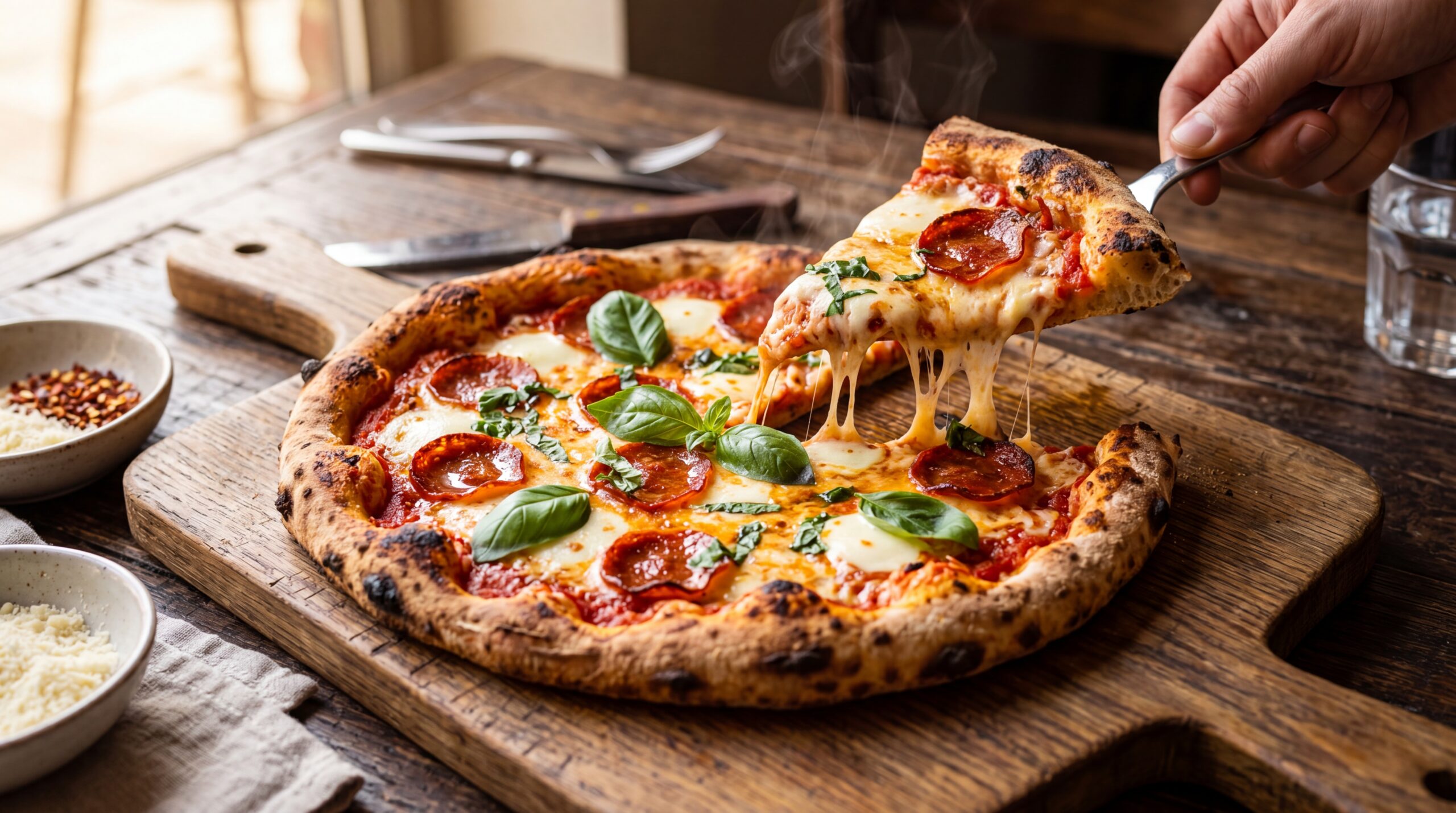
There’s something truly magical about a perfectly crafted pizza. From the moment you smell the aroma of baking dough to that first satisfying bite, pizza has captured hearts and taste buds around the world. Whether you’re a home cook looking to elevate your skills or simply a pizza enthusiast wanting to understand what makes your favorite slice so special, this guide will take you through the art of creating the perfect pizza.
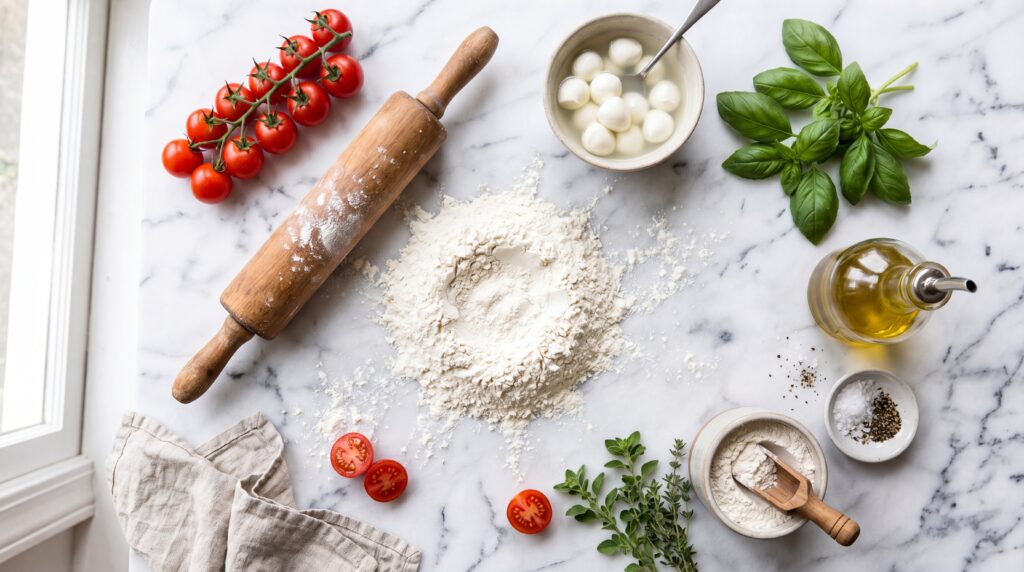
The Foundation: Quality Ingredients
Great pizza starts with great ingredients. The simplicity of traditional Italian pizza means that every component must shine. Start with San Marzano tomatoes for your sauce – their natural sweetness and low acidity create the perfect base. For cheese, fresh mozzarella di bufala offers a creamy, delicate flavor that melts beautifully, though high-quality fior di latte (cow’s milk mozzarella) is an excellent alternative.
Don’t underestimate the power of fresh basil, extra virgin olive oil, and sea salt. These finishing touches transform a good pizza into an unforgettable one. When sourcing ingredients, think local and seasonal – farmers’ market produce can elevate your homemade pizza to restaurant quality.
Mastering the Dough
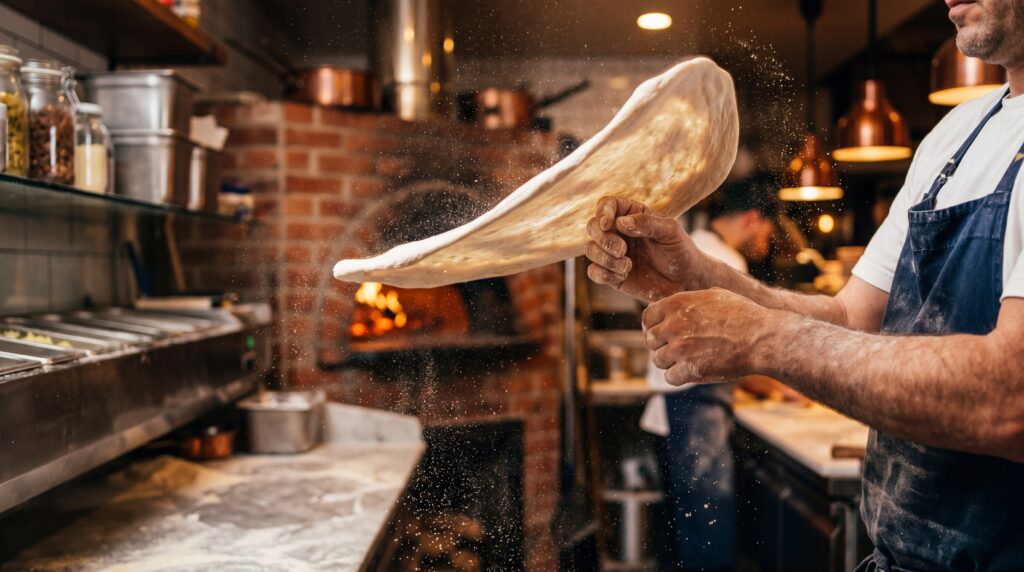
The dough is where pizza truly becomes an art form. Authentic Neapolitan pizza dough requires just four ingredients: flour, water, salt, and yeast. The magic happens in the technique and time. Using high-protein 00 flour creates the characteristic chewy-yet-tender crust that defines great pizza.
Cold fermentation is the secret weapon of pizza artisans. Allowing your dough to rise slowly in the refrigerator for 24-72 hours develops complex flavors and improves texture. The longer fermentation also makes the dough easier to stretch – a crucial skill that takes practice but rewards patience.
When stretching dough, use your fingertips to create the crust edge, then let gravity do the work as you gently rotate and stretch the dough. Never use a rolling pin, which compresses the air bubbles that create a light, airy crust.
The Perfect Bake
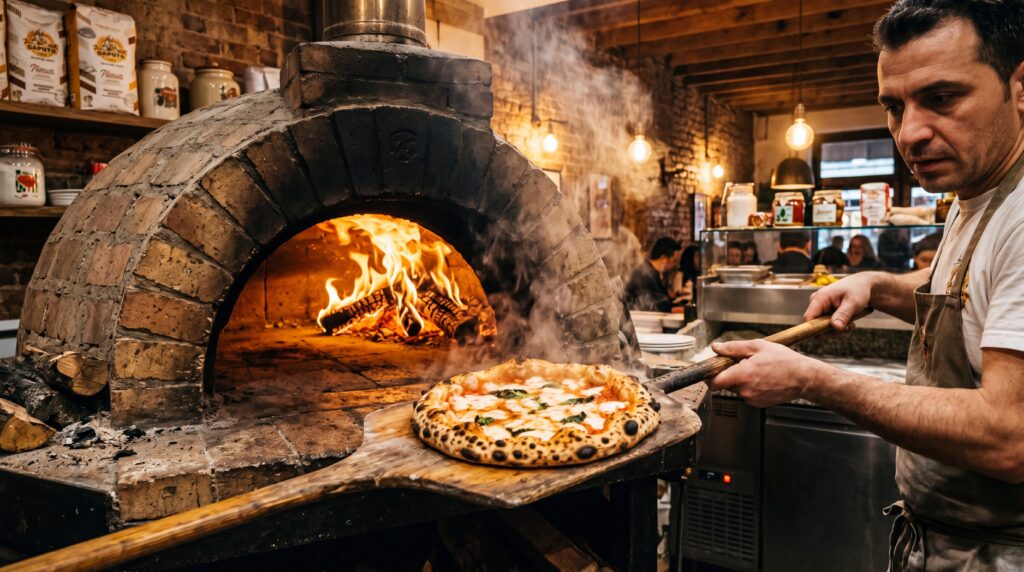
Traditional wood-fired ovens reach temperatures of 800-900°F (425-480°C), cooking pizzas in just 90 seconds. This intense heat creates the characteristic “leopard-spotted” crust with its perfect balance of char and chew. While most home ovens can’t reach these temperatures, you can get surprisingly close results with a few tricks.
A pizza stone or steel is essential for home baking. Preheat your oven with the stone inside for at least an hour at its highest setting – typically 500-550°F. The thermal mass of the stone mimics the heat distribution of a professional deck oven. For even better results, use your oven’s broiler for the final minute to create that authentic blistered crust.
Conclusion
Creating the perfect pizza is a journey of continuous improvement. Each batch of dough teaches you something new, and every pizza brings you closer to mastery. Remember that even in Naples, the birthplace of pizza, every pizzeria has its own subtle variations and secrets. Find your own style, respect the ingredients, and most importantly – enjoy every delicious moment of the process.
Buon appetito!