Every home pizzaiolo eventually hits a wall: the standard kitchen oven. While your oven can reach 500°F or 550°F, it lacks the intense, concentrated floor heat of a professional wood-fired brick oven. This discrepancy is why home-baked pizzas often suffer from the dreaded “soggy middle.” To bridge this gap, enthusiasts turn to specialized baking surfaces. Achieving The Art of the Perfect Crust requires more than just a good recipe; it requires a surface that can store and discharge heat rapidly into the dough.
What is a Pizza Stone?
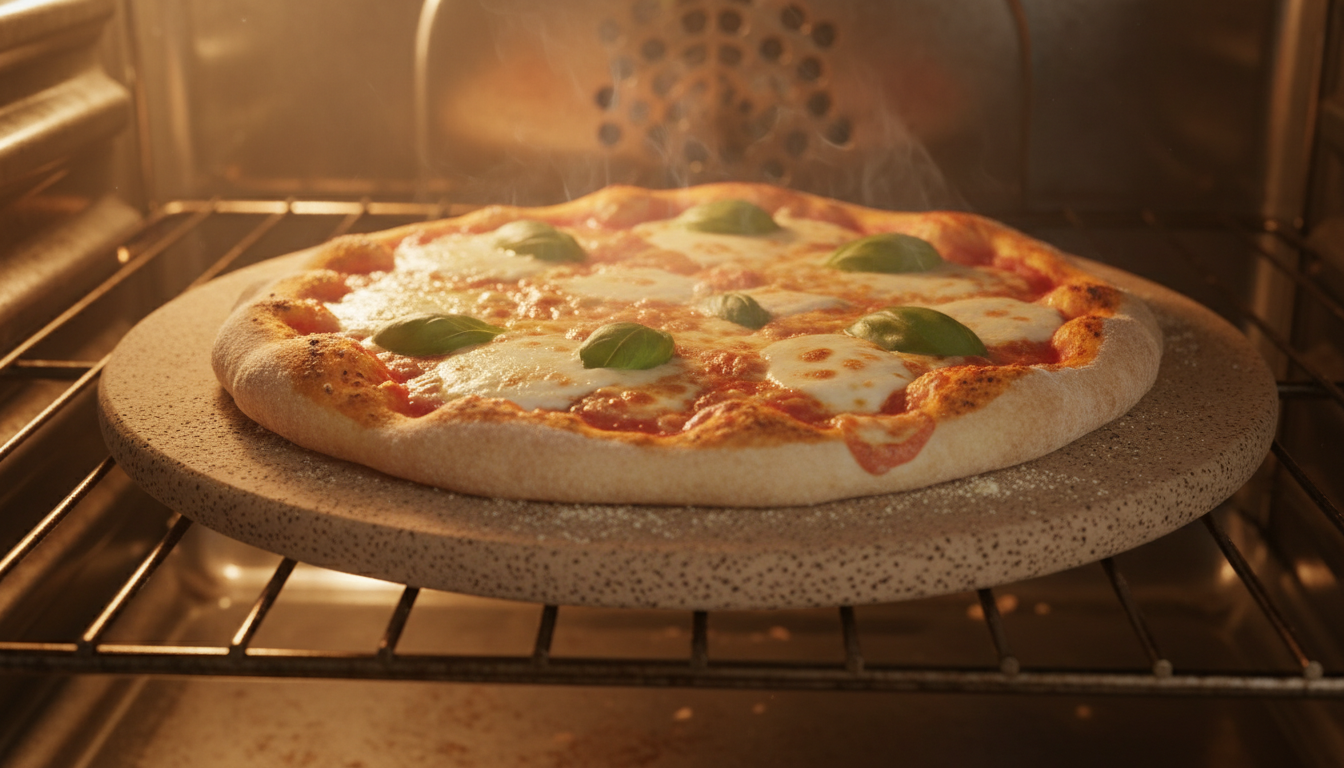
A pizza stone is a slab of ceramic, clay, or cordierite designed to mimic the floor of a traditional masonry oven. Its primary superpower is its porosity. As the raw dough hits the preheated stone, the material’s microscopic pores absorb excess moisture from the bottom of the crust. This moisture extraction is what creates that characteristically dry, cracker-like crispness that many pizza lovers crave.
Cordierite stones are particularly popular because they are highly resistant to thermal shock, meaning they are less likely to crack when moving from different temperature extremes. However, stones are generally more fragile than their metal counterparts and can break if dropped or handled roughly. They provide excellent heat retention, staying hot for a long time once they reach their target temperature, making them a staple for those who prefer a traditional, artisanal approach.
What is a Pizza Steel?
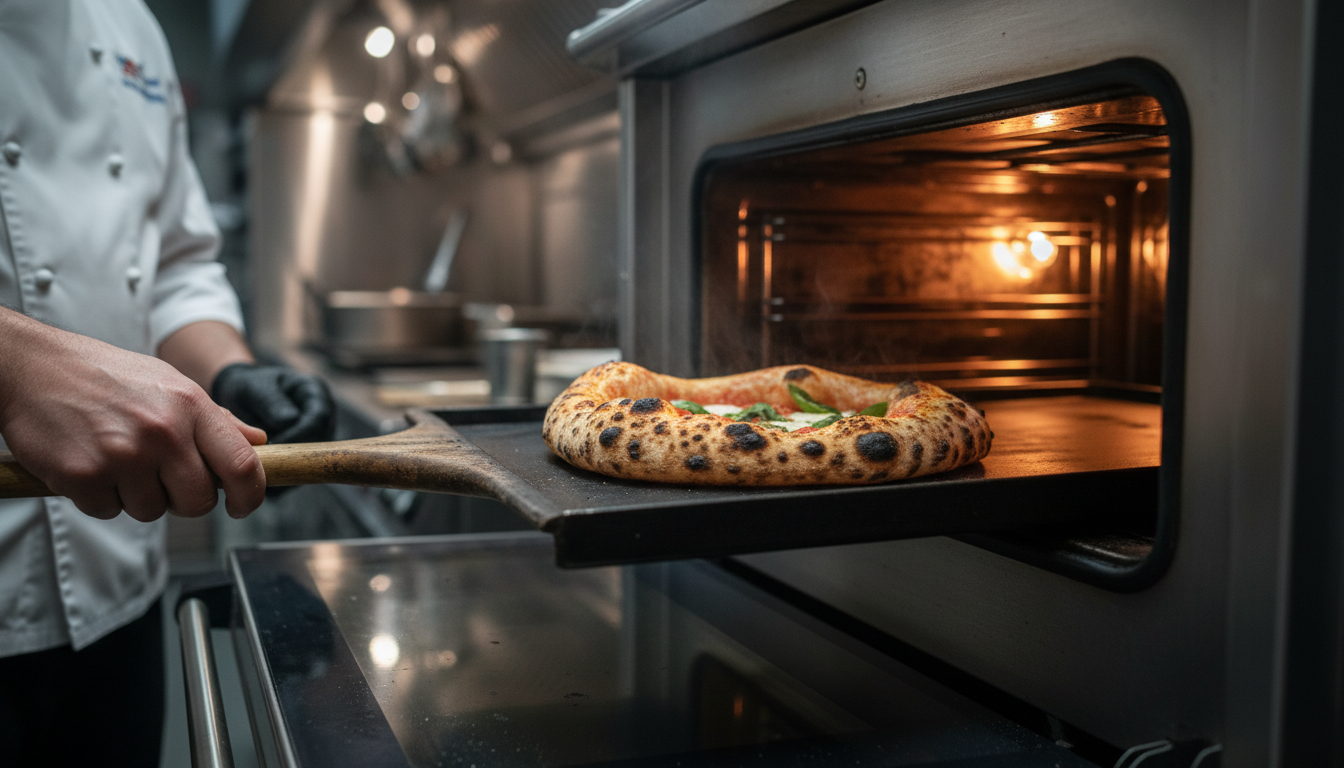
The pizza steel, or “baking steel,” is a relatively modern innovation in the home kitchen. Made from solid carbon steel, these plates rely on high thermal conductivity rather than just heat retention. Steel conducts heat much more efficiently than stone, meaning it can transfer energy into your pizza dough at a significantly faster rate. This rapid heat transfer creates a massive “oven spring,” causing the gases in the dough to expand quickly and create those beautiful, airy bubbles in the crust.
Steels are virtually indestructible. Unlike ceramic stones, a steel will never crack, no matter how high you crank the heat or how many times you drop it. However, they are incredibly heavy—often weighing between 15 and 25 pounds—and require seasoning (similar to a cast-iron skillet) to prevent rust. For those focused on Mastering the Pizza Oven environment within a standard kitchen, the steel is often considered the ultimate upgrade.
Head-to-Head Comparison
- Heat-up Time: Both require a long preheat (usually 45–60 minutes). However, because steel is more conductive, it can often be ready slightly sooner than a thick ceramic stone.
- Recovery Time: This is where the steel shines. When you place a cold pizza on a hot surface, the surface temperature drops. Steel recovers its heat almost instantly, allowing you to bake multiple pizzas back-to-back without the “cool down” period required by stones.
- Texture: A stone produces a very crispy, crunchy bottom. A steel produces a “leopard-spotted” char with a texture that is crispy on the outside but soft and chewy on the inside—reminiscent of New York-style pies.
- Price: Pizza stones are generally more budget-friendly, typically ranging from $30 to $60. High-quality pizza steels are an investment, usually costing between $80 and $150.
Which One Should You Choose?
The choice depends on your goals and your budget. If you are just starting out or are primarily interested in Elevating the Frozen Pizza to a gourmet level, a pizza stone is a fantastic, cost-effective entry point. It will significantly outperform a standard baking sheet and provide that classic crunch.
However, if you are a serious hobbyist aiming for professional-grade New York or Neapolitan-style results in a home oven, the pizza steel is the clear winner. Its ability to transfer heat rapidly and its lifetime durability make it the superior tool for high-performance baking.
Conclusion
Whether you choose the porous, traditional pizza stone or the high-octane pizza steel, either option will be a massive upgrade over a bare oven rack or a thin aluminum pan. The stone offers a classic, crispy experience at a lower price point, while the steel provides professional-level heat transfer and indestructible longevity. Evaluate your baking style, consider your budget, and get ready to enjoy the best home-cooked pizza of your life.