Exploring Pizza Crust Varieties: From Thin Crust to Deep Dish
Pizza is a global language, but its dialect is spoken through the crust. While toppings often get the glory, the foundation of any great pizza is the dough. From the charred, pillowy edges of a Neapolitan pie to the buttery, structural walls of a Chicago deep dish, the crust determines the entire eating experience. Understanding these varieties is essential for any enthusiast looking to master The Art of the Perfect Pizza Dough.
The Neapolitan: The Ancestor of All Crusts
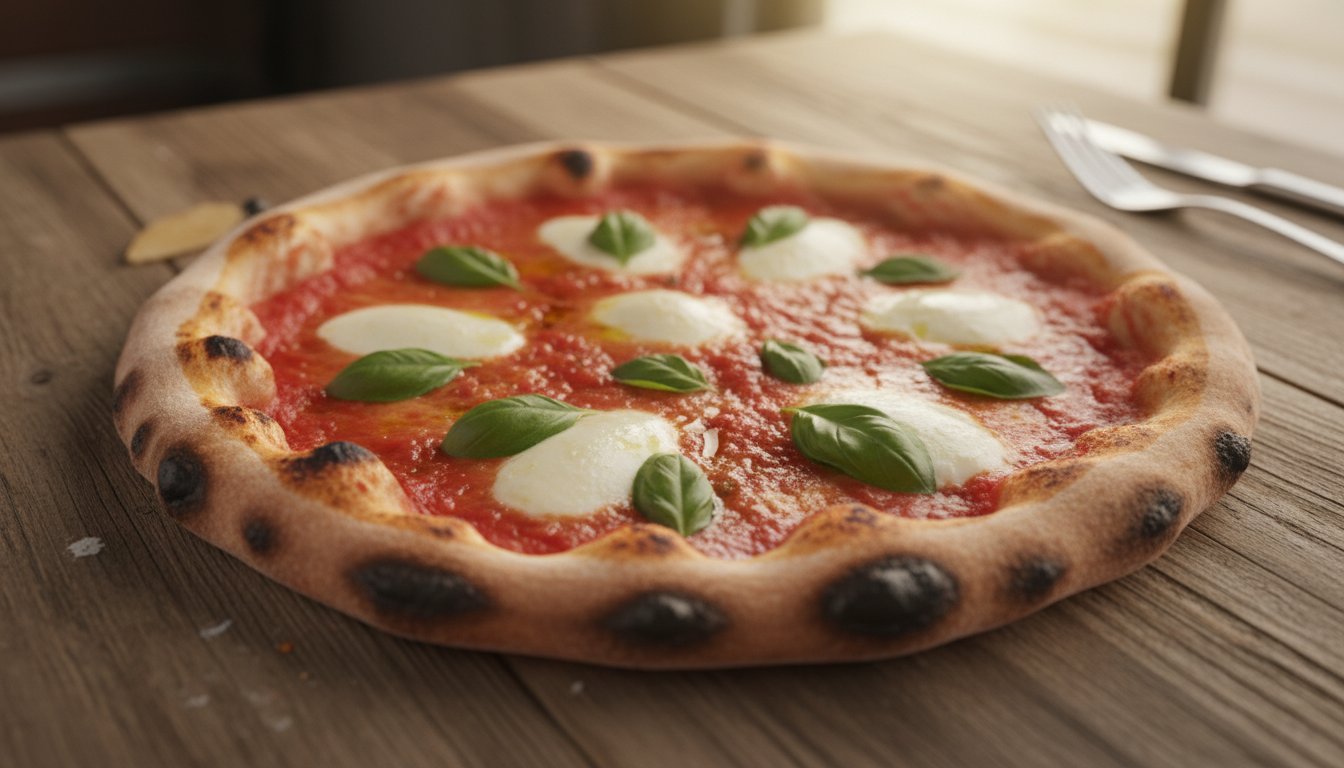
The story of modern pizza begins in Naples, Italy. Neapolitan pizza is protected by tradition, characterized by a crust that is thin, soft, and remarkably airy. To achieve the signature “cornicione” (the puffed outer rim), the dough must be baked at extremely high temperatures—often exceeding 800°F—in a wood-fired oven for no more than 90 seconds. This creates the iconic “leopard spotting,” or charred bubbles, that provide a smoky contrast to the tender interior.
Authenticity is key here. Traditional Neapolitan dough consists only of highly refined flour, water, salt, and yeast. For those looking to replicate this at home, choosing the right ingredients is vital; you can learn more in The Ultimate Guide to Pizza Flour. The result is a crust that is elegant and light, meant to be eaten with a fork and knife or folded into a “wallet” style.
New York Style: The Foldable Classic
As Italian immigrants brought their recipes to the United States, the crust evolved to meet the fast-paced lifestyle of New York City. The New York-style crust is a descendant of the Neapolitan but modified for deck ovens. It is large, hand-tossed, and features a distinct chewiness that comes from high-gluten bread flour and the addition of sugar and oil.
The hallmark of a perfect New York slice is its “foldability.” The crust must be sturdy enough to hold its toppings without cracking, yet thin enough to be folded in half for on-the-go consumption. The bottom should have a light brown crispness, providing a structural snap that balances the gooey mozzarella and tangy tomato sauce.
Chicago Deep Dish: A Buttery Fortress
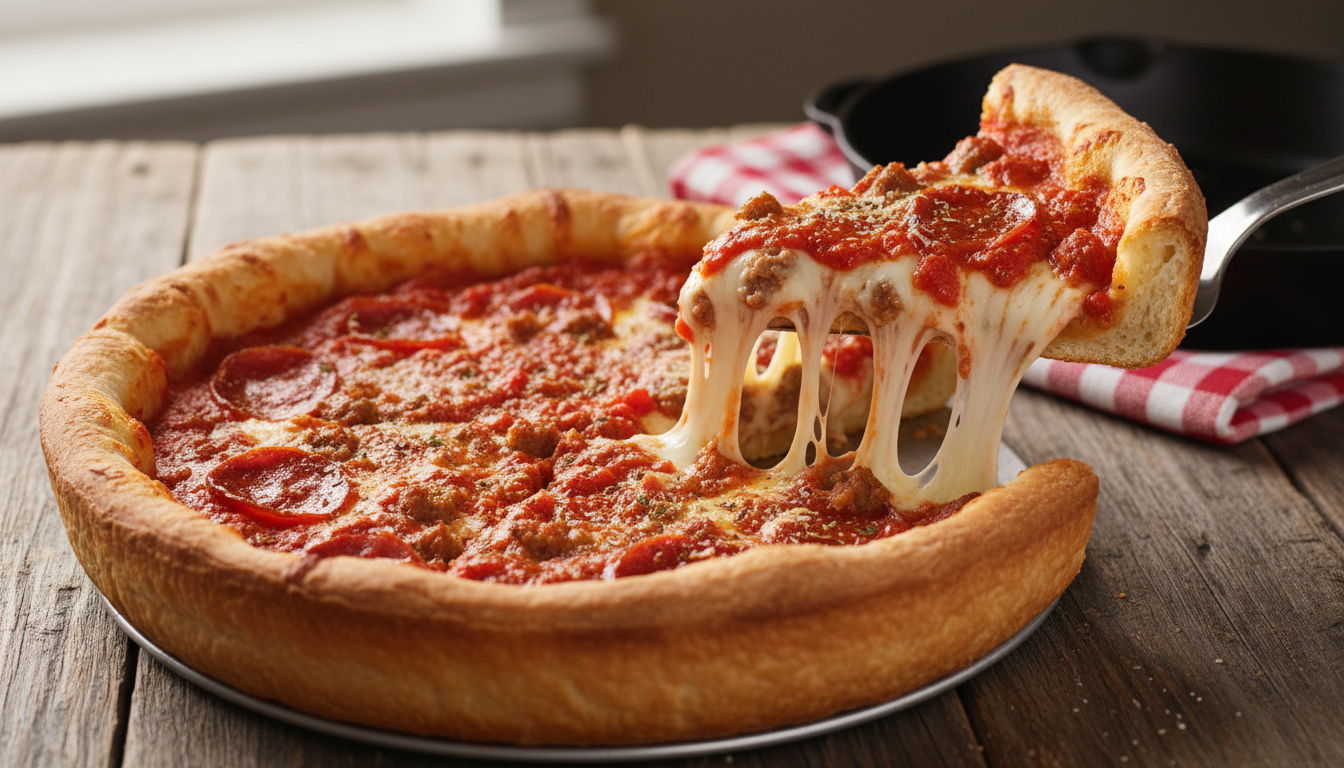
Moving to the Midwest, the pizza undergoes a radical transformation. Chicago Deep Dish is less of a flatbread and more of a savory pie. Baked in a deep, oiled steel pan, the crust is pressed up the sides to create a high wall that contains massive amounts of cheese and toppings. The dough itself often contains cornmeal or a high fat content (butter or oil), resulting in a biscuit-like, flaky texture rather than a chewy one.
Because of its thickness, the assembly is inverted to prevent the cheese from burning during the long bake time. A thick layer of sliced mozzarella sits directly on the crust, followed by meats and vegetables, and finally topped with a chunky tomato sauce. When selecting components for such a heavy dish, it helps to explore The Best Cheeses for Pizza: Beyond Mozzarella to find varieties that can stand up to the intense heat and volume.
Sicilian and Grandma Style: The Square Standard
Finally, we look at the square varieties. Sicilian pizza is known for its thick, spongy, focaccia-like base. The dough is allowed to rise in a heavily oiled pan, which essentially “fries” the bottom of the crust, giving it a golden, crunchy exterior while the middle remains soft and airy. It is the ultimate comfort food crust.
A close relative is the “Grandma Style” pizza. Originating from Italian-American households, this version is thinner and denser than the Sicilian. It is stretched into a sheet pan and baked with a more rustic approach—often with the sauce drizzled over the cheese. It offers a home-cooked feel with a focus on a crispy, olive-oil-infused bottom that provides a satisfying crunch in every bite.
Whether you prefer the charred elegance of Naples or the buttery depths of Chicago, the crust is the soul of the pizza. By experimenting with different hydration levels, flours, and baking vessels, you can transform a simple dough into a masterpiece of texture and flavor.