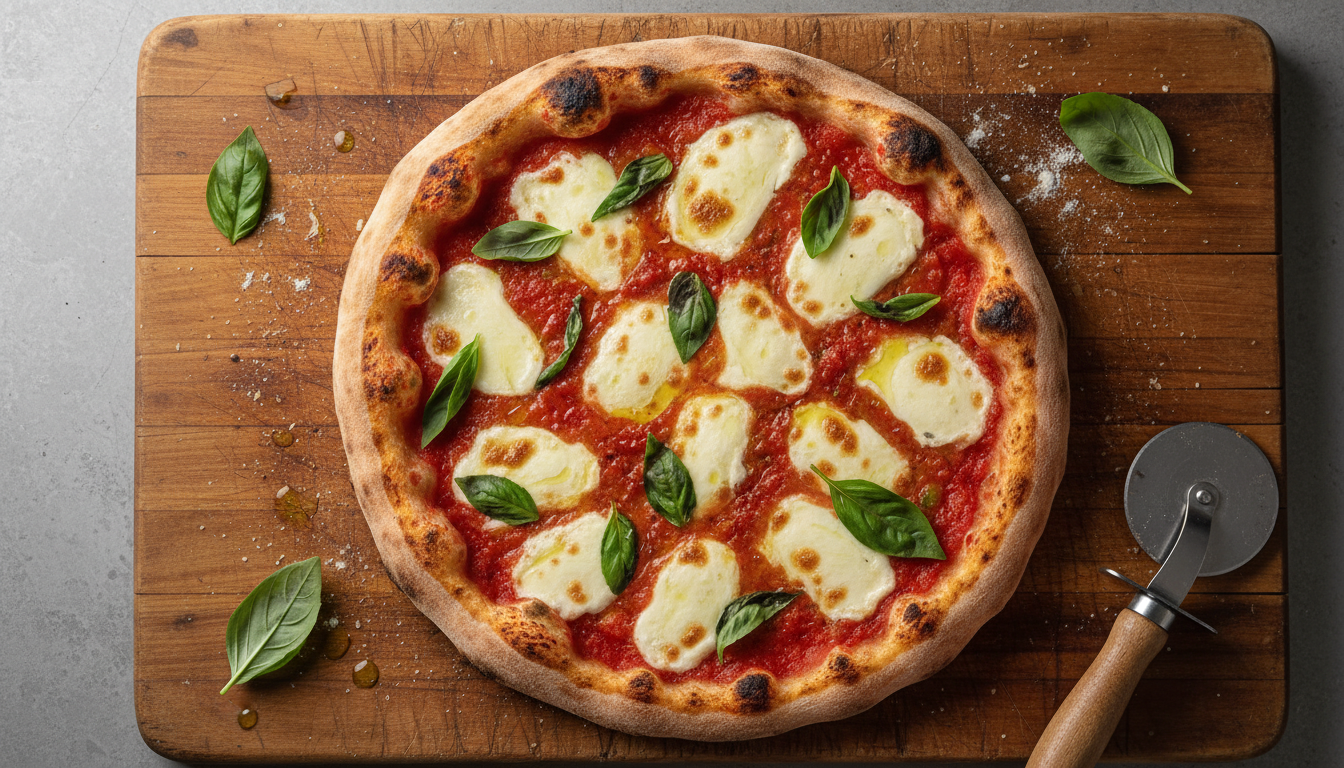
Few culinary creations have captivated the world quite like Neapolitan pizza. Born in the sun-drenched streets of Naples, Italy, this iconic dish has earned UNESCO Intangible Cultural Heritage status — a testament to its cultural depth and timeless perfection. Whether you’re a curious home cook or a passionate food lover, mastering Neapolitan pizza is one of the most rewarding kitchen adventures you can embark on. In this guide, we’ll walk you through everything: the dough, the sauce, the toppings, and the baking secrets that make this pizza truly extraordinary.
The Foundation: Perfecting Neapolitan Pizza Dough
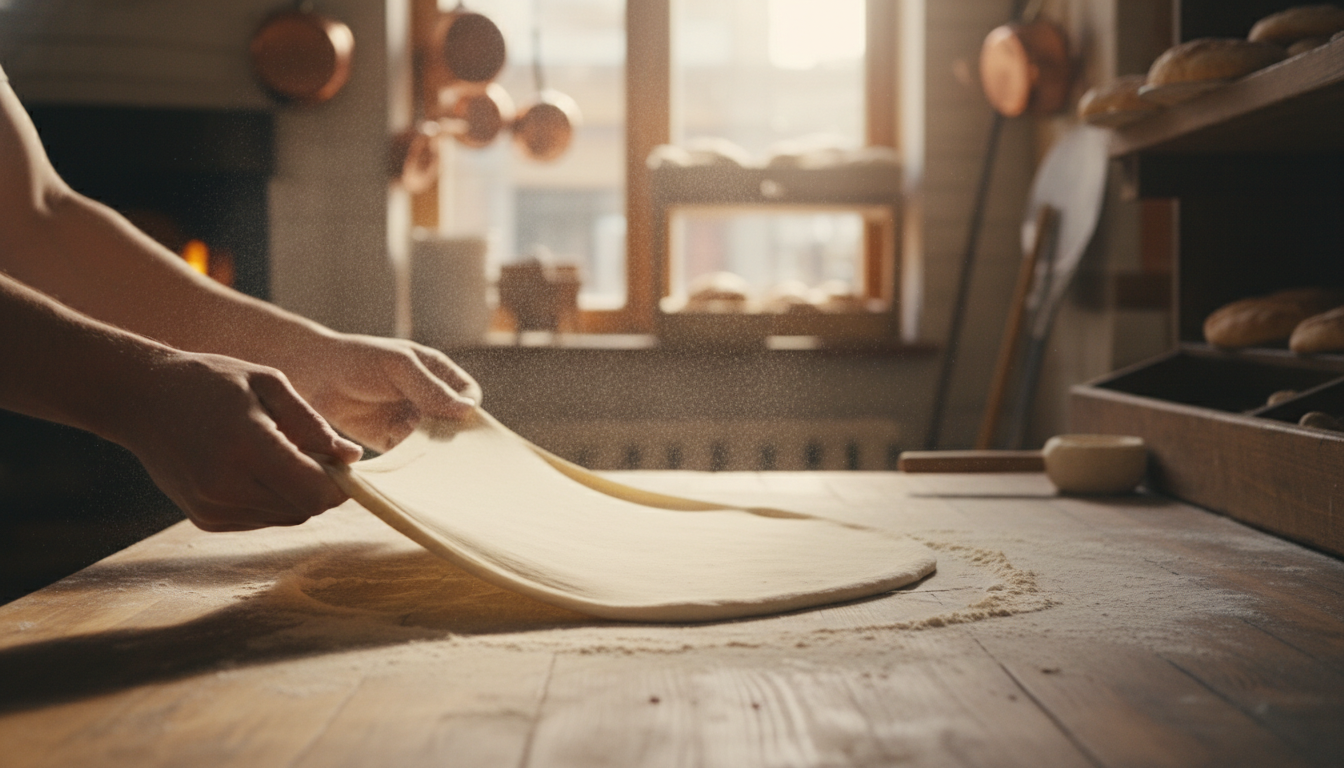
The dough is where the magic begins — and where most home cooks go wrong. Authentic Neapolitan pizza dough uses just four ingredients: 00-grade flour, water, salt, and yeast. But the real secret lies in time. A slow, cold fermentation of 24 to 72 hours allows complex flavors to develop and creates that signature light, airy, digestible crust.
Here’s the foundation recipe for two pizzas:
- 500g Tipo 00 flour (or all-purpose as a substitute)
- 325ml cold water (65% hydration)
- 10g fine sea salt
- 1g active dry yeast (yes, just 1 gram!)
Mix flour and water until no dry flour remains, then add salt and a small amount of yeast dissolved in a little water. Knead for 10–15 minutes until smooth and elastic. Let it bulk ferment at room temperature for 2 hours, then refrigerate overnight (or up to 3 days). When ready, ball the dough and let it rest at room temperature for 3–4 hours before stretching. Never use a rolling pin — always stretch by hand to preserve those precious air pockets that give the crust its incredible texture.
The Heart: San Marzano Tomato Sauce
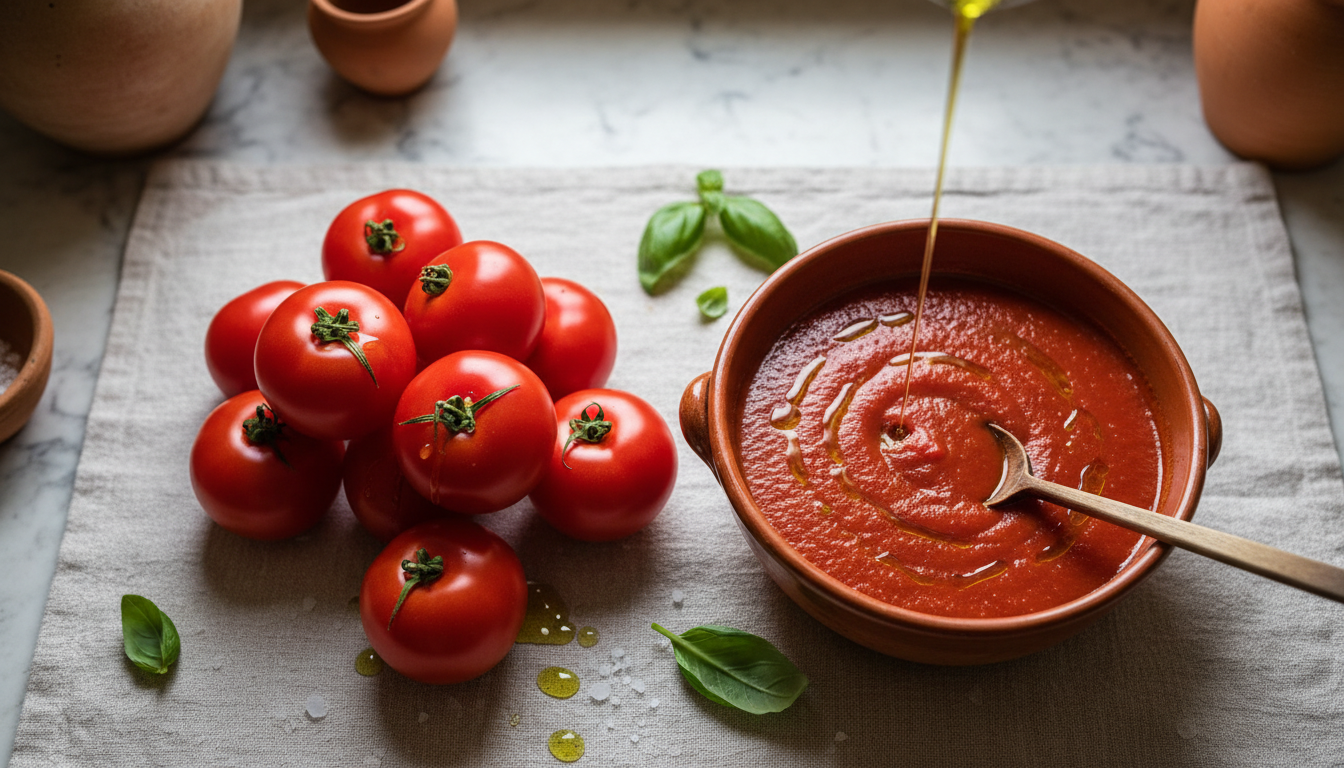
Neapolitan pizza sauce is a lesson in restraint. The Associazione Verace Pizza Napoletana (the official body that certifies authentic Neapolitan pizza) specifies that the sauce must be made from DOP San Marzano tomatoes — a protected variety grown in the volcanic soil of the Campania region near Mount Vesuvius.
The sauce is never cooked. That’s right — true Neapolitan pizza sauce is simply crushed raw tomatoes, seasoned lightly and spread directly on the dough. This preserves the tomatoes’ bright, fresh flavor, which would be lost with cooking. Here’s how to prepare it:
- Open a 400g can of DOP San Marzano tomatoes and drain excess liquid.
- Crush the tomatoes by hand directly into a bowl — chunky texture is ideal.
- Season with a generous pinch of sea salt and a drizzle of extra-virgin olive oil.
- Add a few torn fresh basil leaves if desired.
- That’s it. No cooking, no blending, no sugar. Let the tomatoes speak for themselves.
When spreading on the dough, use the back of a spoon to spiral outward from the center, leaving a 2cm border for the crust. Less is more — a thin, even layer lets all the flavors balance beautifully in the oven.
The Bake: Wood-Fired Secrets and Home Oven Tips
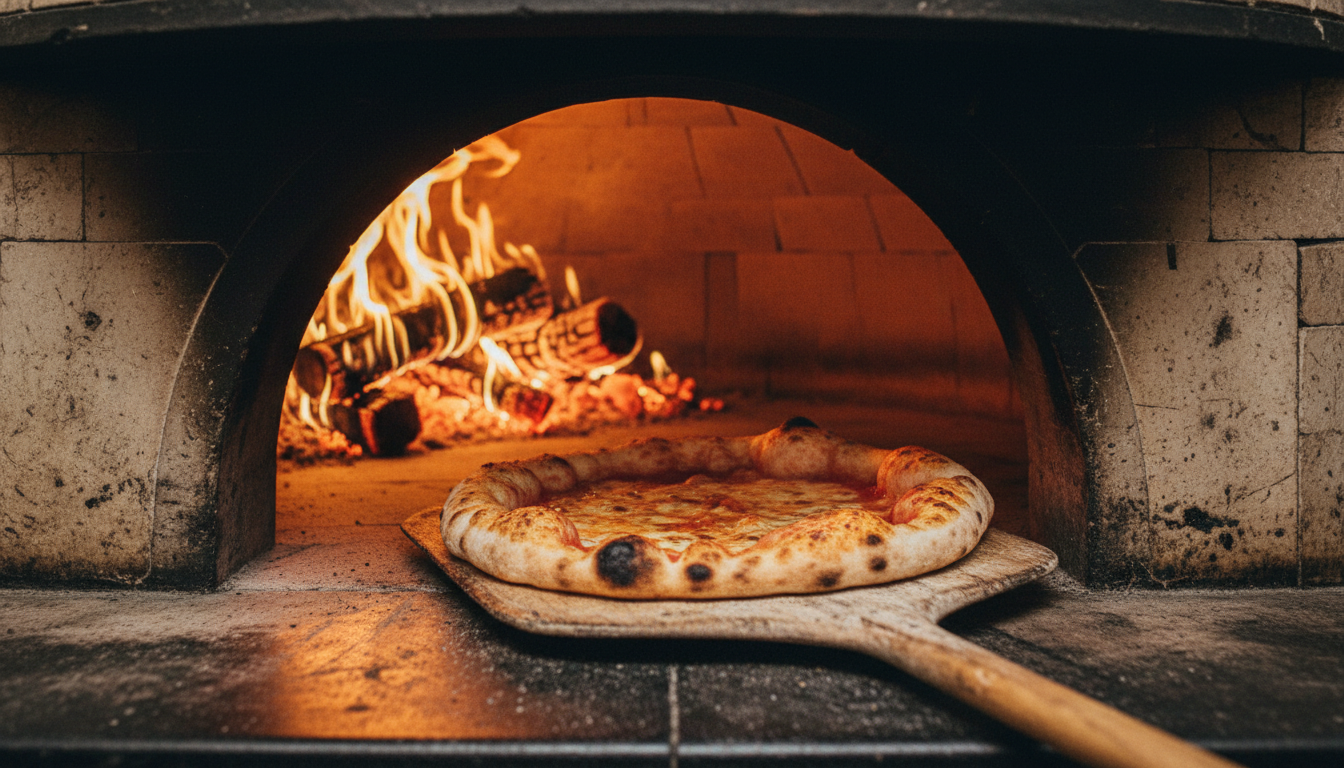
Traditional Neapolitan pizza is baked in a wood-fired dome oven at 450–500°C (840–930°F) for just 60–90 seconds. This extreme heat creates the hallmark characteristics: a charred, blistered crust (the beloved “leopard spots”), a soft and moist interior, and toppings that are perfectly melted without being overcooked.
Don’t have a wood-fired oven? No problem. Here’s how to get as close as possible at home:
- Preheat your oven to its maximum temperature (usually 250–280°C / 480–540°F) for at least 45–60 minutes.
- Use a pizza stone or steel — place it on the highest rack position. Steel conducts heat better and gives a crispier base.
- Switch to broil/grill mode for the last 1–2 minutes to blister the top of the crust.
- Assemble the pizza quickly on a floured peel and slide it onto the hot stone in one confident motion.
- Bake for 5–7 minutes, watching closely for the crust to char in spots and the mozzarella to bubble golden.
Classic Toppings: Simplicity Is Everything
Neapolitan pizza philosophy is beautifully simple: use fewer, better ingredients. The classic Pizza Margherita — named after Queen Margherita of Savoy — features only three toppings representing the colors of the Italian flag:
- 🍅 Crushed San Marzano tomatoes (red)
- 🧀 Fresh fior di latte mozzarella or buffalo mozzarella (white) — torn by hand, never pre-shredded
- 🌿 Fresh basil leaves (green) — added after baking to preserve their brightness
A final drizzle of high-quality extra-virgin olive oil after baking ties everything together. If you want to venture beyond Margherita, classic Neapolitan variations include the Pizza Marinara (tomato, garlic, oregano, olive oil — no cheese!) and the indulgent Pizza Quattro Formaggi (four cheeses: mozzarella, gorgonzola, provolone, and parmigiano).
The Neapolitan Pizza Experience
Making authentic Neapolitan pizza at home is as much about mindset as technique. Slow down. Respect the process. Use the best ingredients you can find. And remember — imperfection is part of its beauty. A slightly uneven crust, a bubble here or there, a charred edge: these are signs of something made with love and skill, not a factory.
Once you taste a pizza made with long-fermented dough, real San Marzano tomatoes, and fresh mozzarella, you’ll understand why Neapolitan pizza has endured for centuries. It’s not just food — it’s a cultural experience on a plate. So fire up your oven, flour your hands, and let the journey begin. Buon appetito!