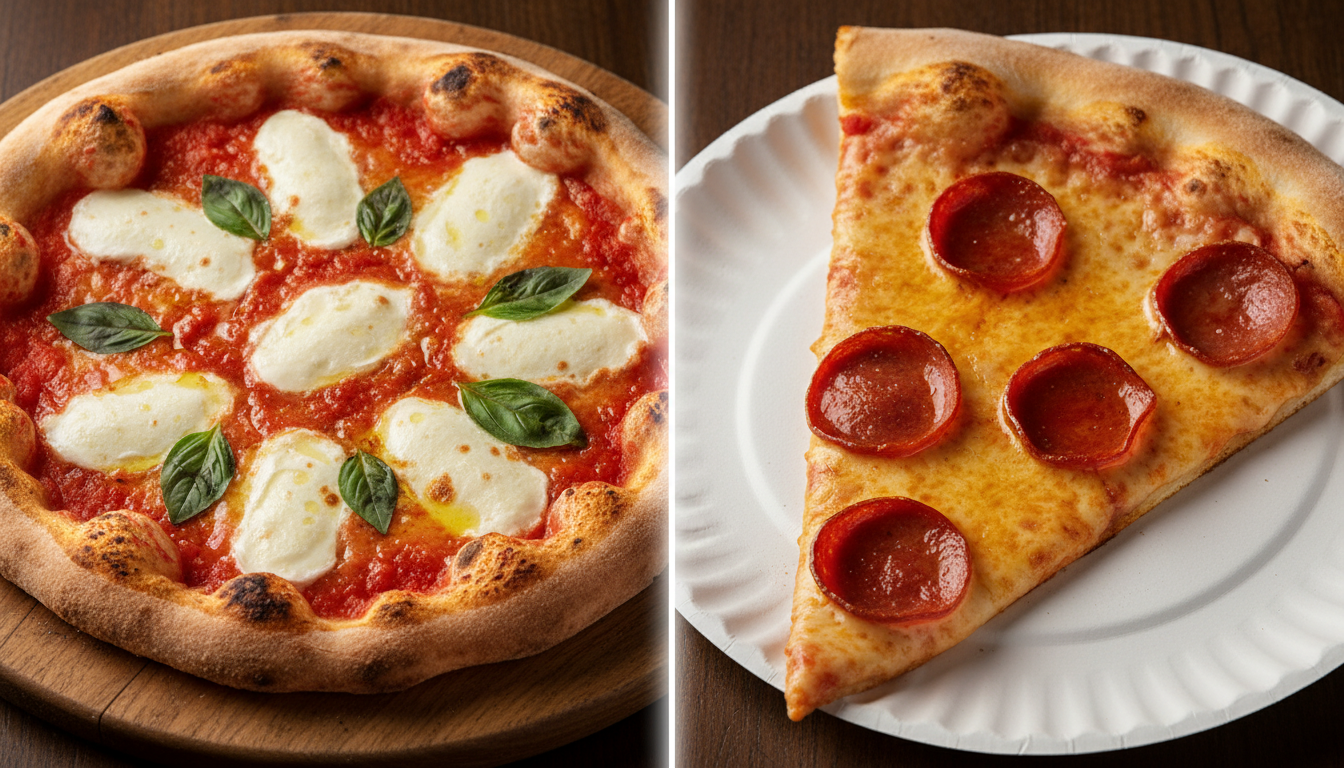
Few culinary rivalries inspire as much passion as the one between Neapolitan and New York style pizza. One hails from the ancient streets of Naples, Italy — birthplace of pizza itself. The other rose from the coal-fired ovens of early 20th-century Manhattan, forever changing American food culture. Both are delicious. Both are iconic. But how do they really compare?
In this guide, we’ll explore the origins, techniques, ingredients, and flavors that define each style — so you can understand what makes them unique, and perhaps even choose a favorite.
A Tale of Two Cities
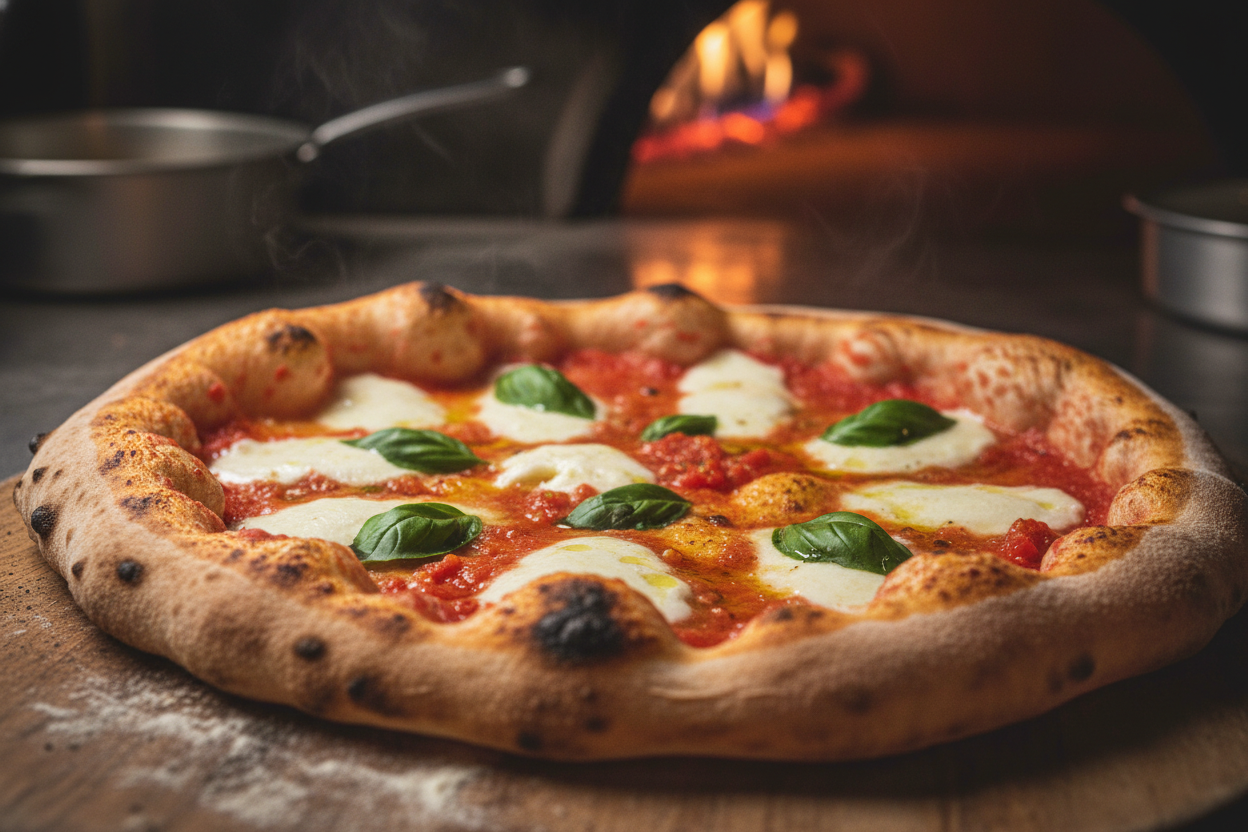
Neapolitan pizza, or Pizza Napoletana, is protected by strict tradition. The Associazione Verace Pizza Napoletana (AVPN) has codified its rules since 1984: only specific flours, San Marzano tomatoes grown near Vesuvius, mozzarella di bufala or fior di latte, fresh basil, extra virgin olive oil, and a wood-fired oven burning at 485°C (905°F). The pizza cooks in just 60–90 seconds, producing its signature pillowy, leopard-spotted edge called the cornicione.
New York pizza, meanwhile, was born from necessity. Italian immigrants adapted their homeland’s recipes to the American landscape: bigger, cheaper, portable, and made for the hungry rush of city workers. The first pizzeria in the United States, Lombardi’s, opened in Manhattan in 1905. By the 1960s, New York’s iconic thin-crust, wide-slice pizzas had become a defining symbol of the city itself.
The Dough: Wet, Chewy, and Slow-Fermented vs. Dense and Foldable
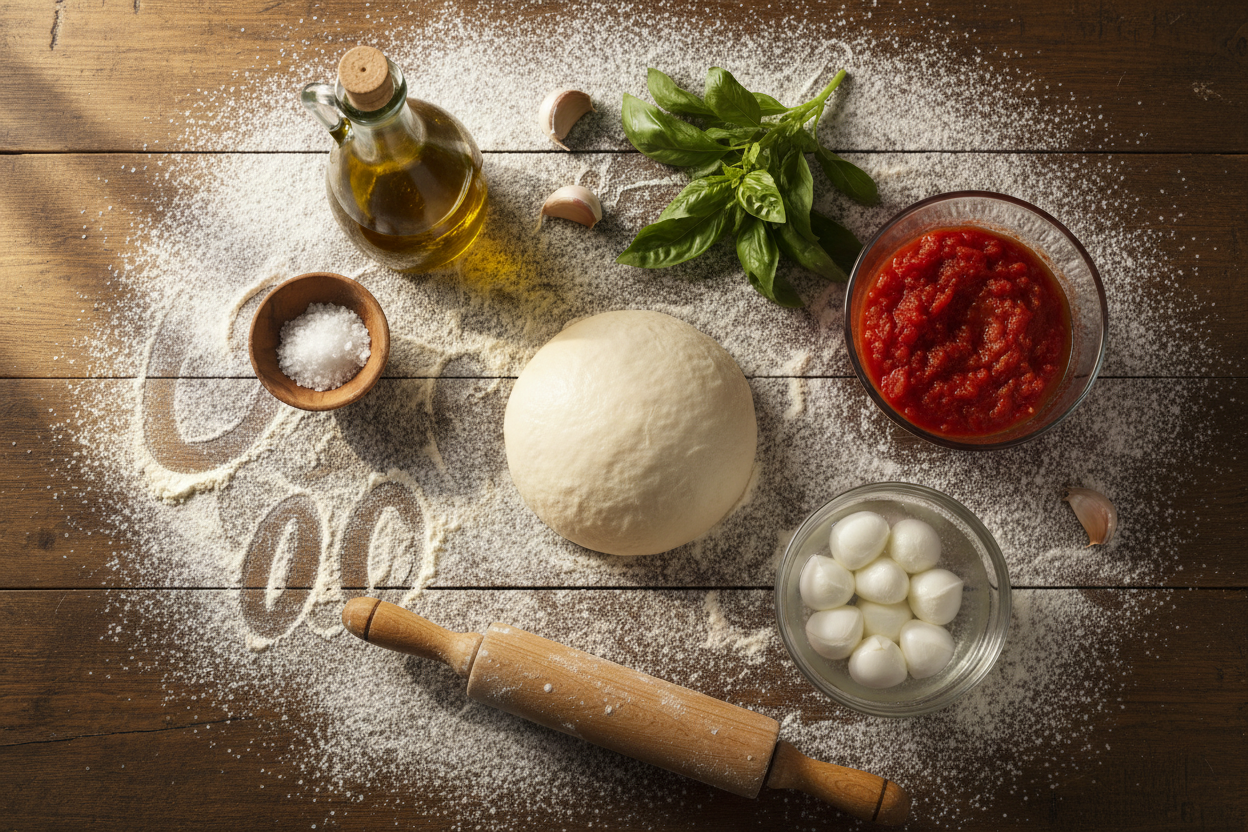
Dough is where these two styles first diverge. Neapolitan dough uses finely milled Italian “00” flour, water, sea salt, and a tiny amount of fresh yeast. Hydration runs around 60–65%, and long cold fermentations (24–72 hours) develop complex flavor and a light, airy structure. Neapolitan pies are small — about 10 to 12 inches — and meant to be eaten with a knife and fork. The center is often soft and slightly wet, a feature locals affectionately call “pizza al portafoglio” when folded into a wallet shape for eating on the go.
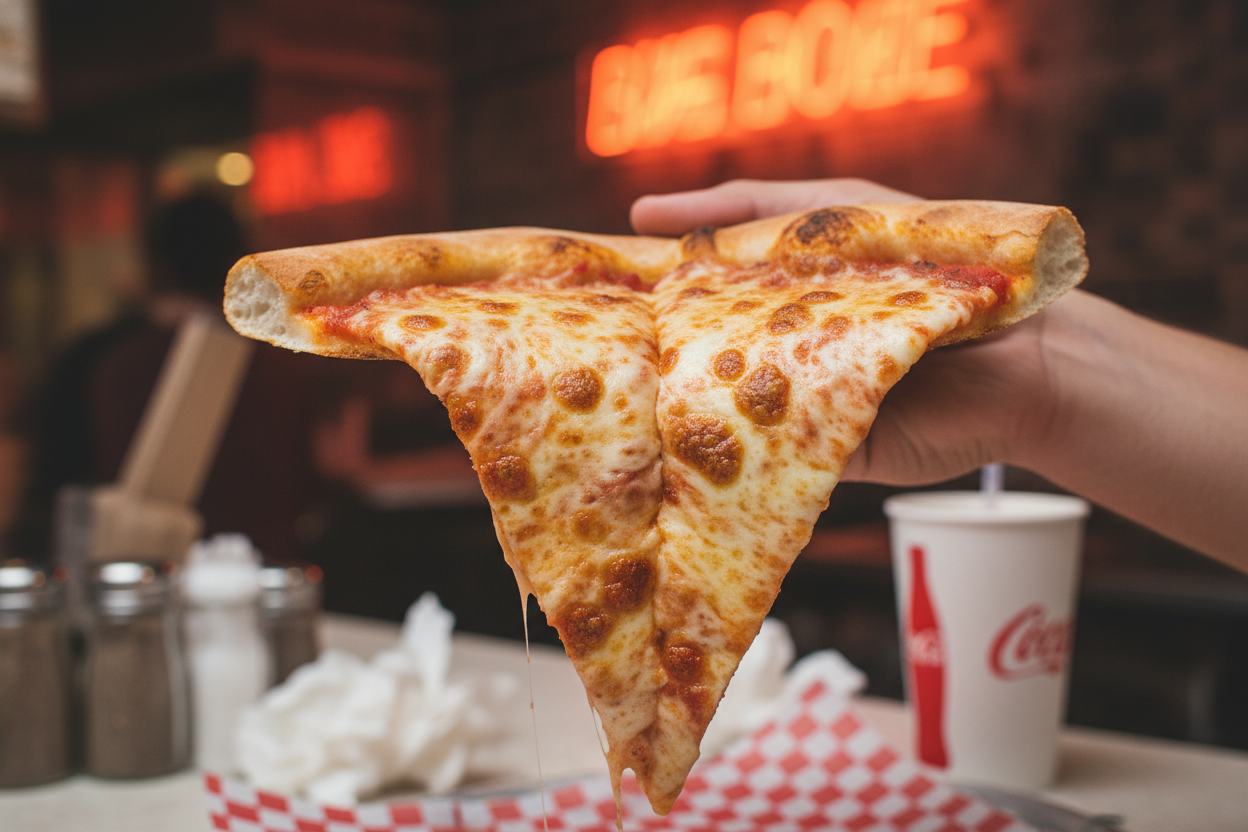
New York dough, by contrast, uses high-gluten bread flour, sometimes enriched with a splash of oil and a pinch of sugar. The result is a sturdier crust that can support generous toppings and survive the famous “fold.” Pies are large — often 18 to 24 inches — baked in gas-fired deck ovens around 260°C (500°F) for 10–15 minutes. The bottom turns crisp and golden; the bite is chewy but firm.
Sauce and Cheese: Minimalism vs. Generosity
Neapolitan sauce is simplicity itself: crushed San Marzano tomatoes (often by hand), a pinch of salt, sometimes a drizzle of olive oil. It’s never cooked before baking — the oven does the work. Cheese is applied sparingly in torn pieces, never in a total blanket, leaving beautiful “windows” of red sauce visible between white islands of bubbling milk.
New York sauce often leans sweeter and more herbaceous, with oregano, garlic powder, and sometimes onion. Low-moisture mozzarella is the cheese of choice — it melts evenly, browns beautifully, and produces the characteristic orange-tinted grease pools that pizza purists secretly love. Coverage is generous and even, corner to corner.
Ingredients: The Secret Soul of Pizza
Regardless of style, pizza lives or dies by its ingredients. Great flour, ripe tomatoes, fresh dairy, and good olive oil can elevate even the simplest pie. Italian traditionalists often source from specific DOP-protected regions, while New York pizzaiolos have built decades of expertise around local suppliers like Grande and Polly-O cheese.
Which One Is Better?
Here’s the honest answer: they’re not competing. They’re different expressions of the same beautiful idea — dough, tomato, and cheese transformed by heat. Neapolitan pizza is a quick ceremony: small, personal, eaten hot at the table within minutes of leaving the oven. New York pizza is urban fuel: big, affordable, foldable, eaten while walking.
If you crave lightness, complex dough flavor, and the soul of southern Italy — go Neapolitan. If you want nostalgia, generosity, and the thrill of a crisp-chewy foldable slice — go New York. And if you’re truly a pizza lover? You already know the answer: both, please.
Making Them at Home
- Invest in good flour. “00” flour for Neapolitan, high-protein bread flour for New York.
- Slow-ferment your dough. At least 24 hours in the fridge — it’s the single biggest upgrade.
- Max out your oven. Use a pizza steel or stone and preheat for at least 45 minutes at the highest setting.
- Go easy on toppings. Less is more — especially with moisture-rich ingredients.
- Respect the basics. Quality tomatoes, real mozzarella, and fresh basil make all the difference.
Whichever camp you belong to, one truth unites all pizza lovers: a great pie — wherever it was born — is one of life’s simplest, most perfect pleasures.