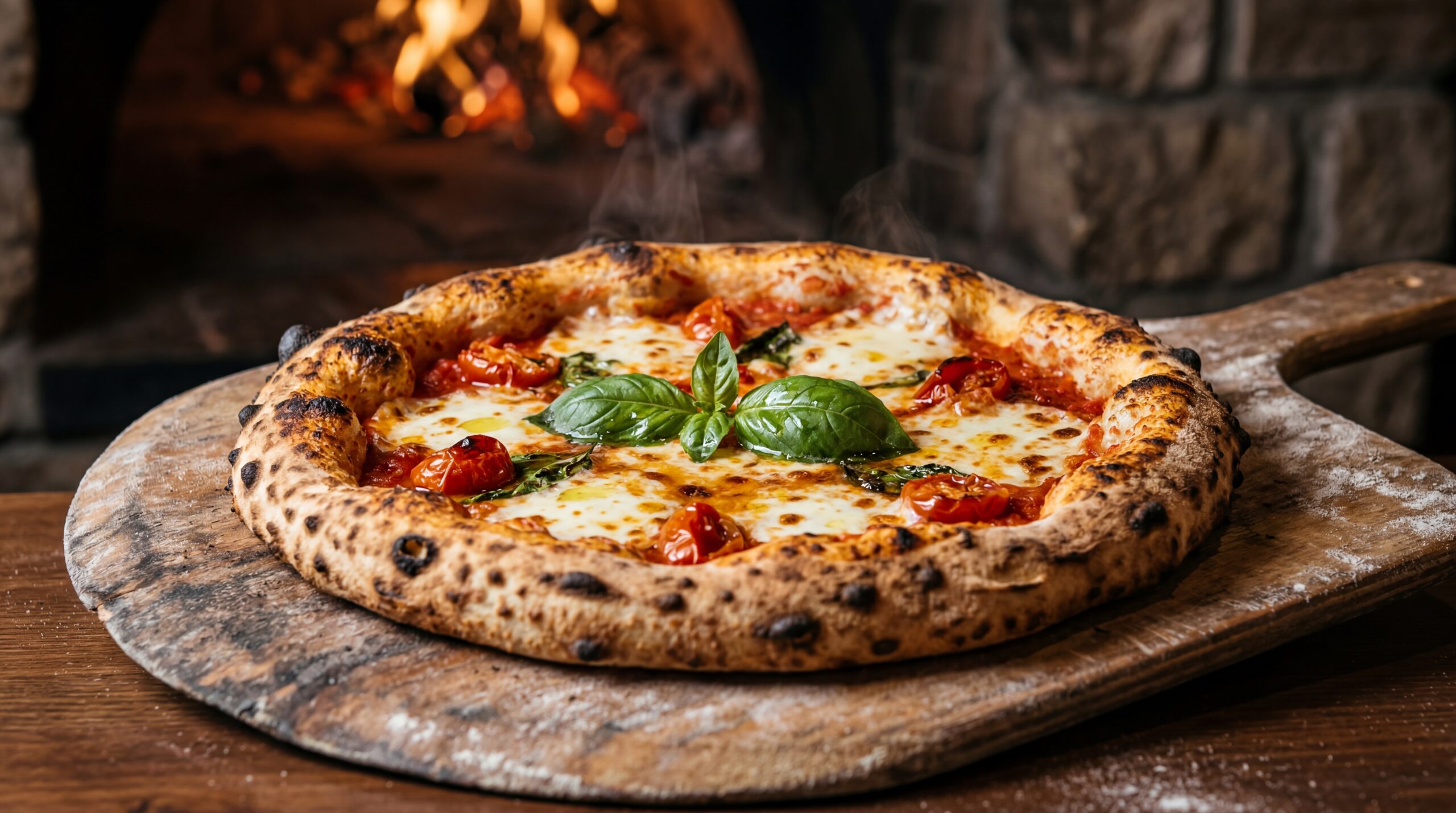
There’s something truly magical about pulling a perfectly baked pizza out of the oven — the crispy, golden crust, the bubbling mozzarella, the intoxicating aroma of fresh basil and tomato sauce filling your kitchen. Authentic Italian pizza doesn’t require a wood-fired oven or professional chef skills. With the right technique, quality ingredients, and a little patience, you can recreate the iconic flavors of Naples right in your own home.
In this guide, we’ll walk you through every step of making the perfect homemade pizza — from crafting an airy, elastic dough to choosing the best toppings and mastering the bake. Whether you’re a first-timer or looking to level up your pizza game, this is the only recipe you’ll ever need.
Step 1: The Dough — The Foundation of Great Pizza
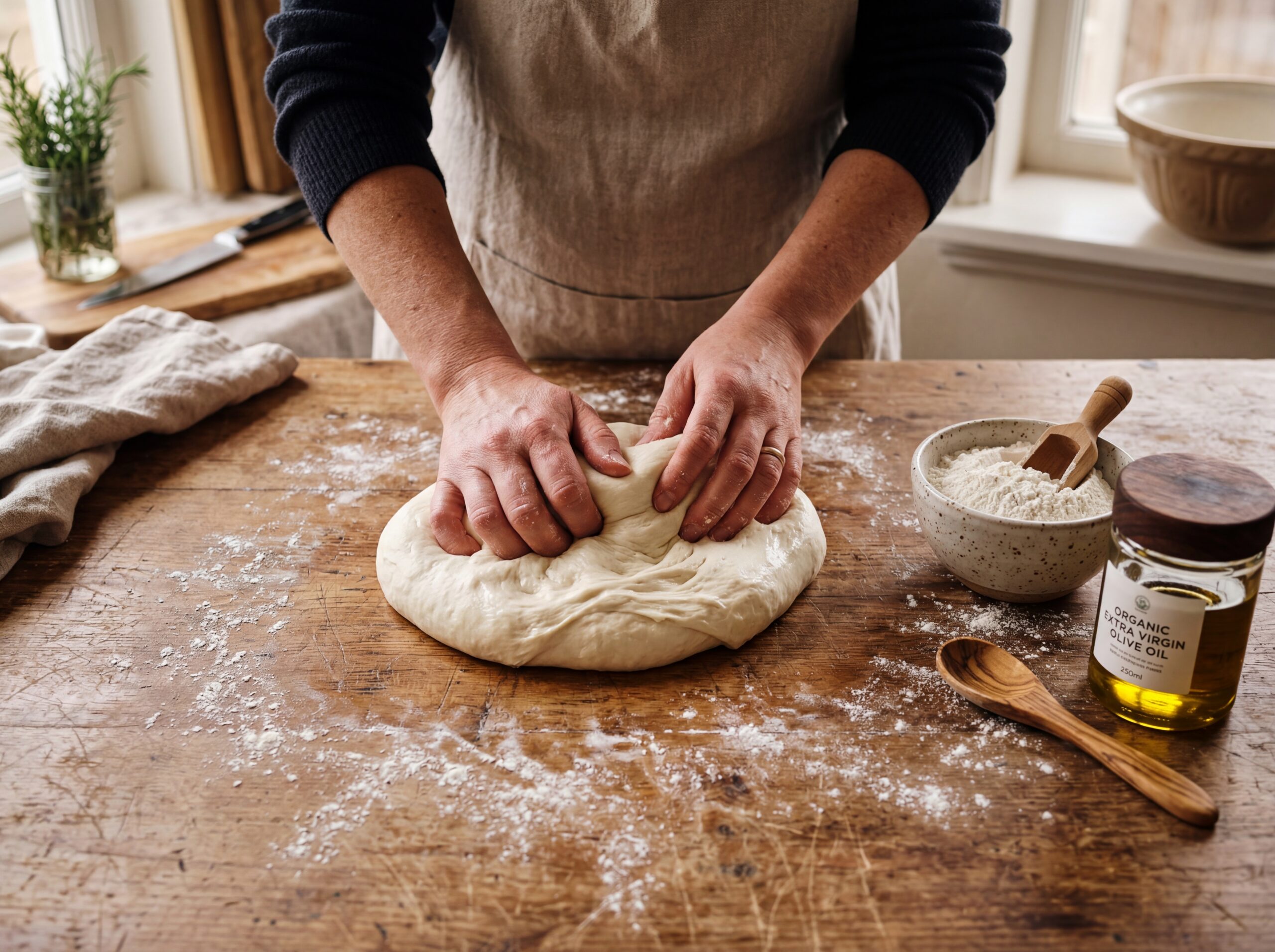
Great pizza starts with great dough. The secret lies in three things: the right flour, proper hydration, and slow fermentation. Use 00 flour (finely milled Italian flour) for that silky, stretchy texture that Neapolitan pizzaiolos swear by. If you can’t find 00 flour, all-purpose flour works well too.
Mix 500g of flour with 325ml of lukewarm water, 7g of active dry yeast, 10g of salt, and a tablespoon of extra virgin olive oil. Knead the dough for at least 10 minutes until it becomes smooth and elastic — it should spring back when you poke it. The real game-changer? Let it ferment slowly in the fridge for 24–72 hours. This cold fermentation develops complex flavors and gives the crust that characteristic slight tang.
Step 2: The Sauce — Simple Is Always Better
Authentic Neapolitan pizza sauce requires no cooking — it’s the purity of the tomatoes that makes it extraordinary. Use San Marzano tomatoes (DOP-certified if possible), crushed by hand or blended briefly. Season with just a pinch of sea salt, a few fresh basil leaves, and a drizzle of extra virgin olive oil. That’s it. No garlic, no oregano, no simmering. The oven does the rest.
Spread the sauce on the stretched dough using the back of a spoon in a circular motion, leaving about 2cm of crust edge uncovered. Less is more — you want to taste the tomato, not drown the pizza in it.
Step 3: Choosing Your Toppings
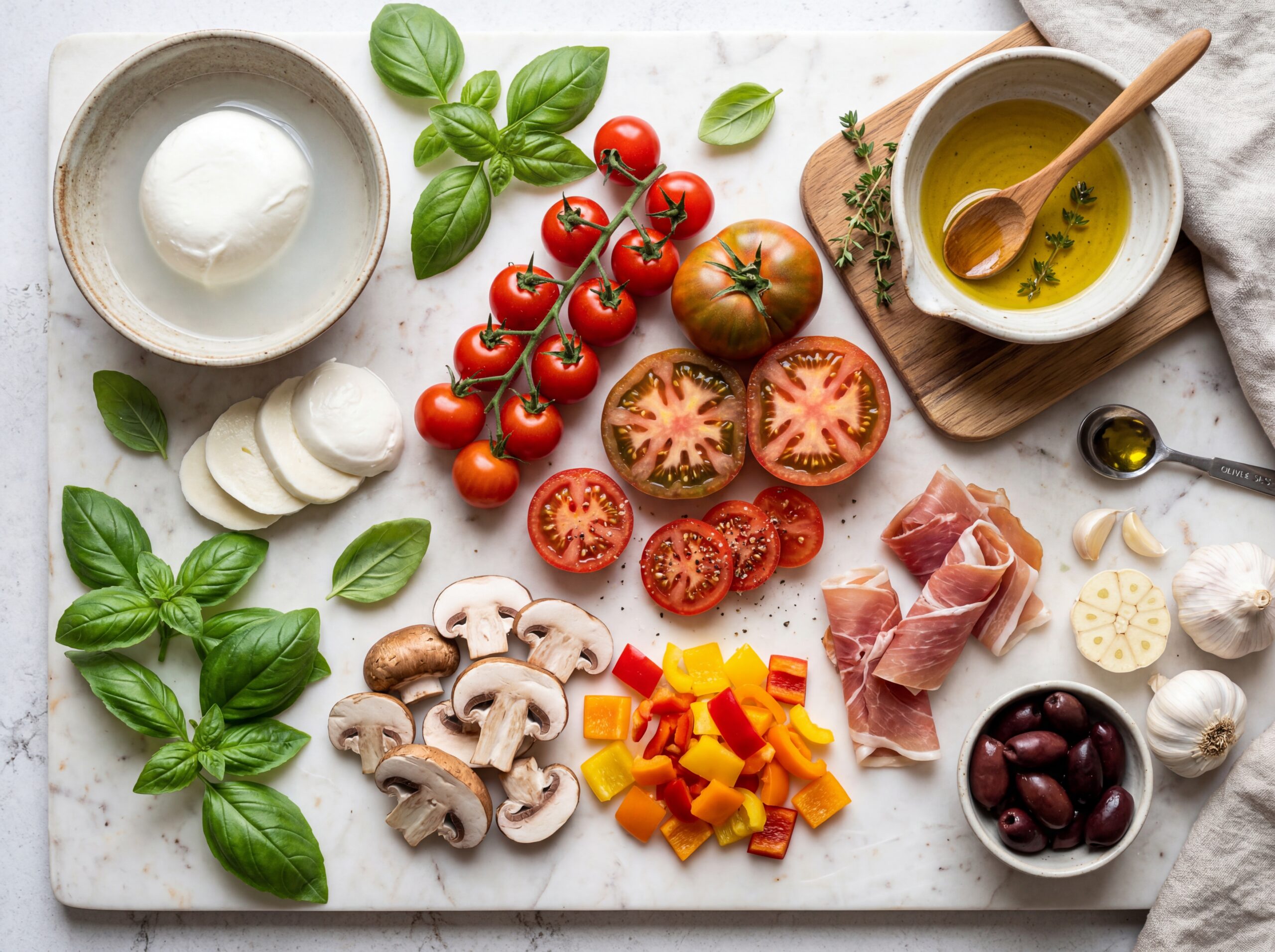
Here’s where creativity meets tradition. The classic Pizza Margherita — tomato, mozzarella, and fresh basil — is a timeless masterpiece for good reason. But the beauty of homemade pizza is that you control every ingredient. The golden rule: don’t overload your pizza. Too many toppings create a soggy center and prevent the crust from crisping up properly.
- Cheese: Fresh buffalo mozzarella (fior di latte) is traditional. For extra richness, mix with burrata.
- Proteins: Prosciutto, Italian sausage, or anchovies for bold, savory depth.
- Vegetables: Roasted peppers, caramelized onions, artichokes, or fresh arugula added after baking.
- Finishing touches: A drizzle of high-quality olive oil, fresh basil, and a pinch of chili flakes elevate any pizza.
Step 4: Mastering the Bake
The biggest challenge of home pizza-making is replicating the intense heat of a professional wood-fired oven (which reaches 450–500°C). The solution? A pizza stone or steel. Place it in your oven and preheat at the maximum temperature (usually 250–280°C) for at least 45–60 minutes. The thermal mass of the stone or steel will give you that crispy, leopard-spotted bottom crust.
Assemble your pizza on a lightly floured pizza peel (or the back of a baking sheet), then slide it swiftly onto the hot stone. Bake for 6–9 minutes, keeping a close eye on the edges. The crust should be deeply golden with dark, charred spots, and the cheese should be bubbling and lightly browned. If you don’t have a pizza stone, a cast-iron skillet preheated in the oven works surprisingly well.
Pro Tips for Pizza Perfection
- Never use a rolling pin. Stretch the dough by hand to preserve the air bubbles that create a light, airy crust.
- Room temperature matters. Take your dough out of the fridge 1–2 hours before stretching so it relaxes and becomes easier to shape.
- Preheat thoroughly. A well-heated stone is the single most important factor for a great home pizza.
- Add delicate toppings after baking. Fresh basil, prosciutto, arugula, and burrata should always go on after the pizza comes out of the oven.
- Use a pizza cutter confidently. A single firm rolling motion — no sawing — gives you clean slices without dragging the toppings.
The Final Slice
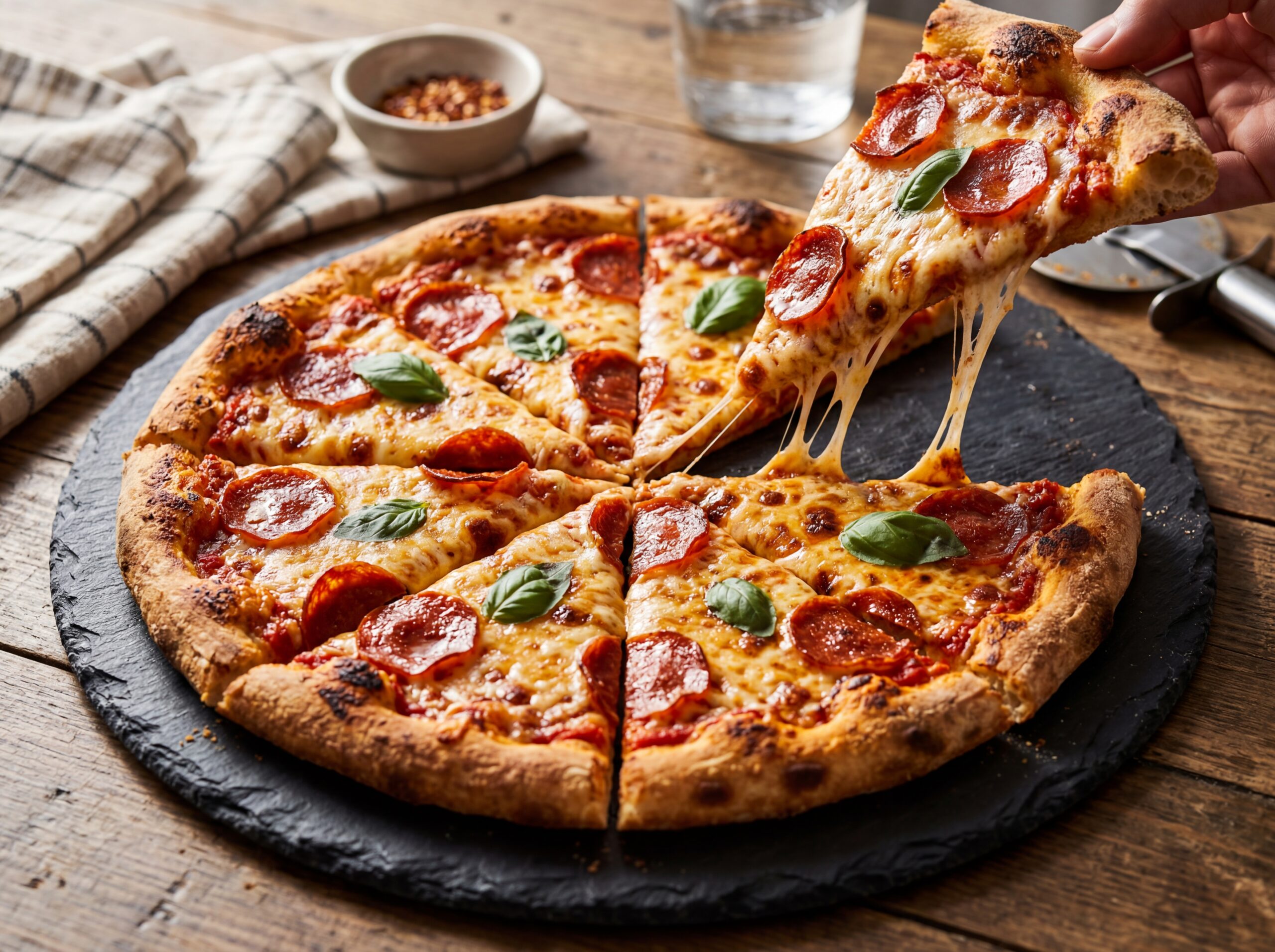
Making authentic pizza at home is one of the most rewarding kitchen experiences you can have. Once you master the basic Margherita, the possibilities are endless — from a white truffle and mushroom pizza to a spicy calabrese with nduja. The key takeaways are simple: use quality ingredients, give your dough time to develop, and get that oven screaming hot.
Now it’s your turn. Gather your ingredients, dust your counter with flour, and get ready to make the best pizza you’ve ever tasted — in your own kitchen. Share your creation with us in the comments below, and don’t forget to tag us with your homemade pizza photos!
Buon appetito! 🍕